

Filters
226 products
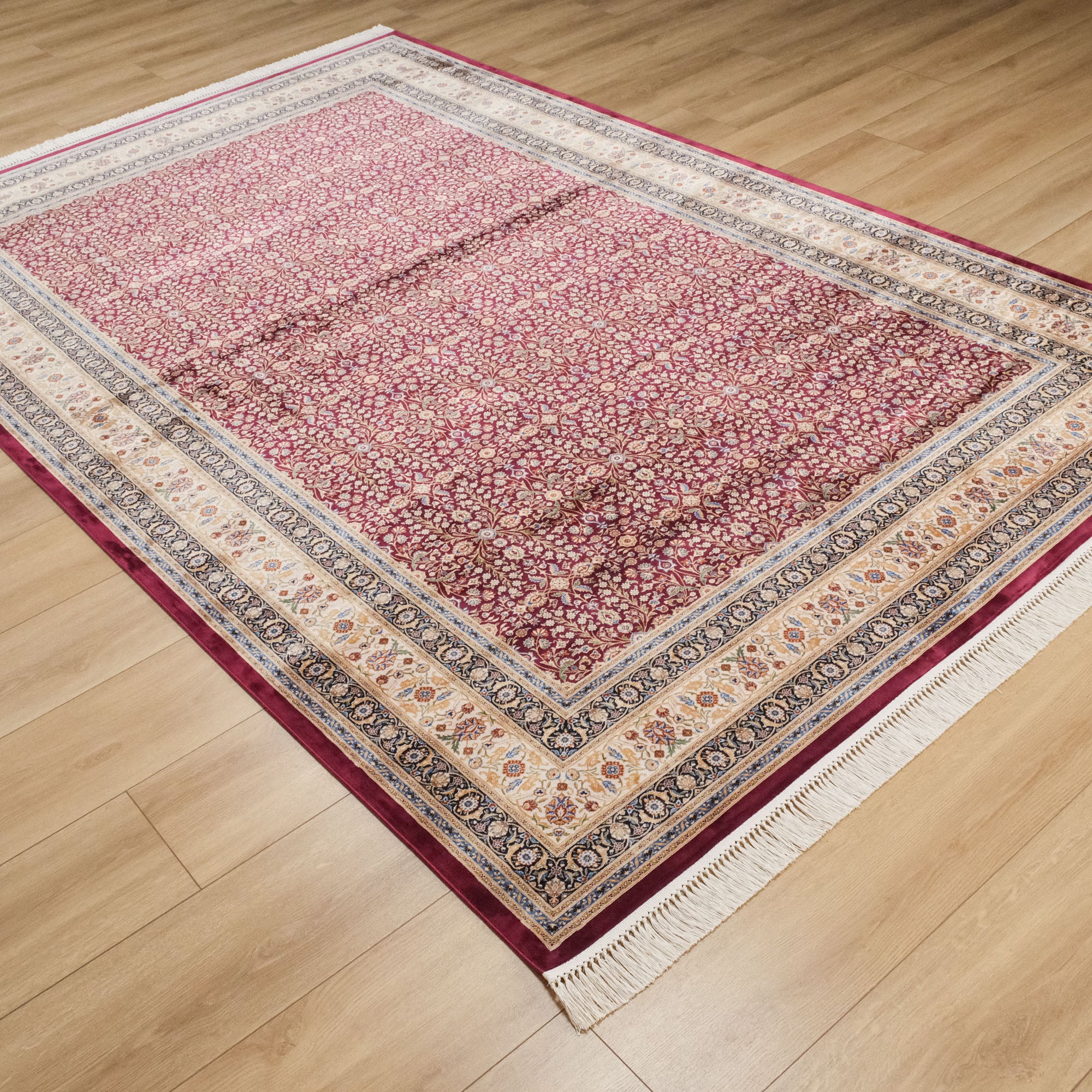
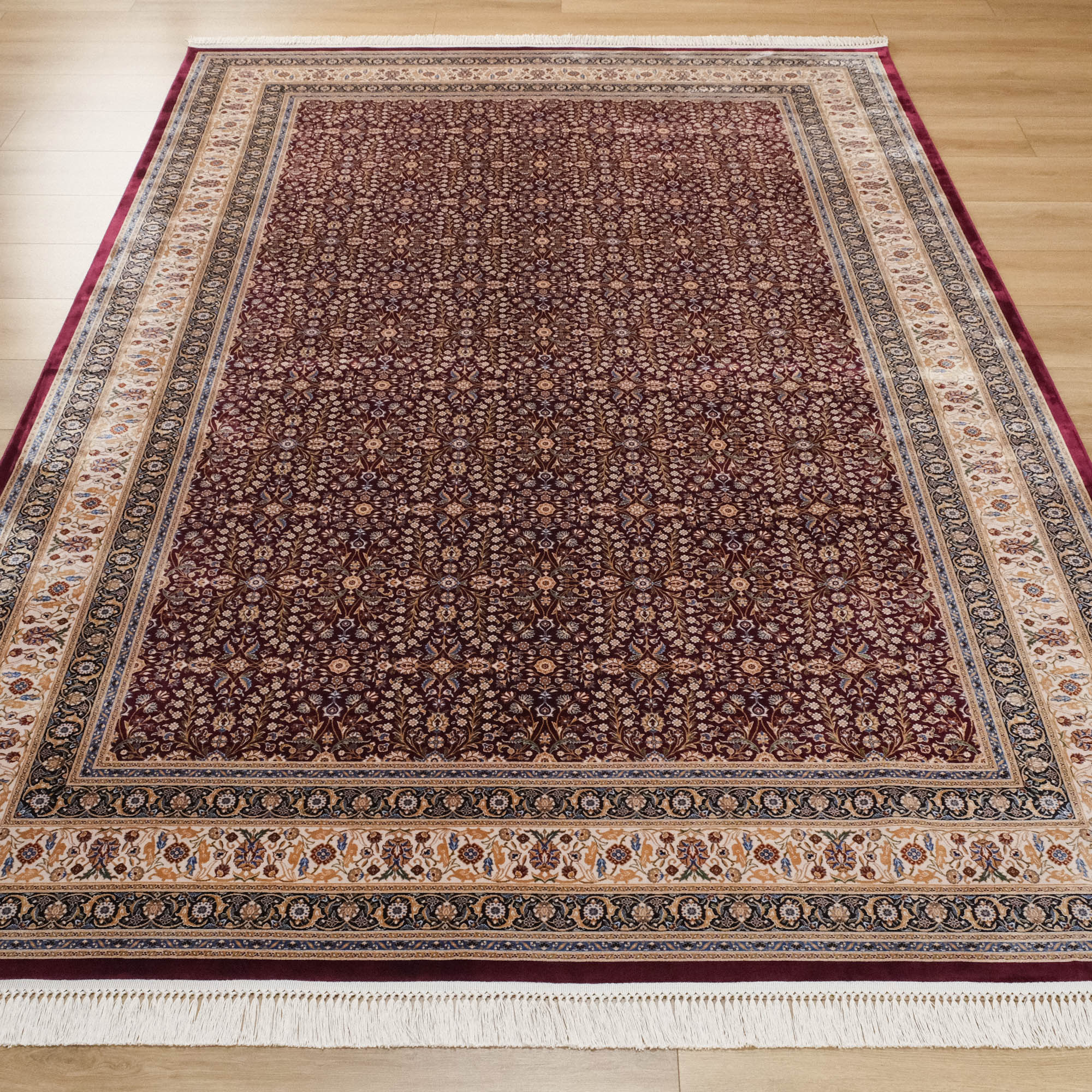
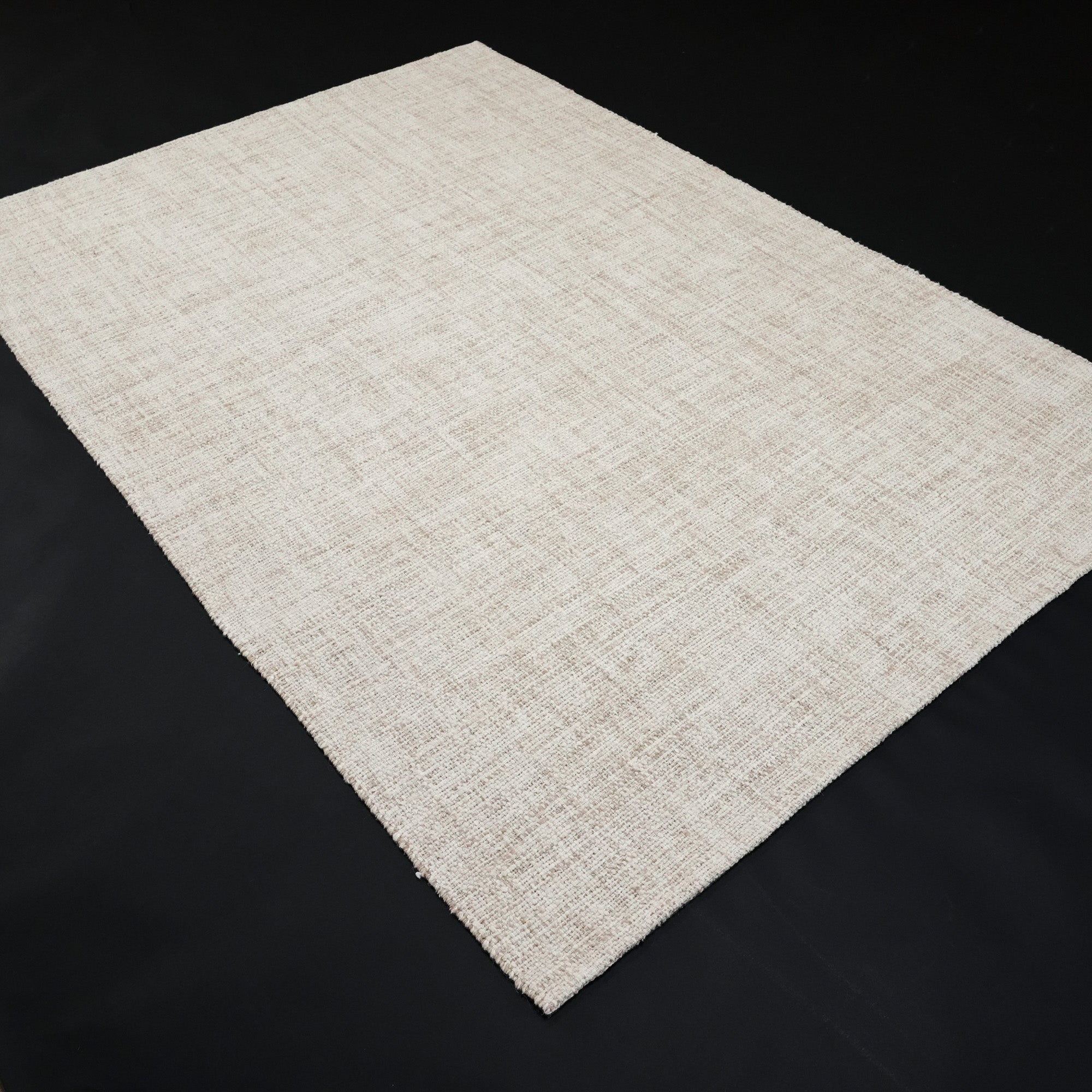
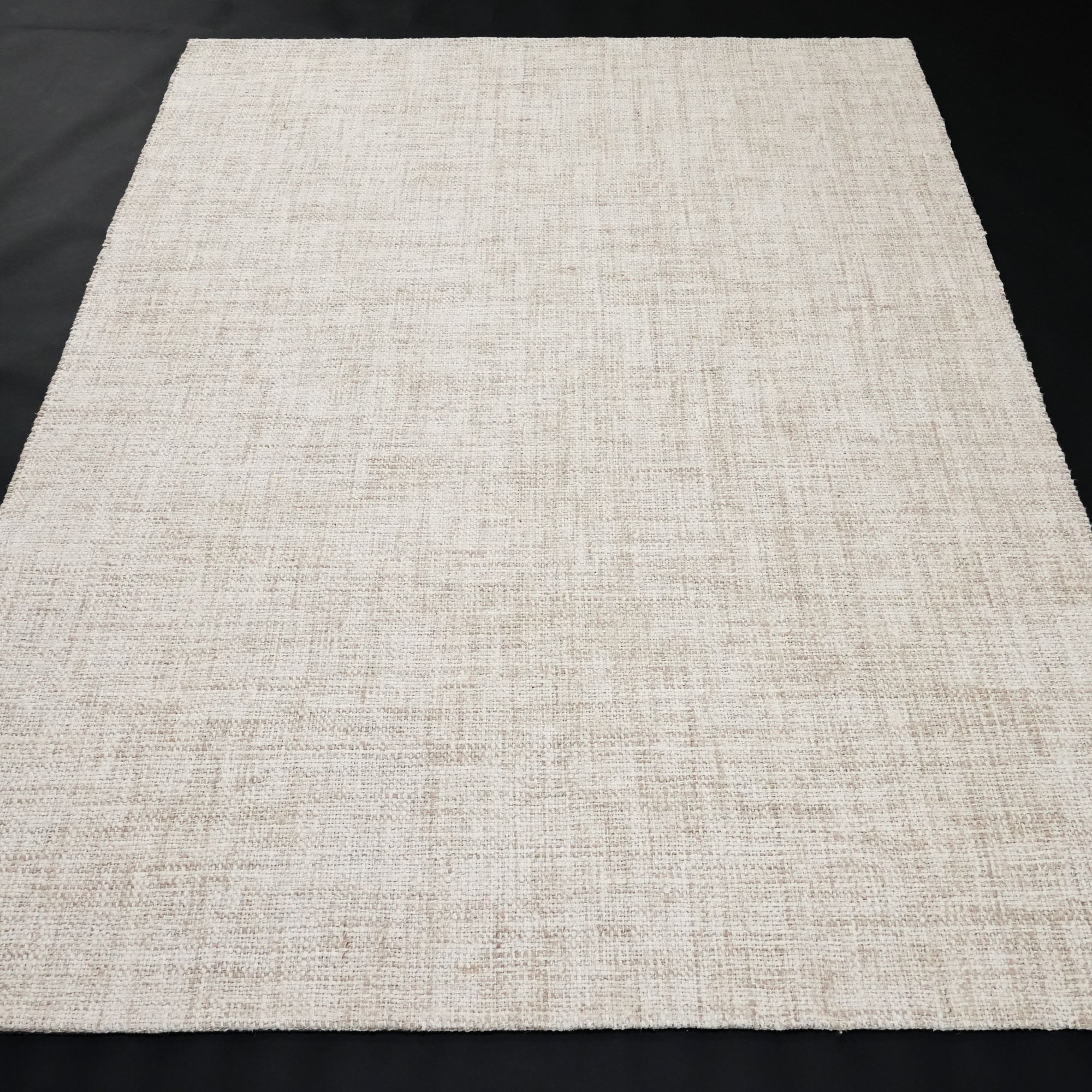
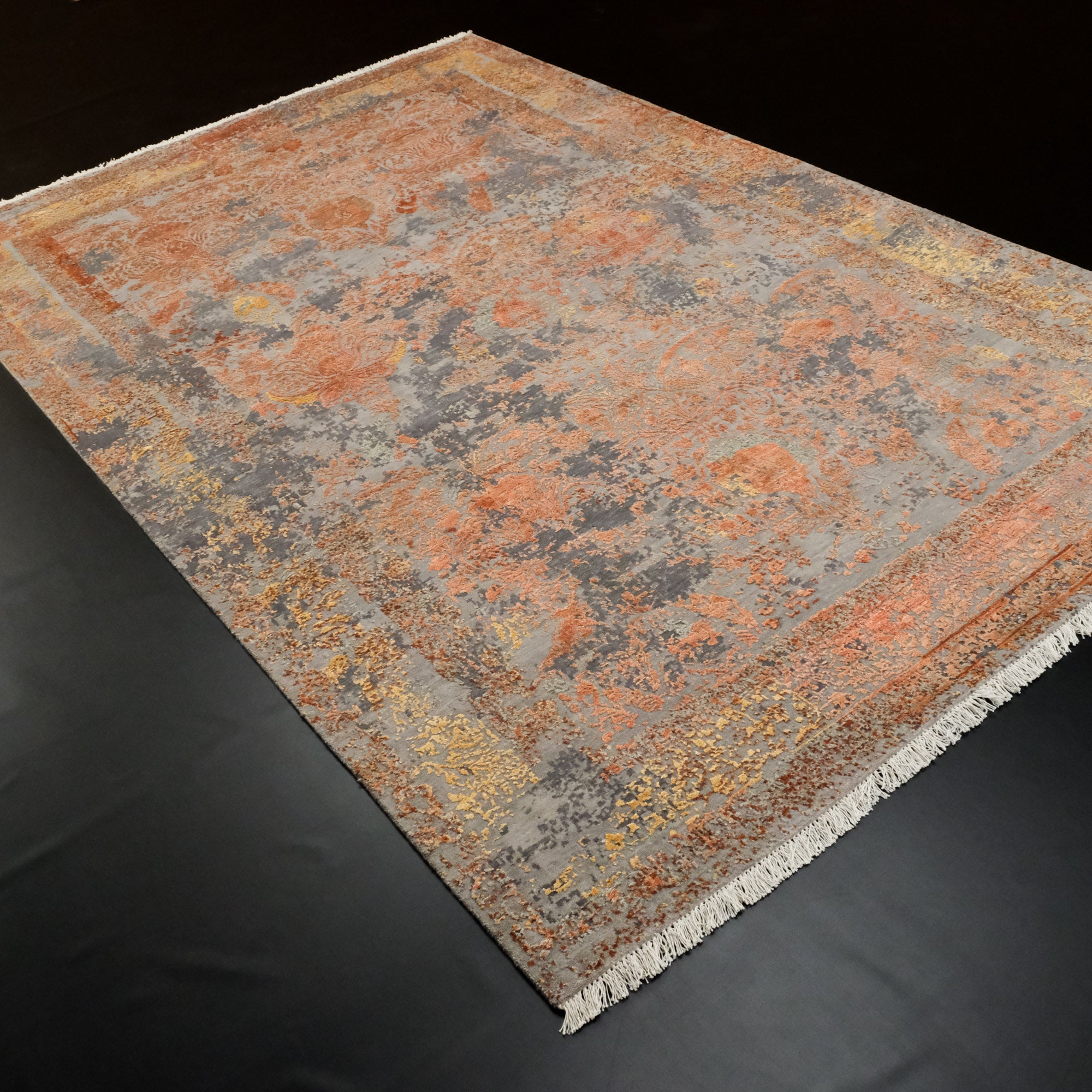
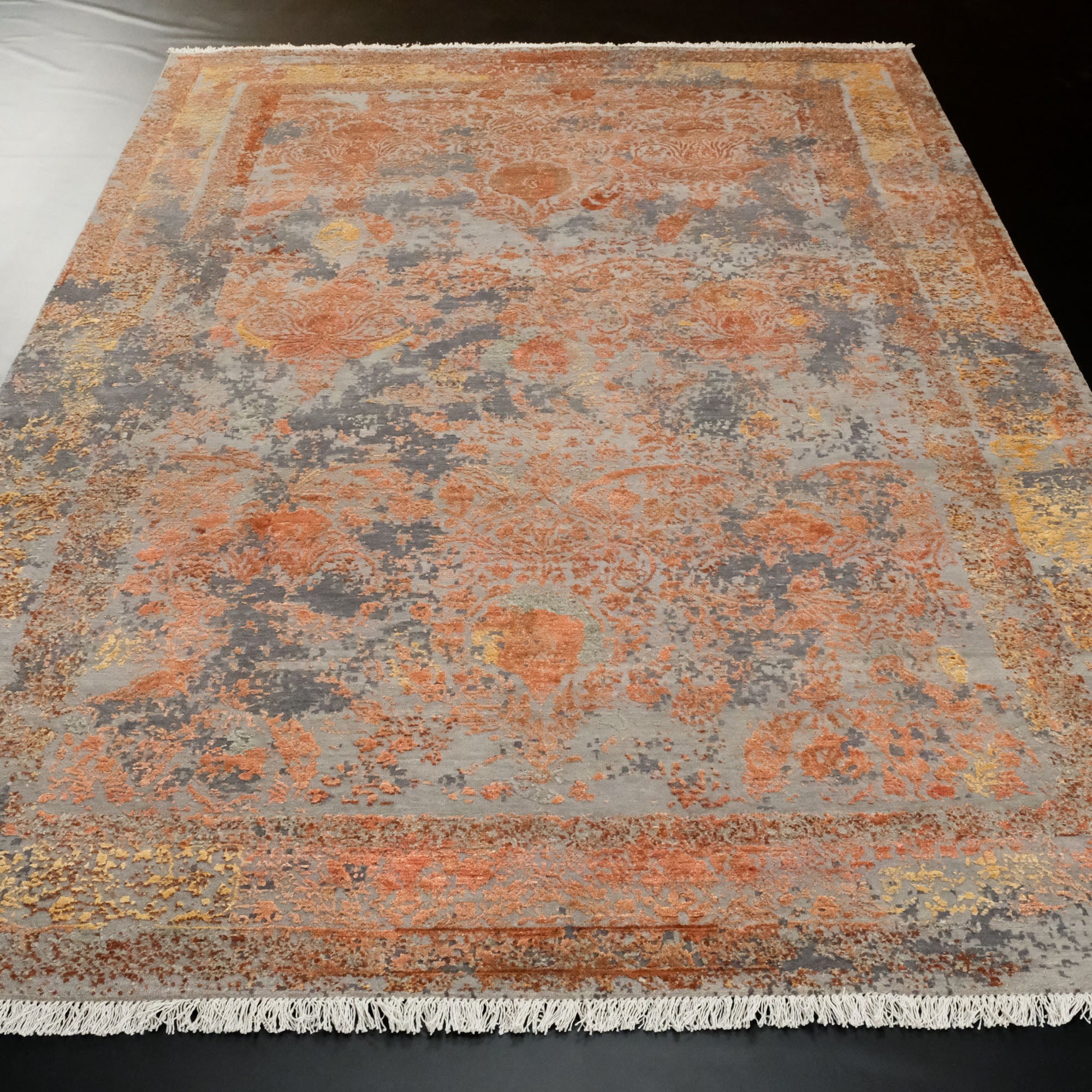
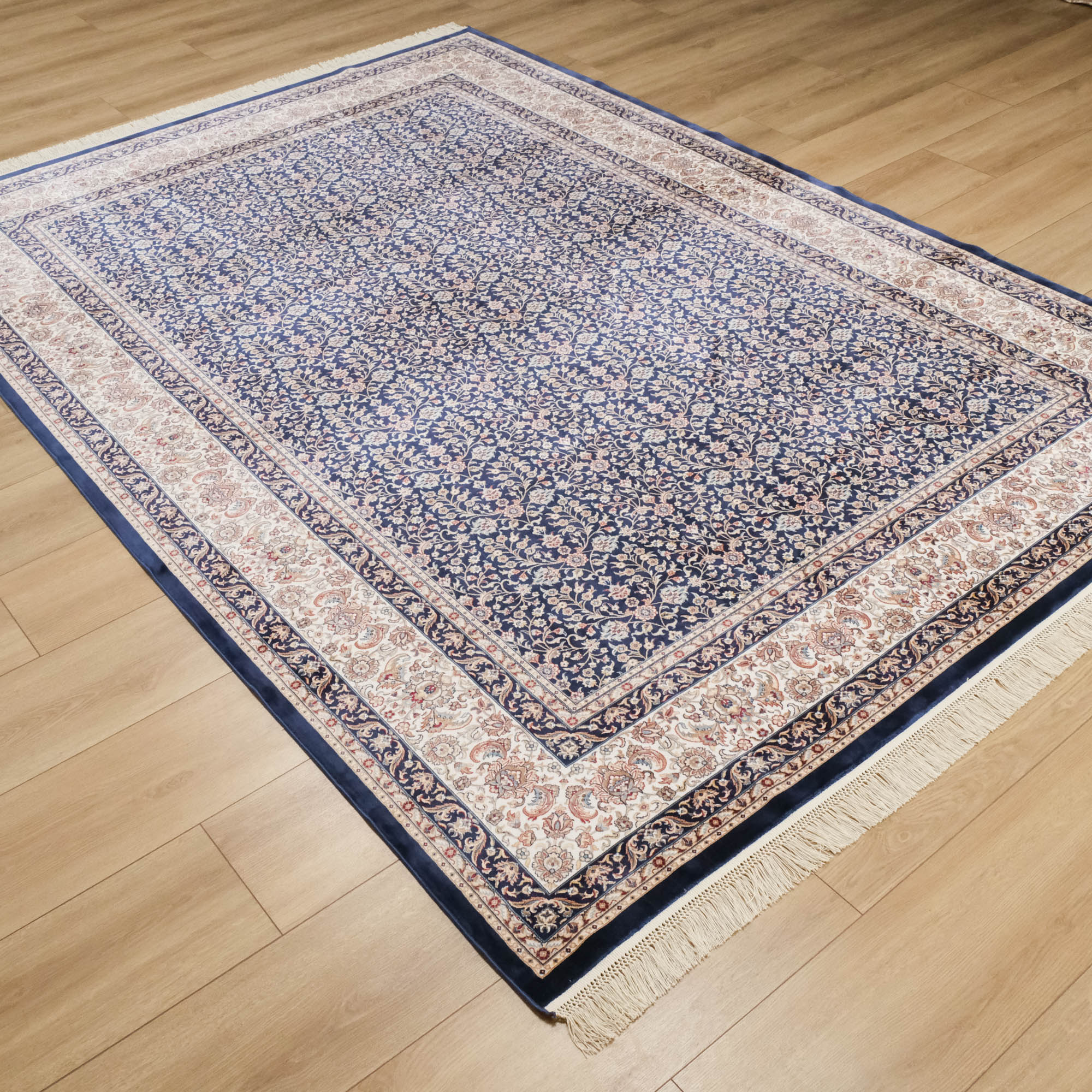
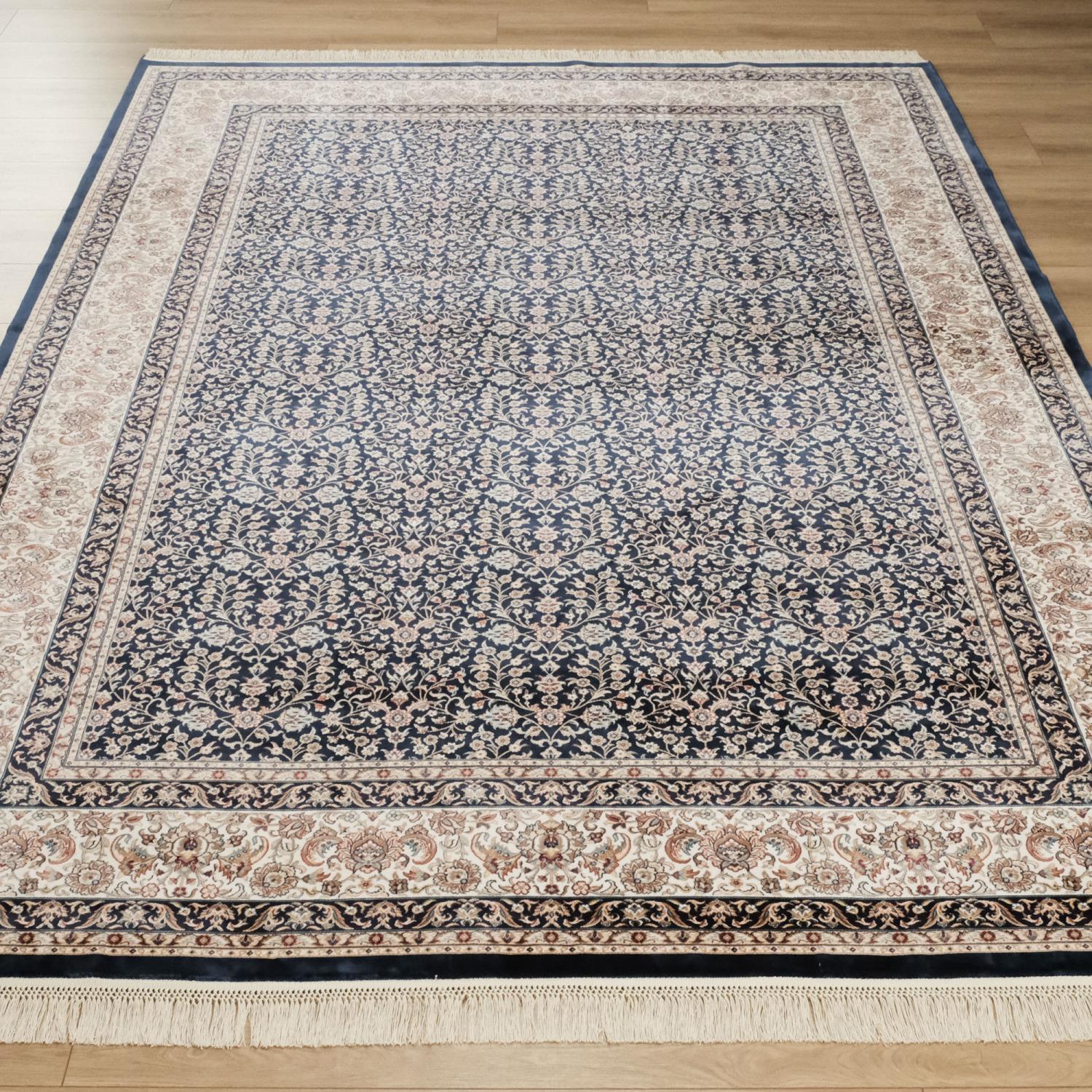
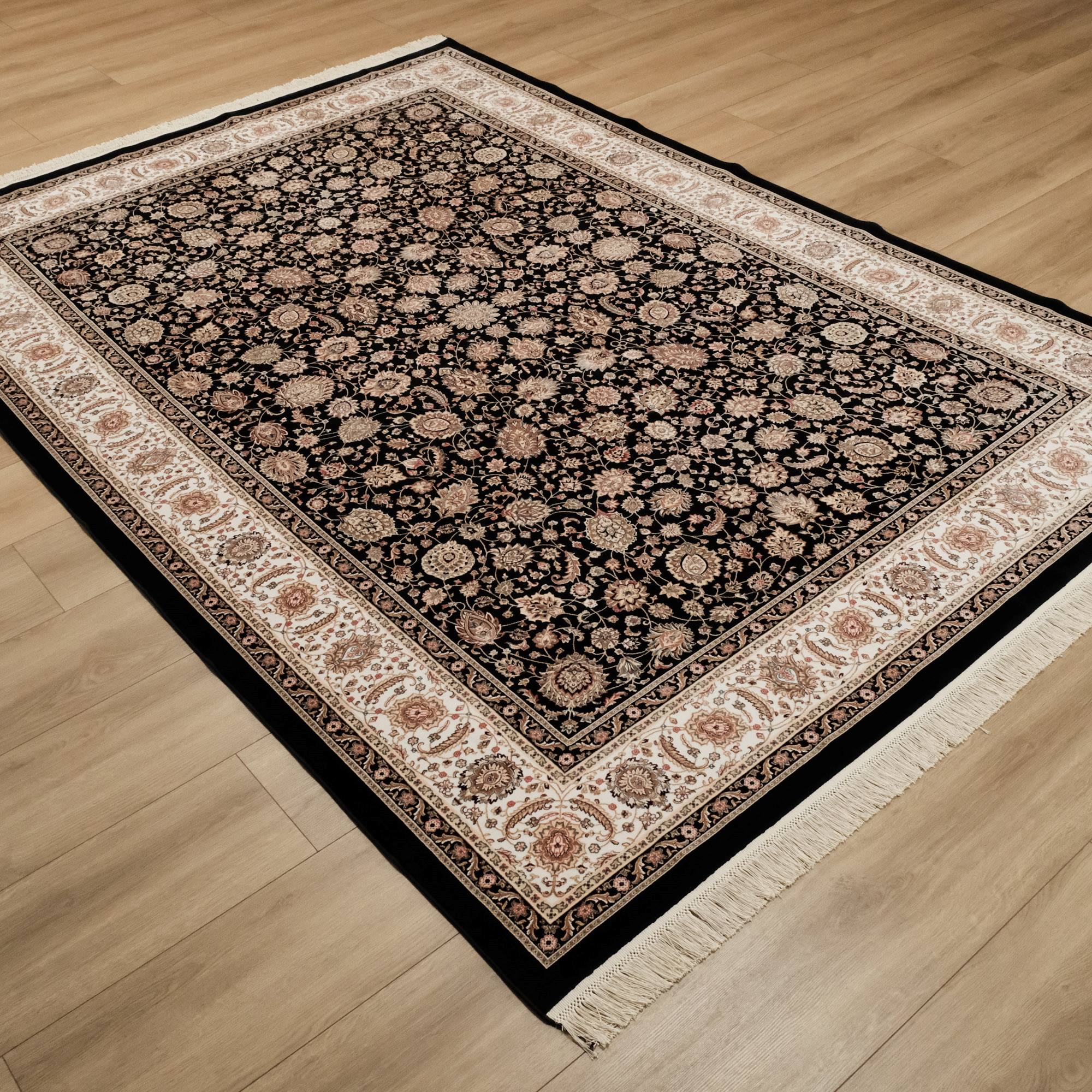
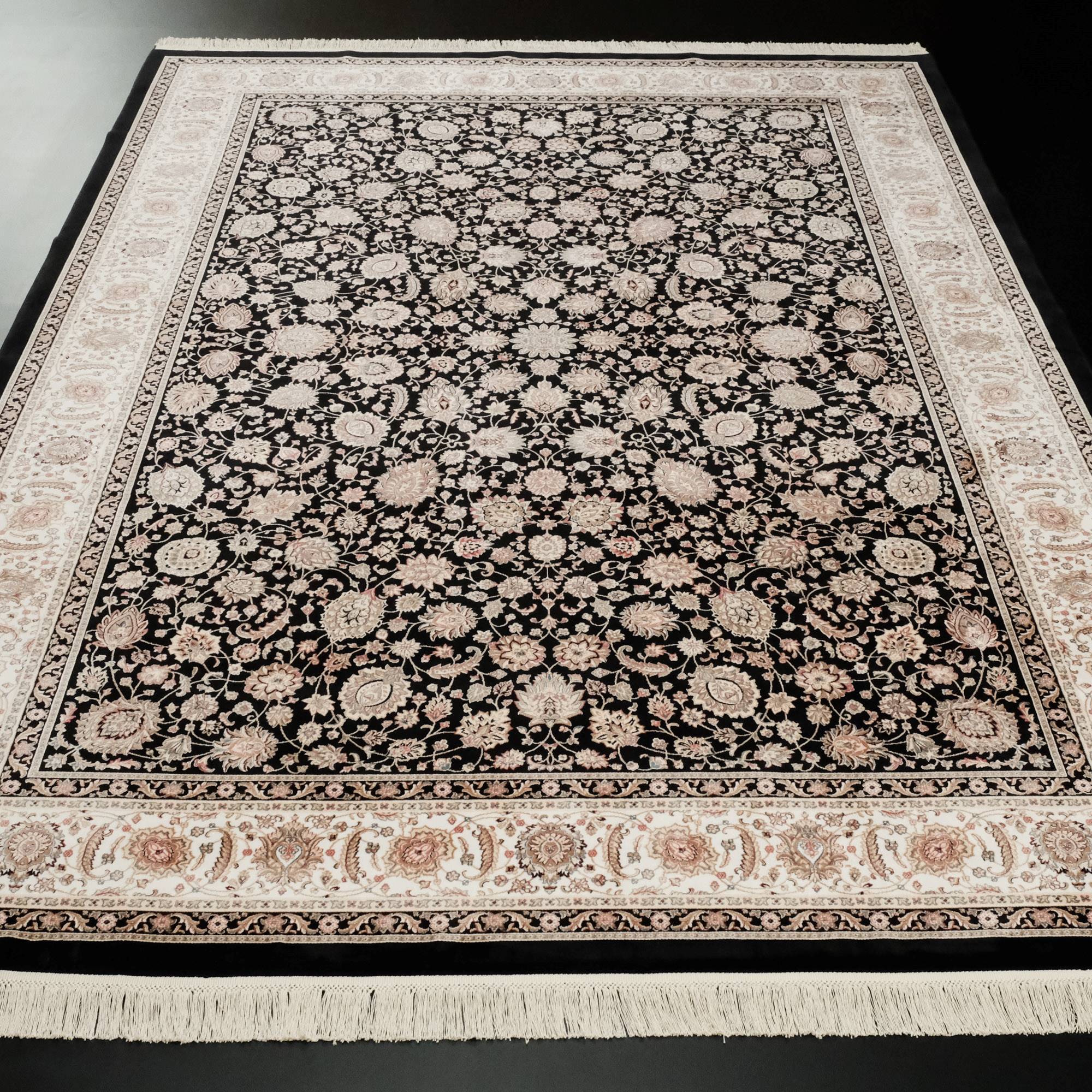

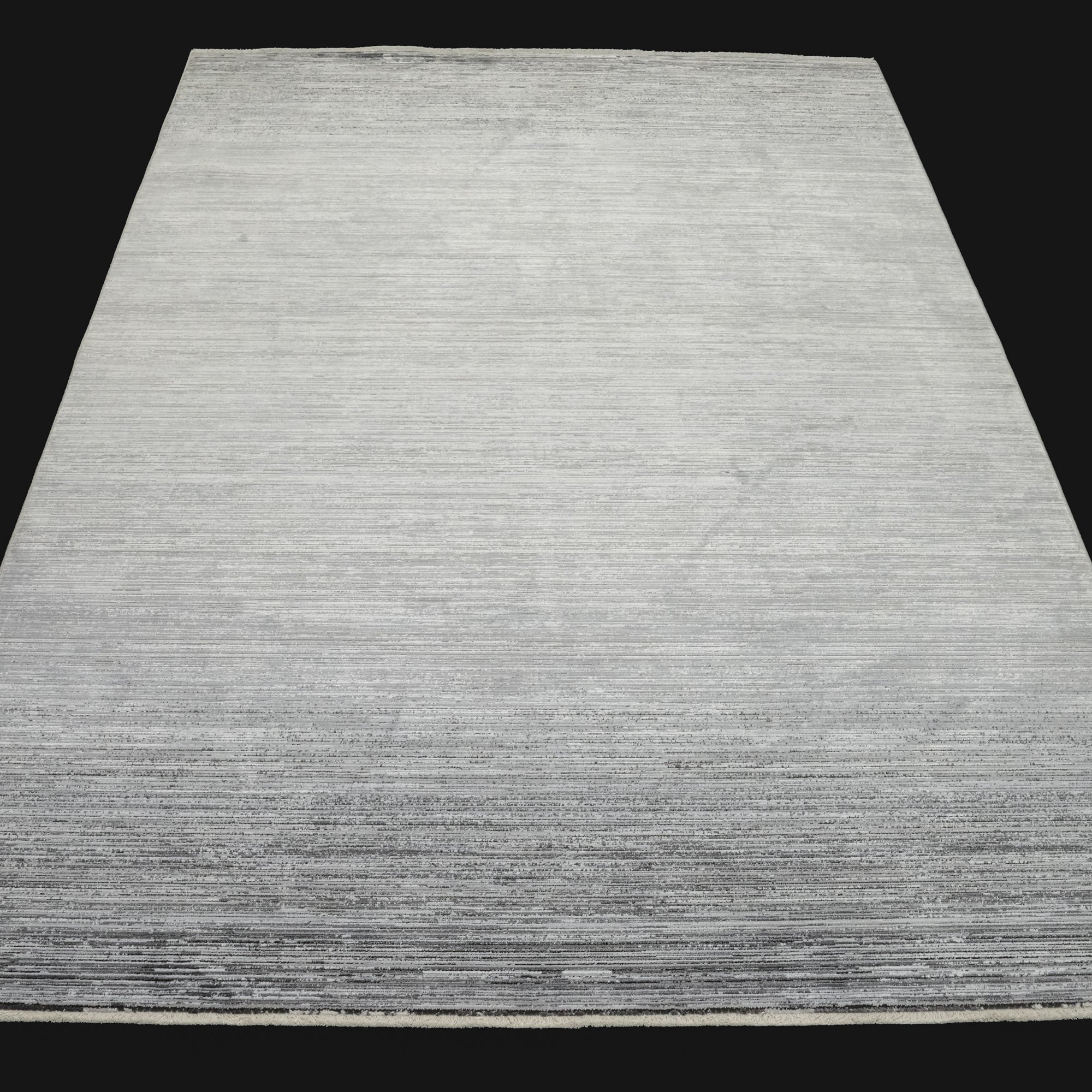
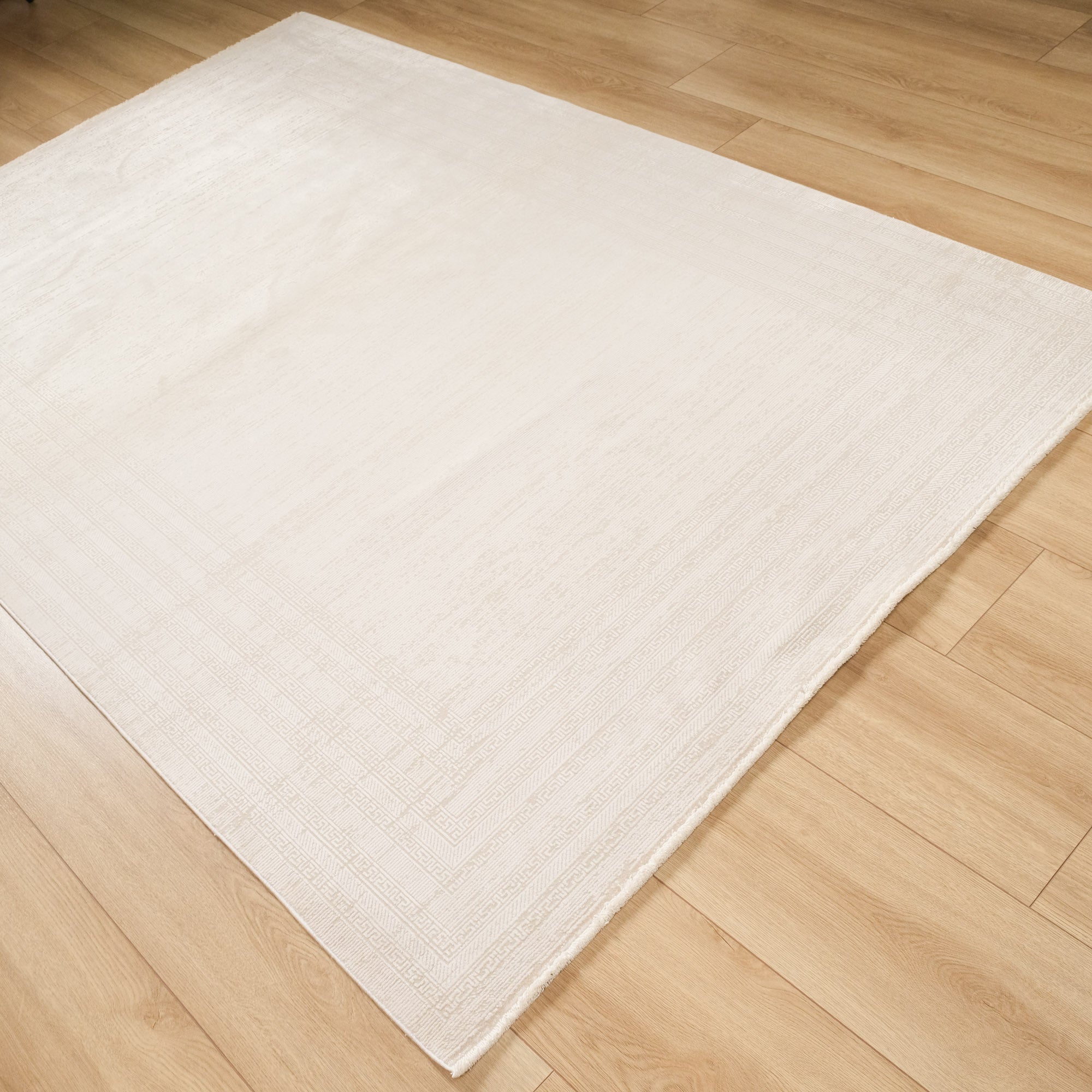
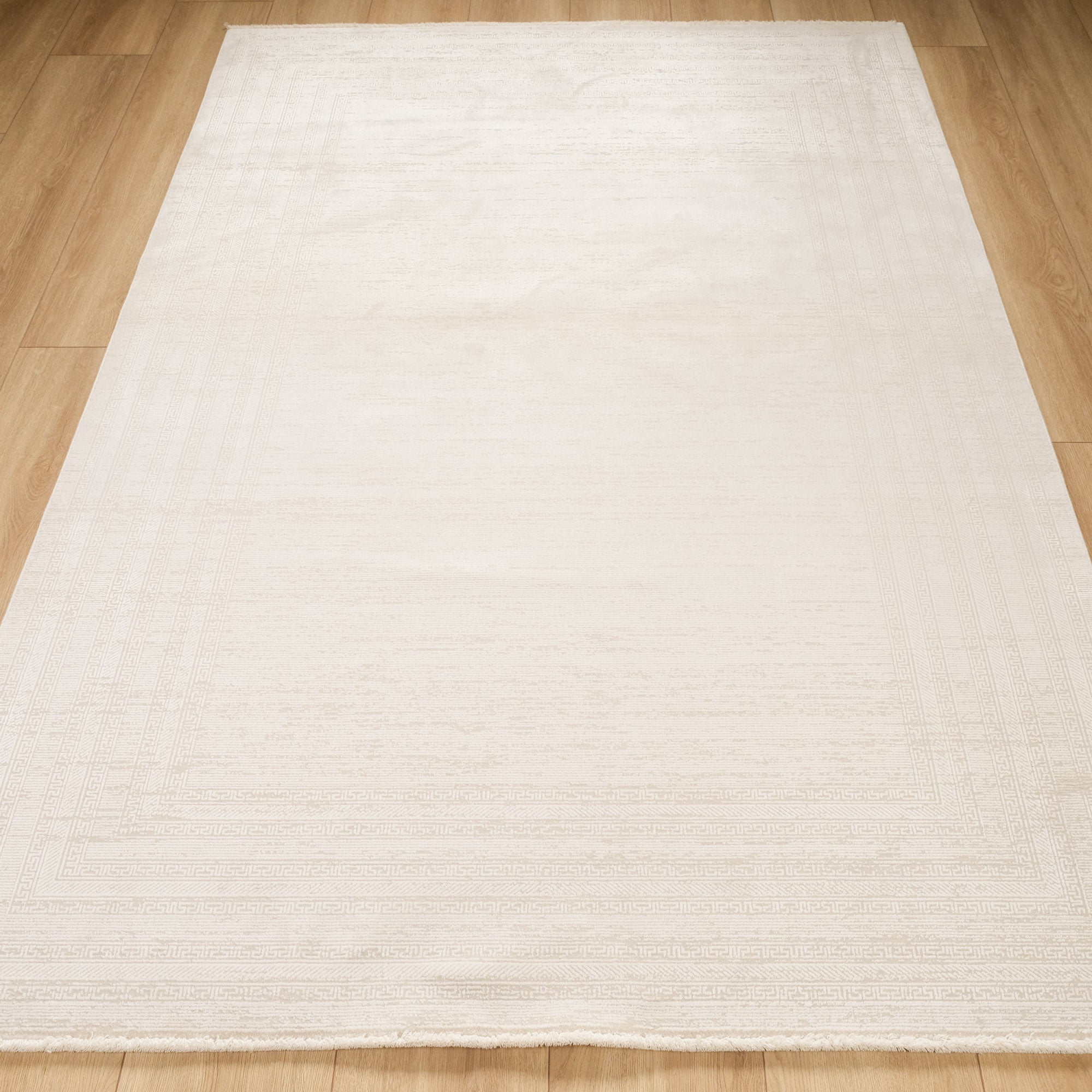
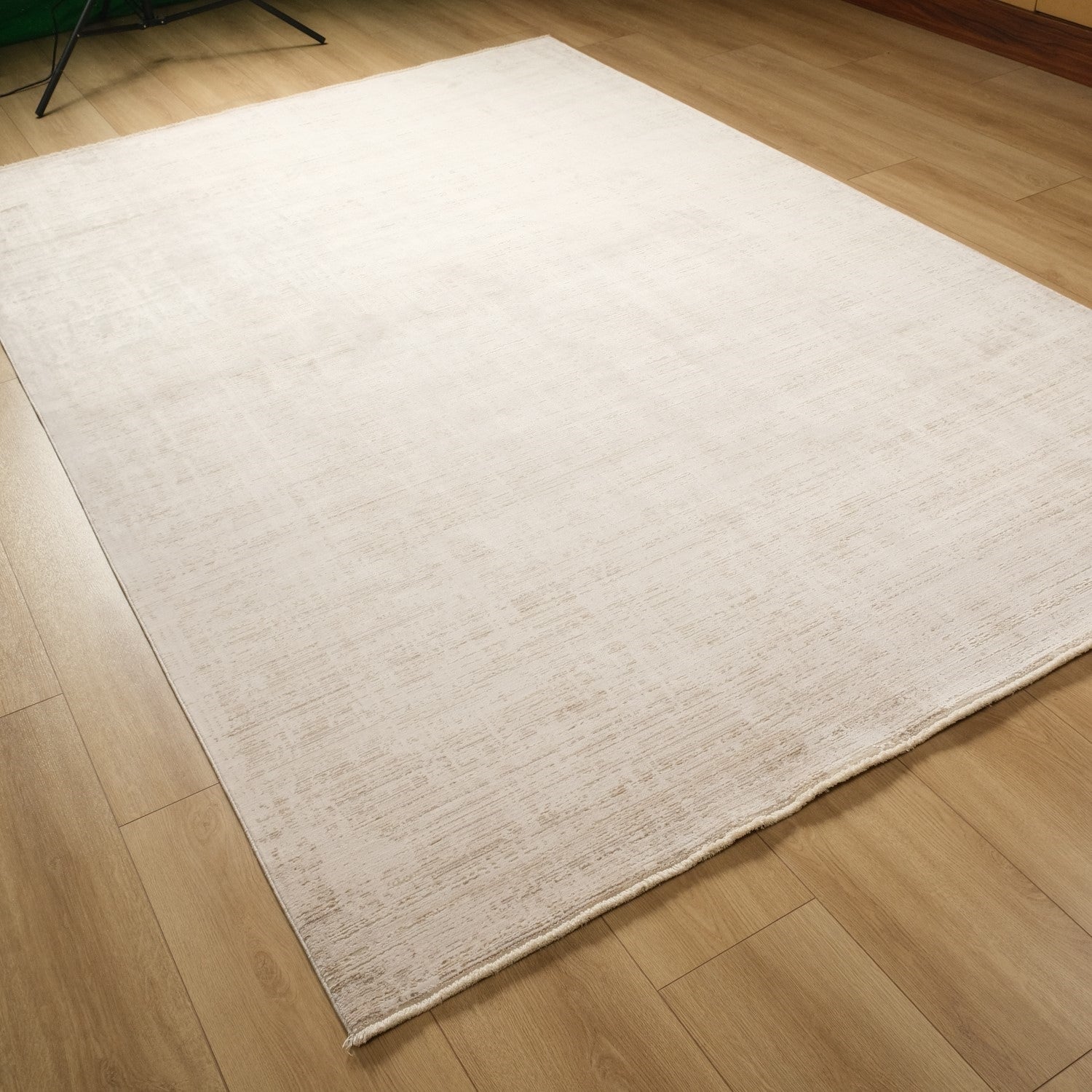
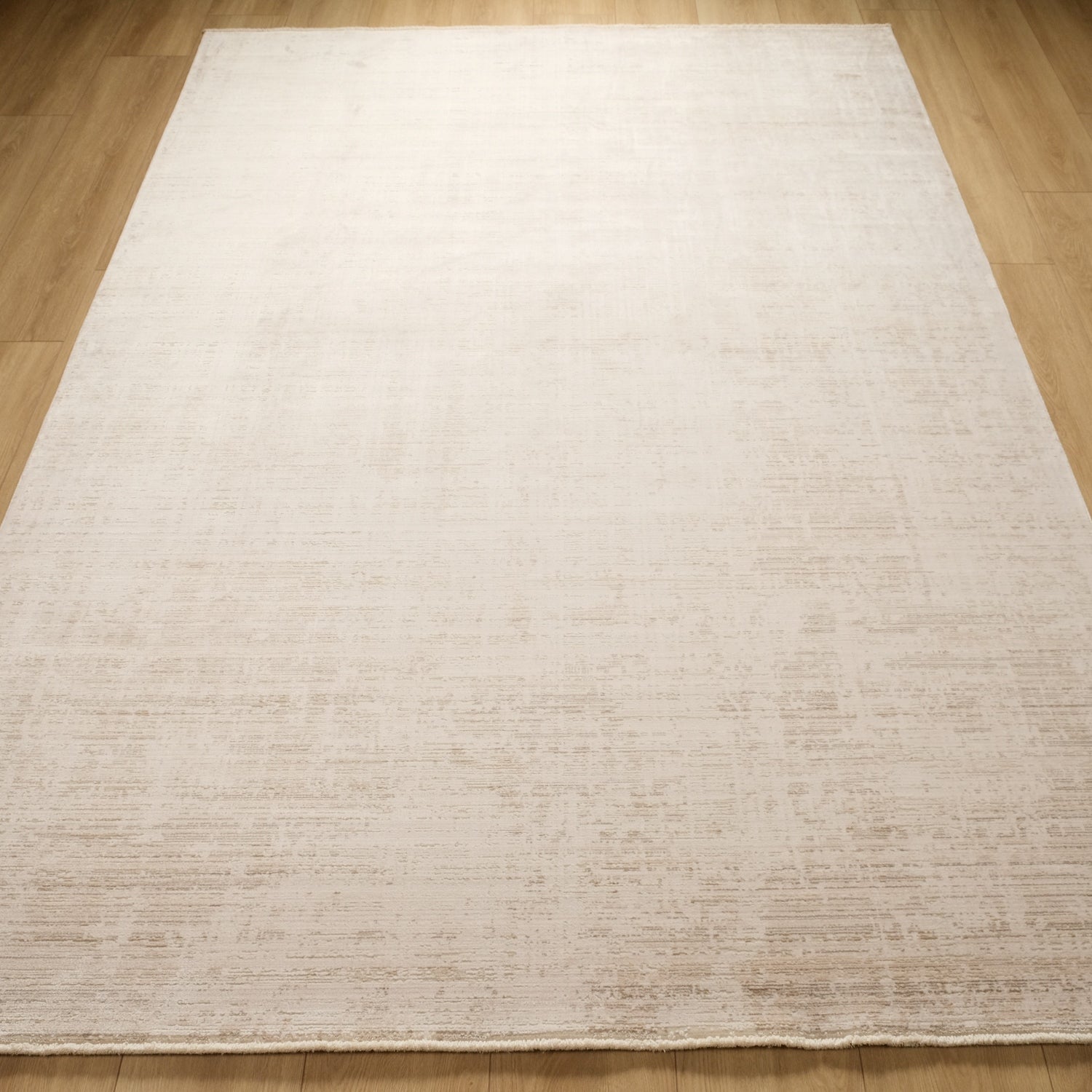
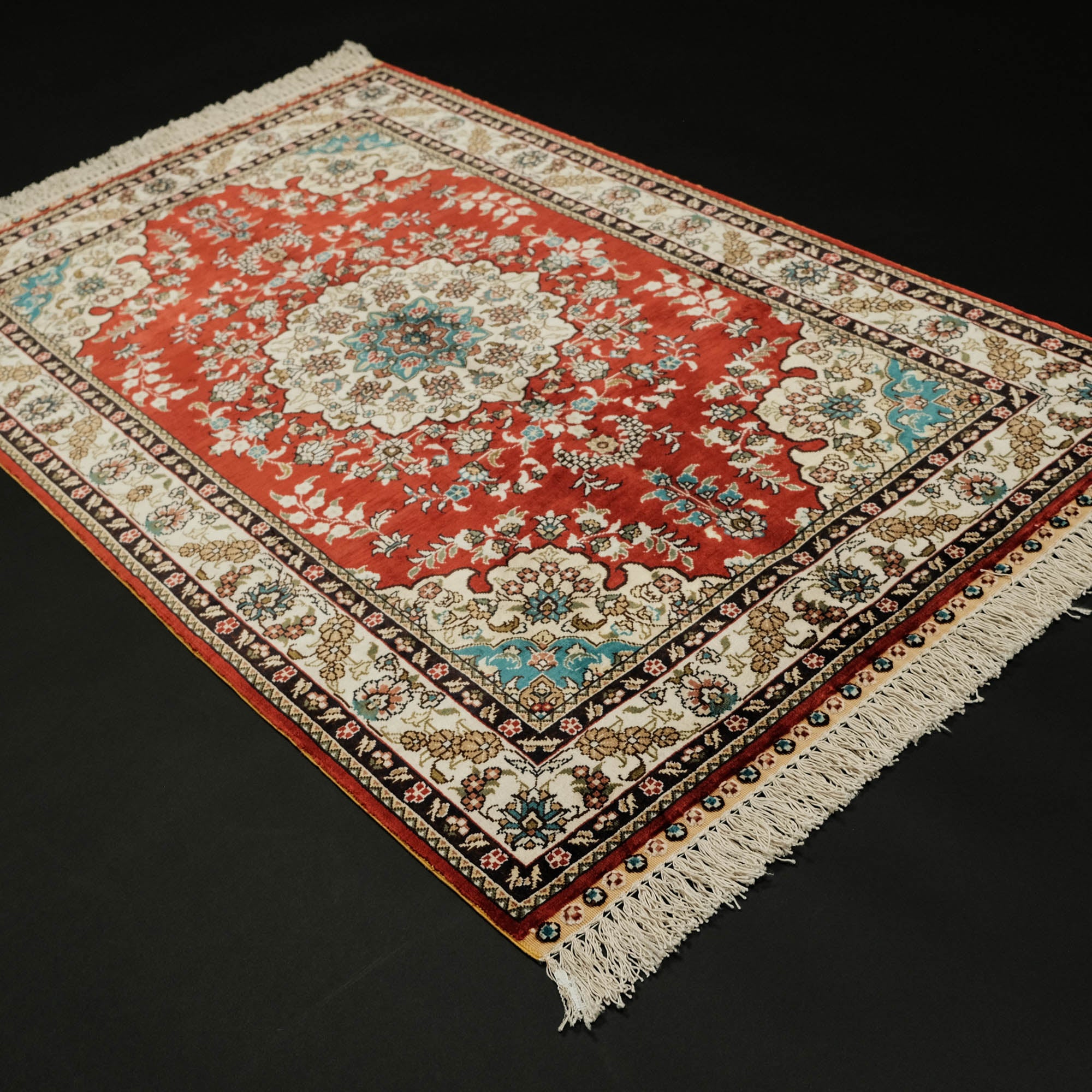
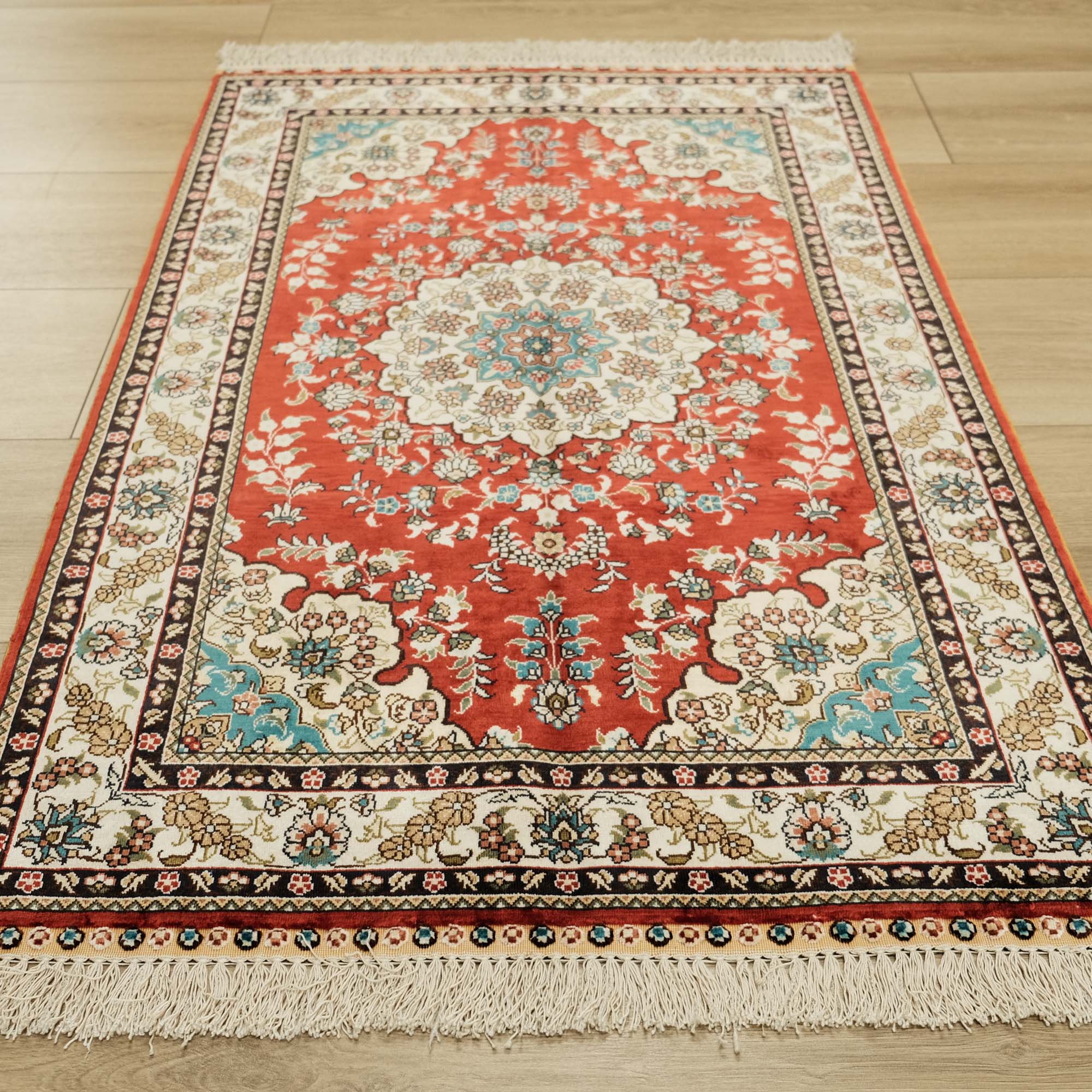
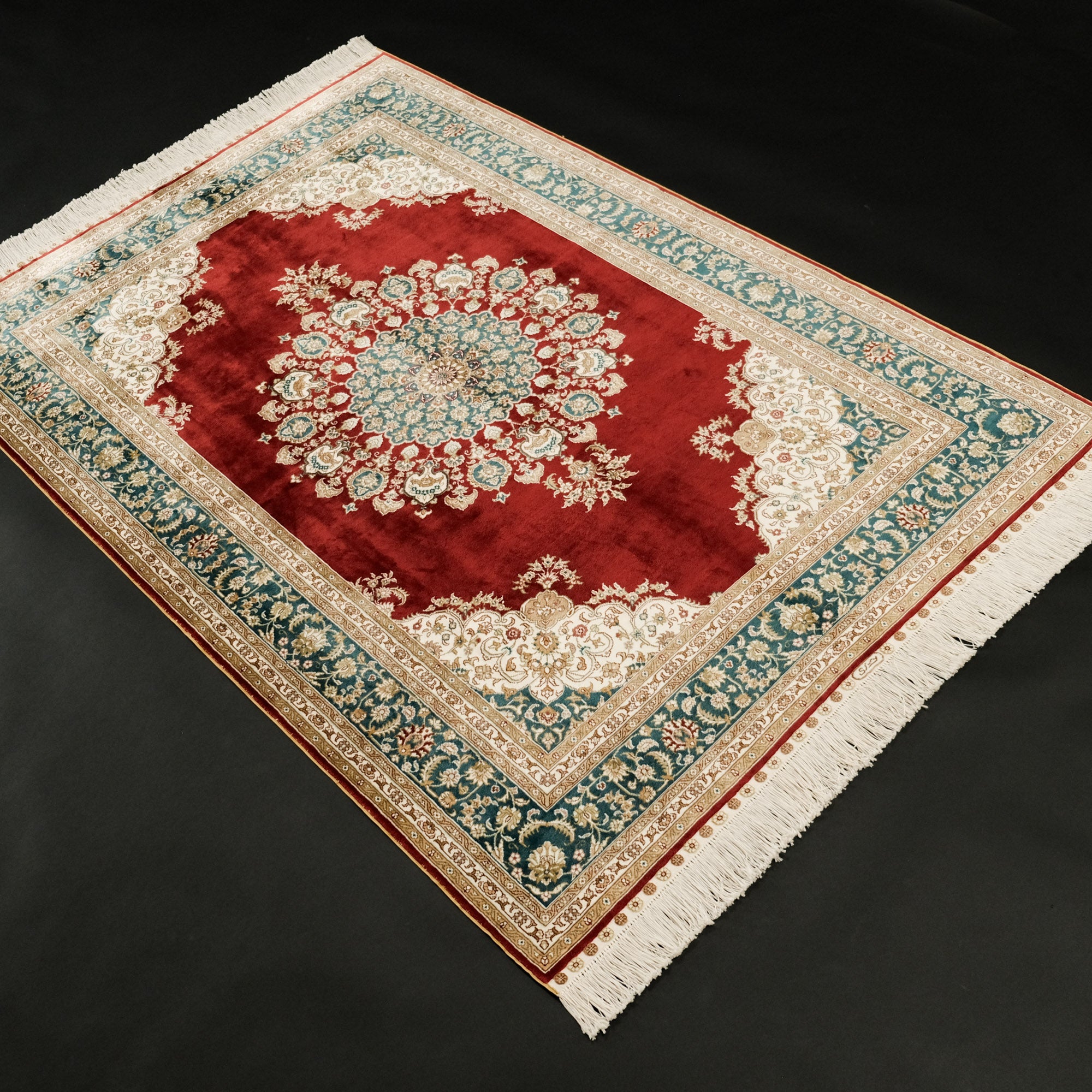
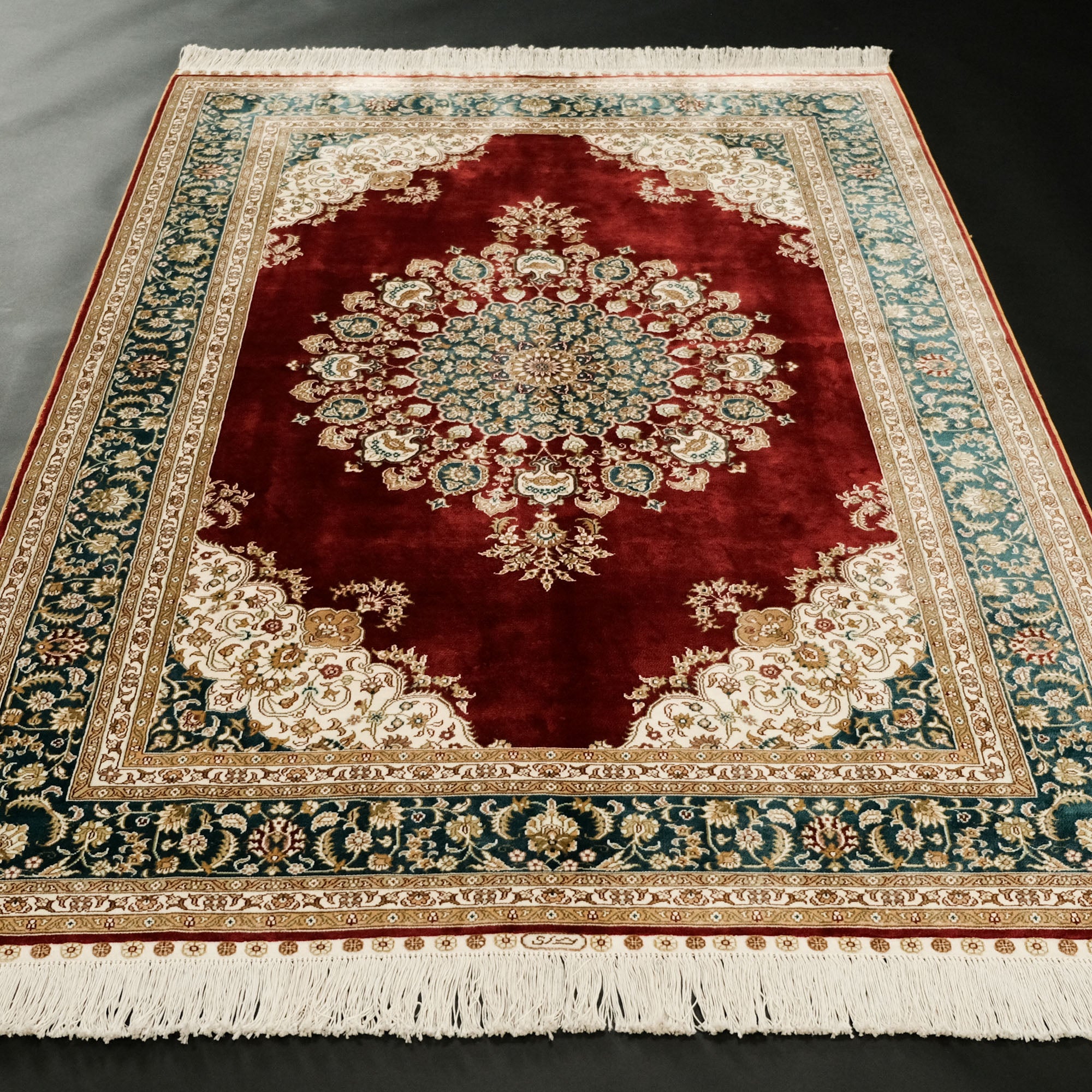
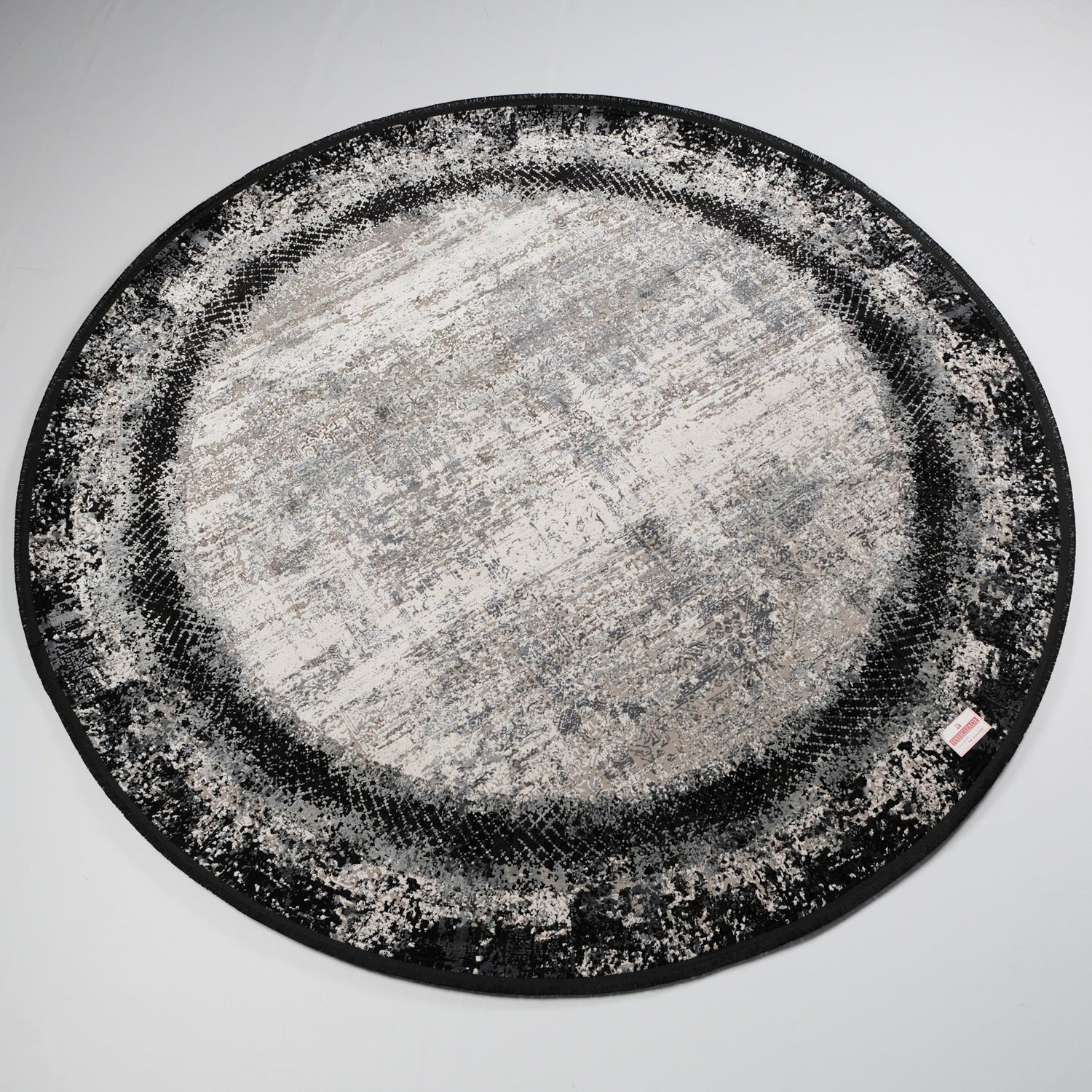
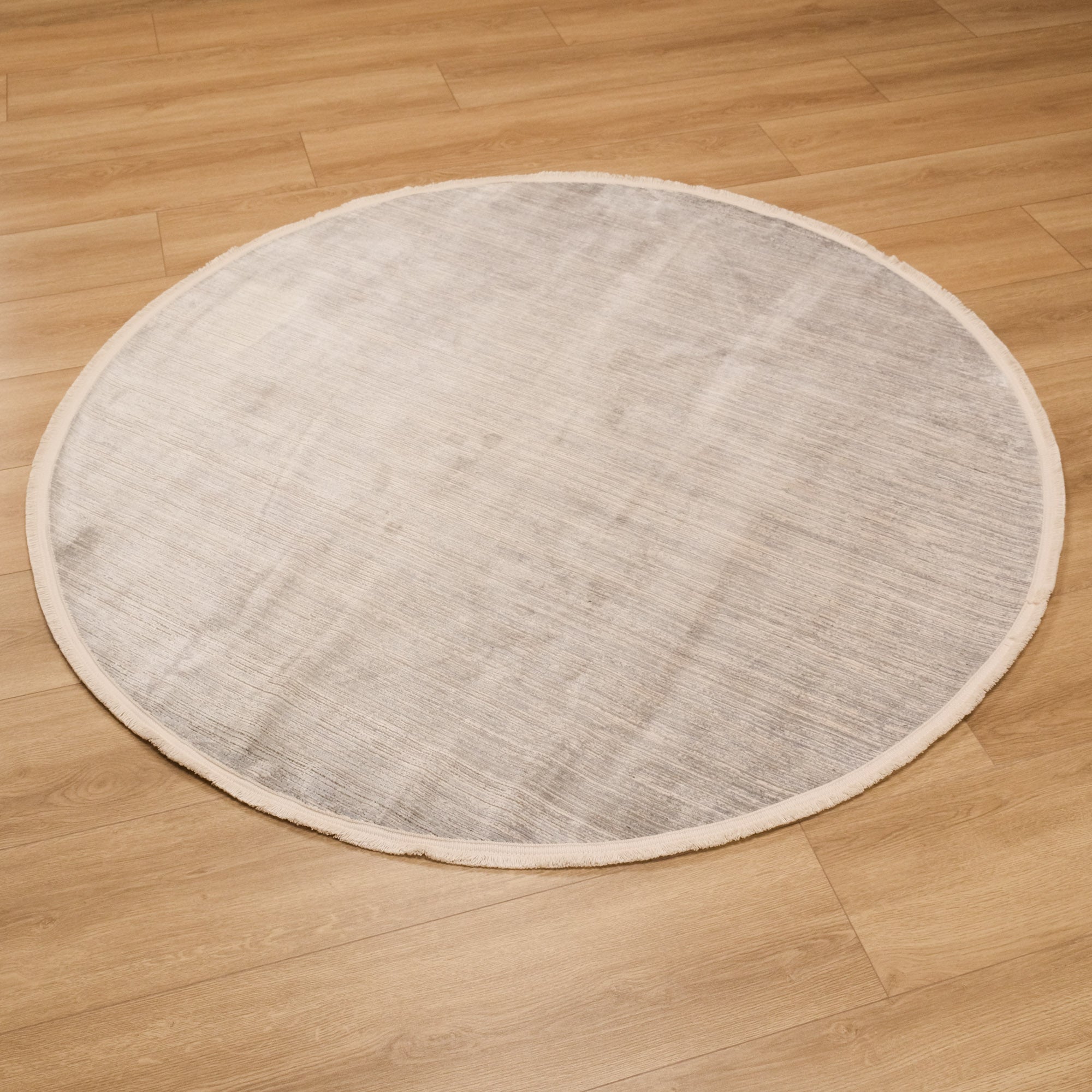
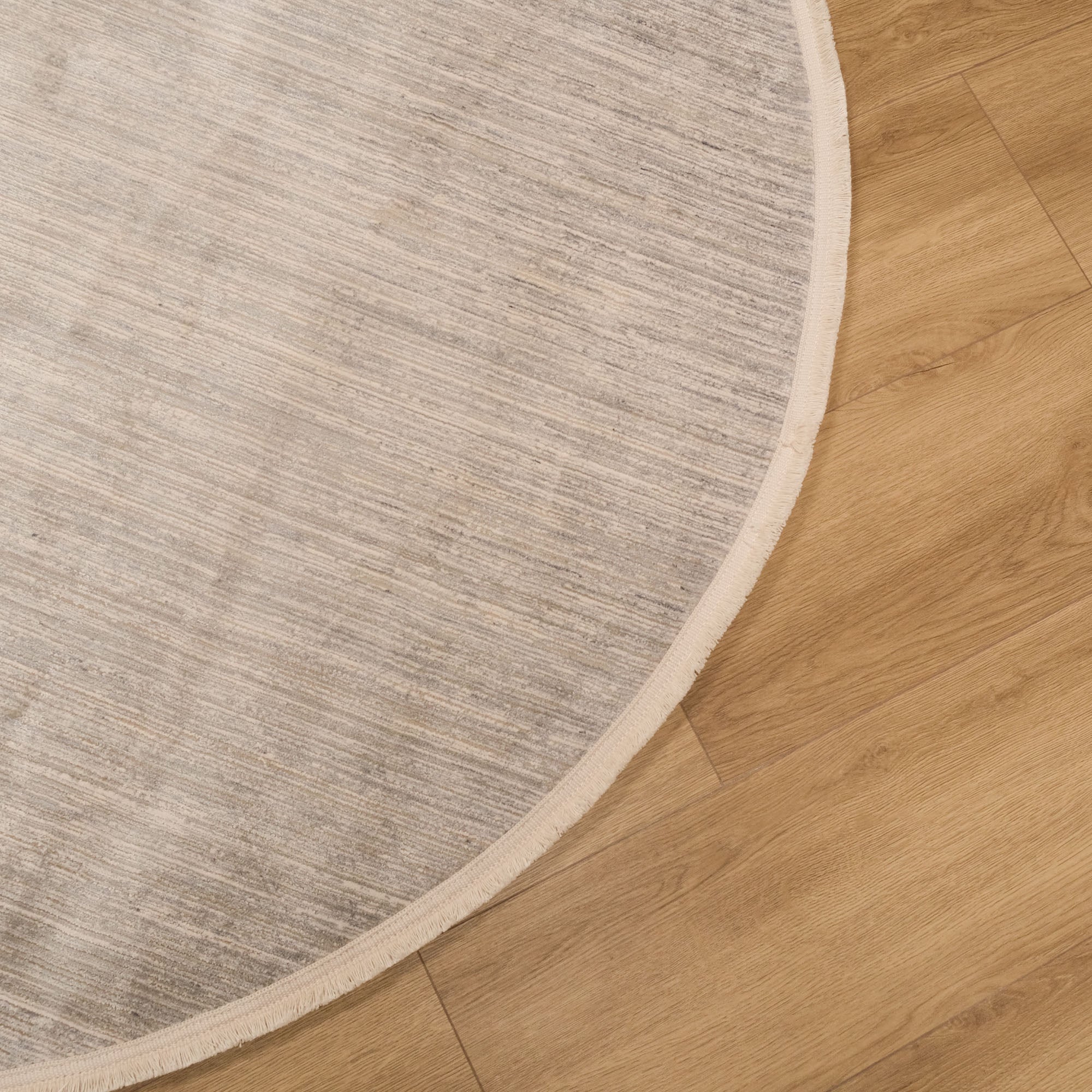
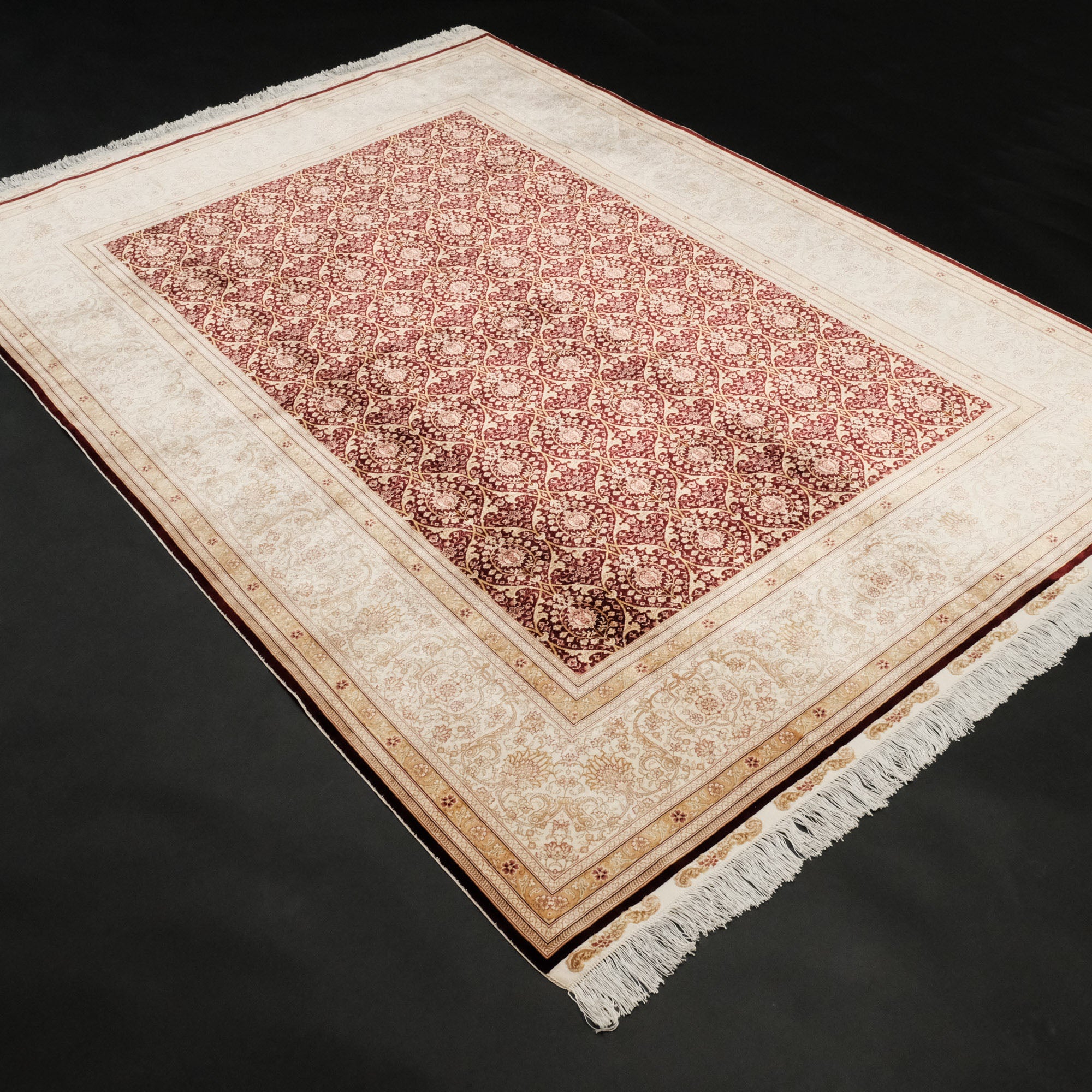
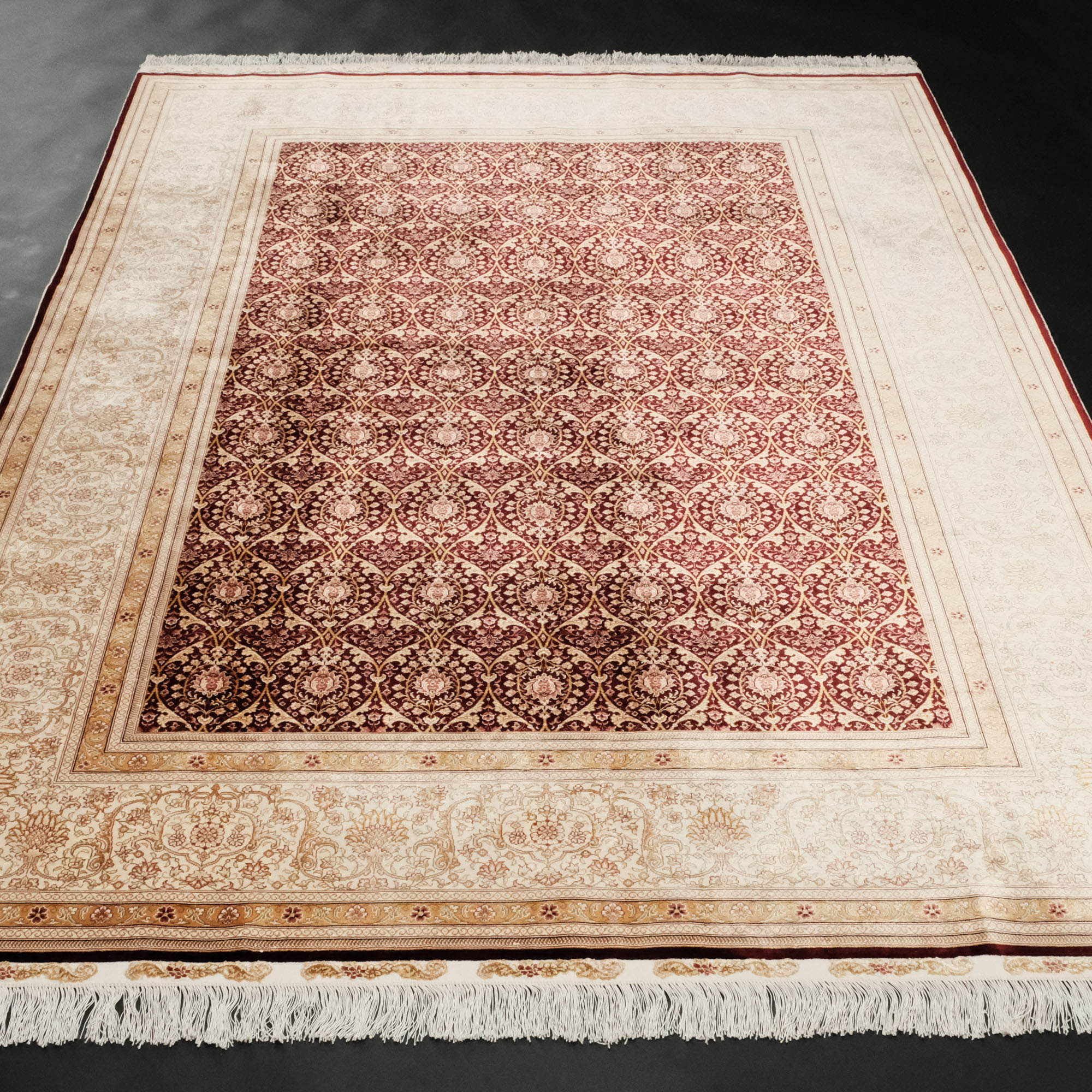
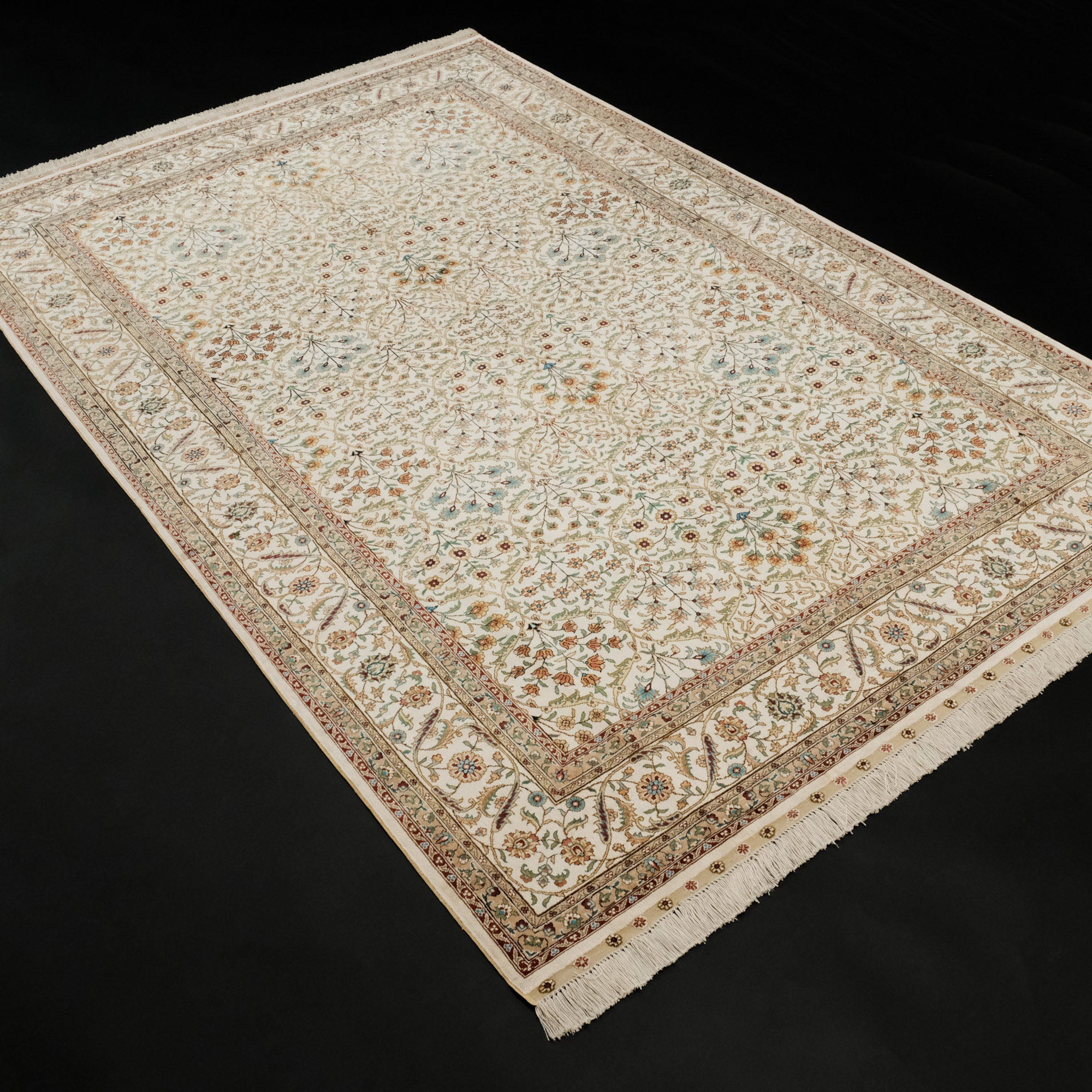
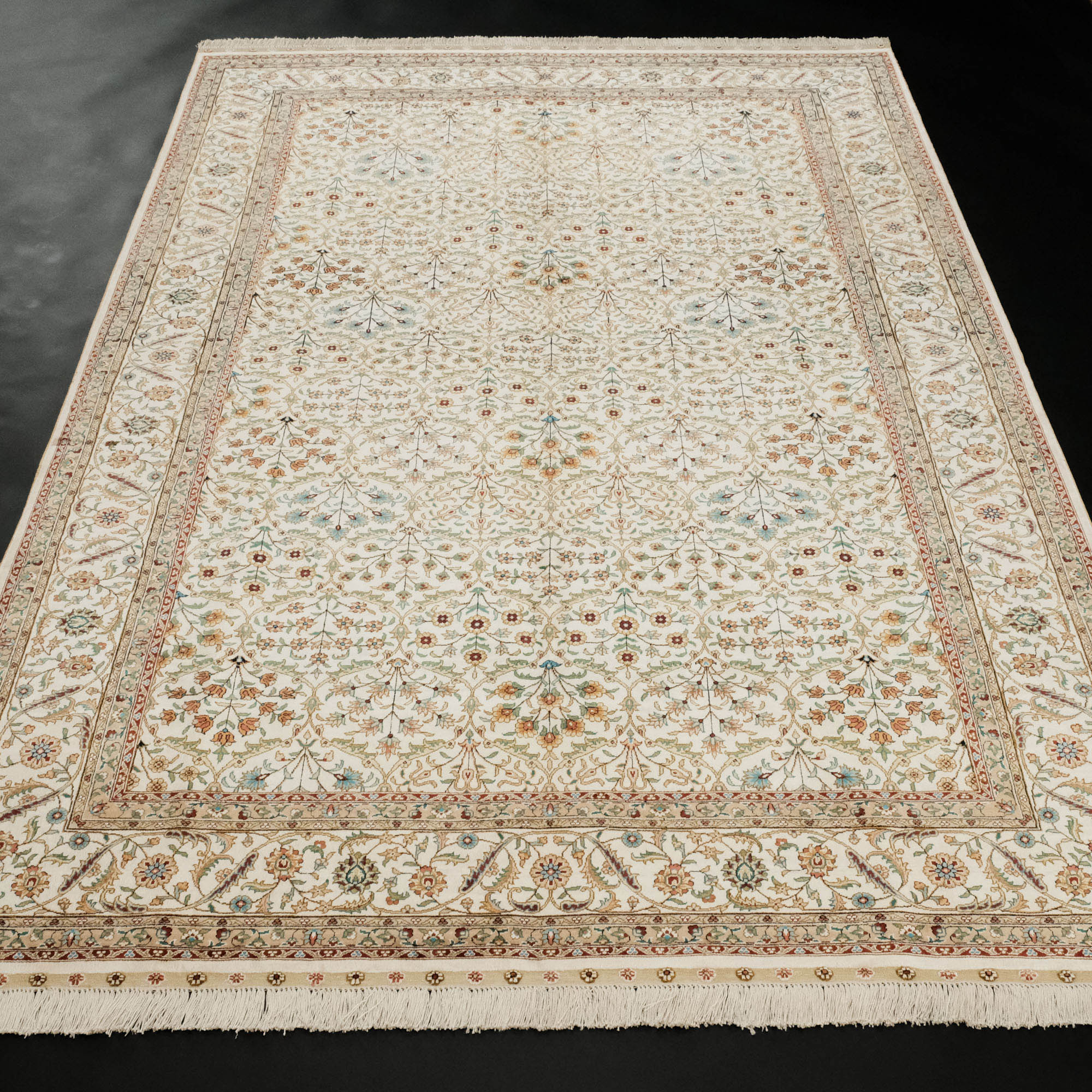
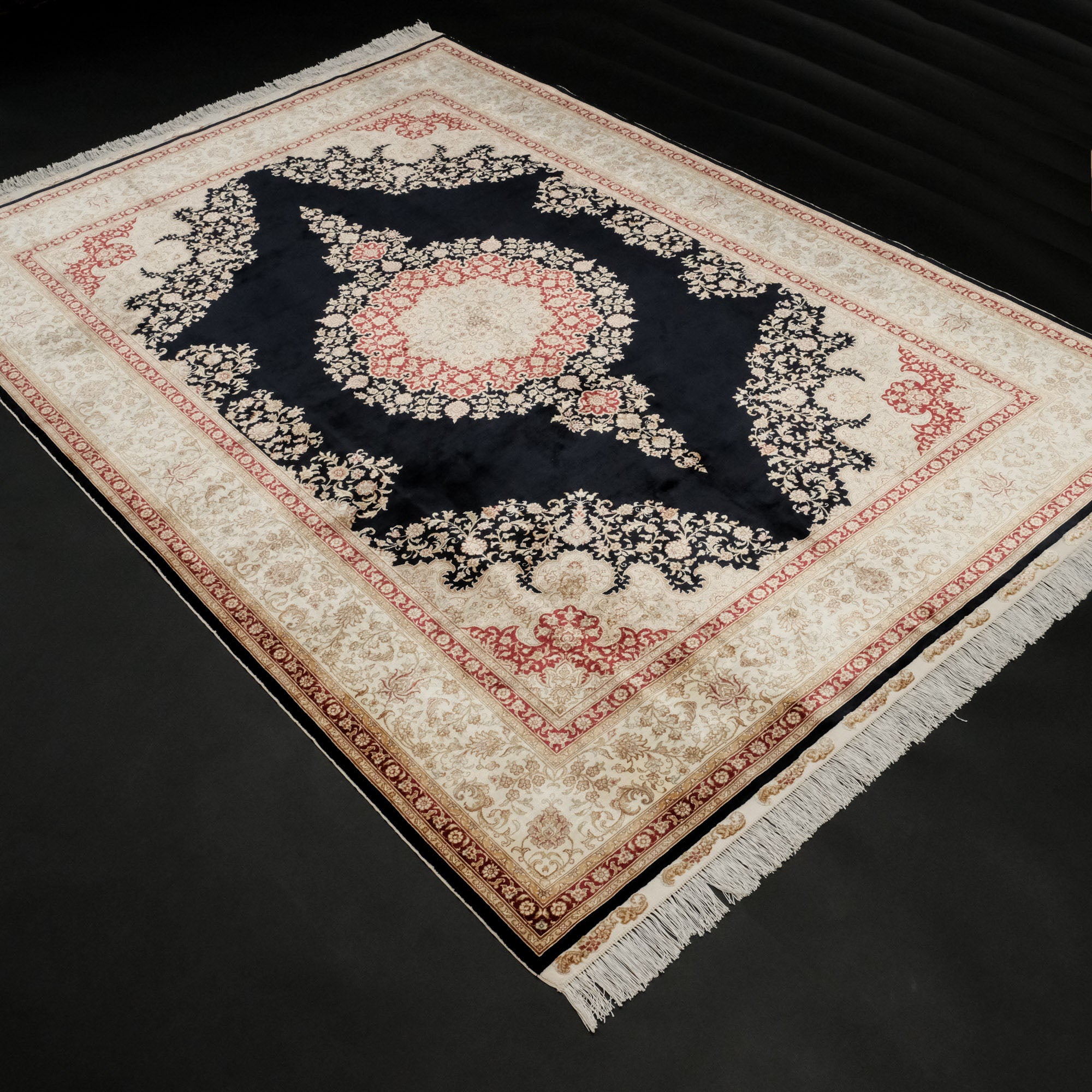
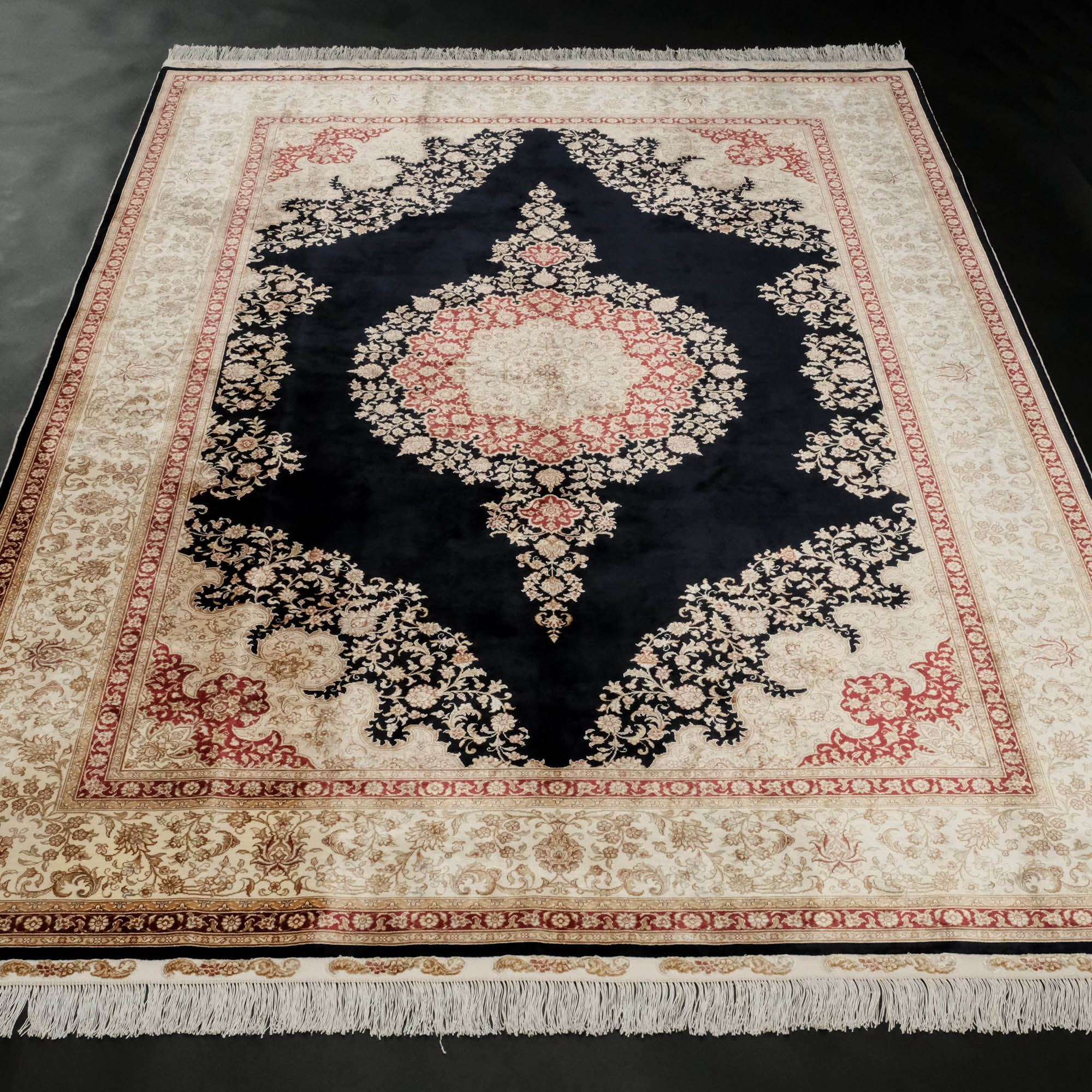
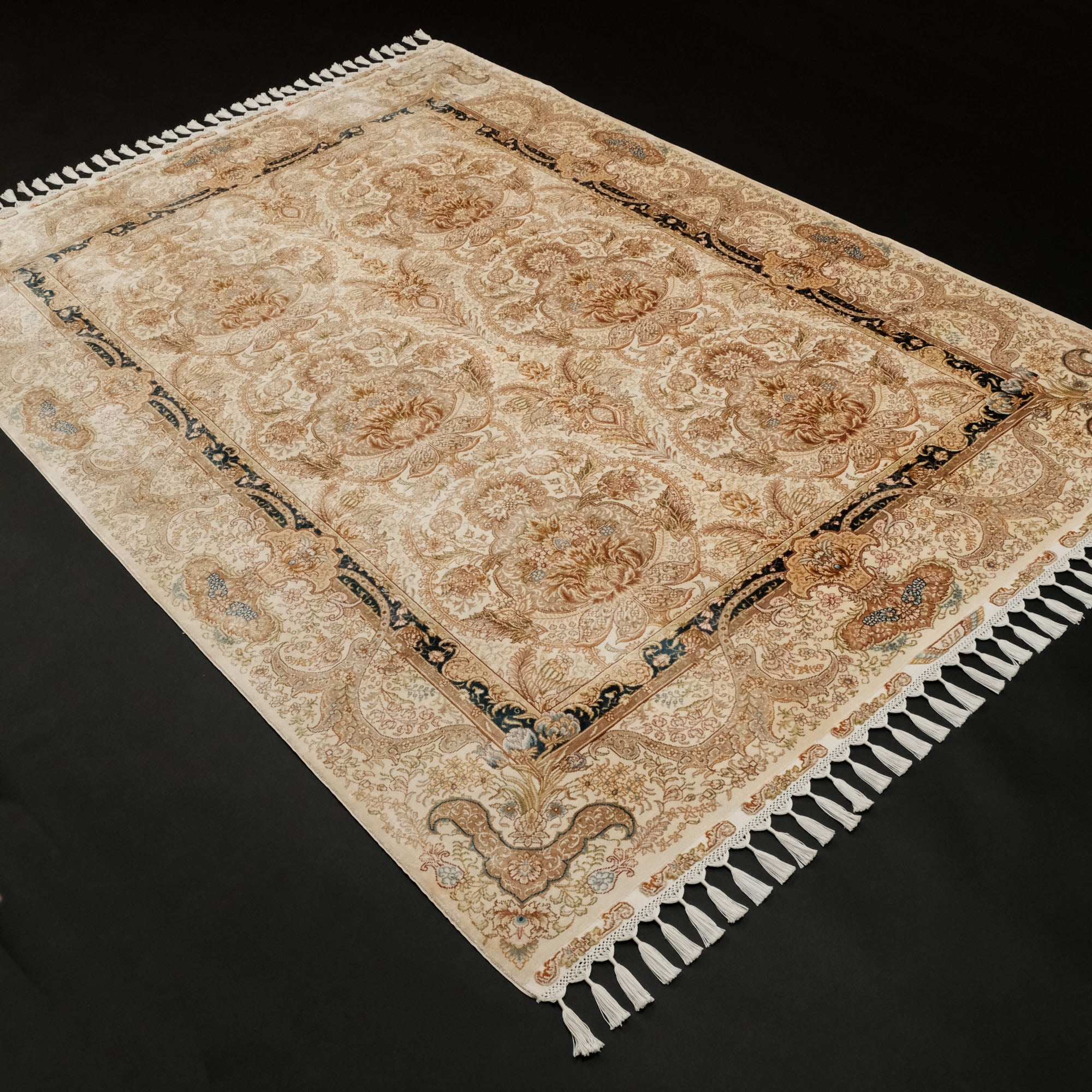
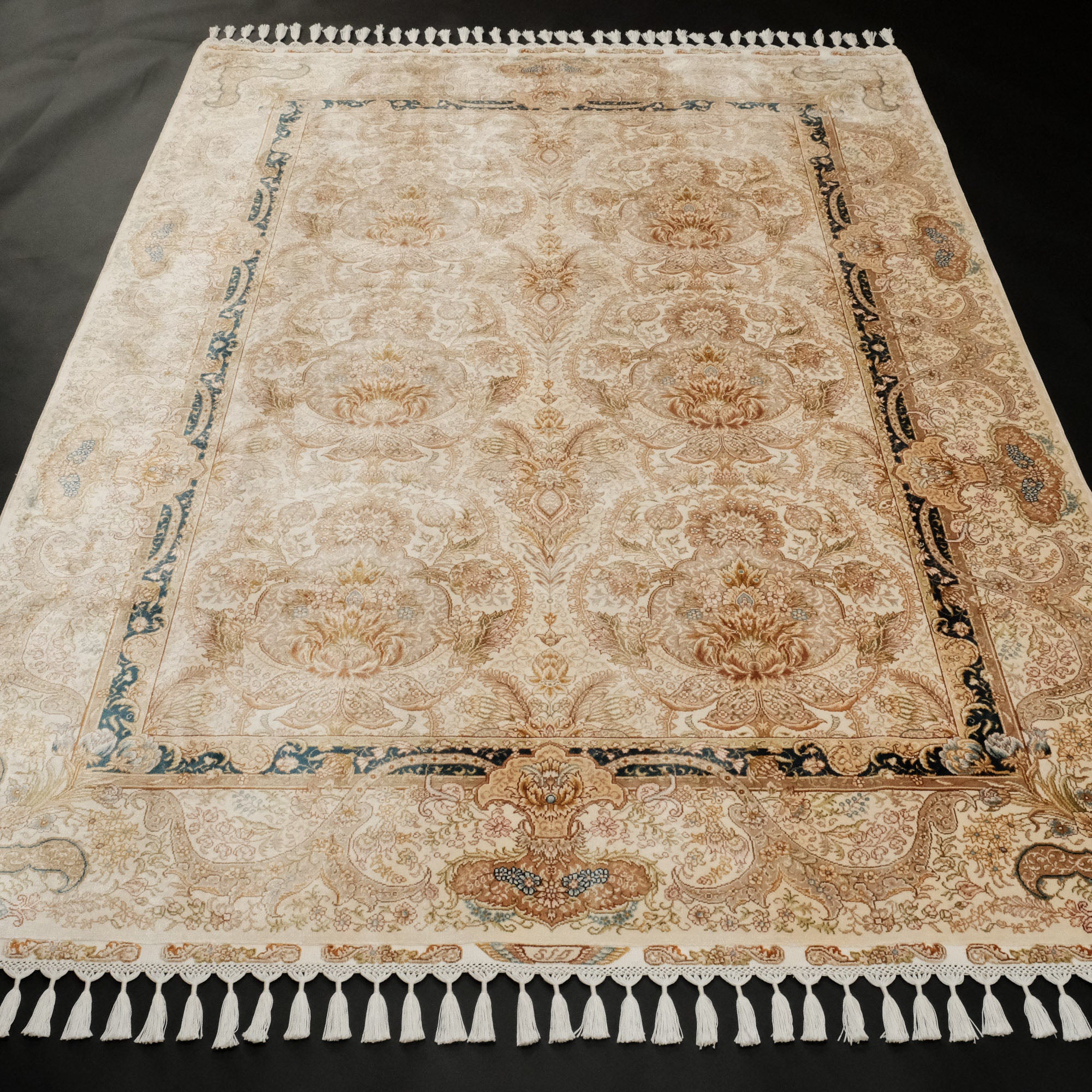
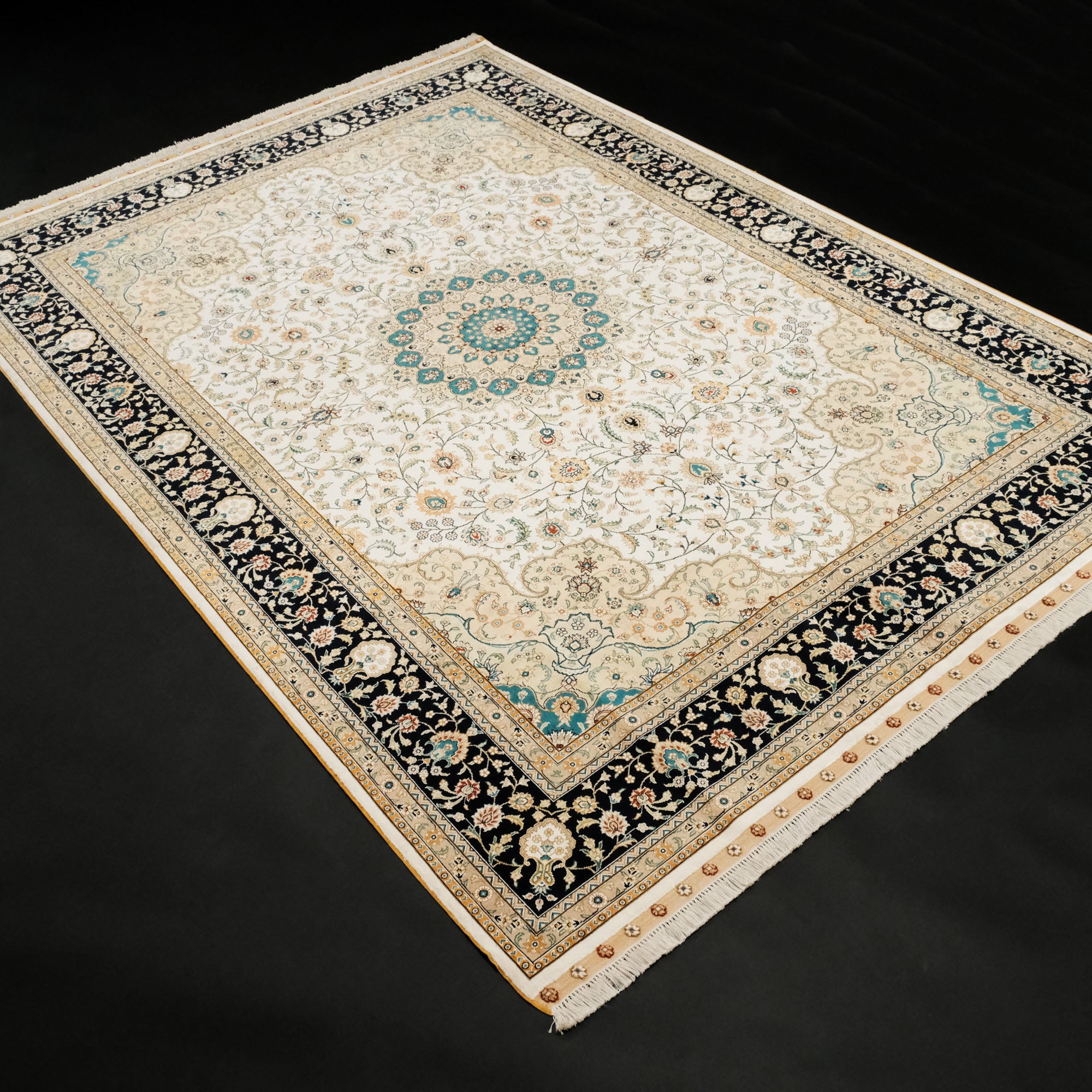
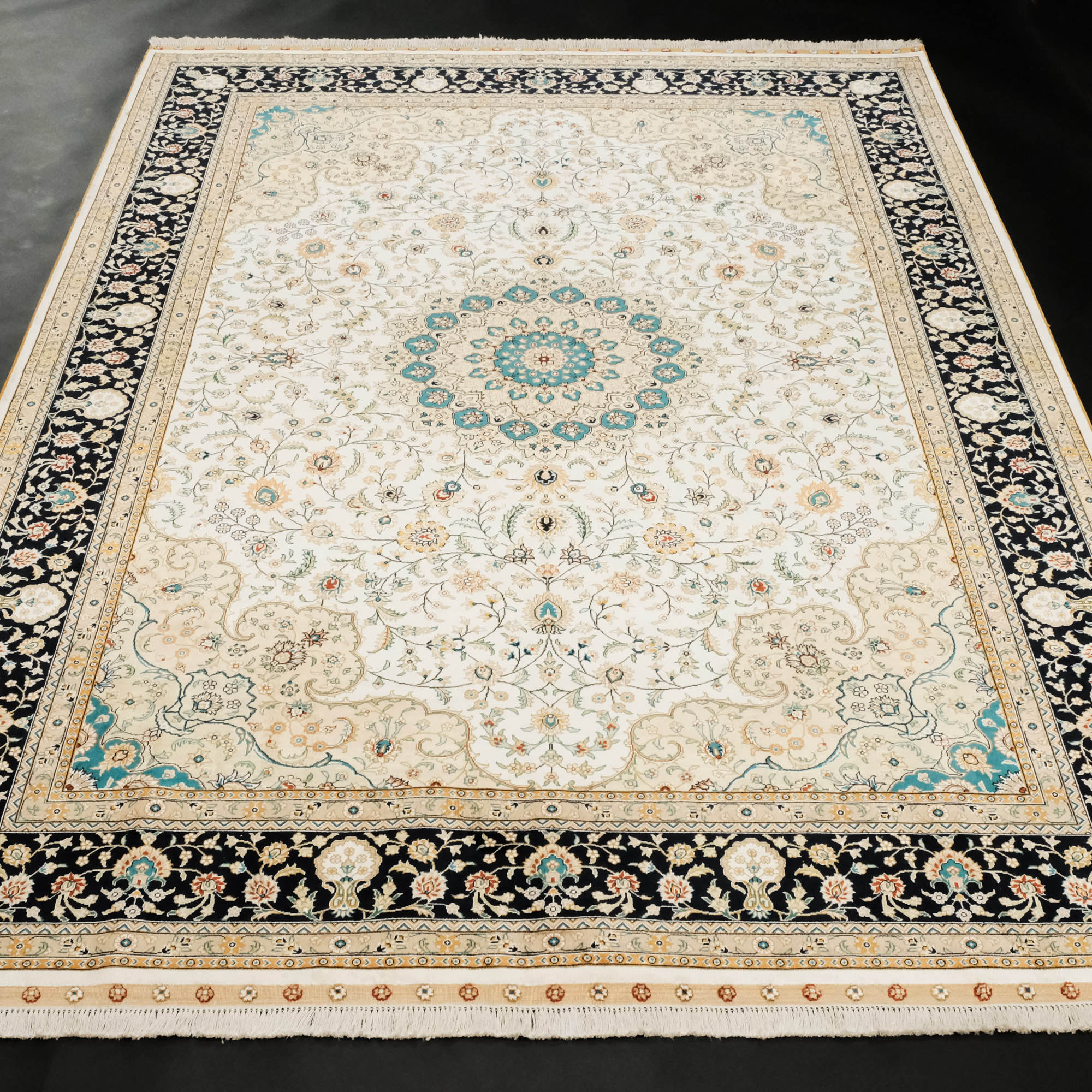
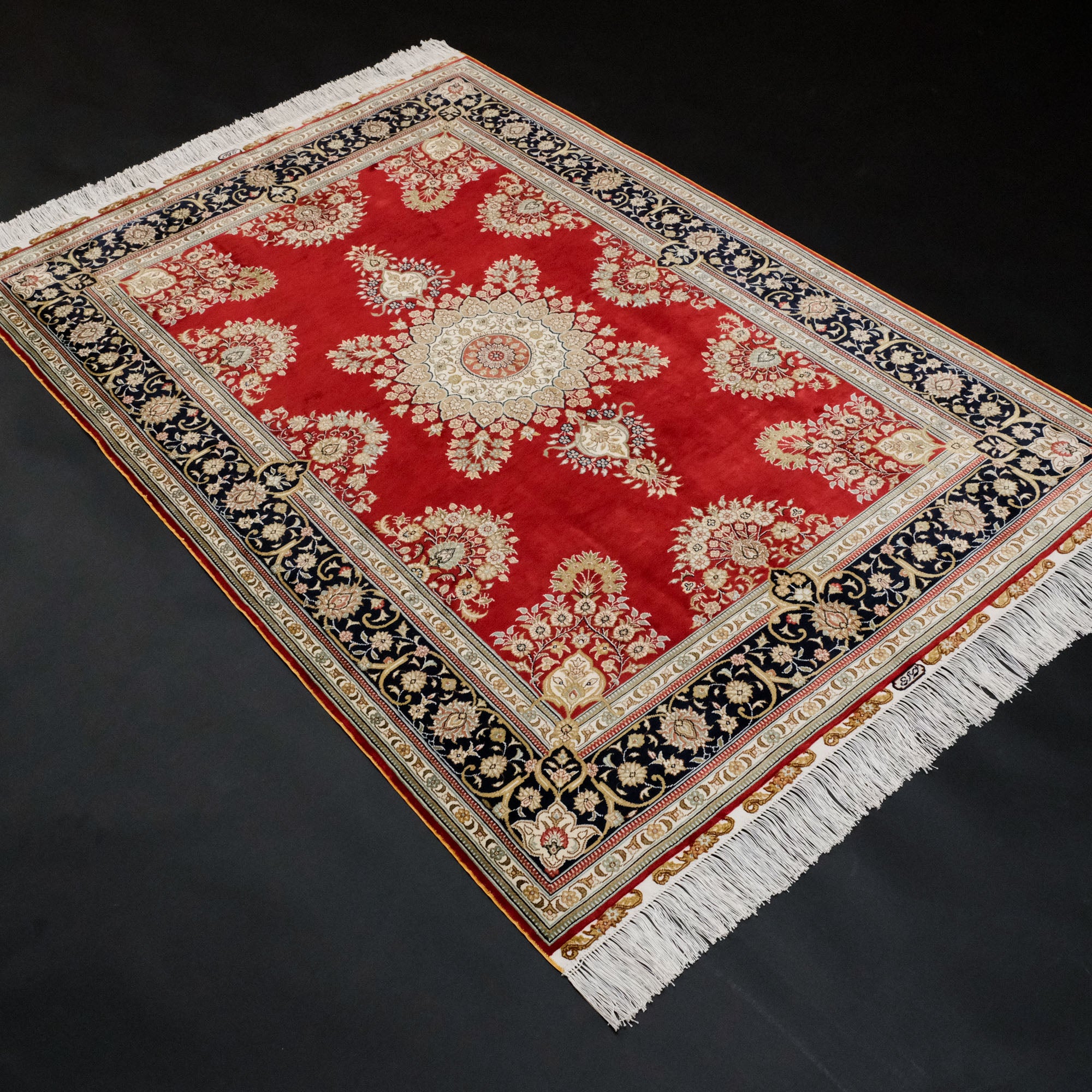
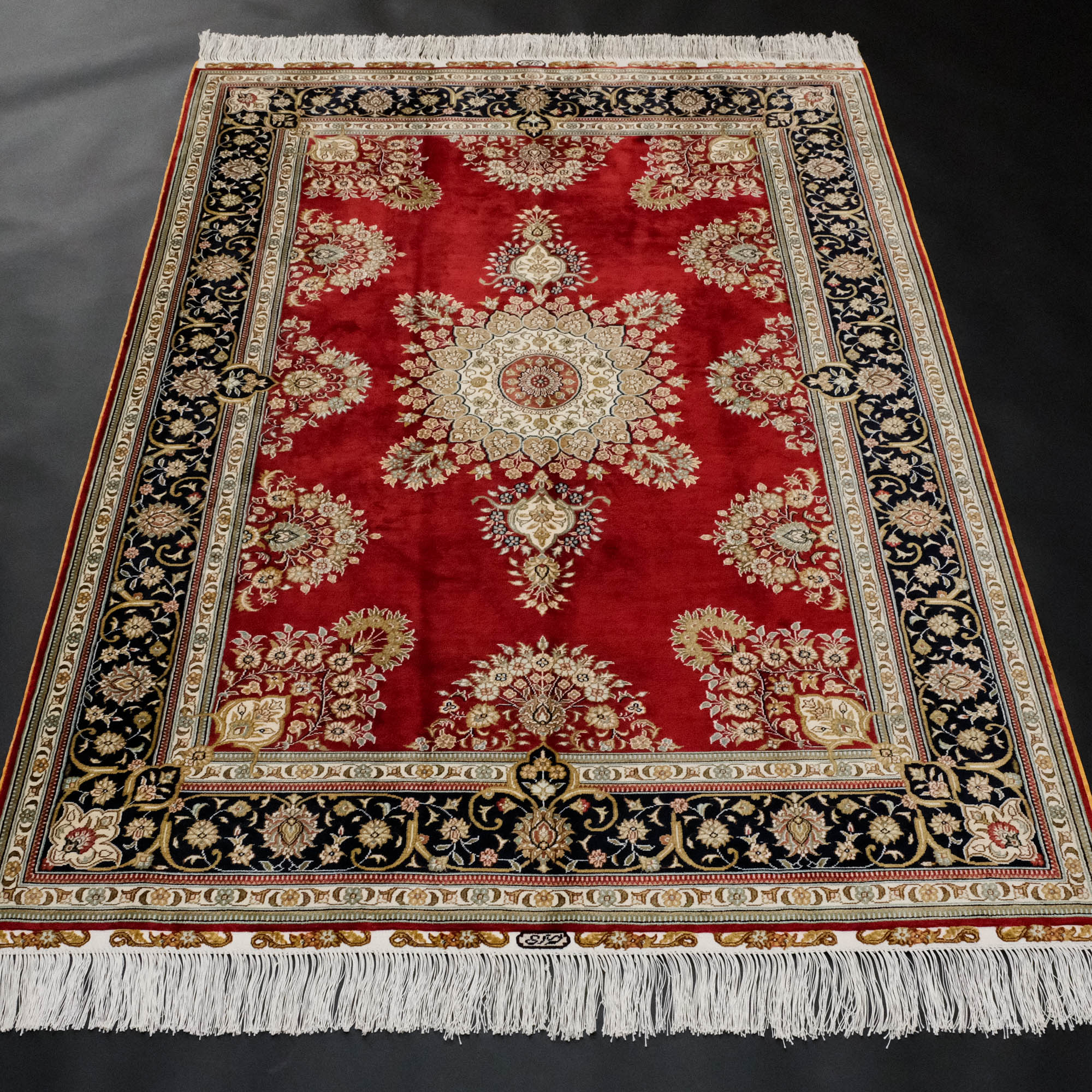
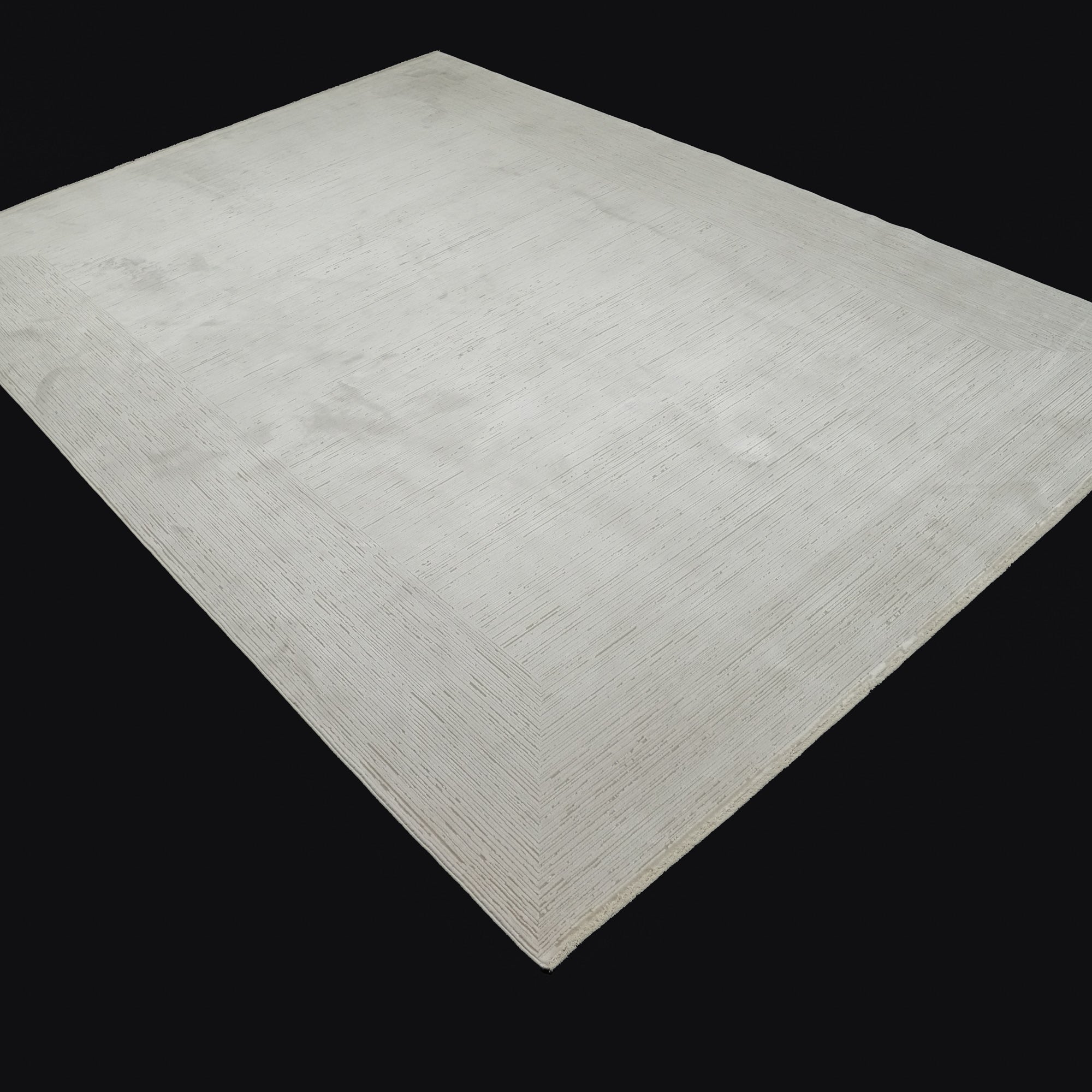
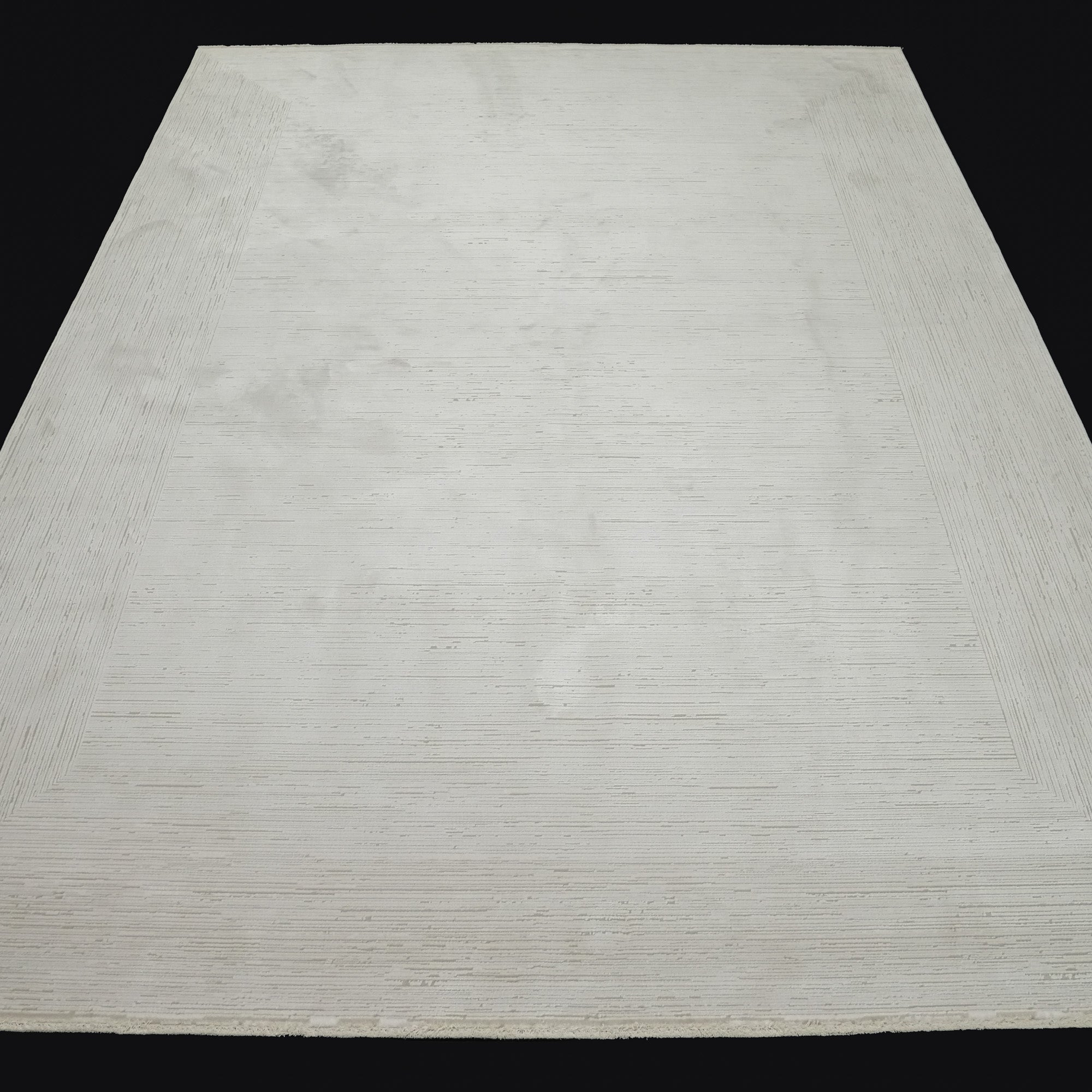
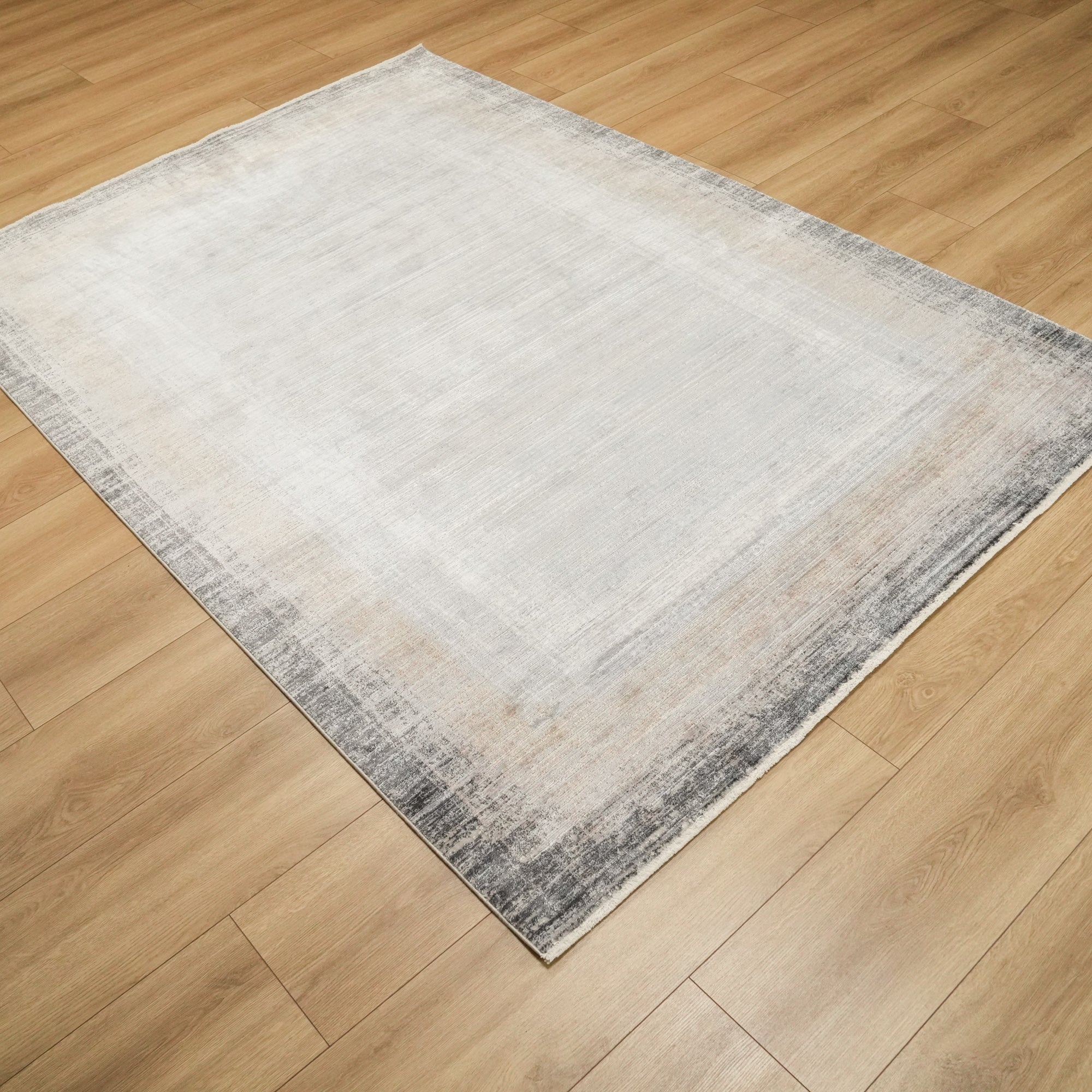
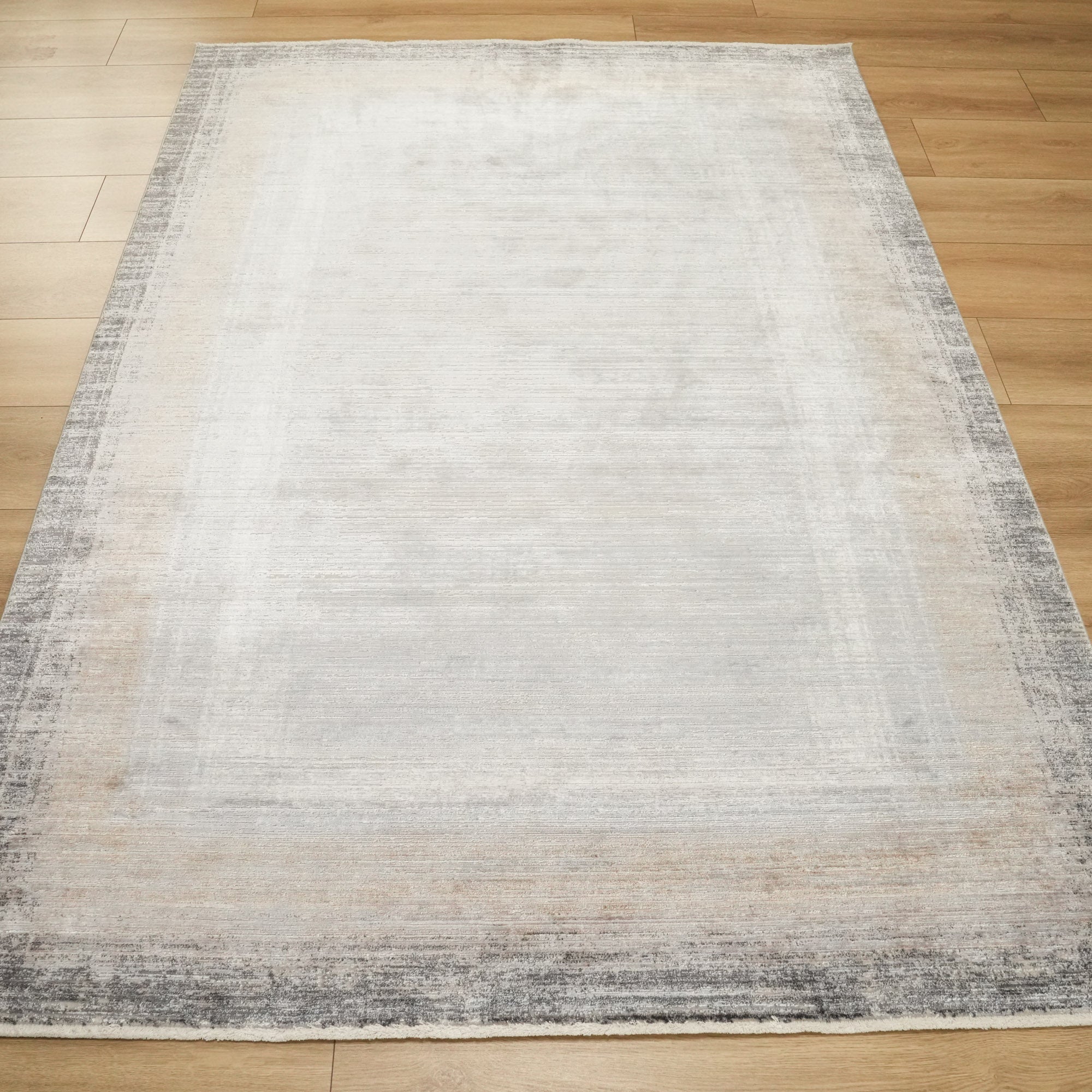
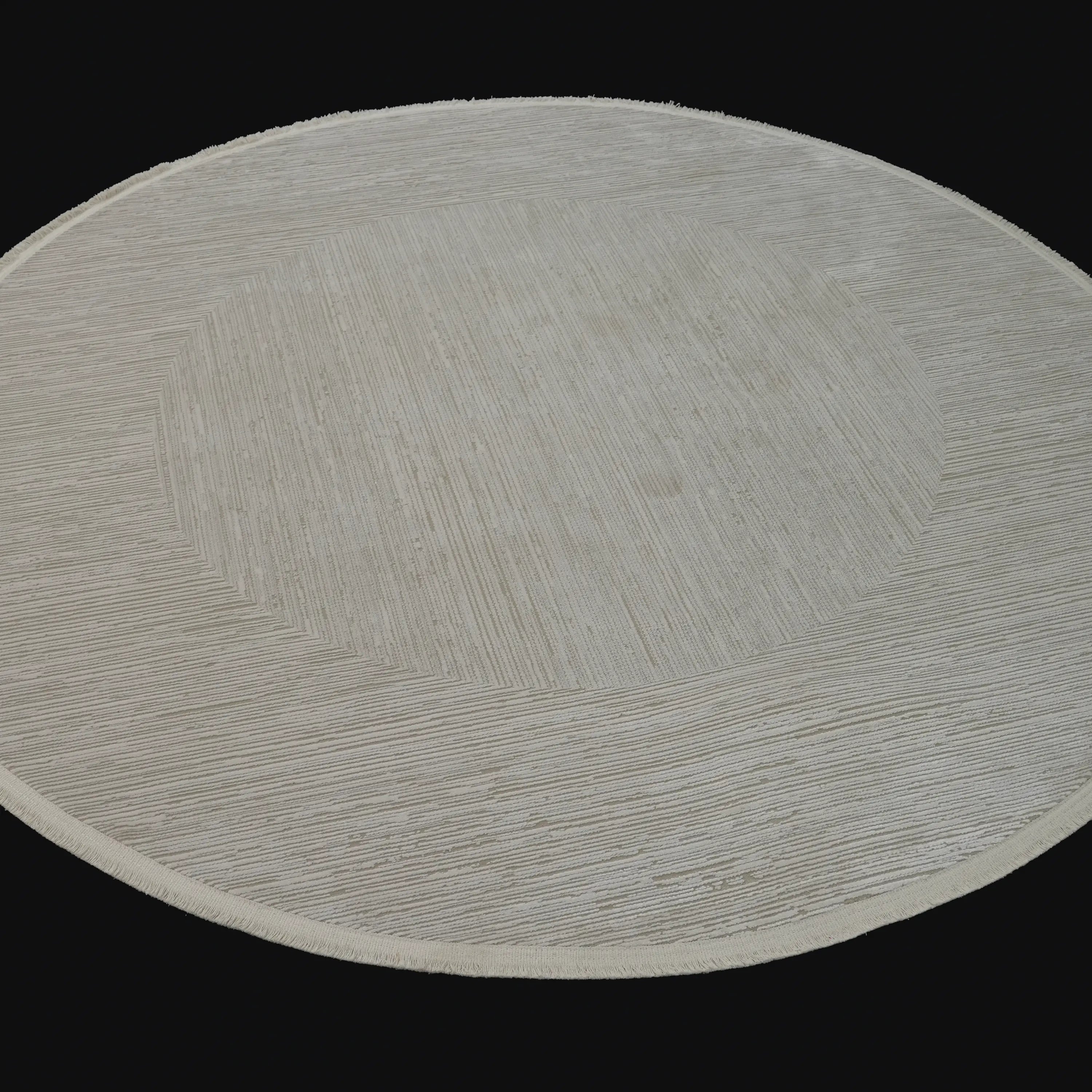
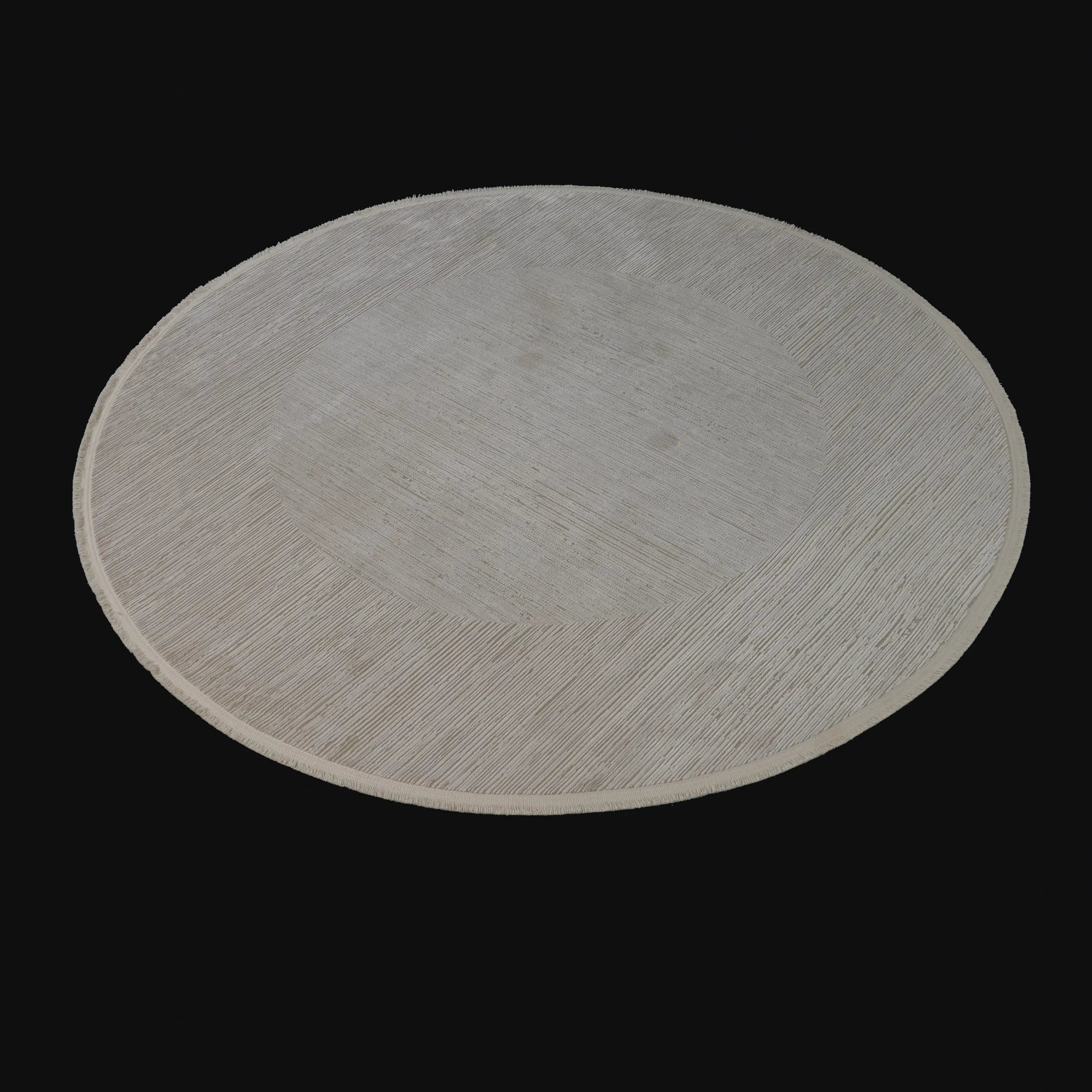
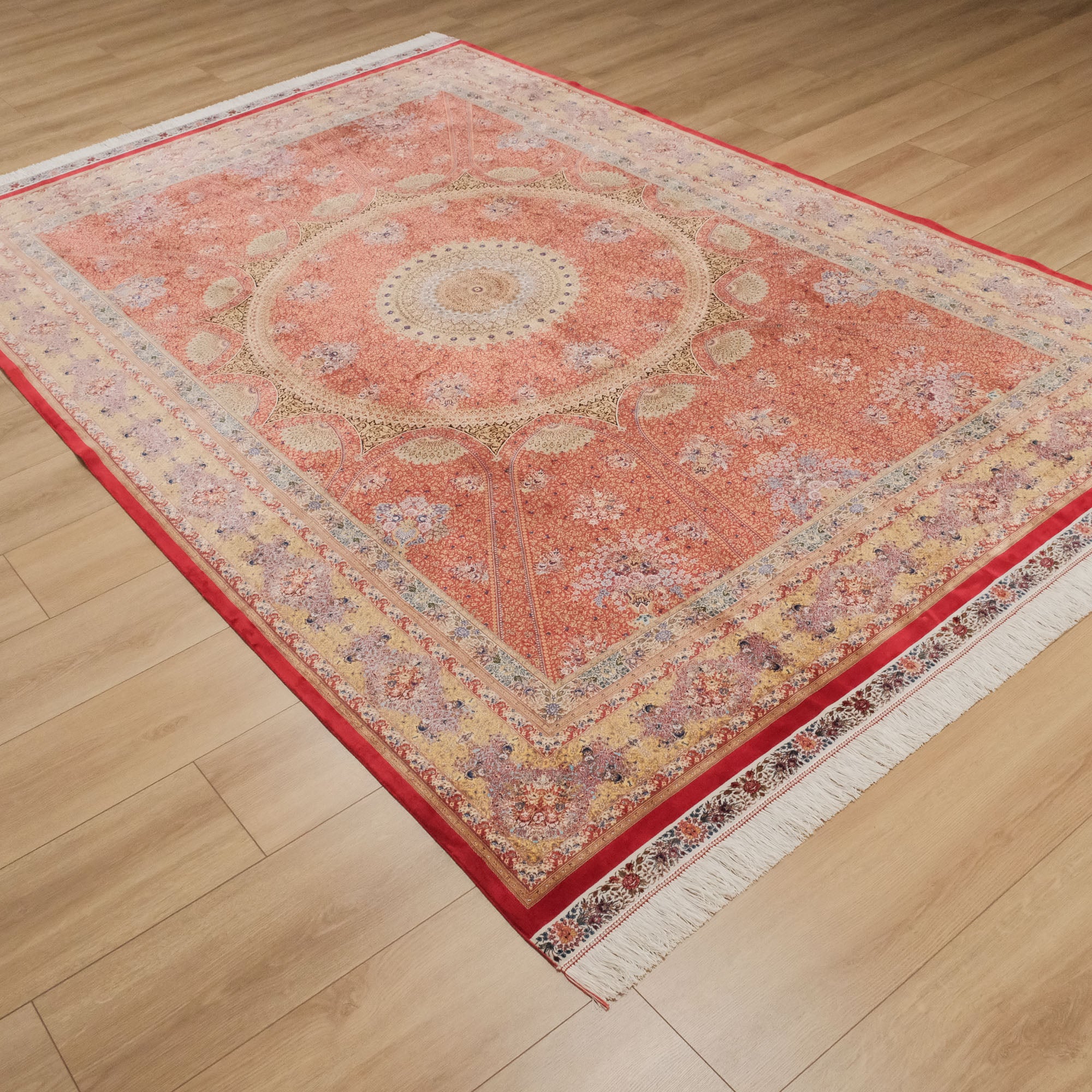
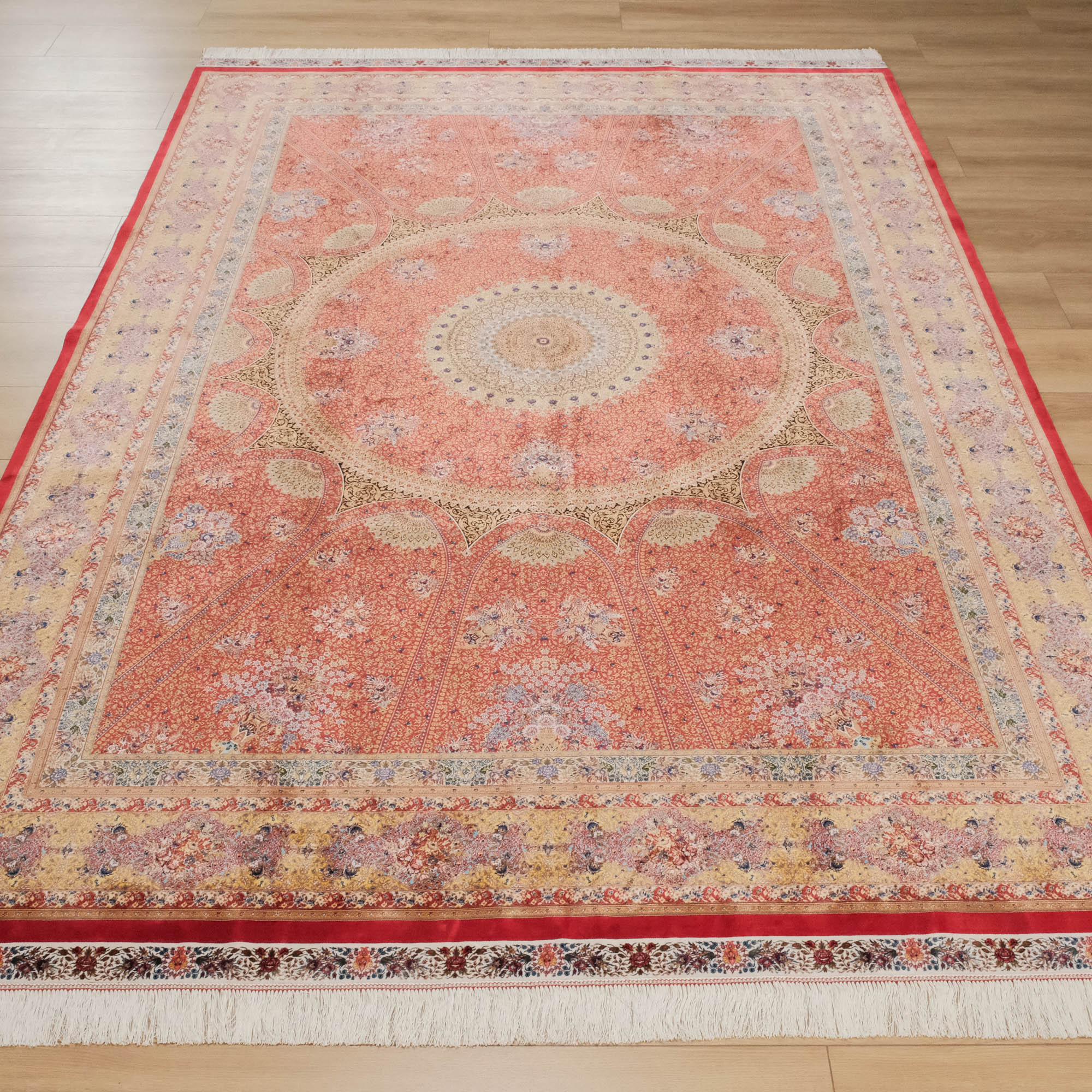
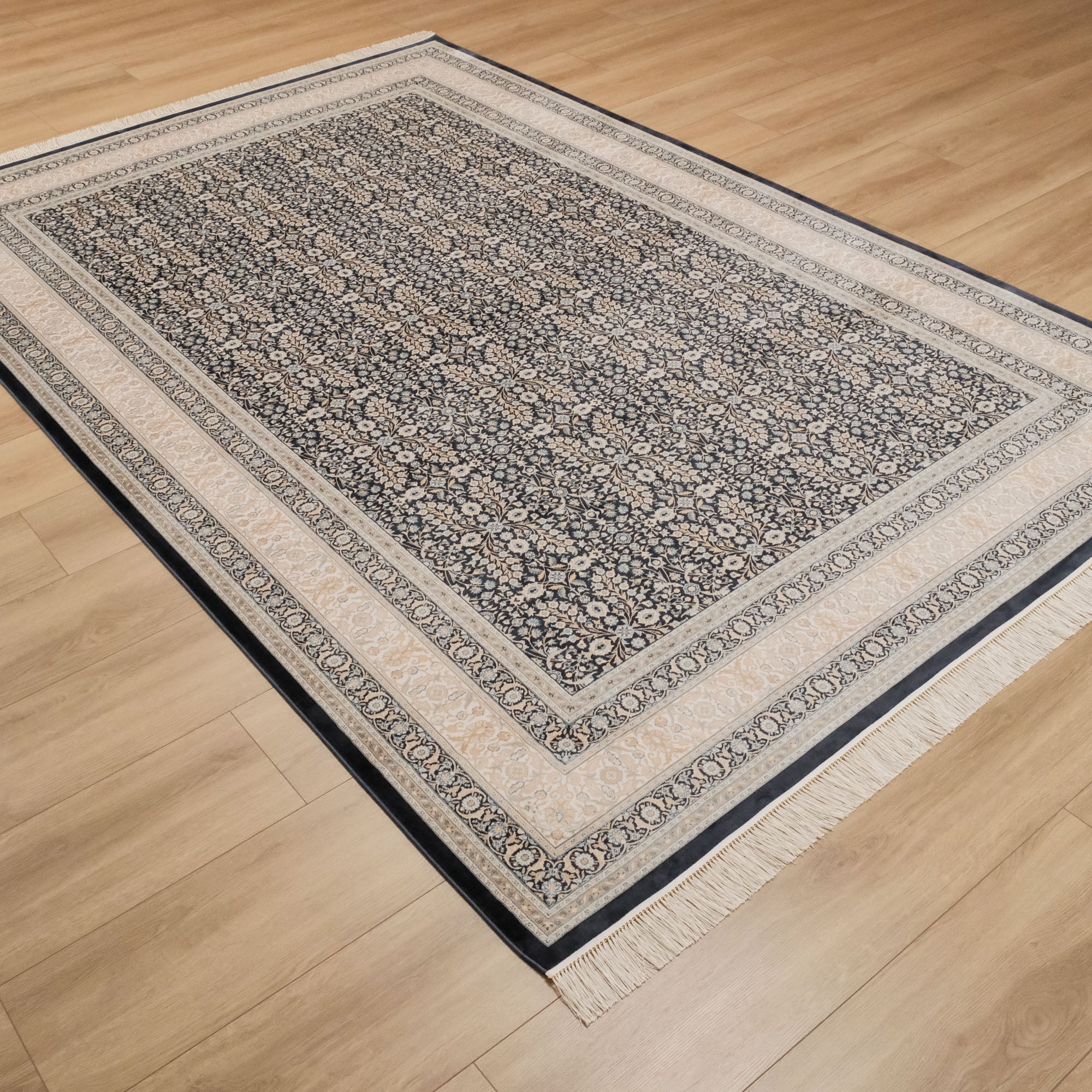
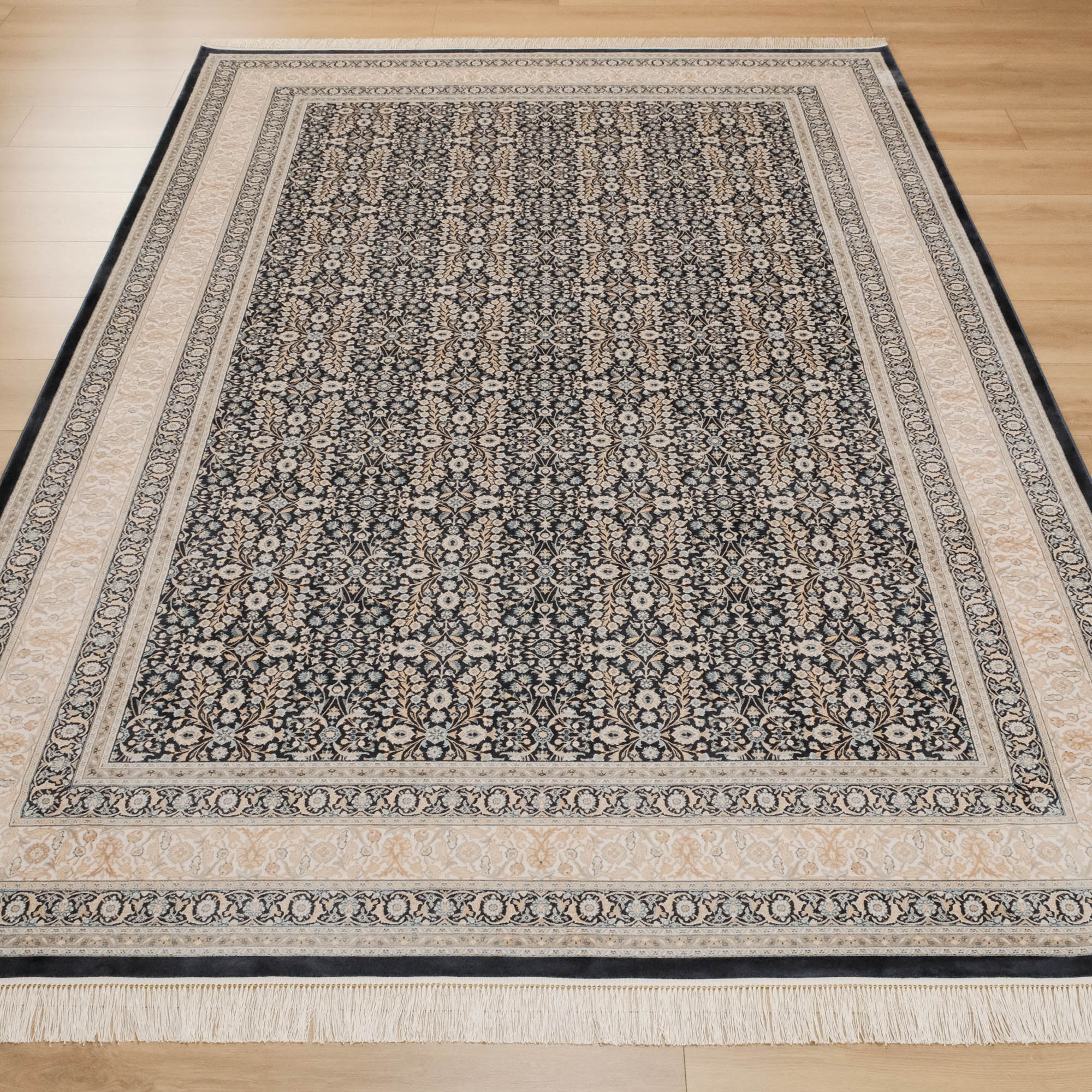
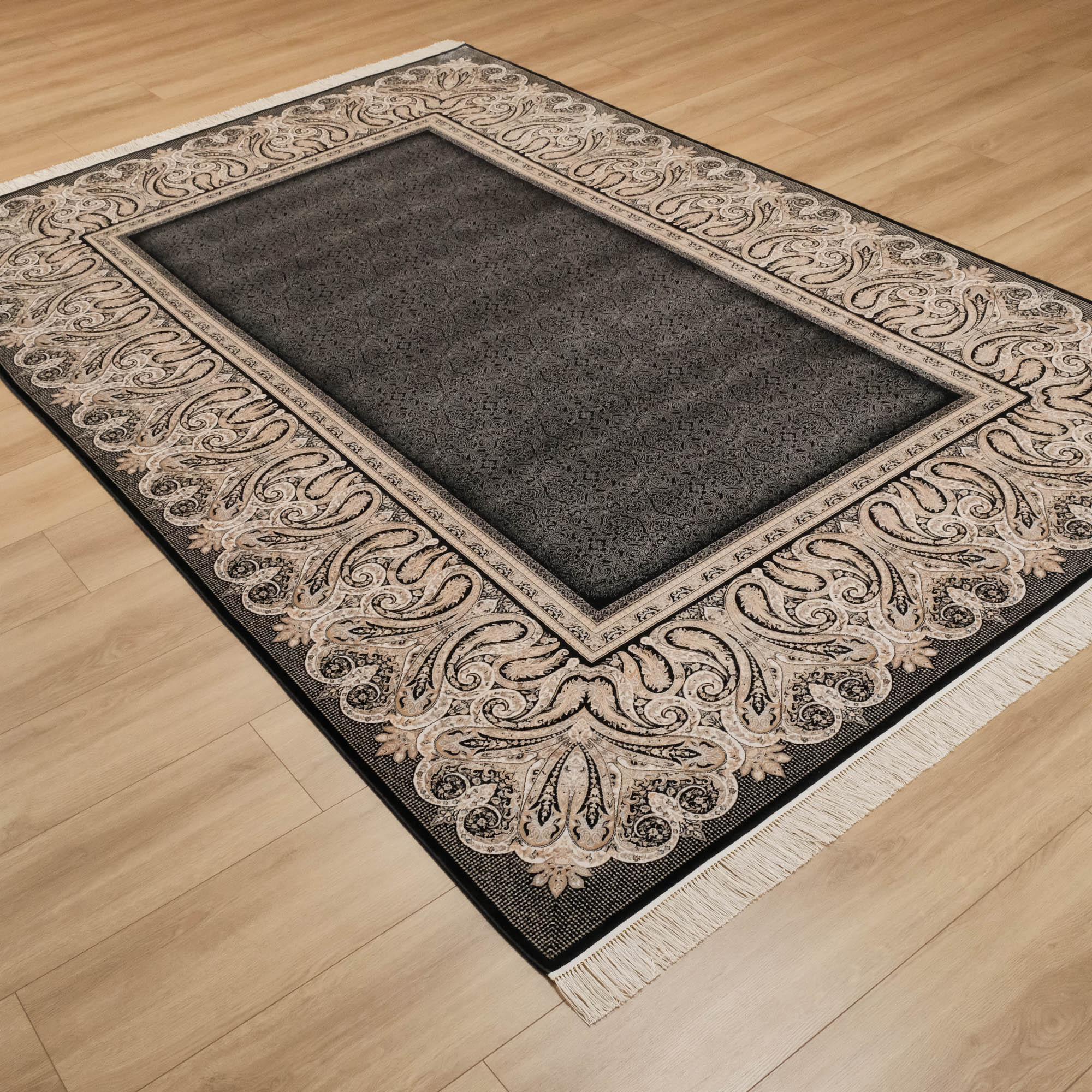
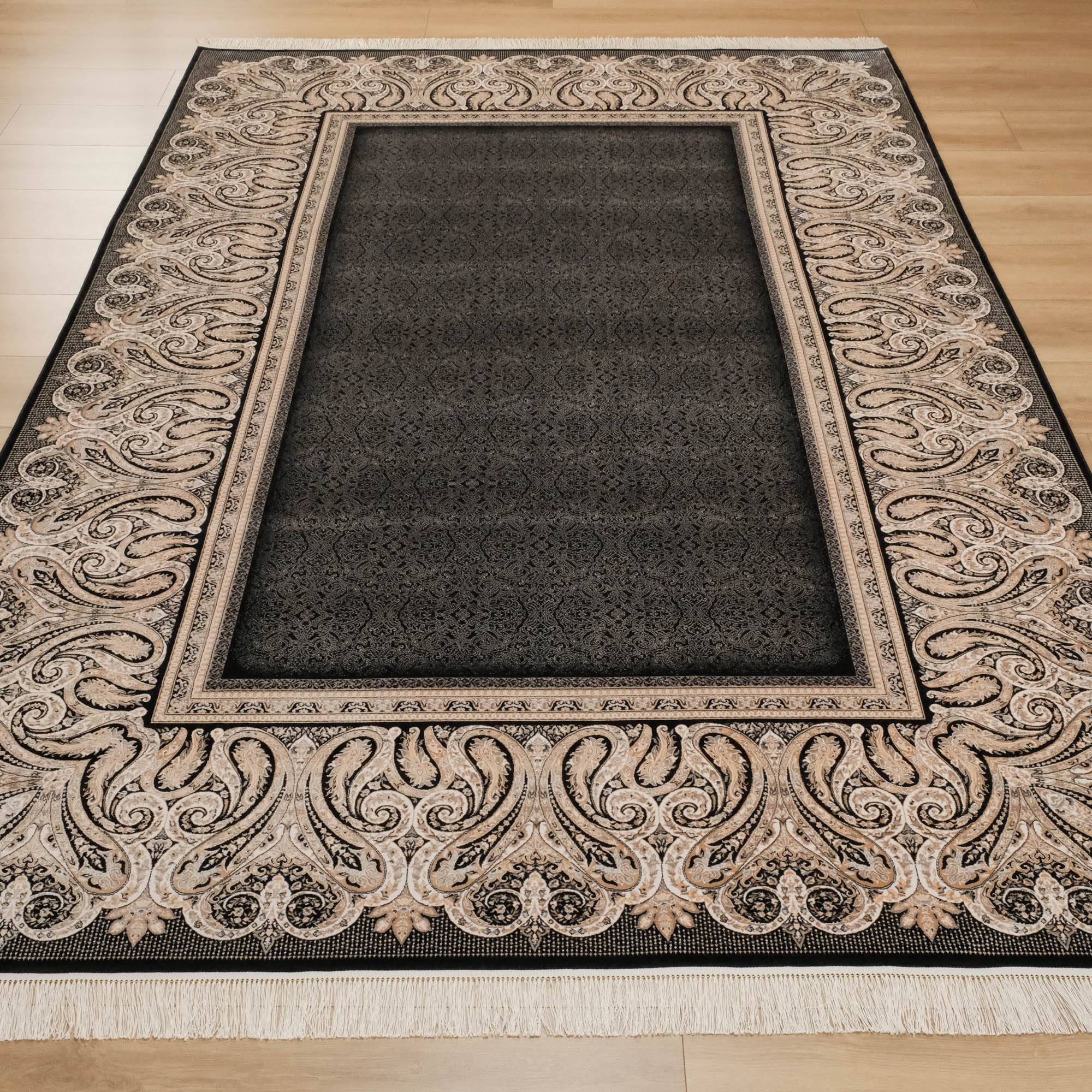
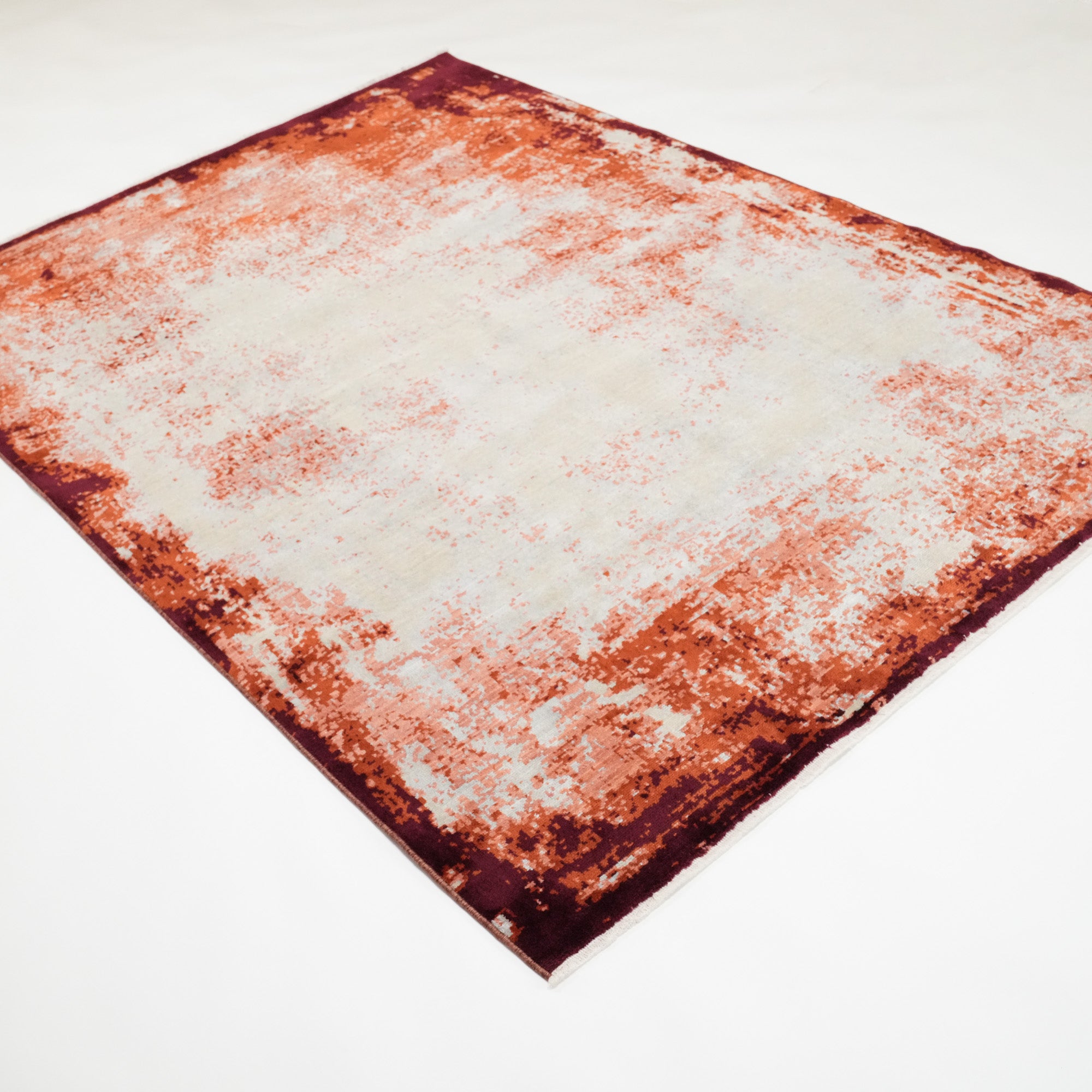
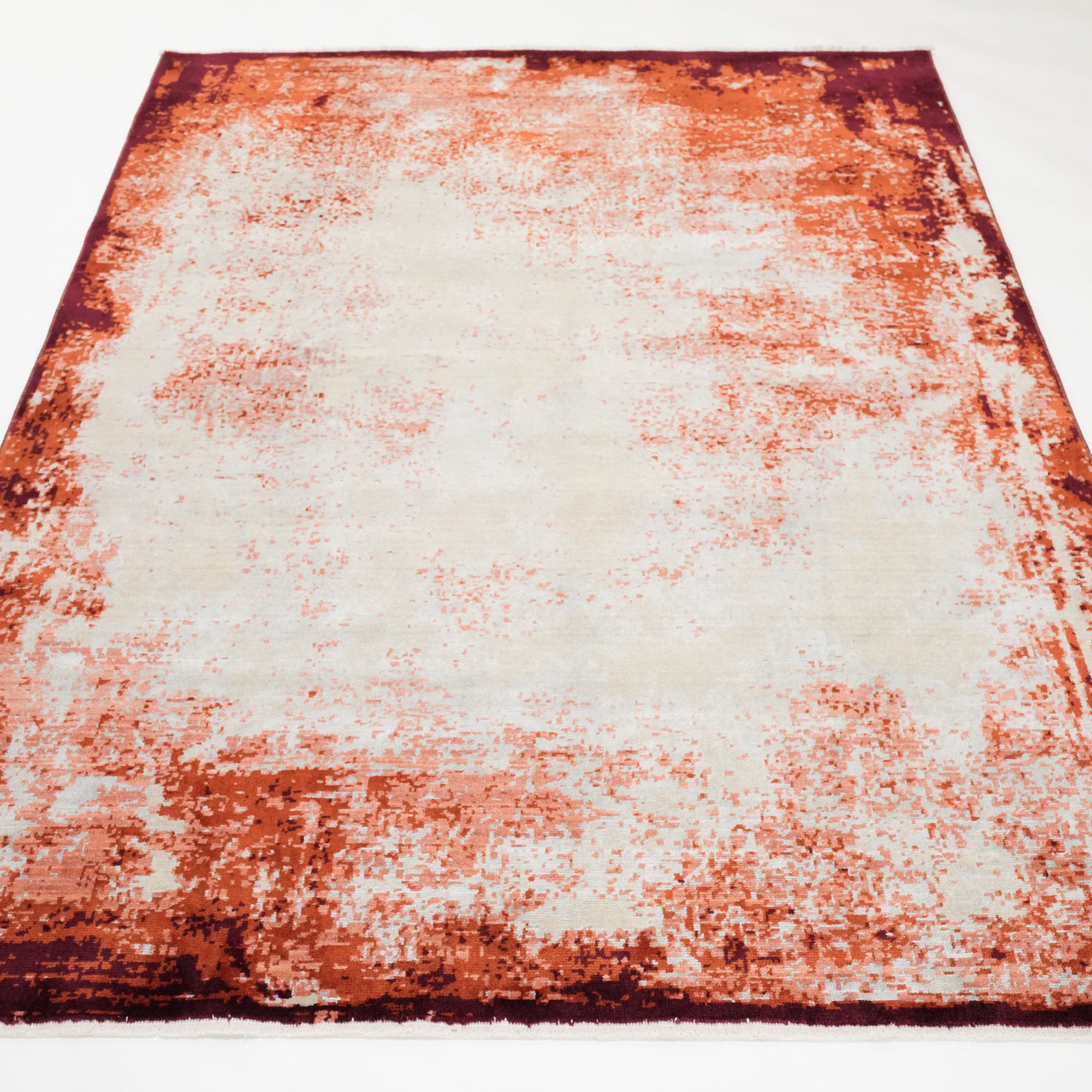
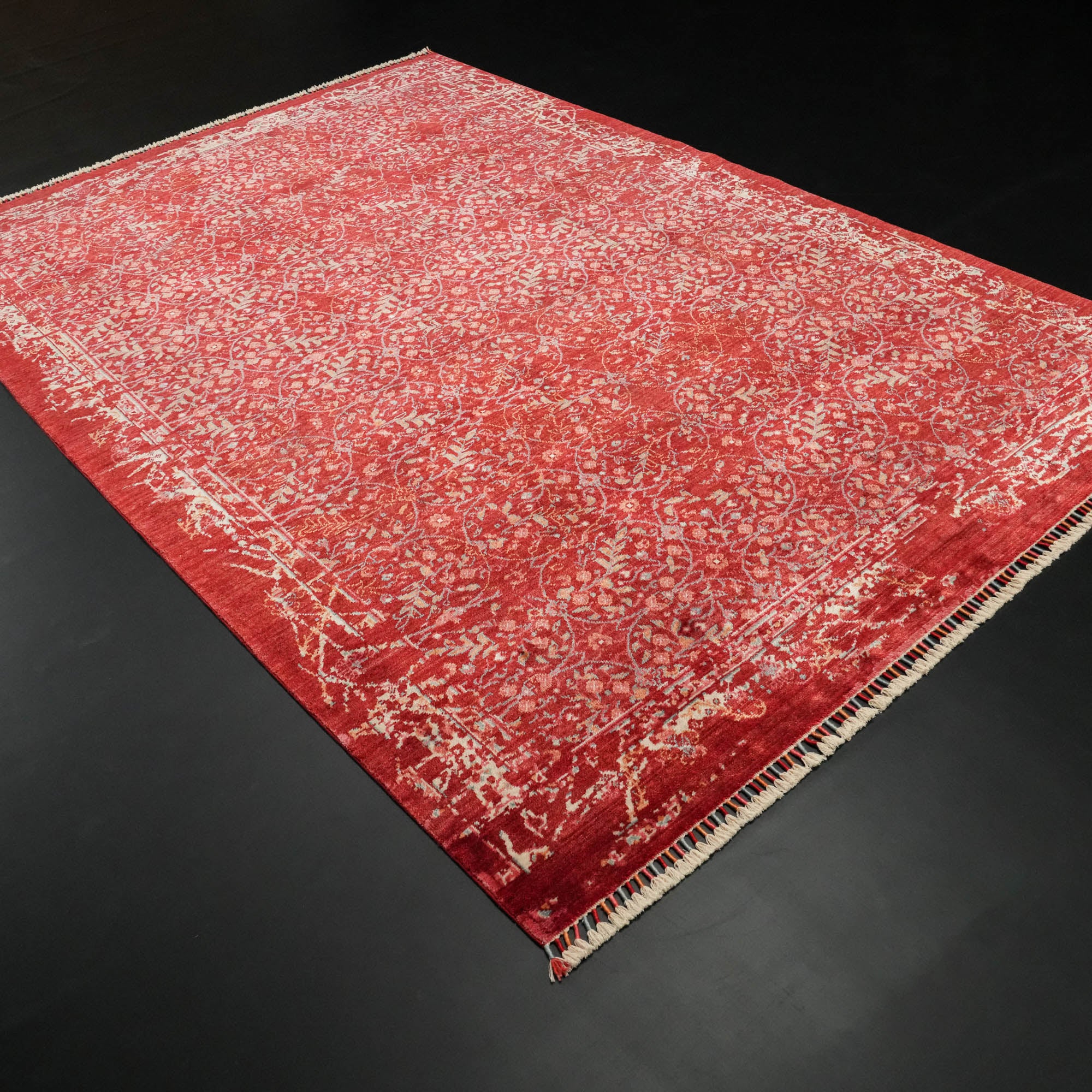
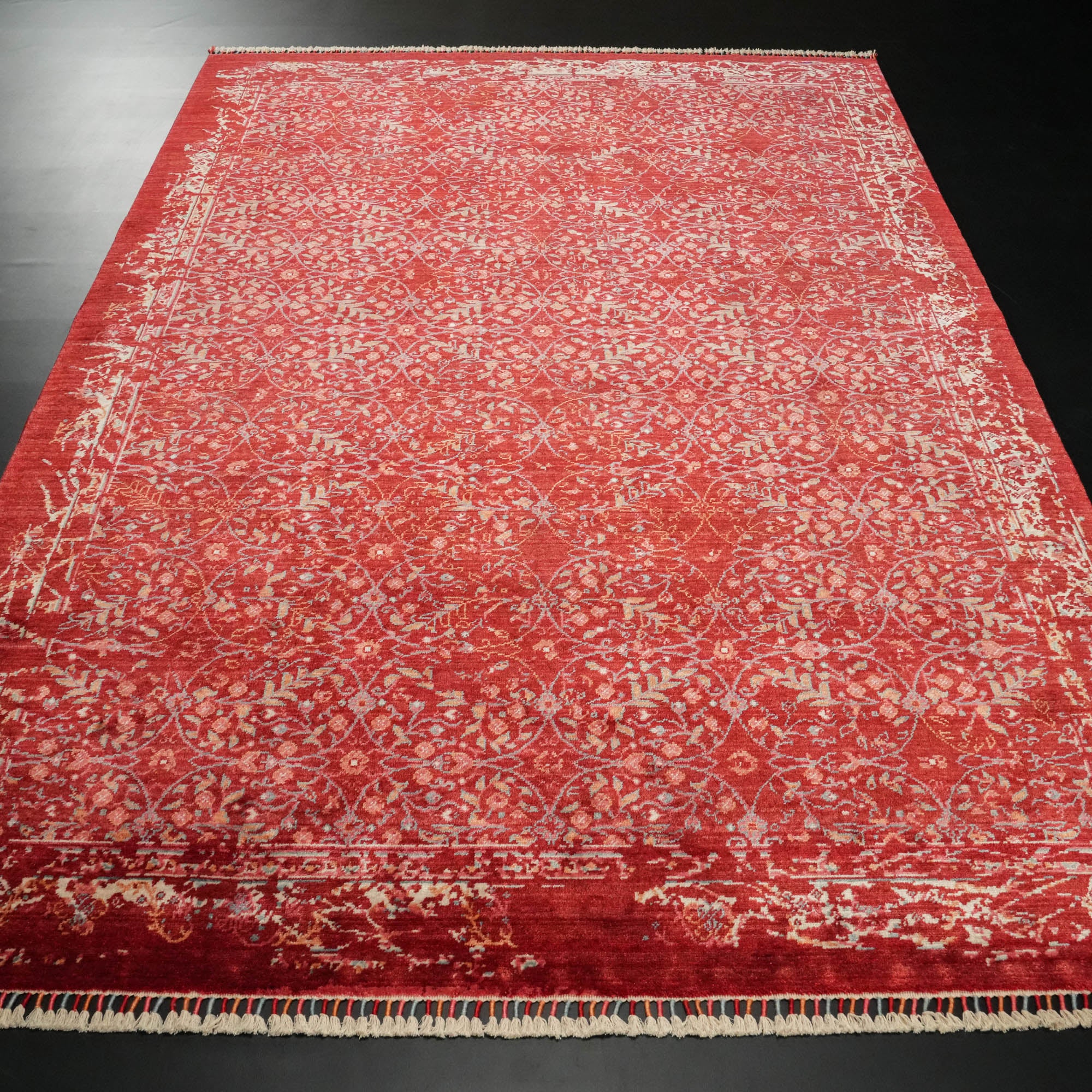
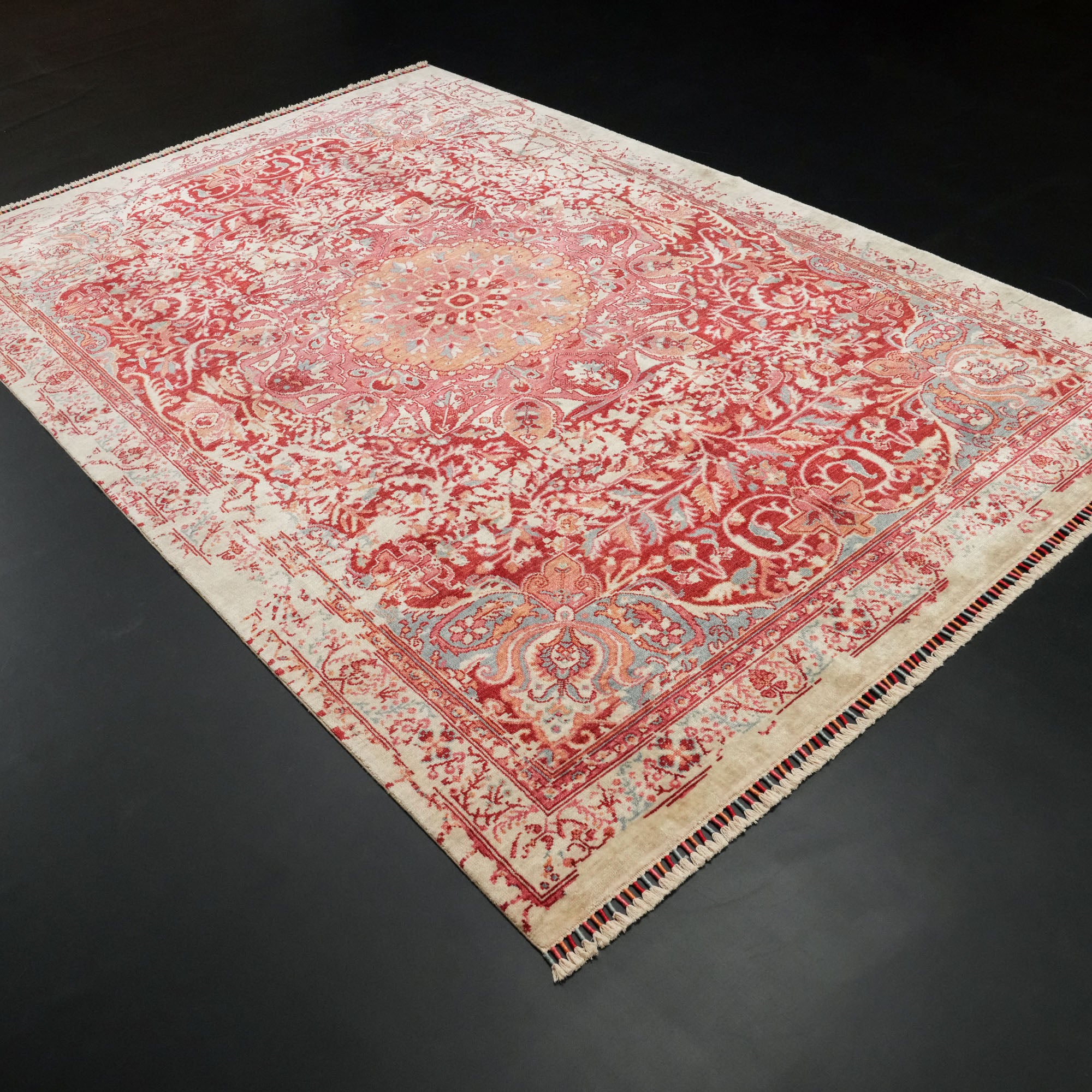
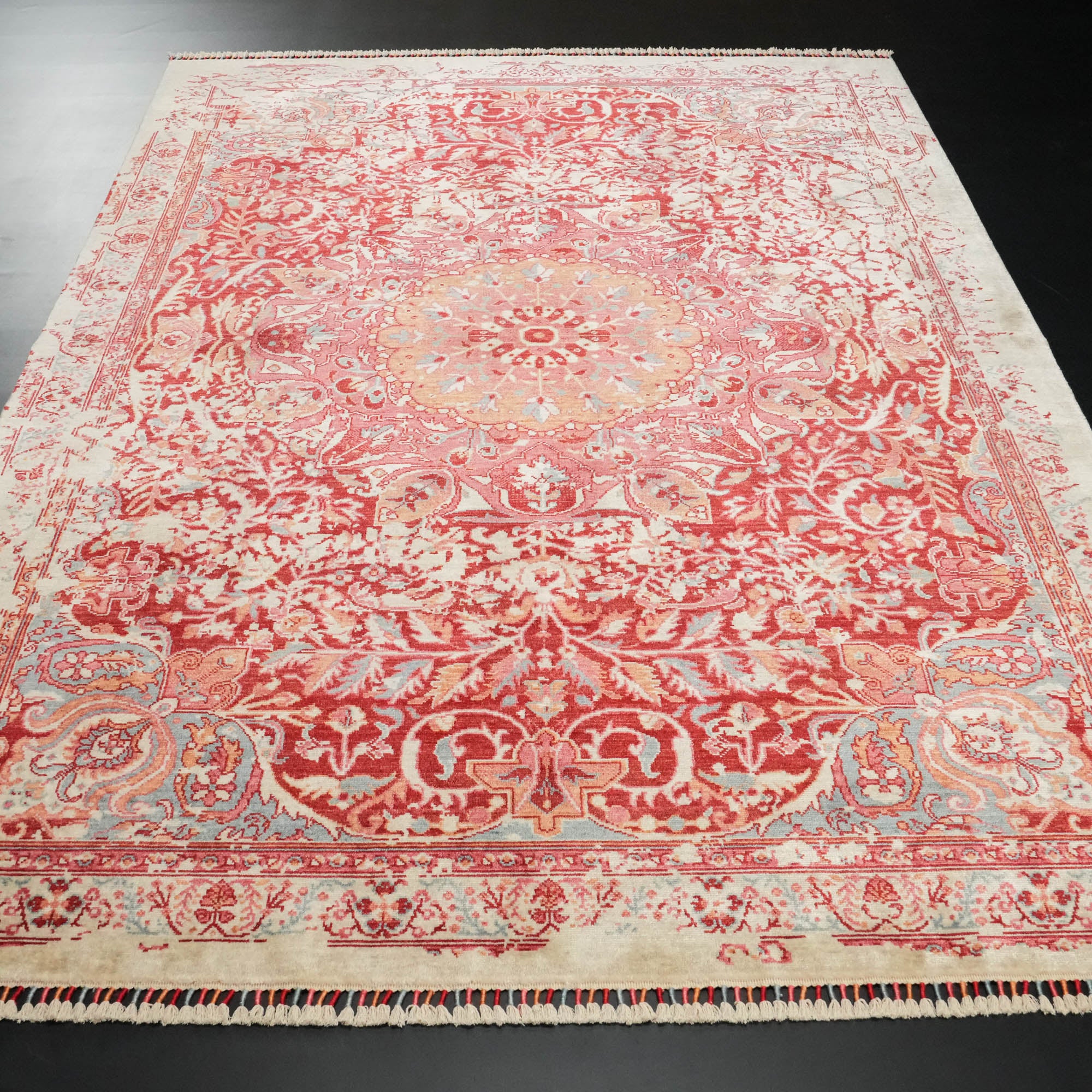
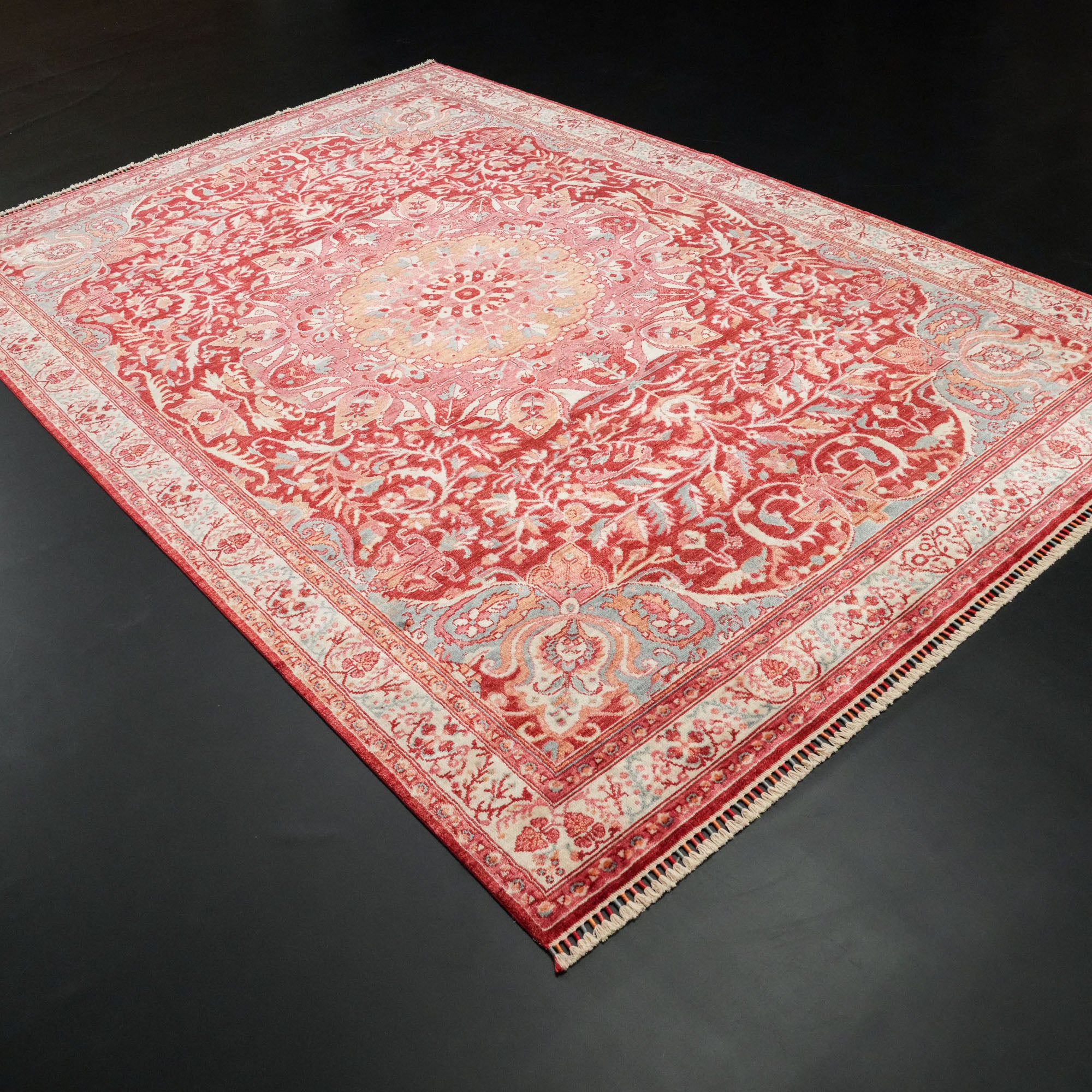
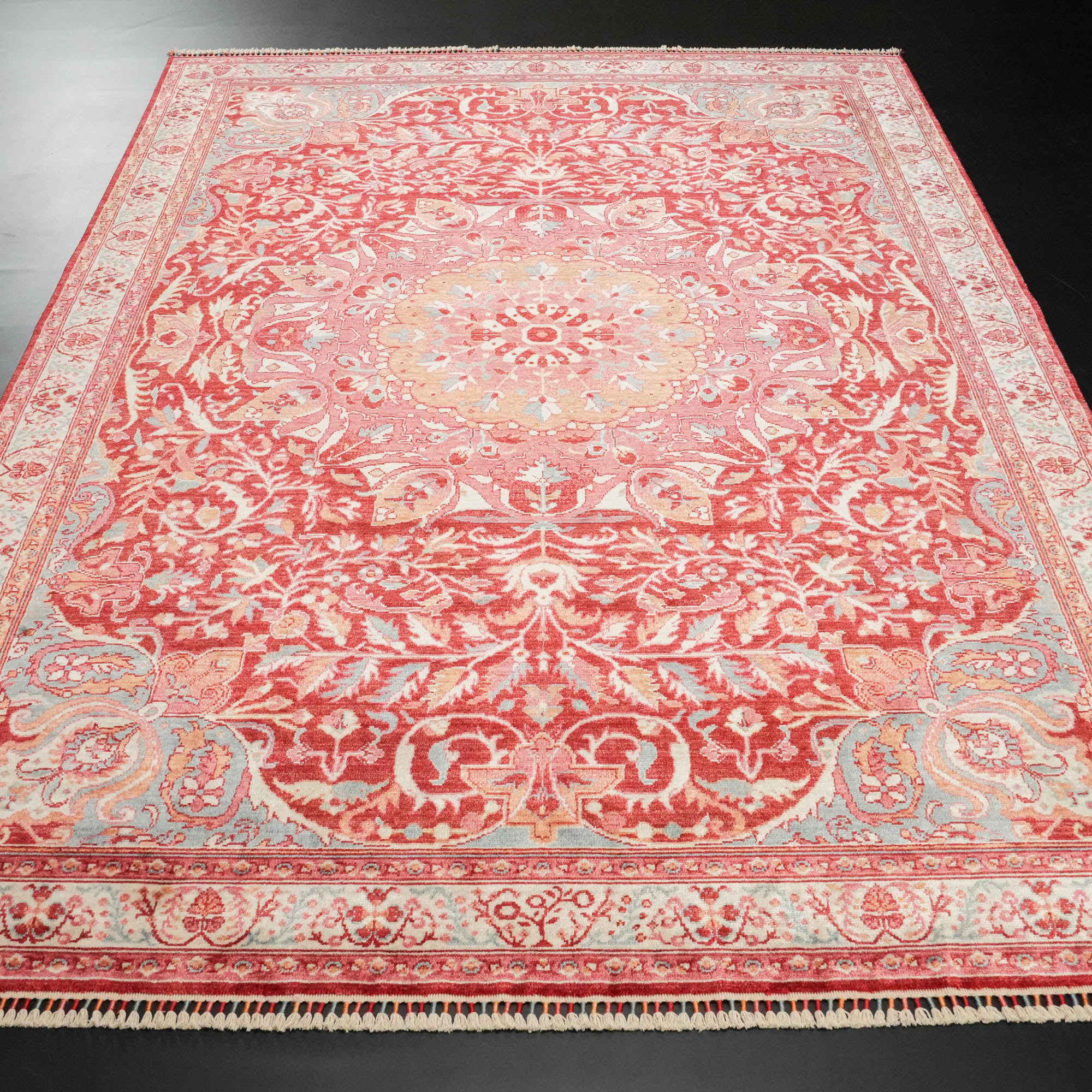
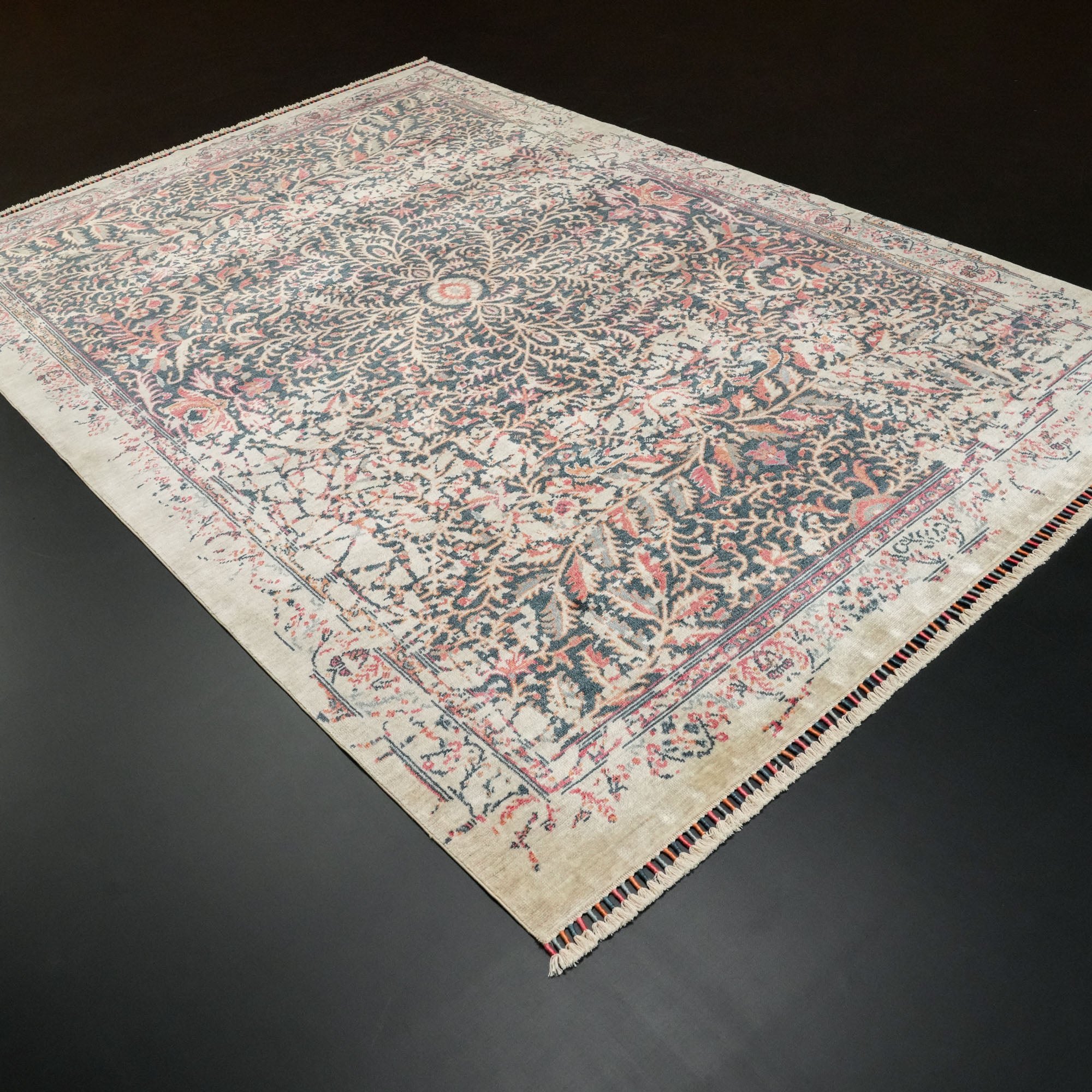
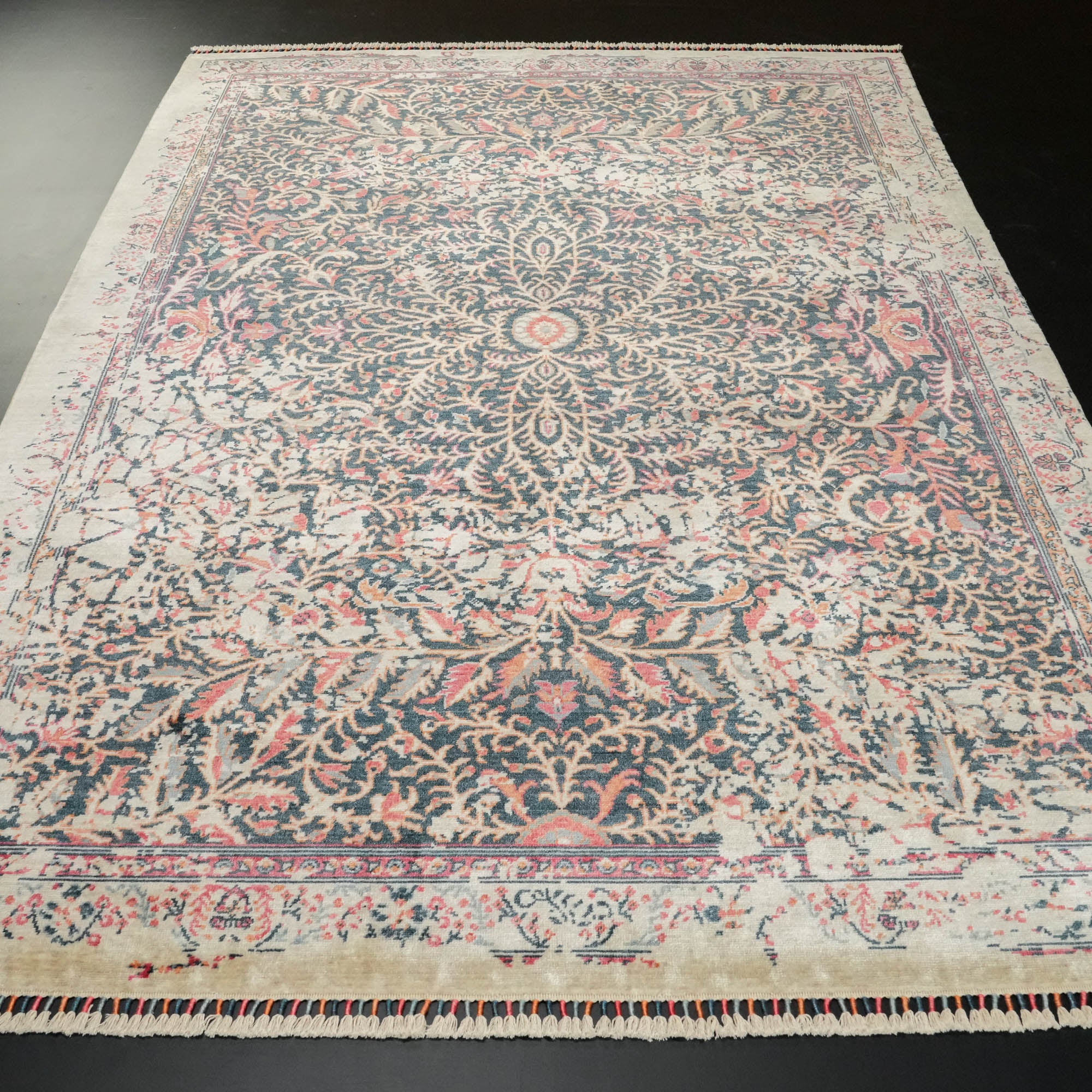
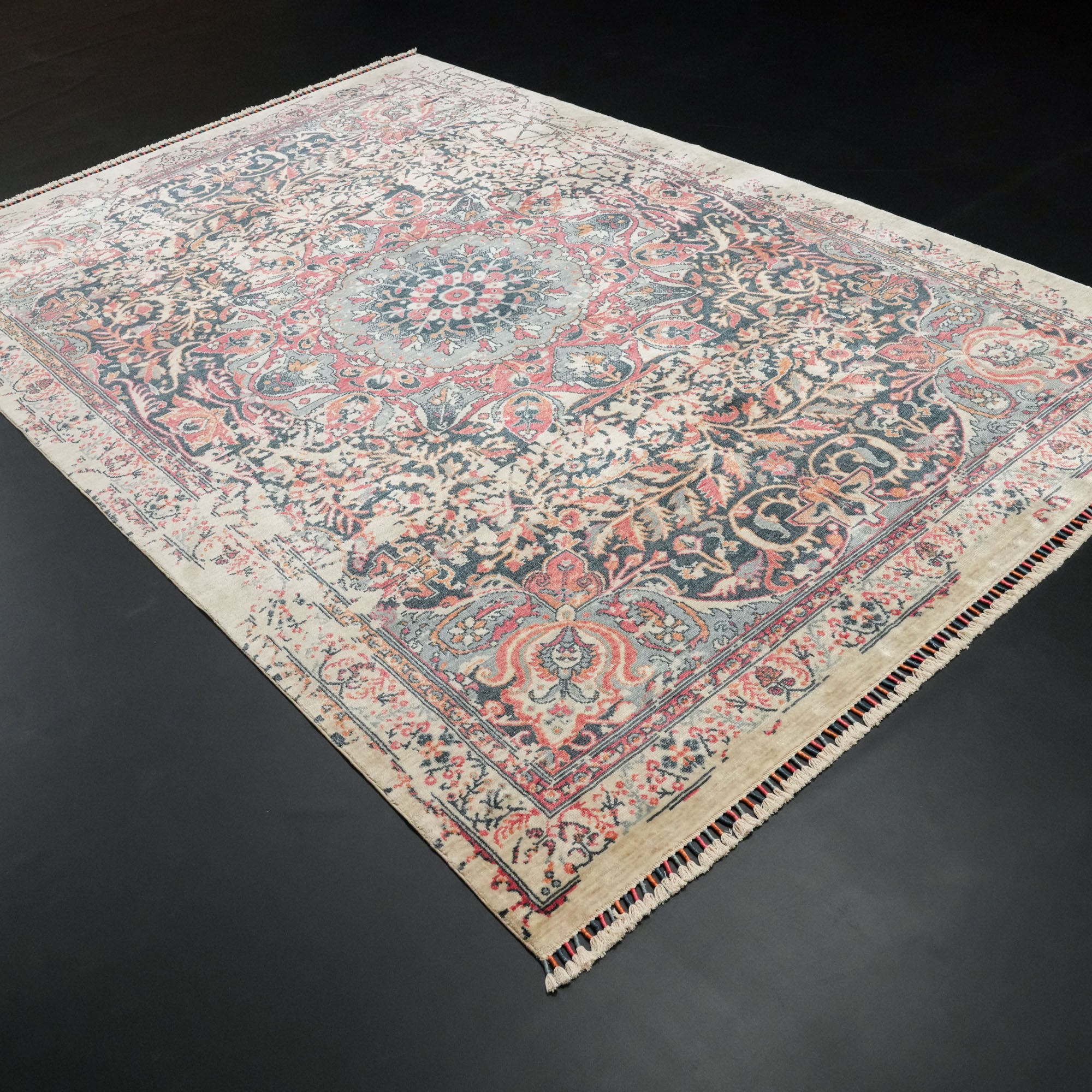
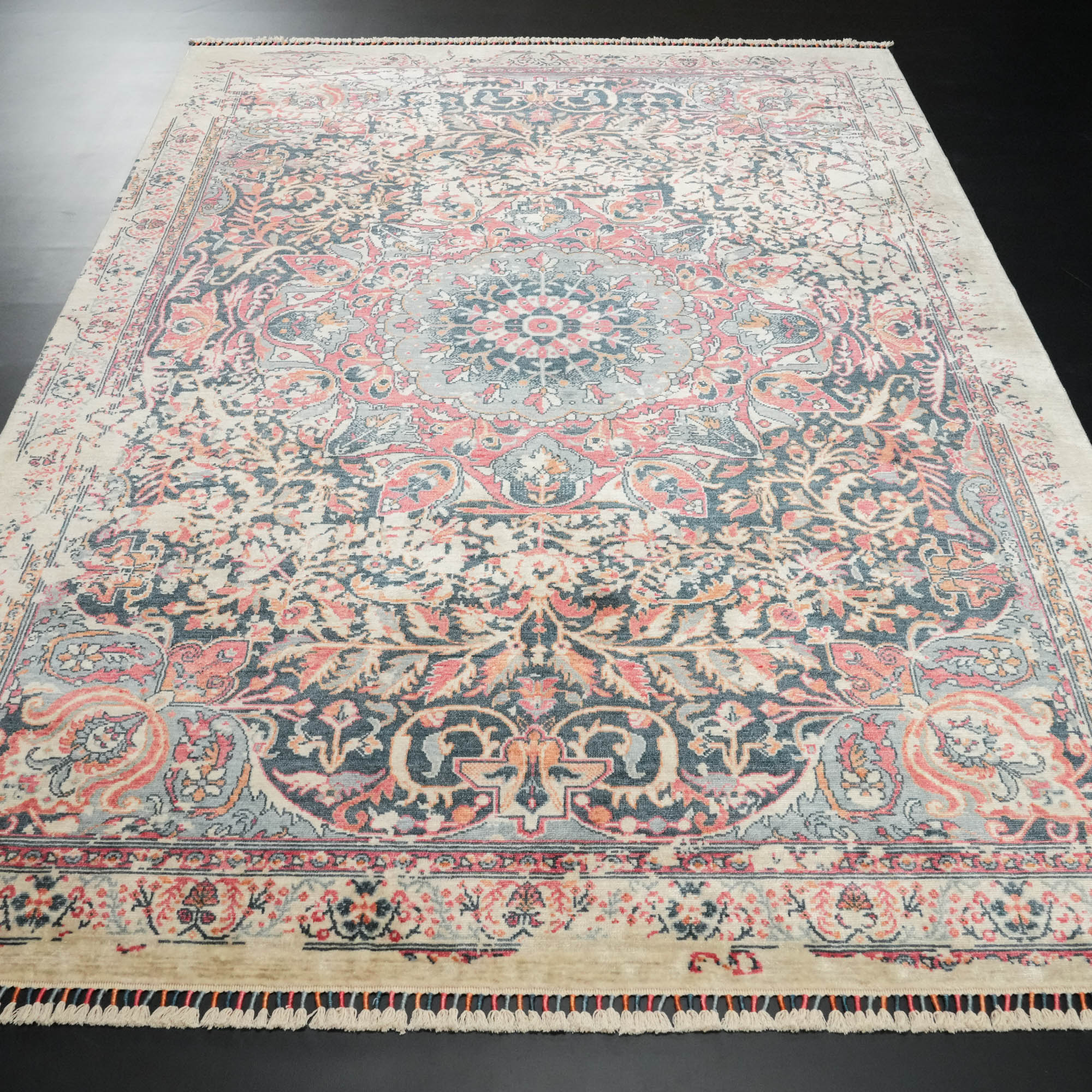
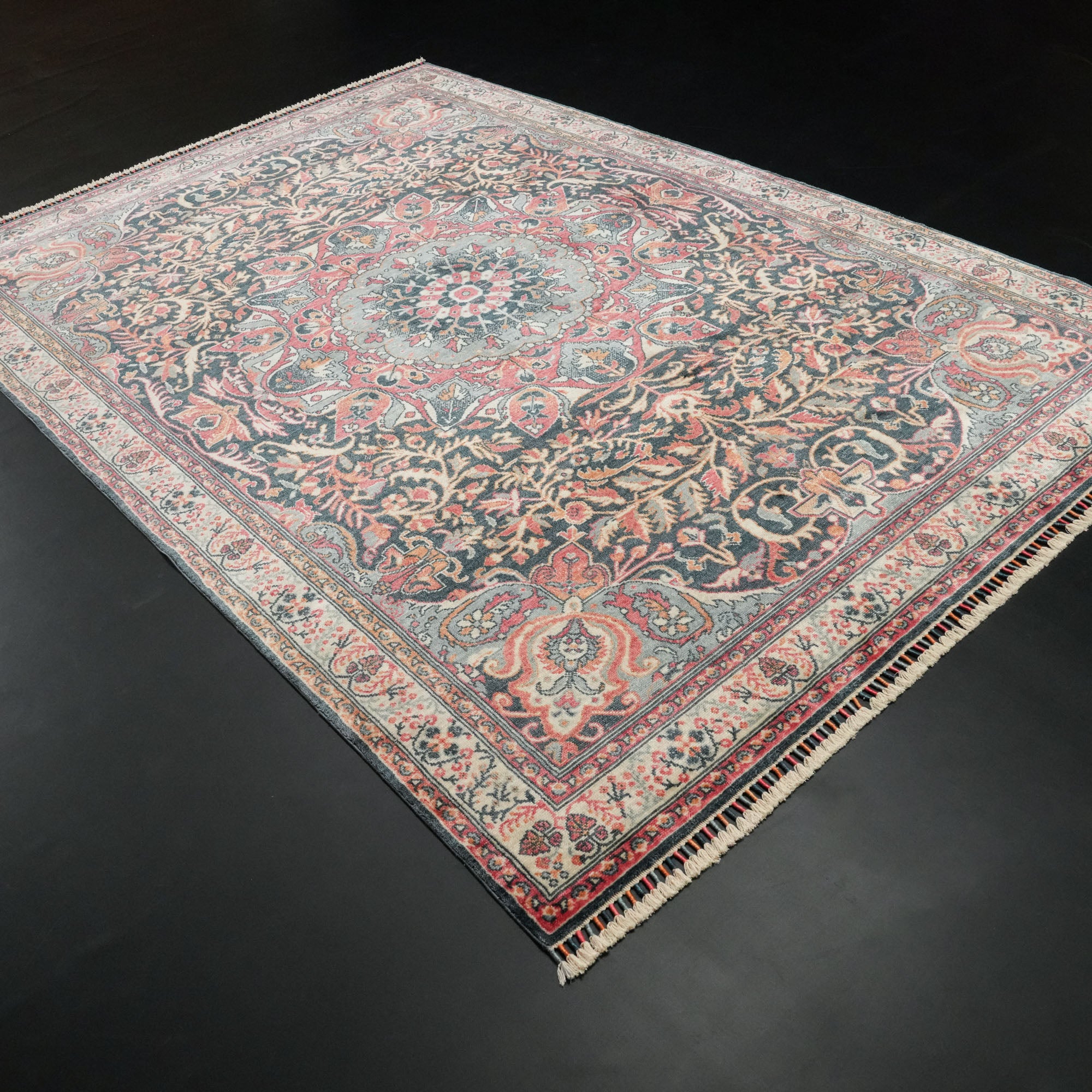
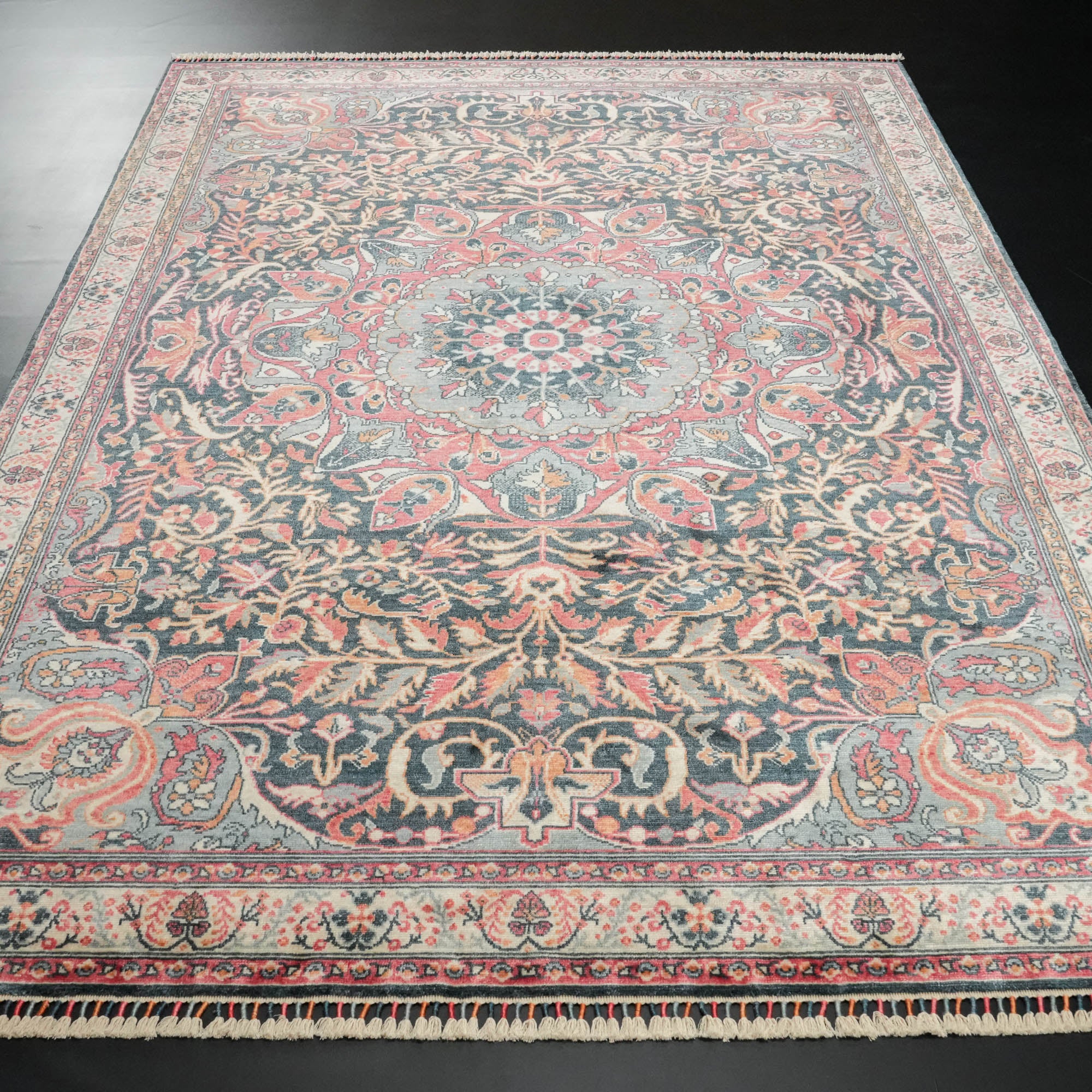
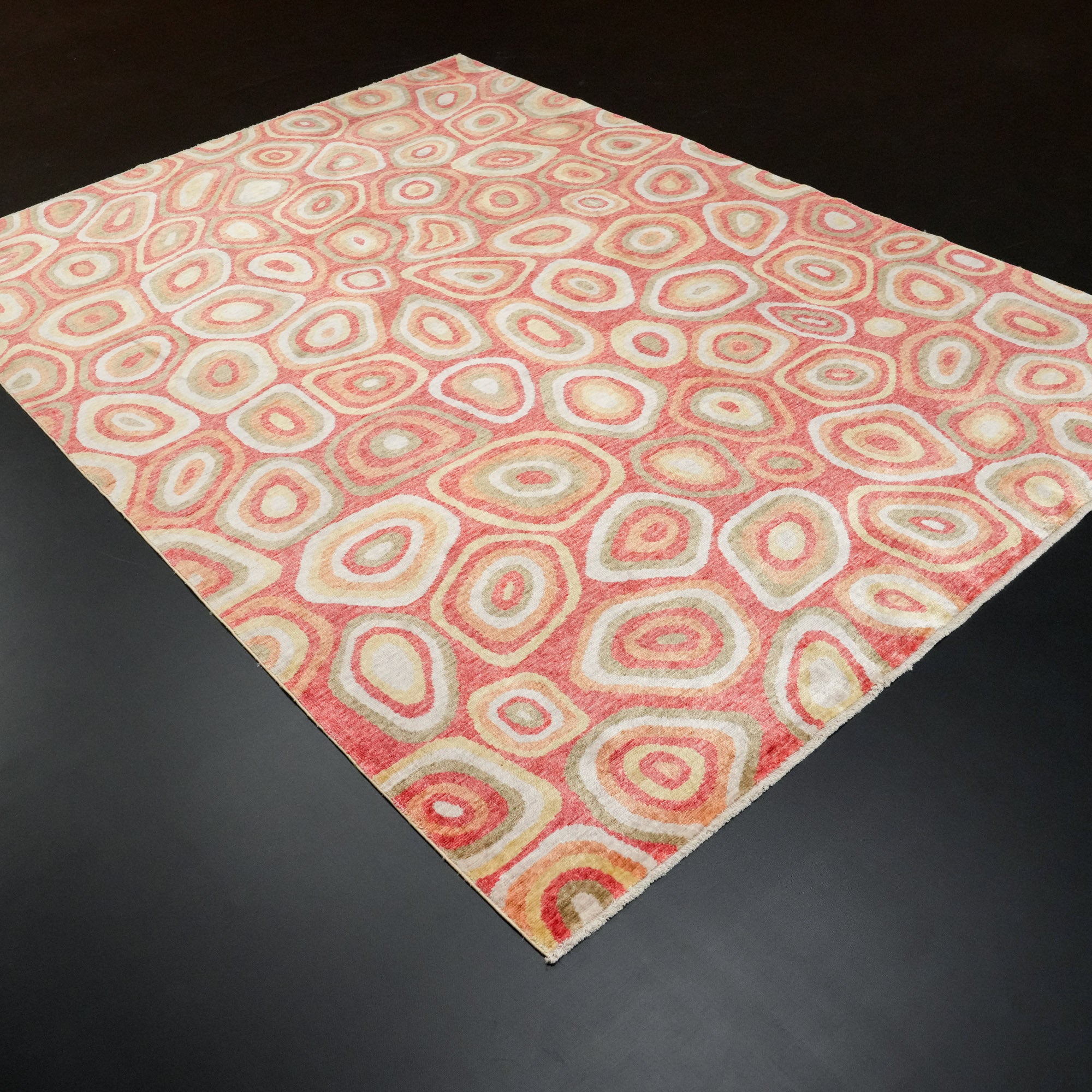
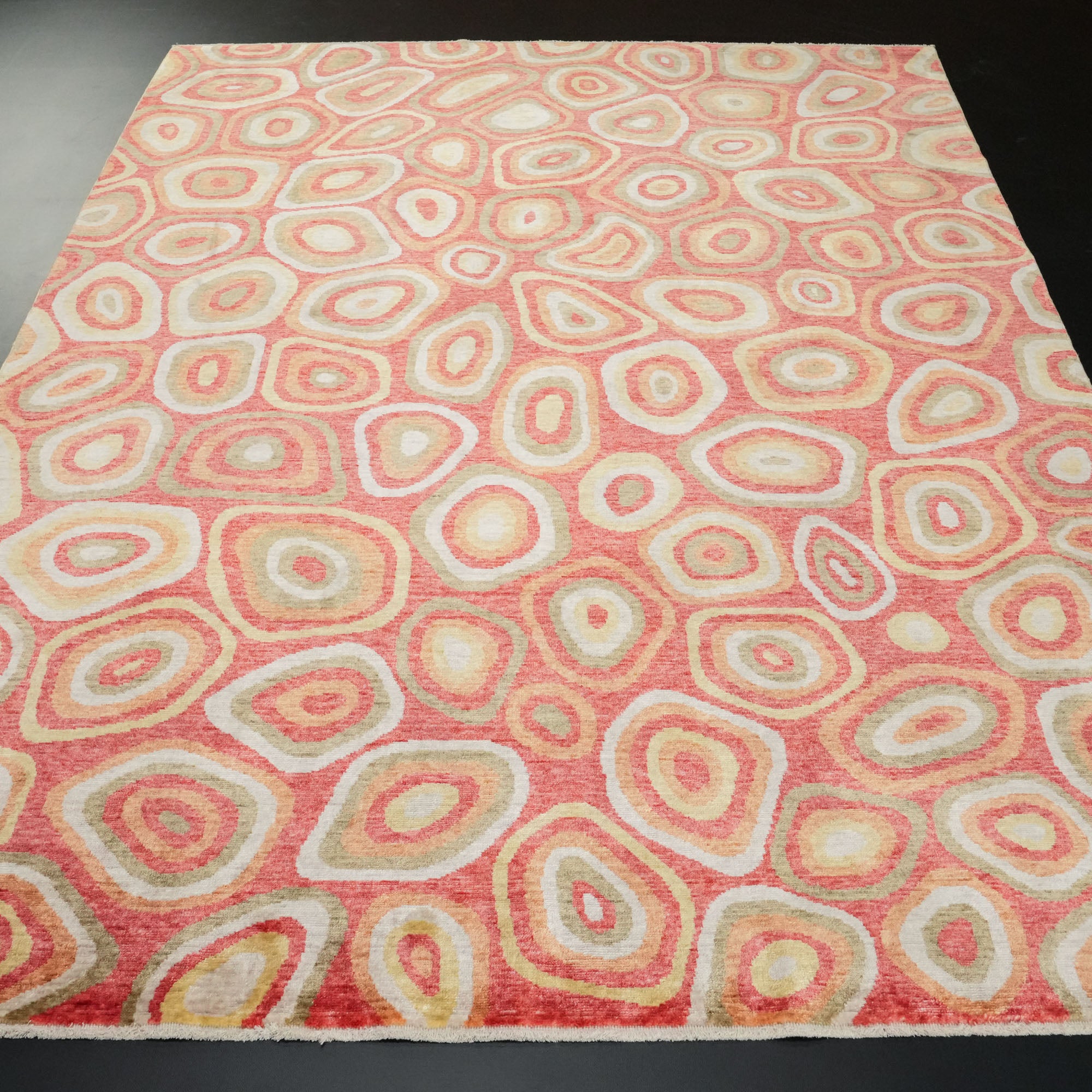
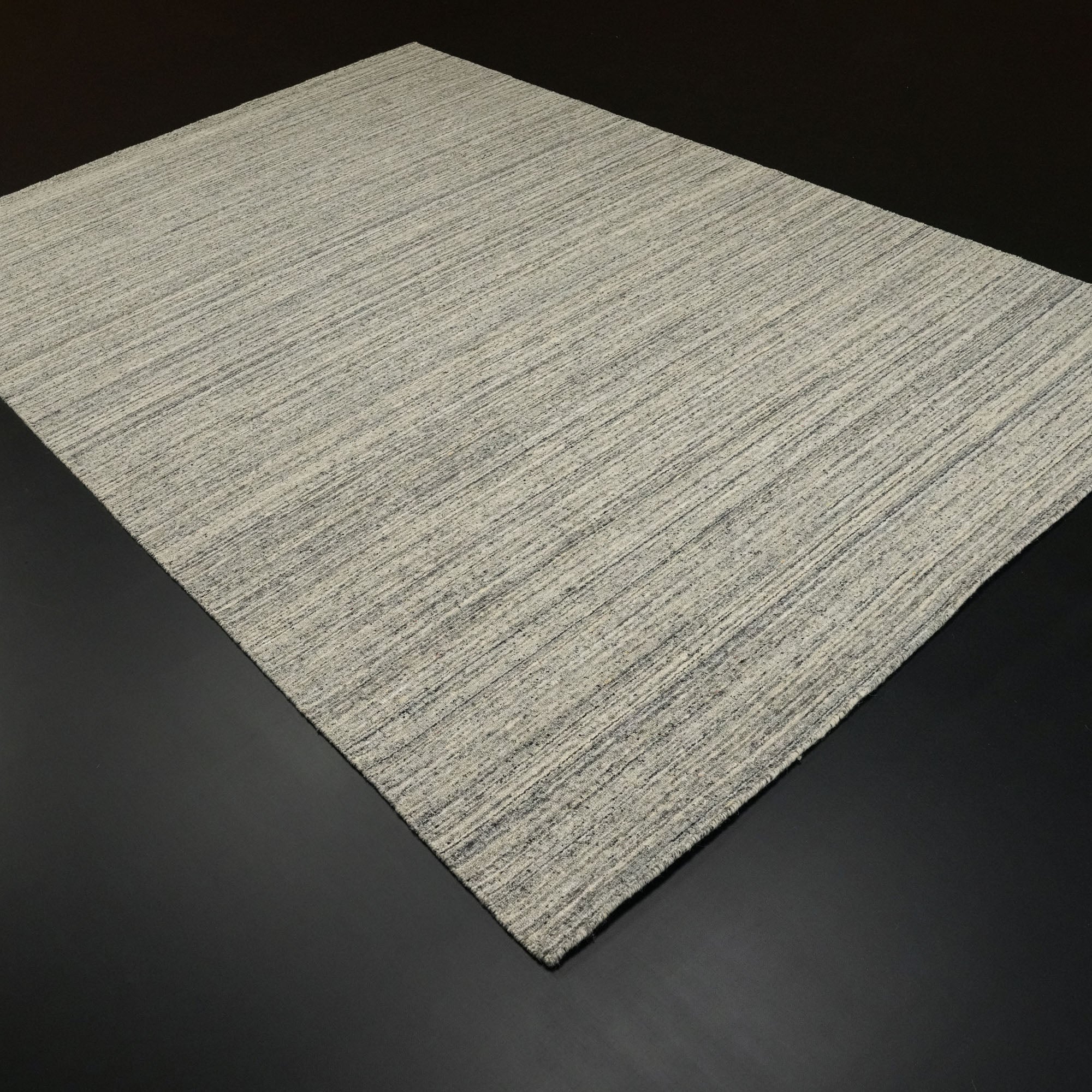
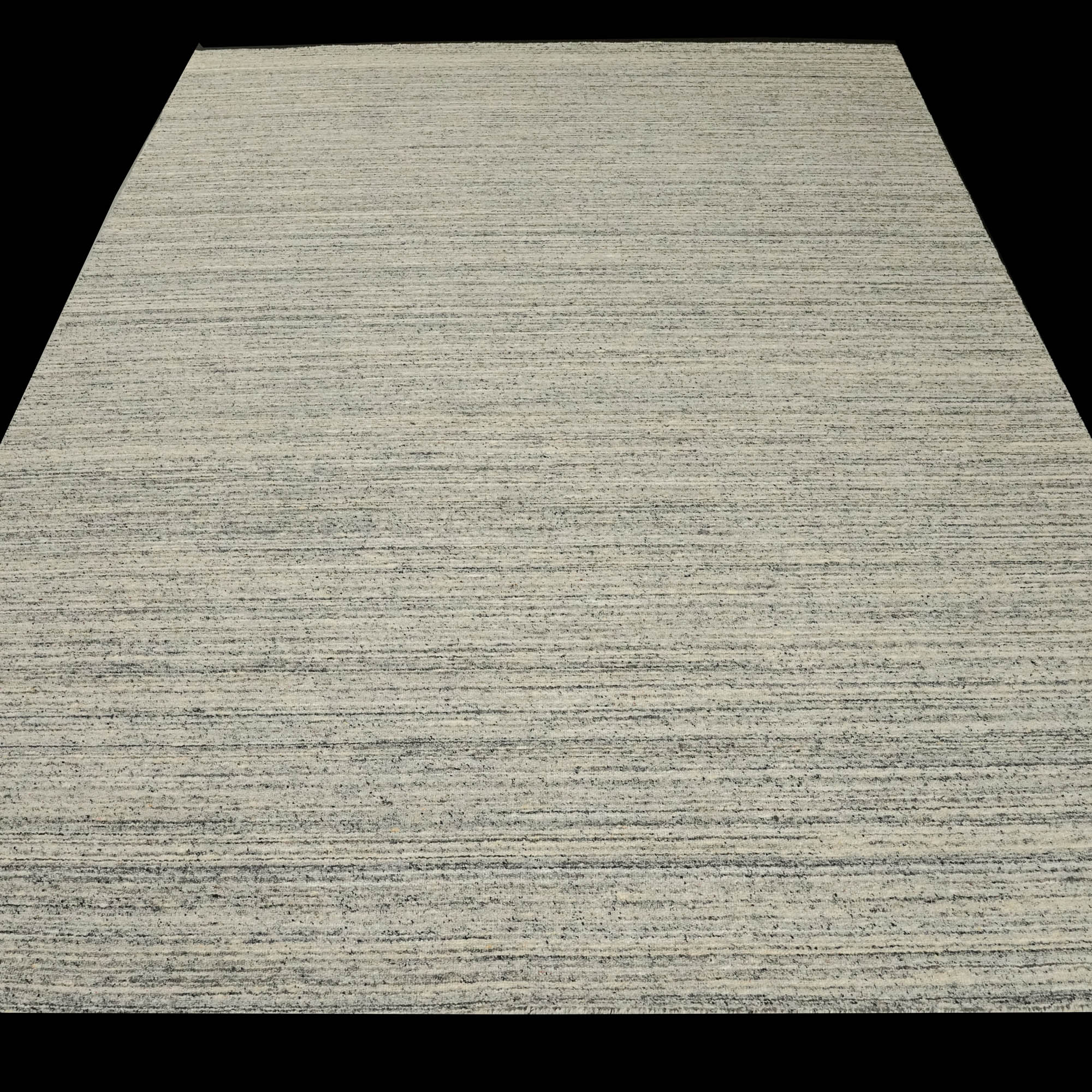
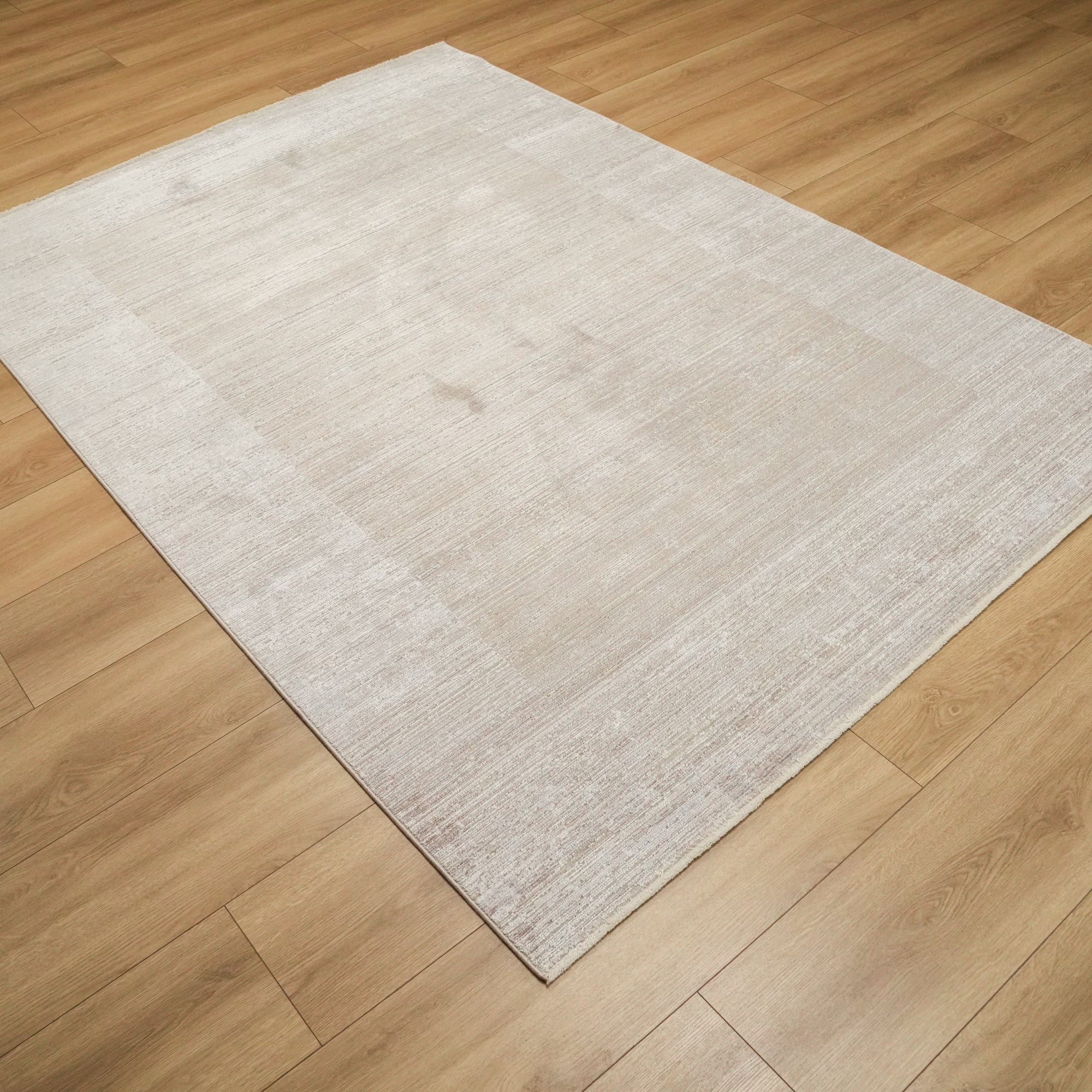
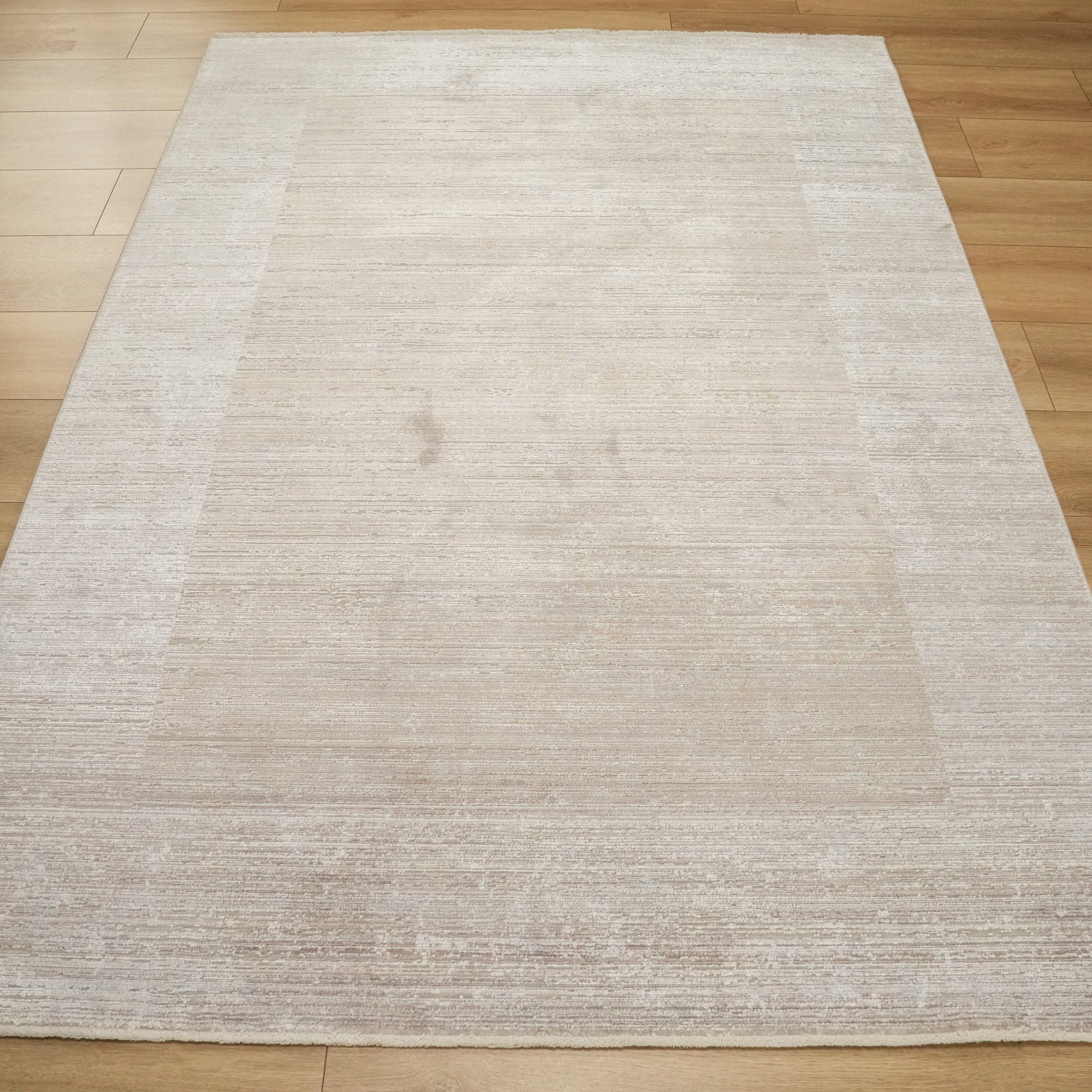
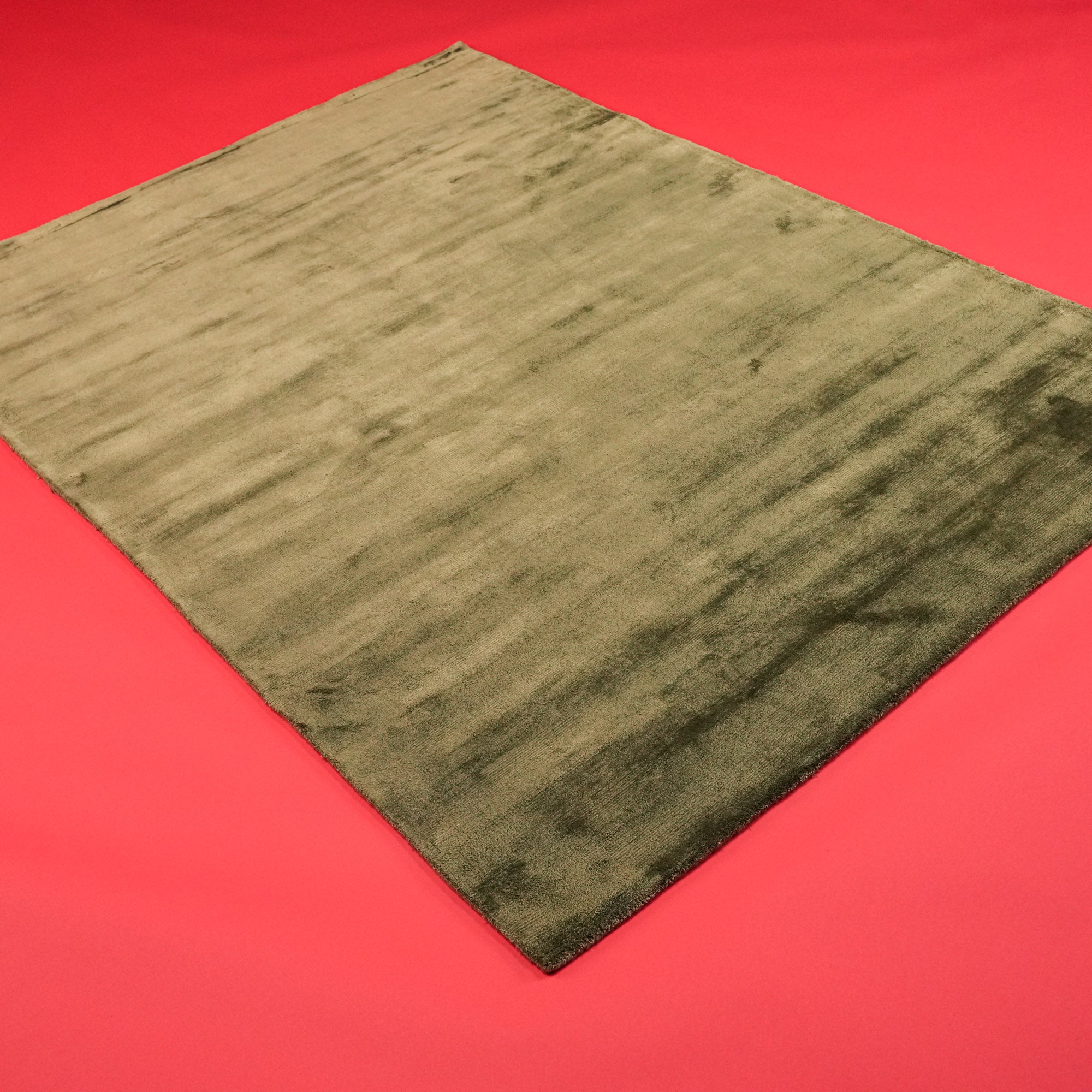
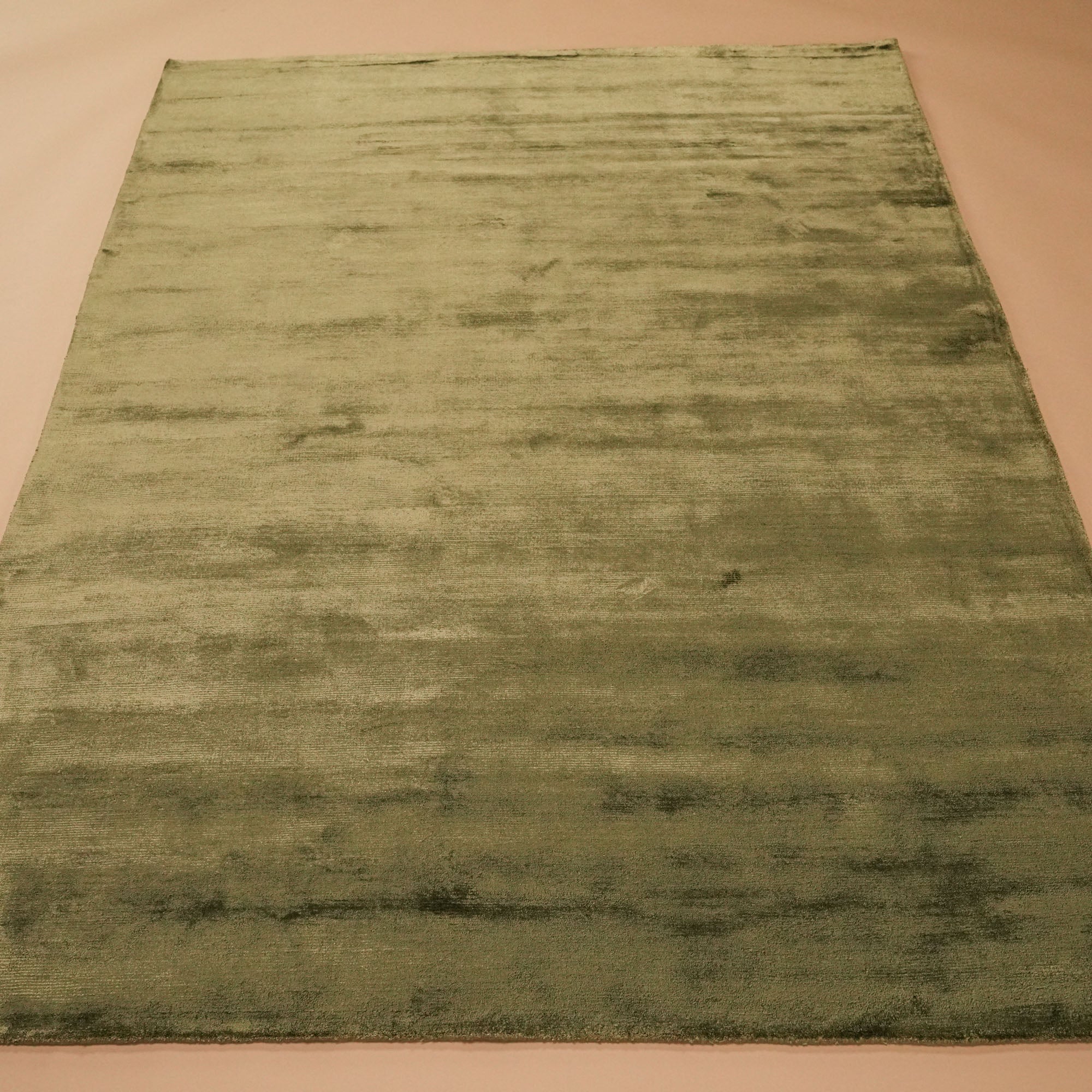

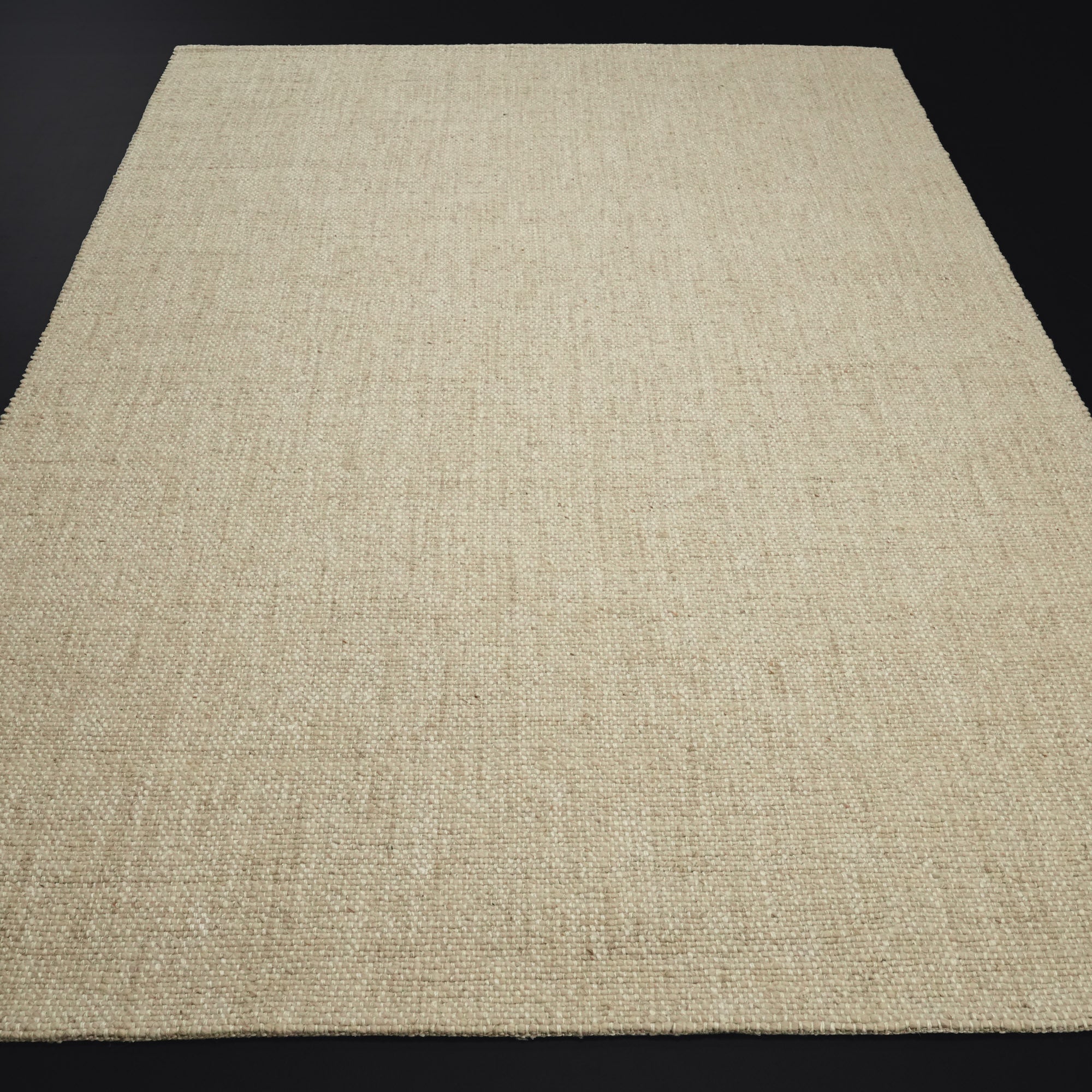
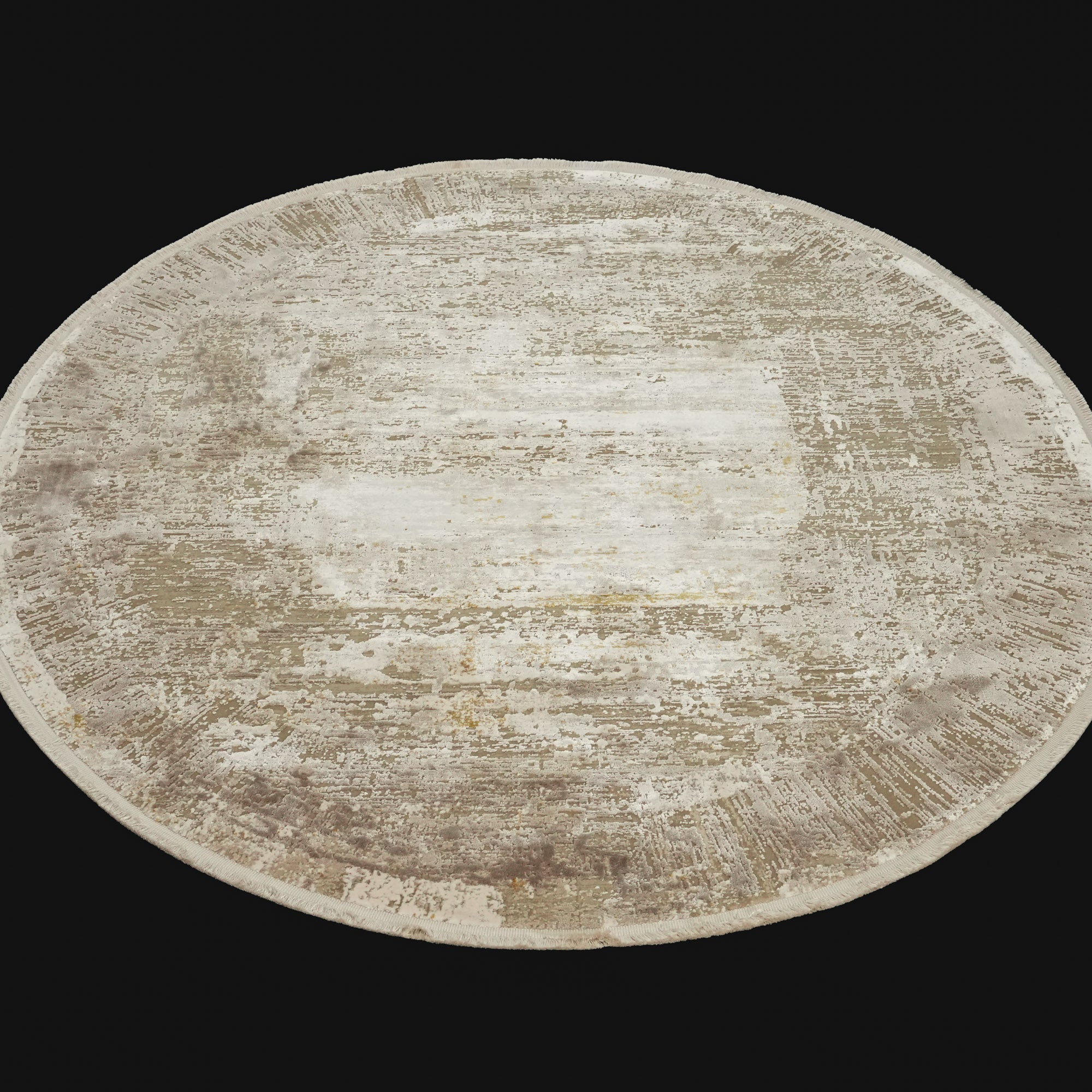
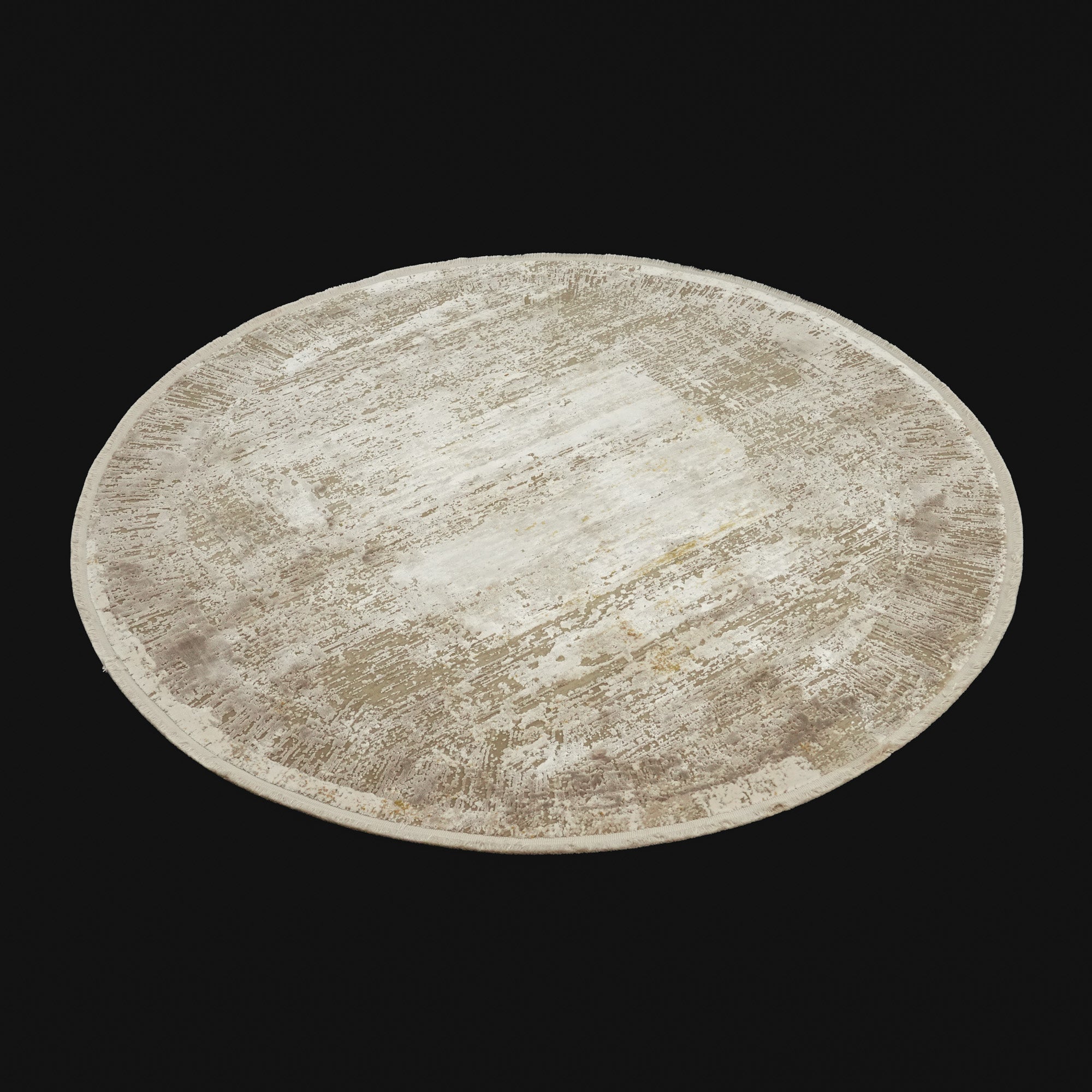
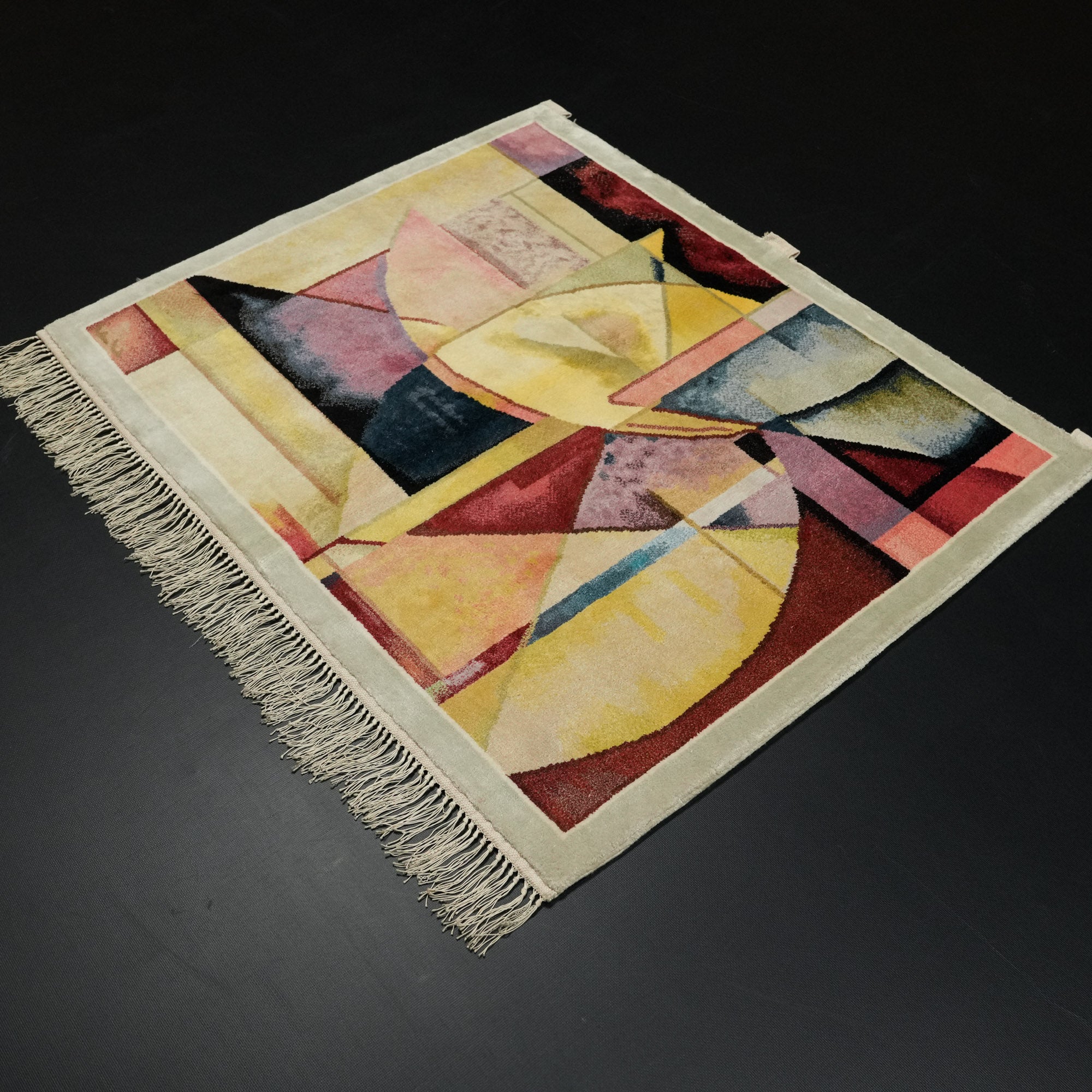
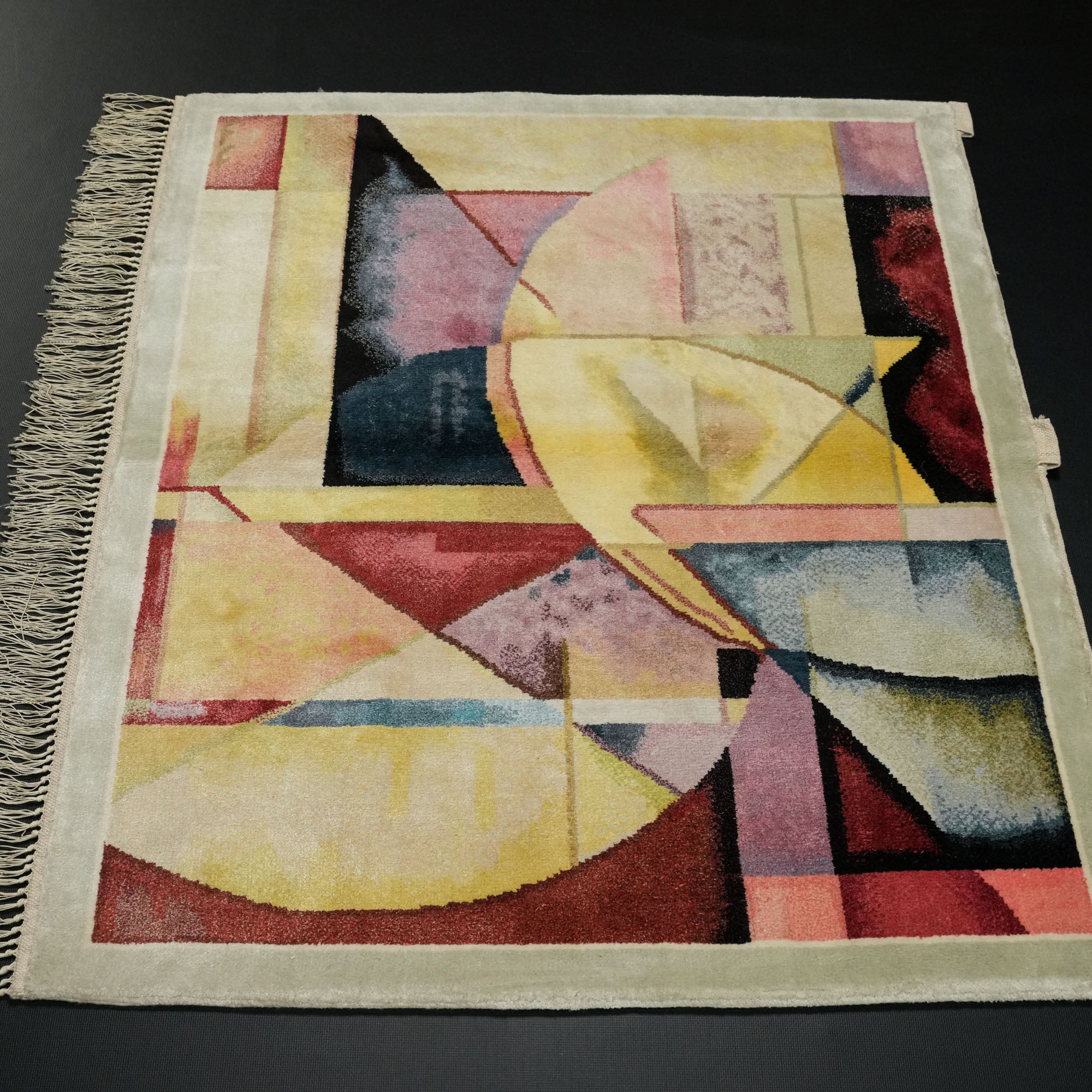
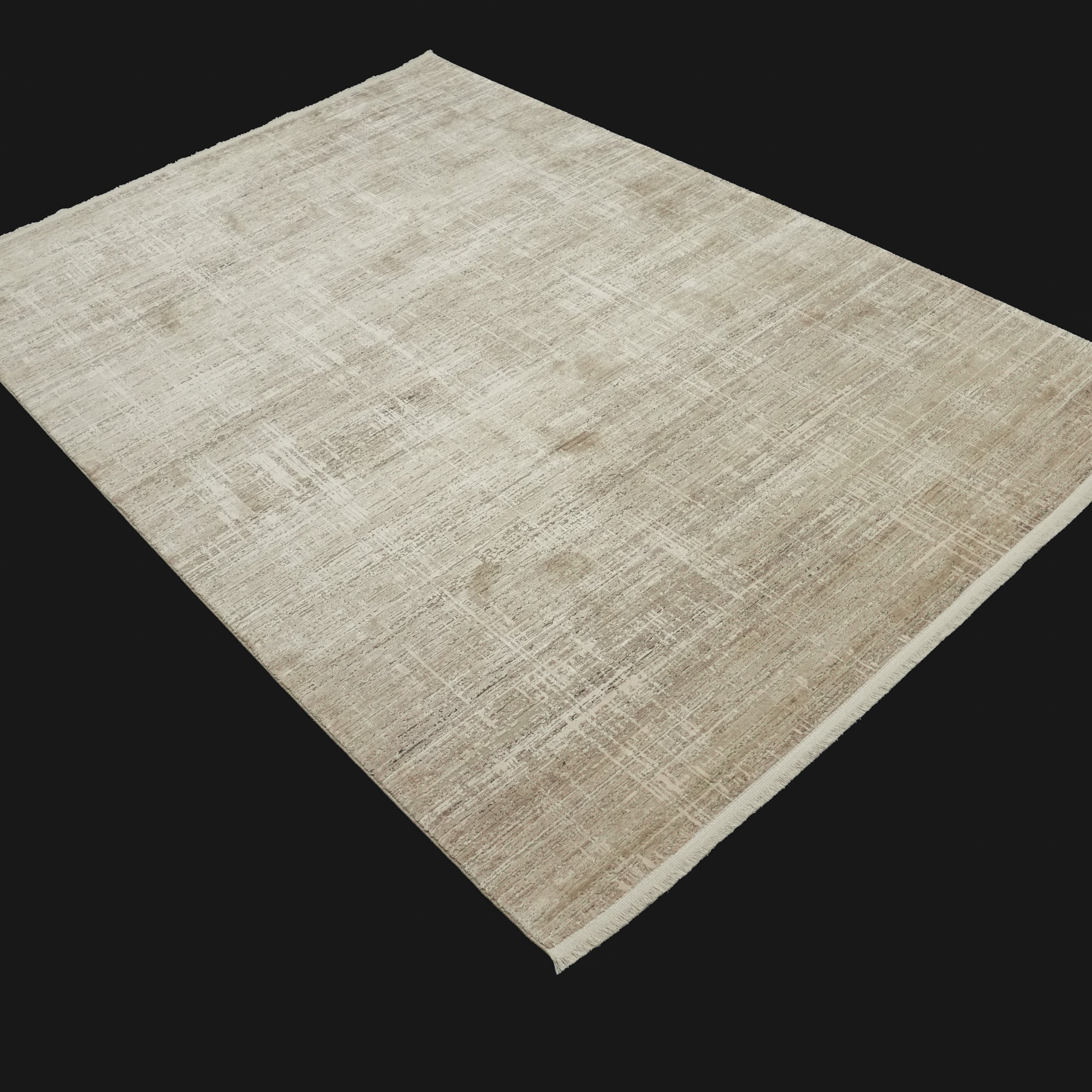
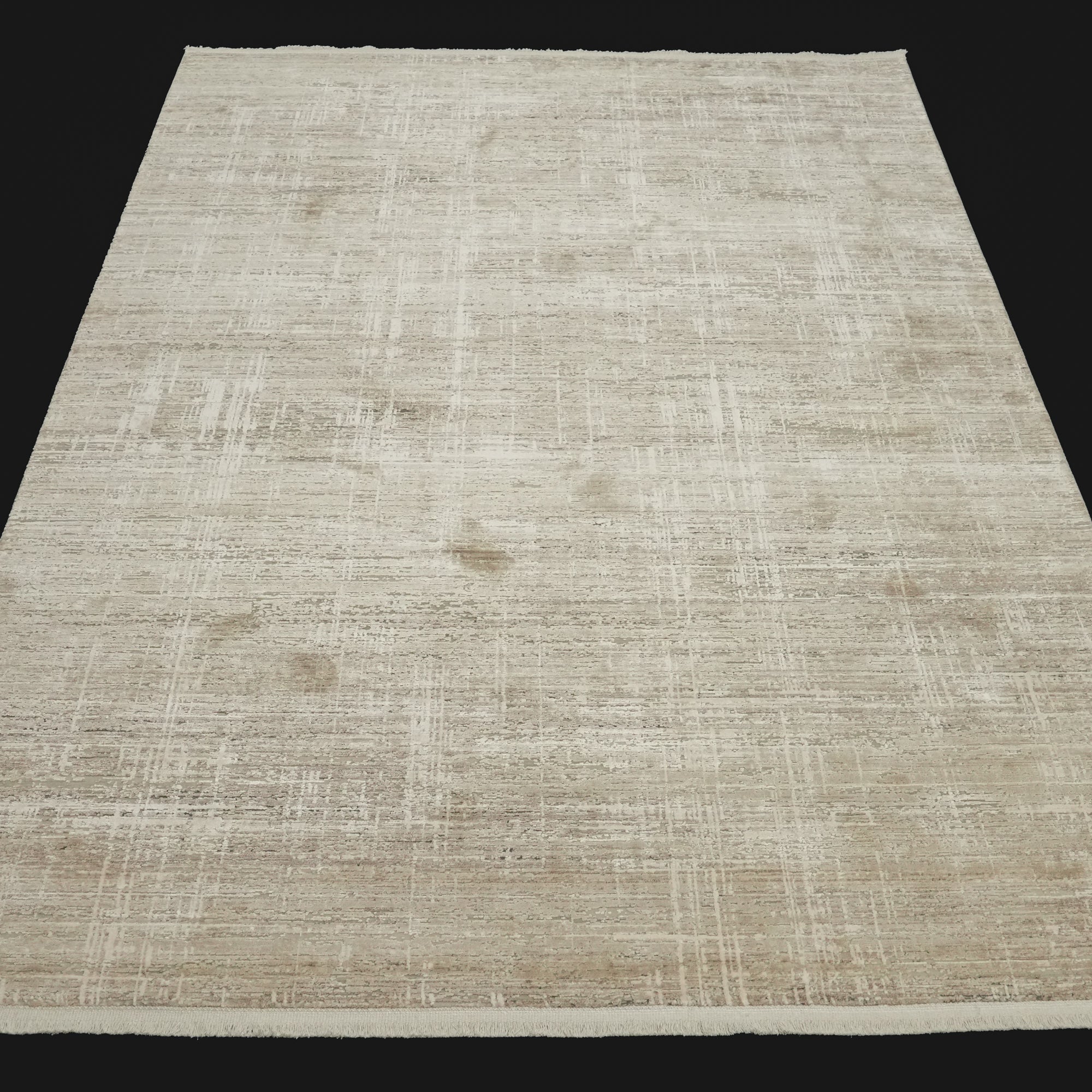

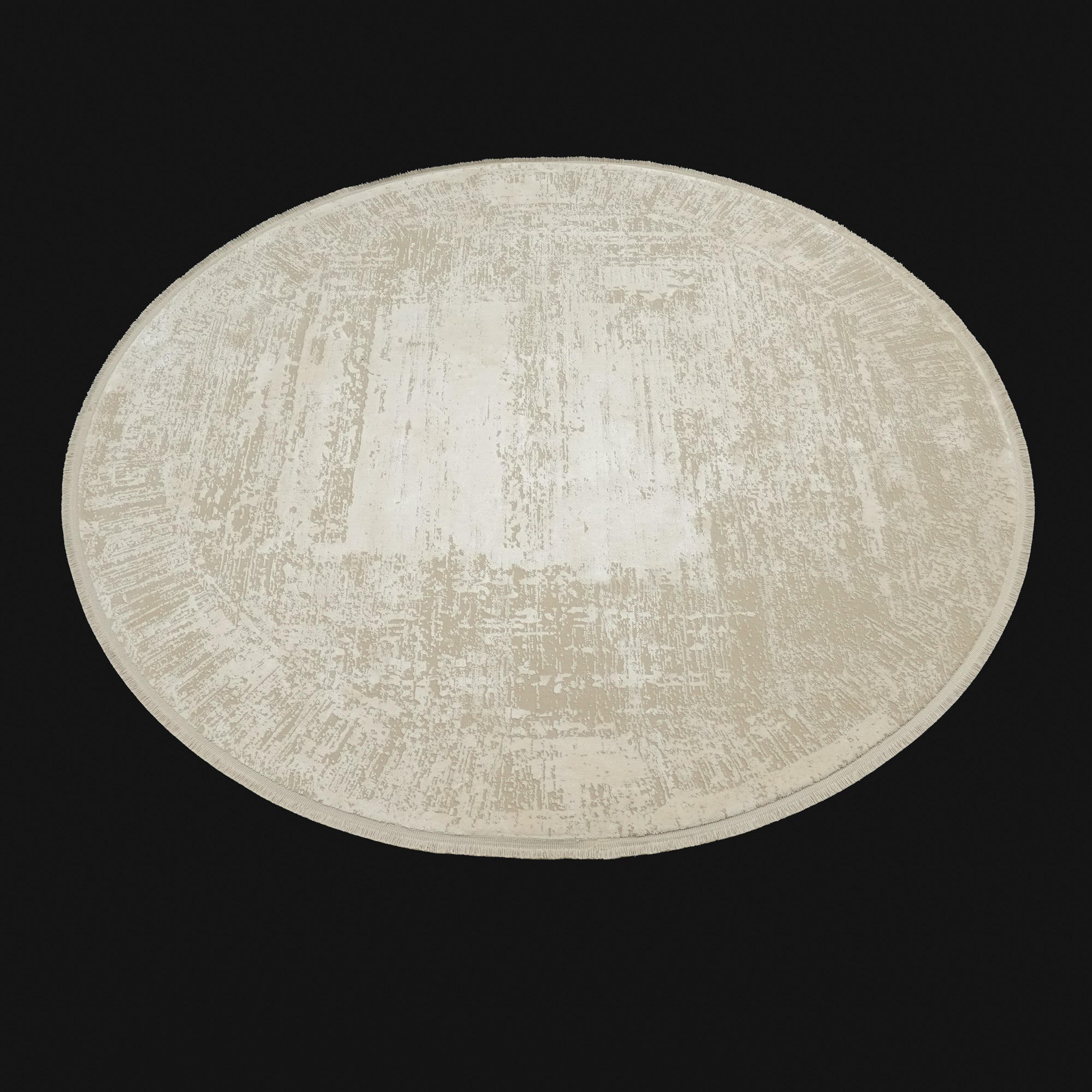
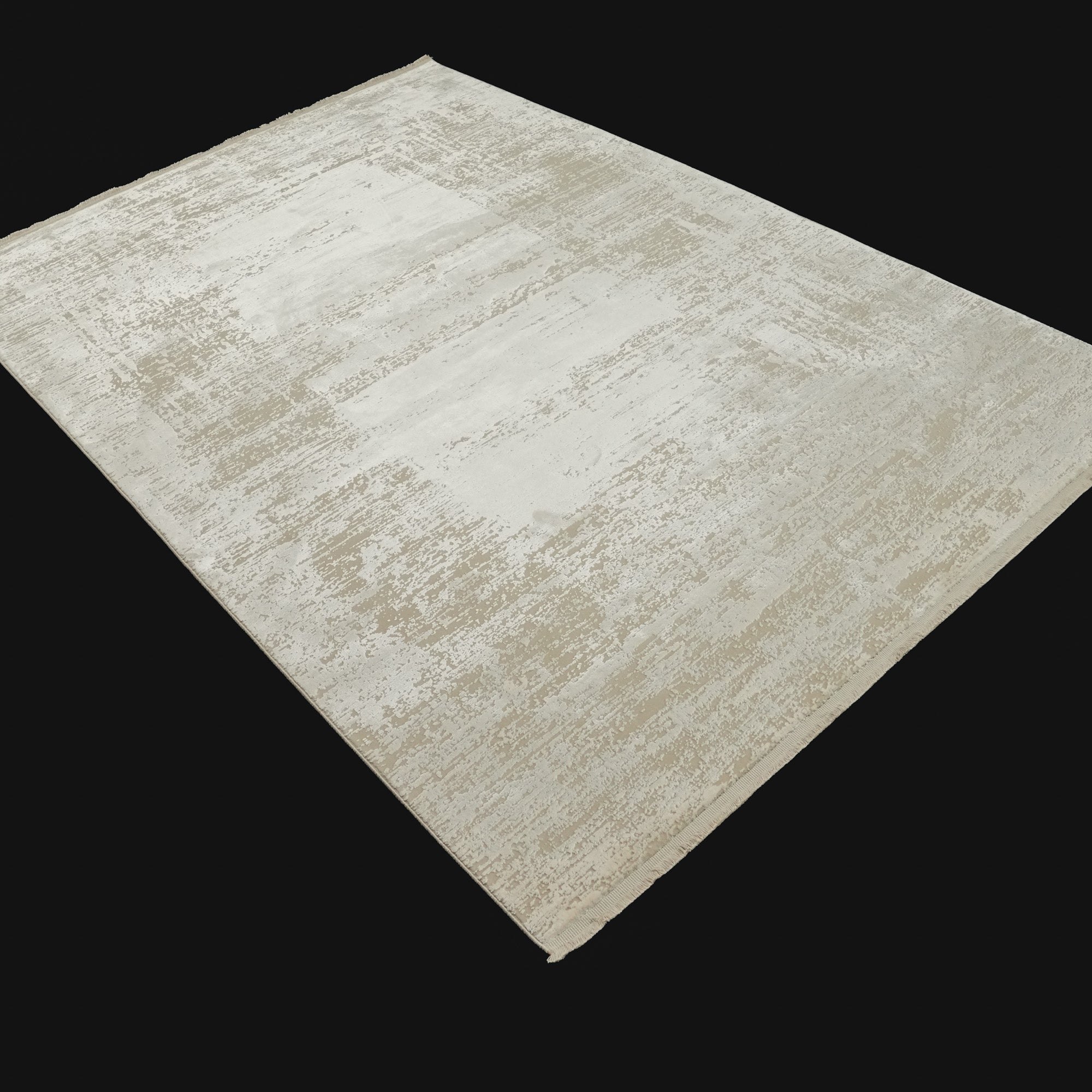
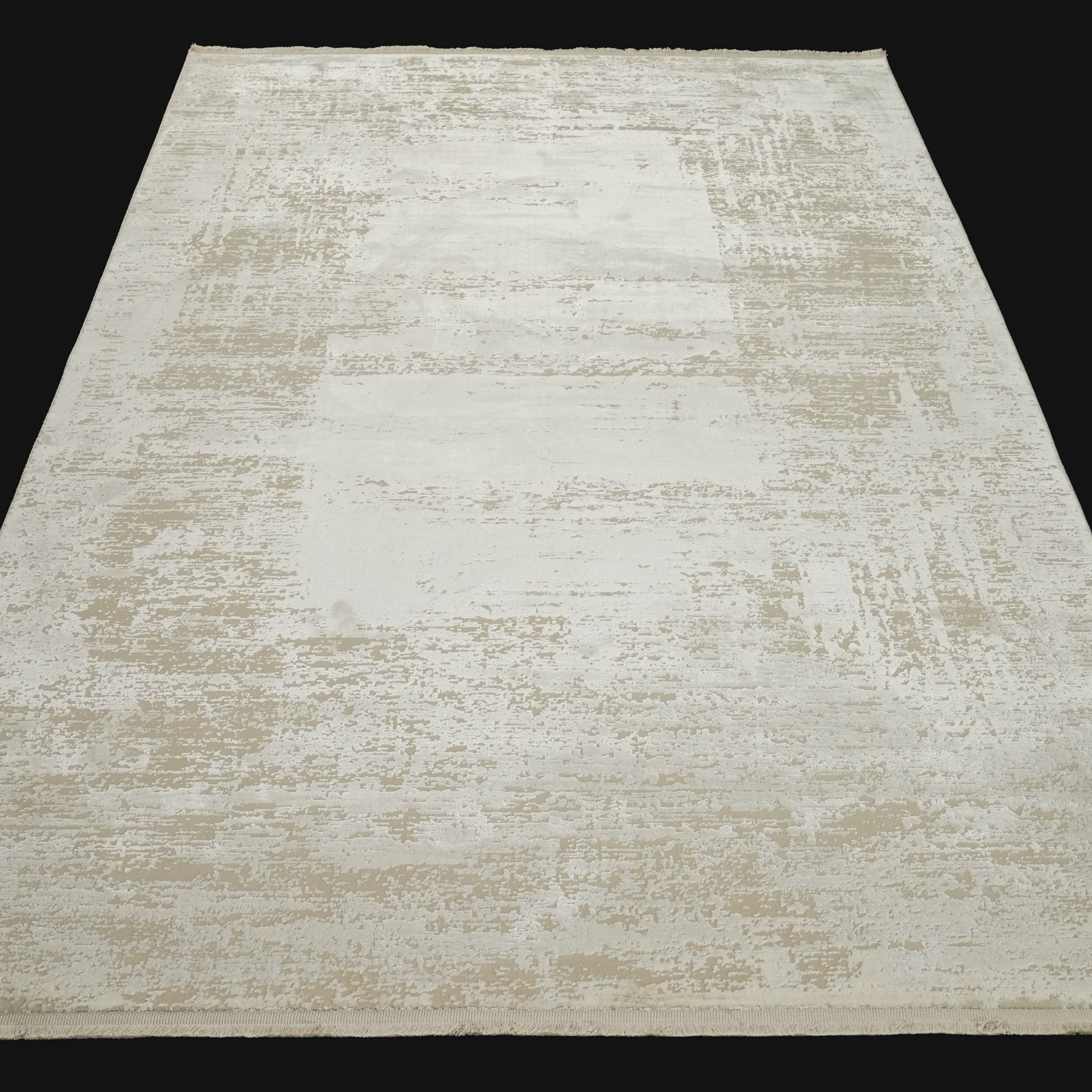
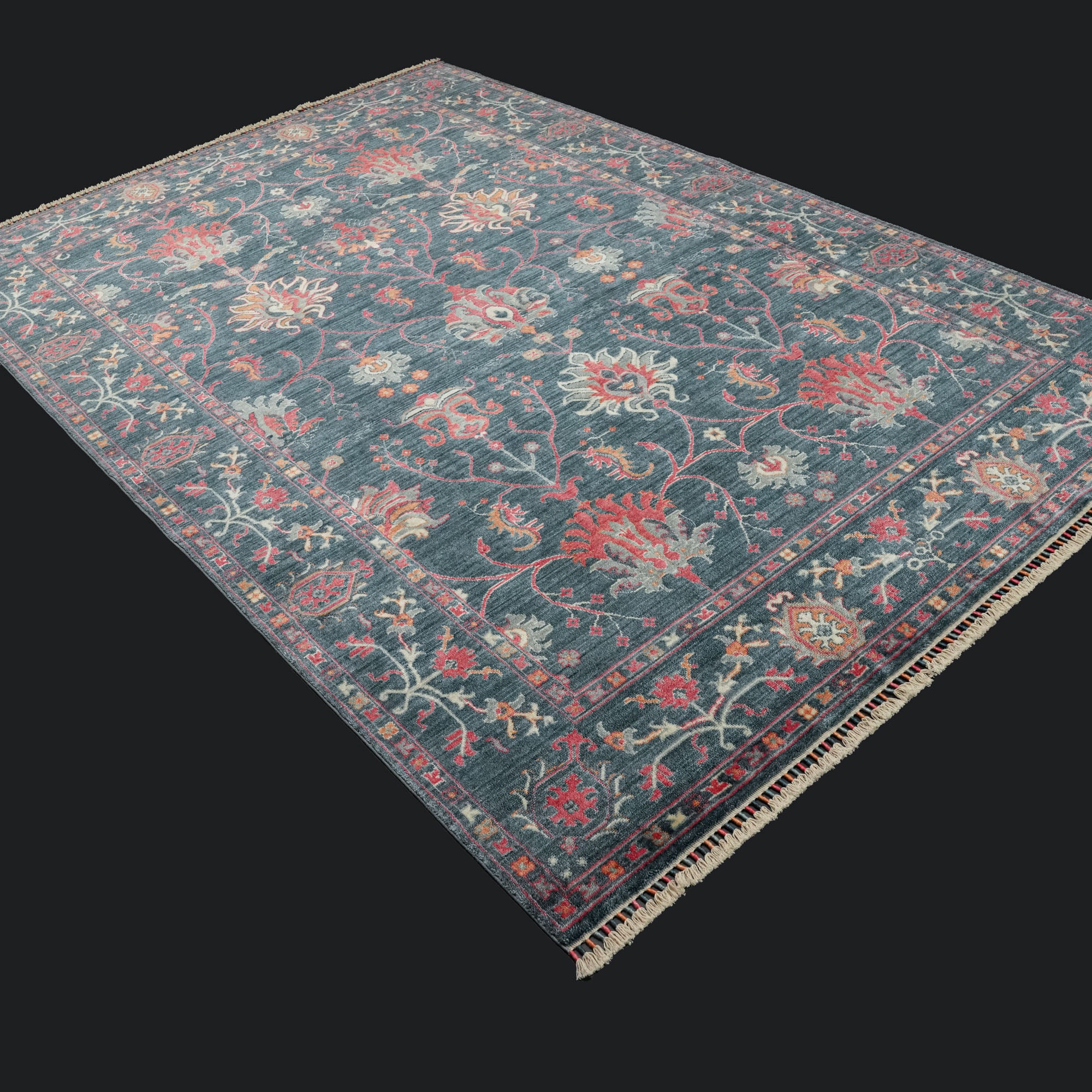
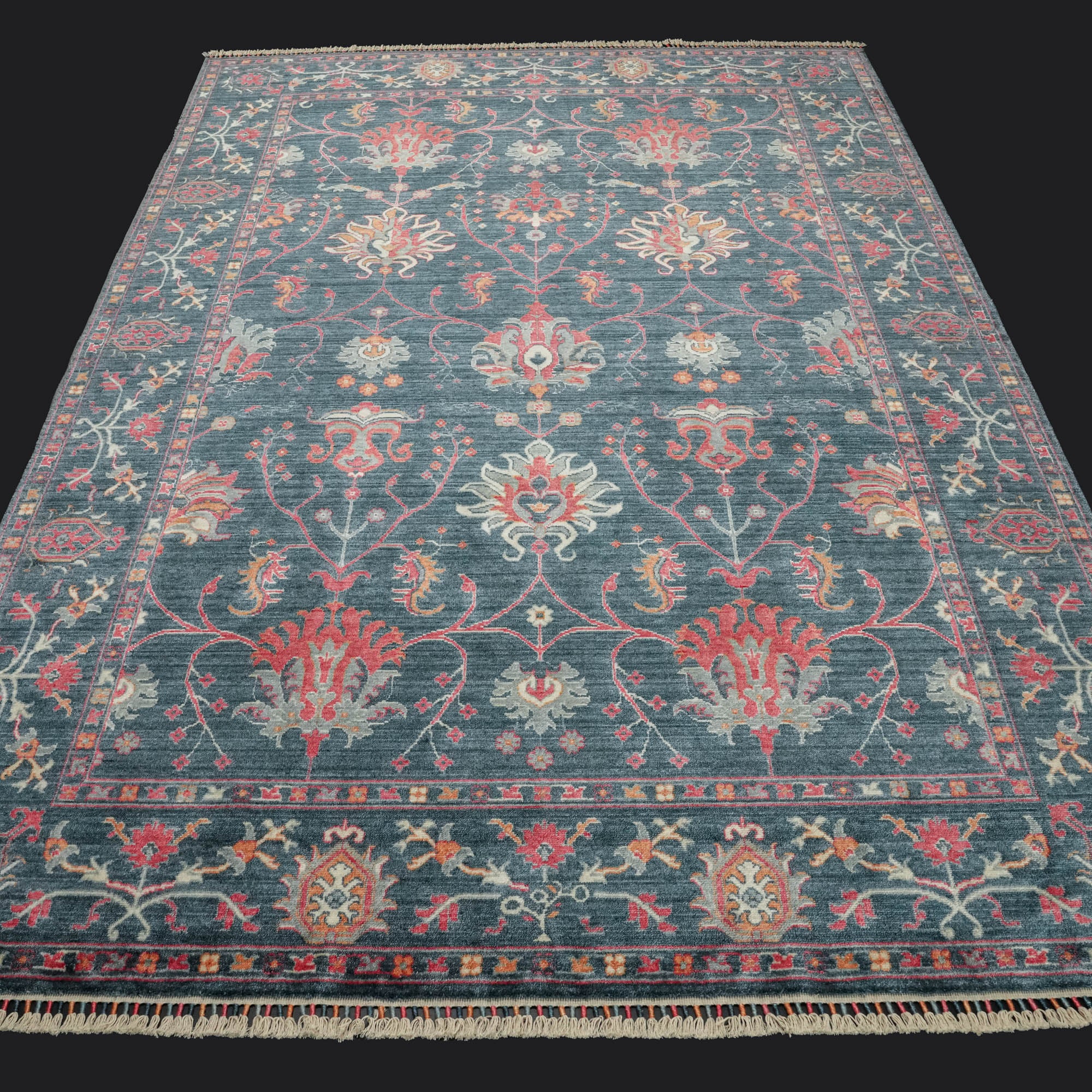
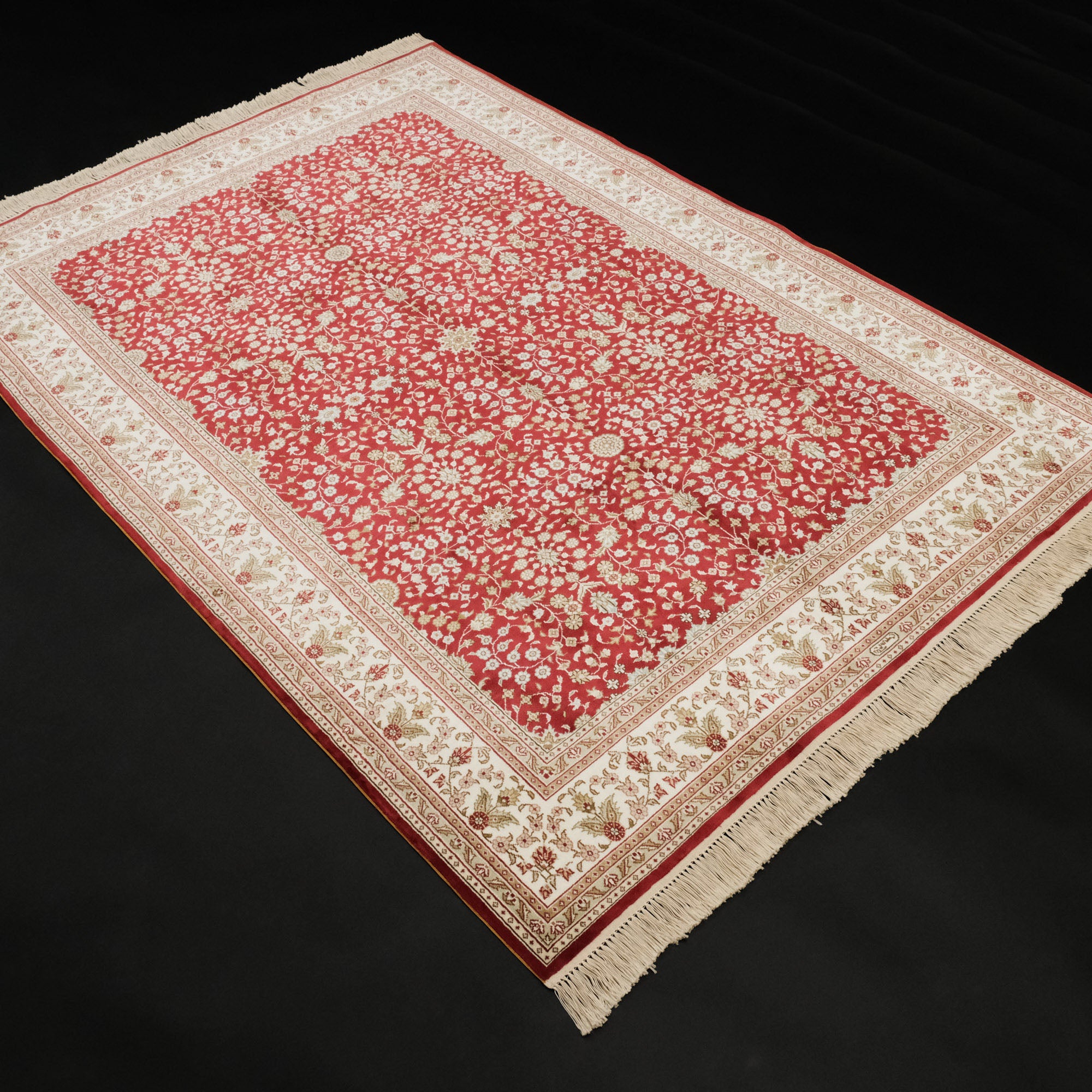
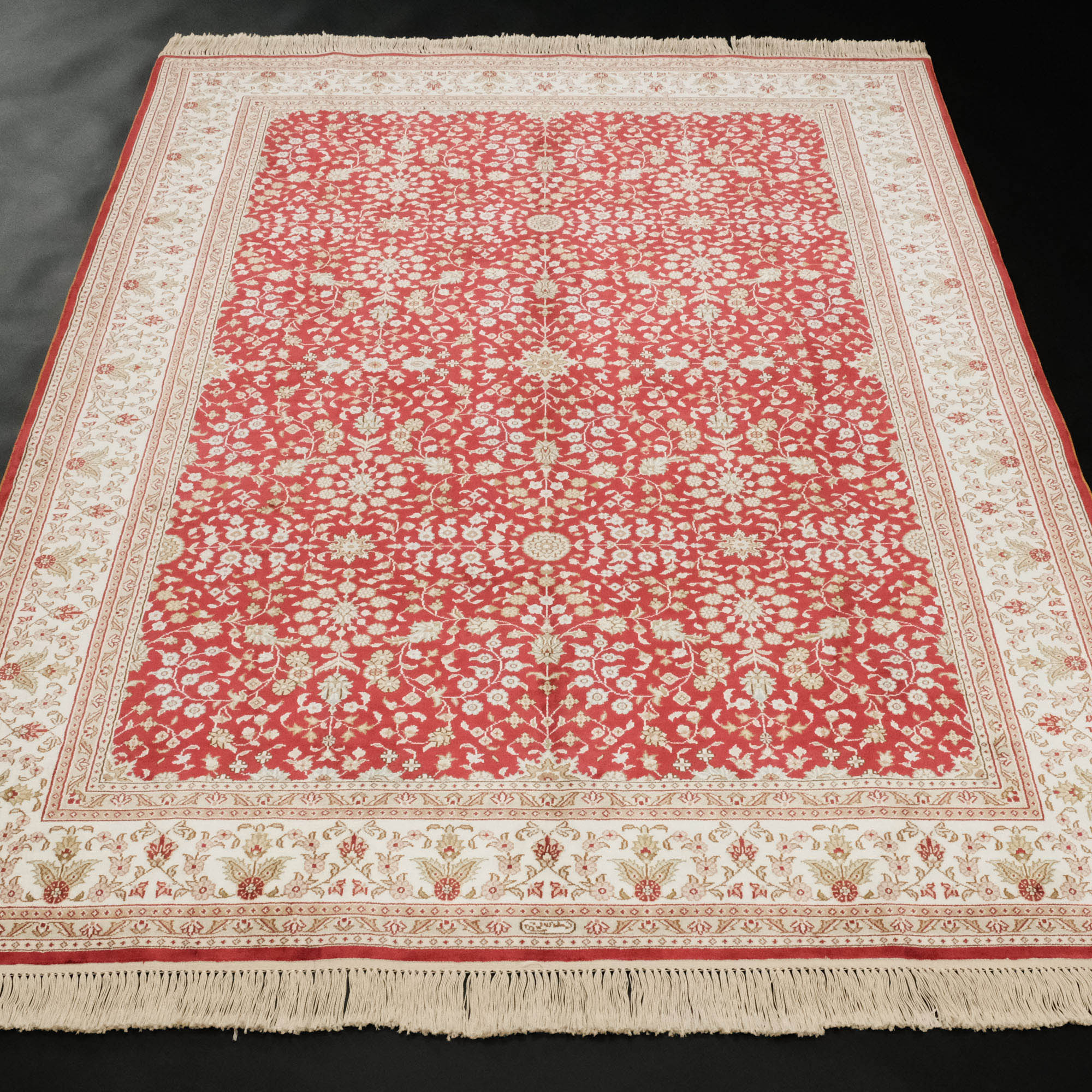
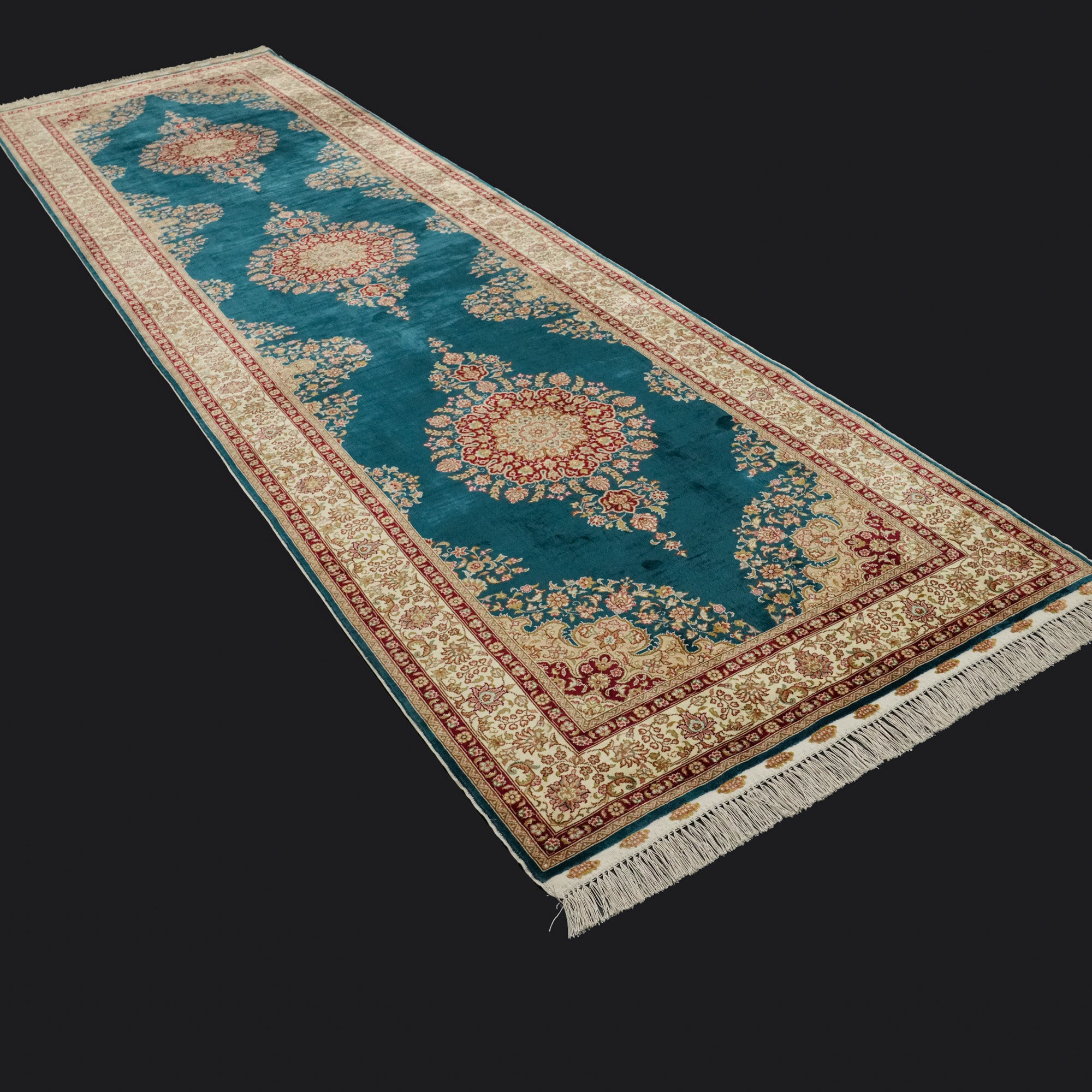
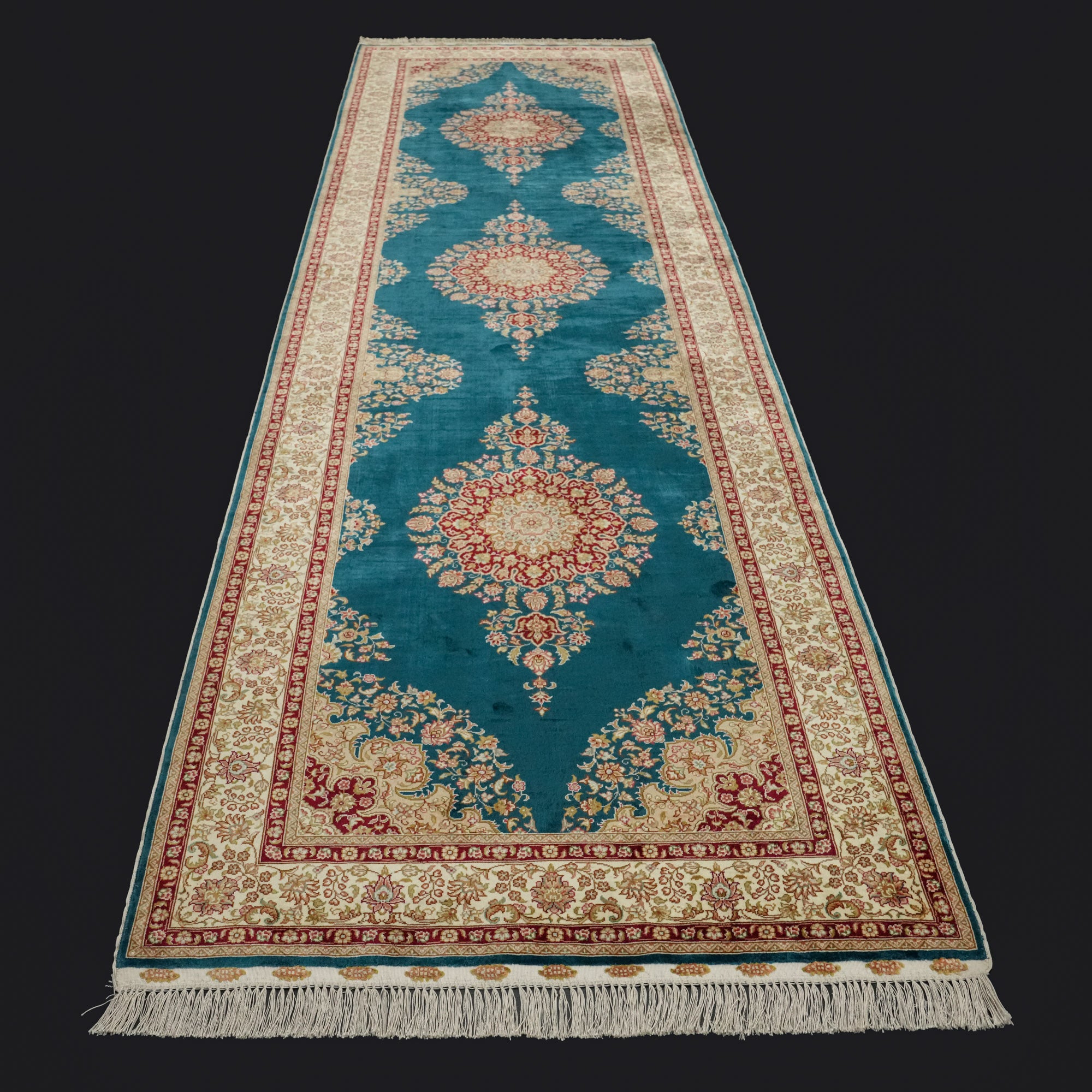
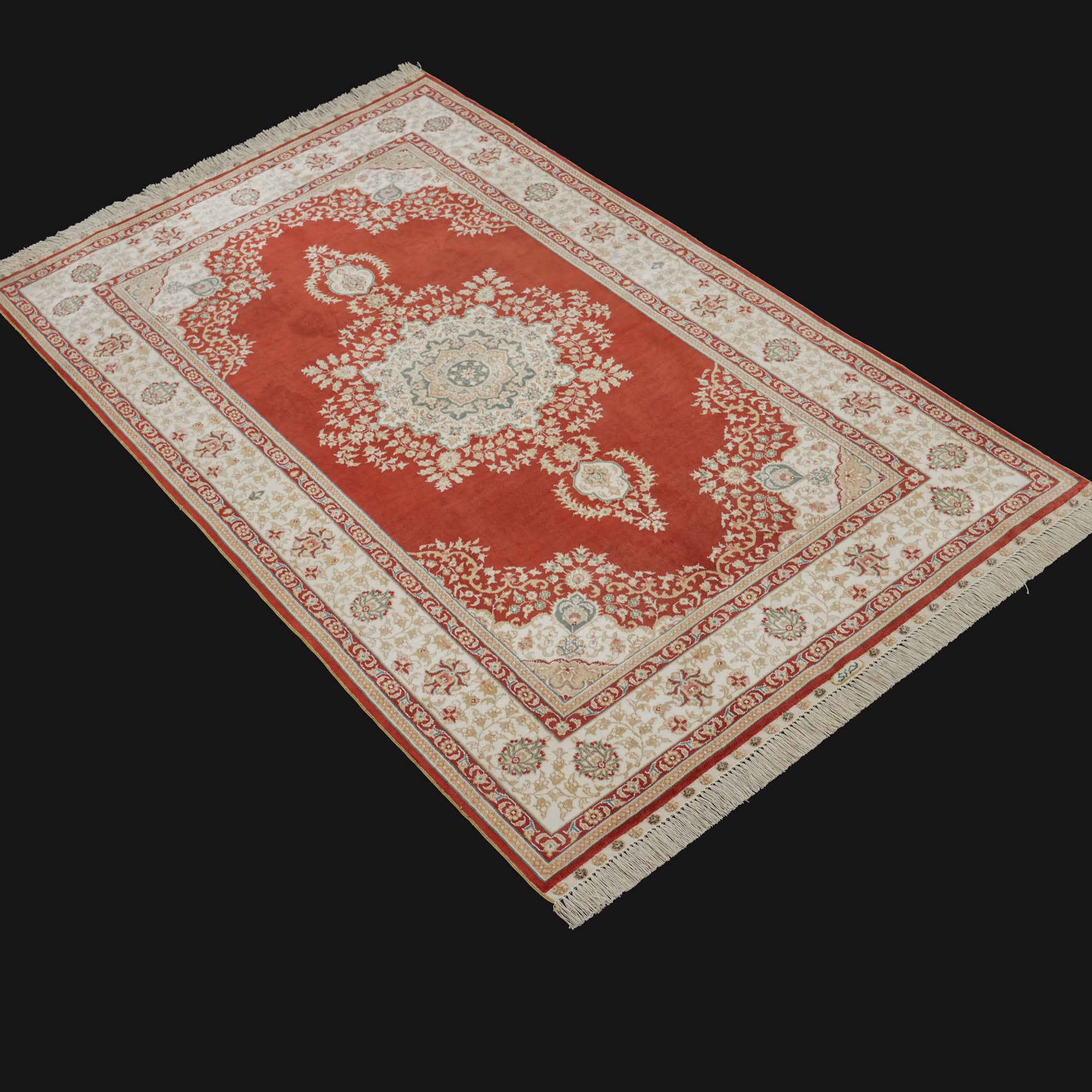
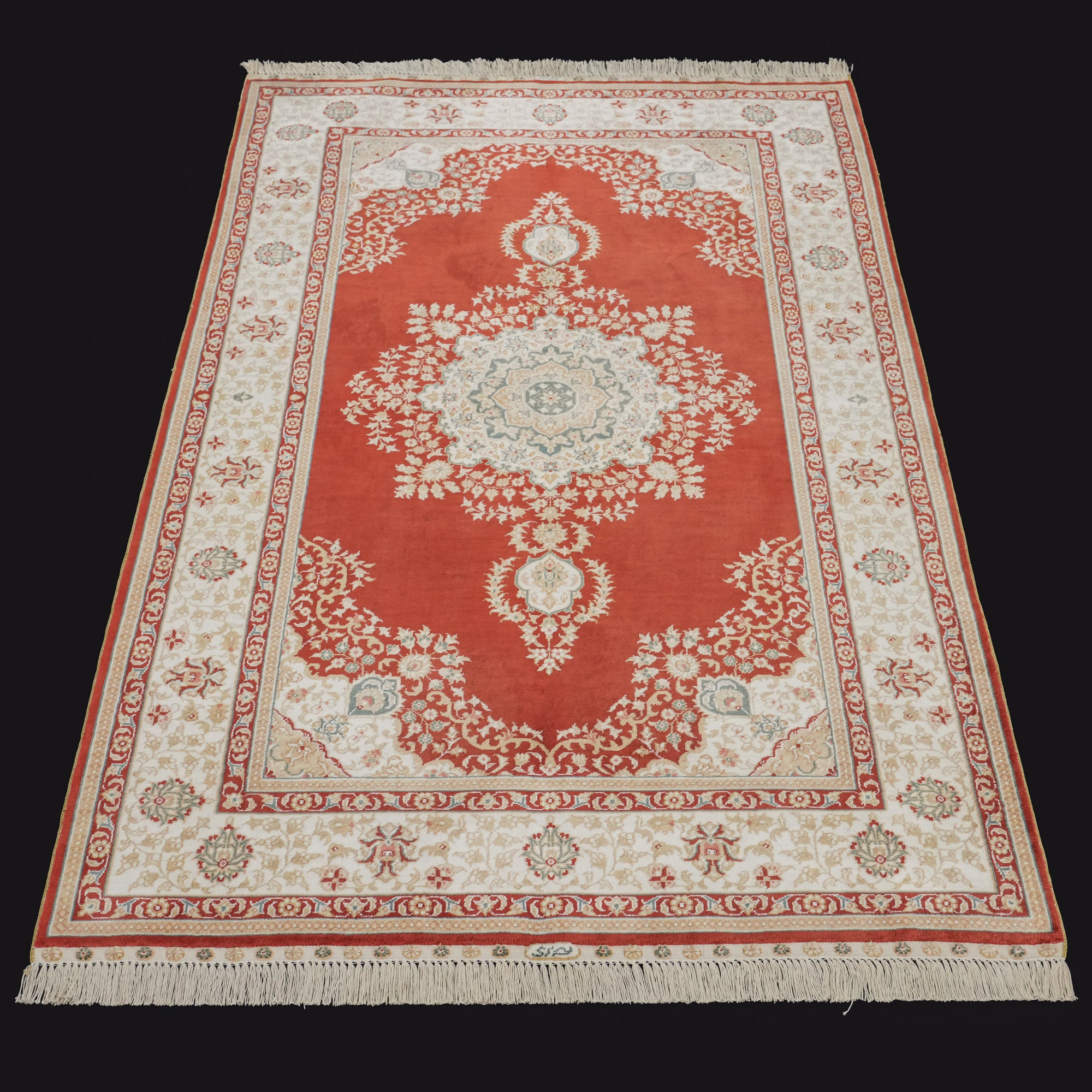
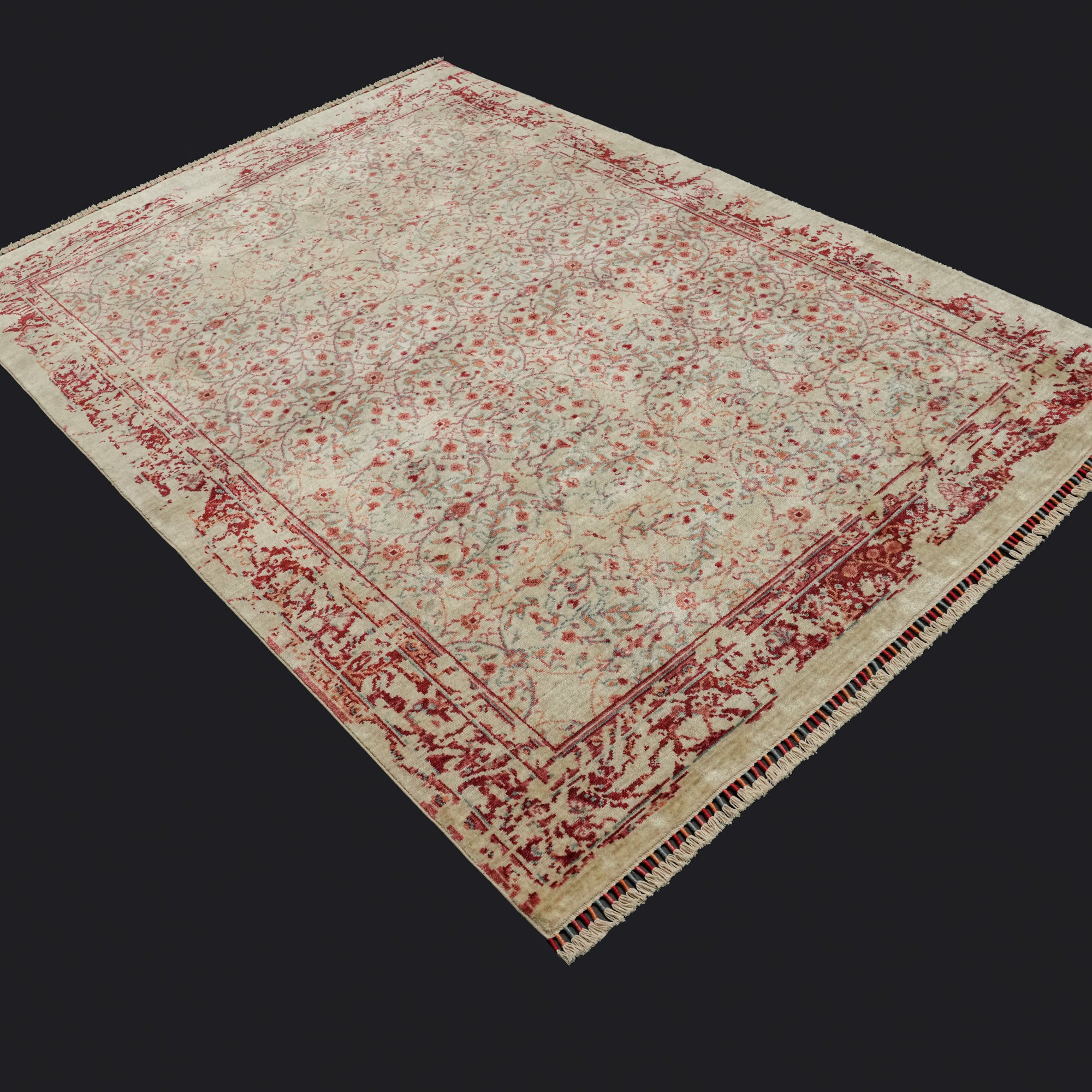
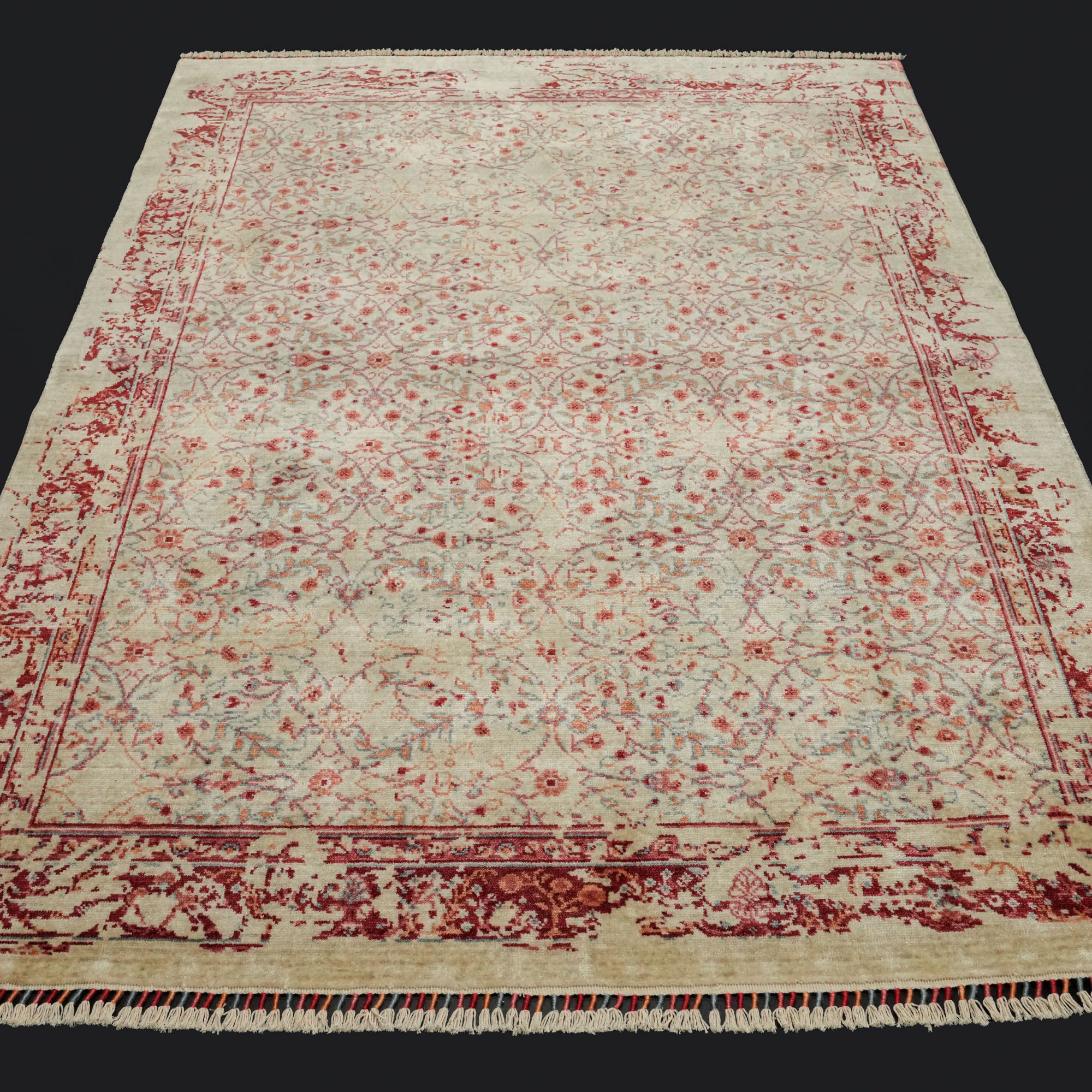
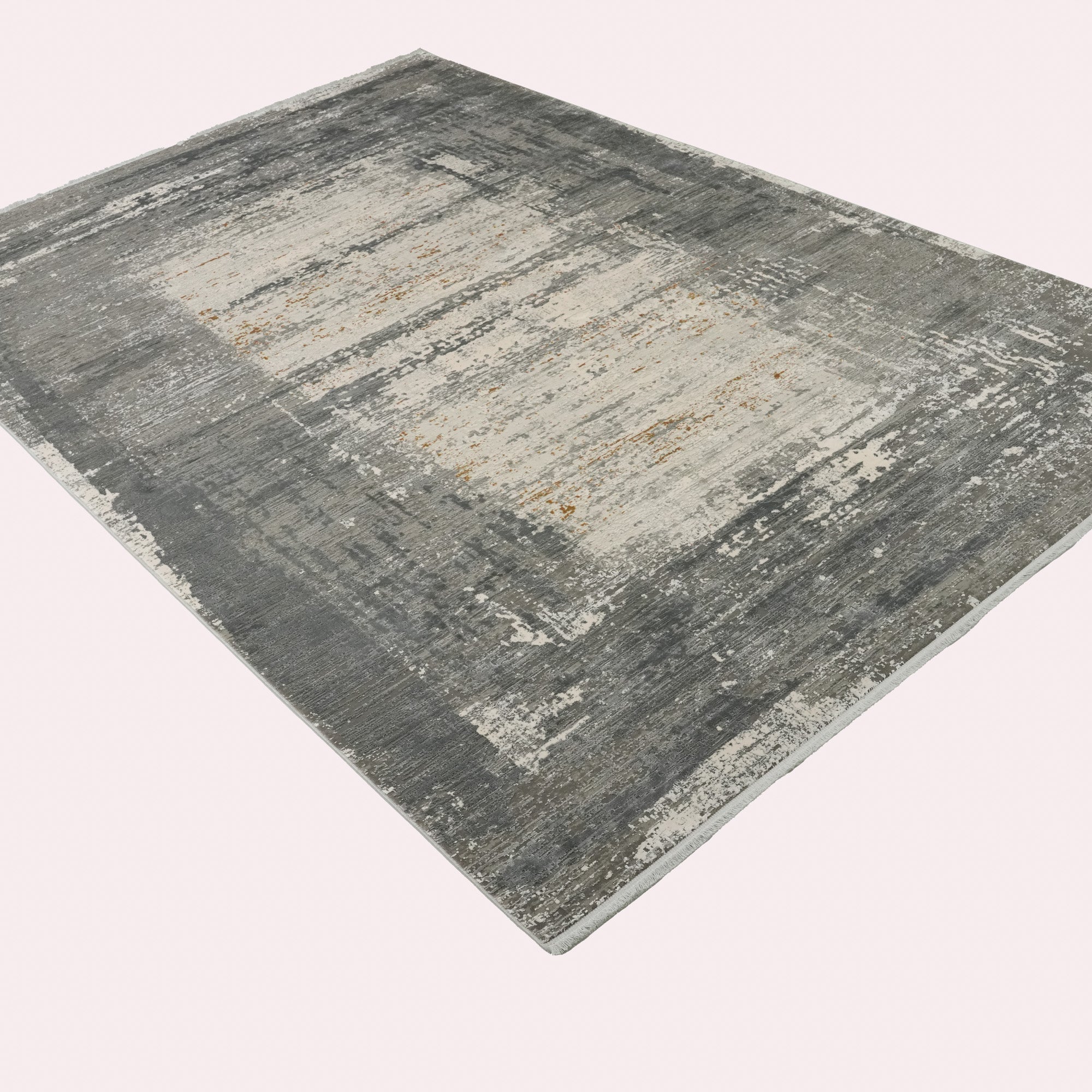
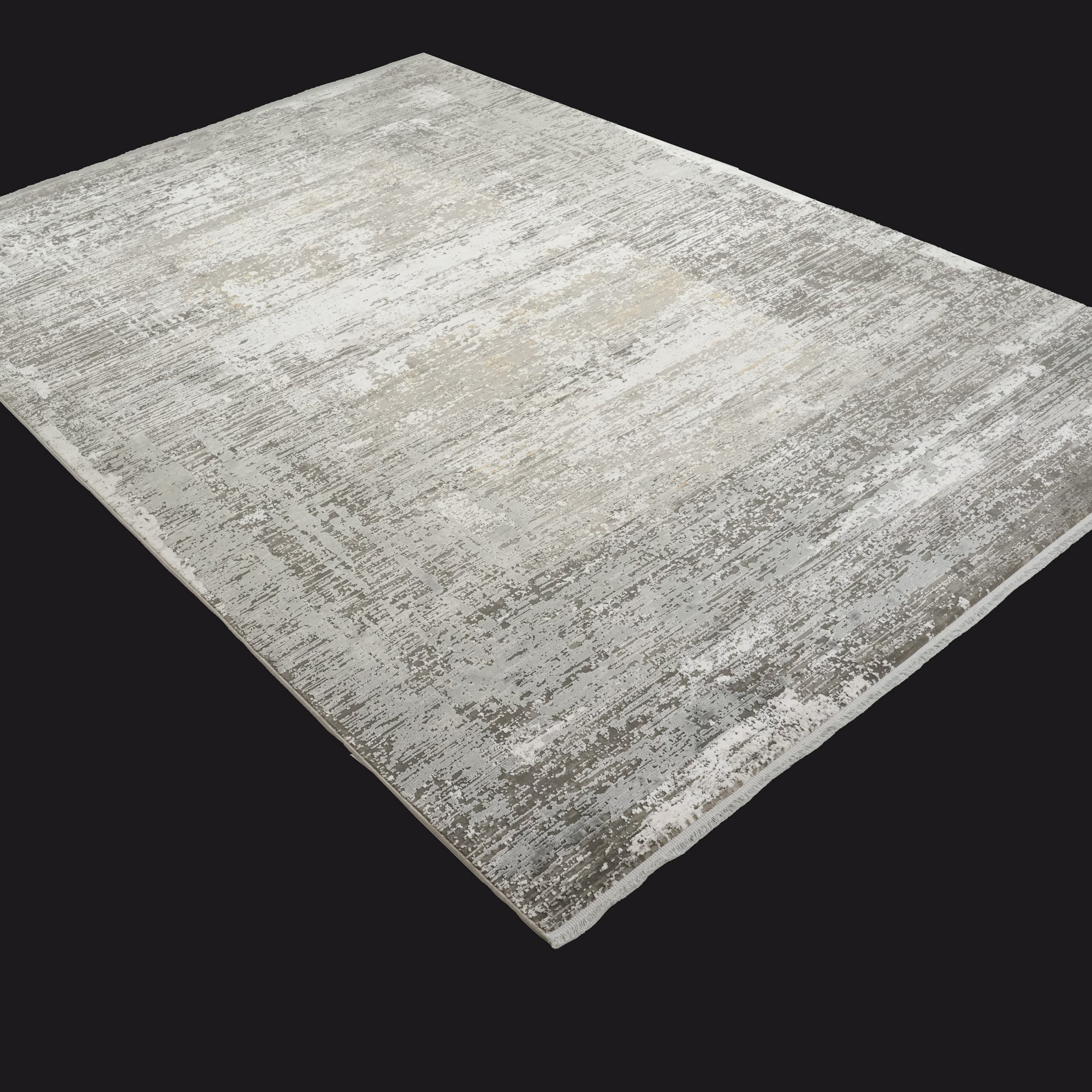
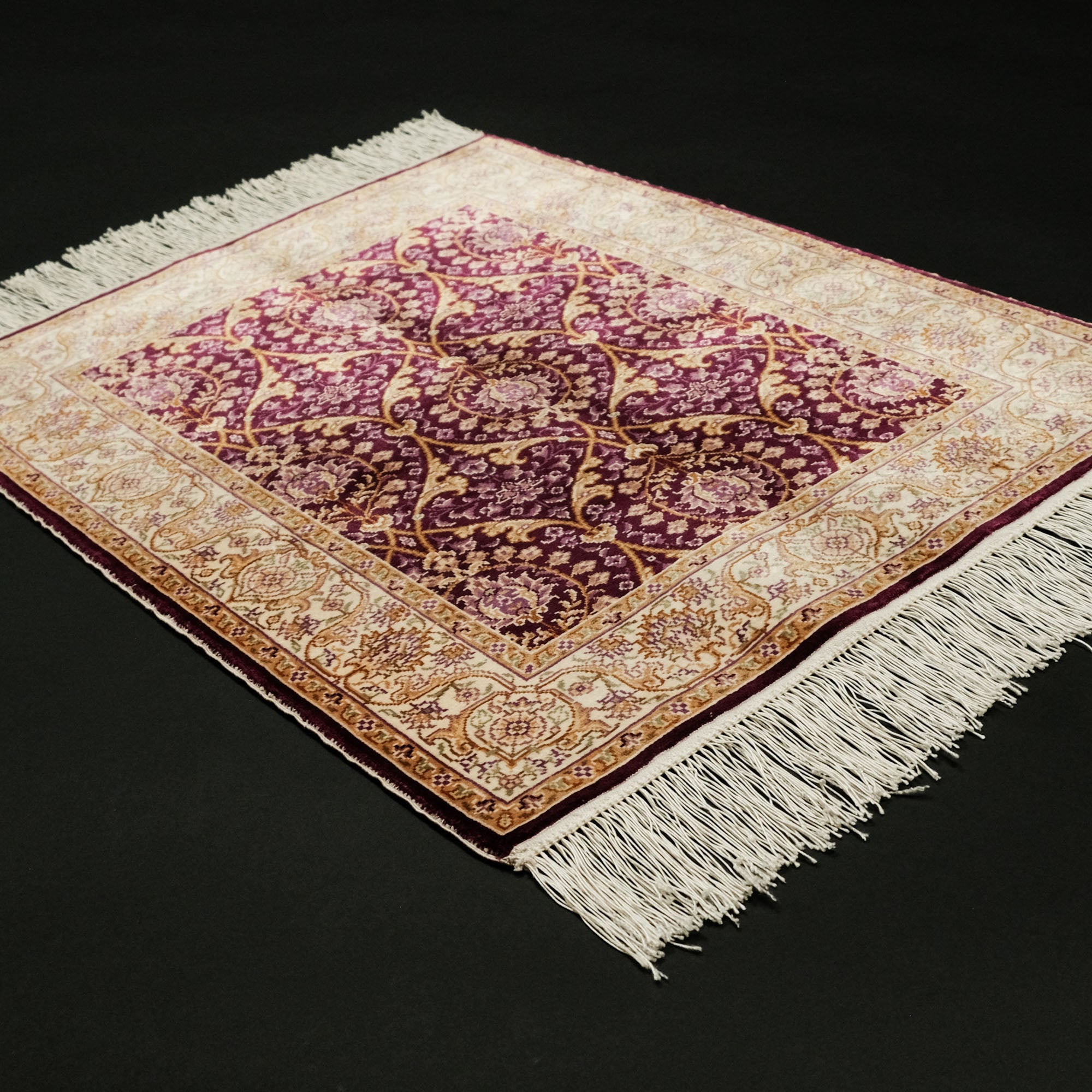
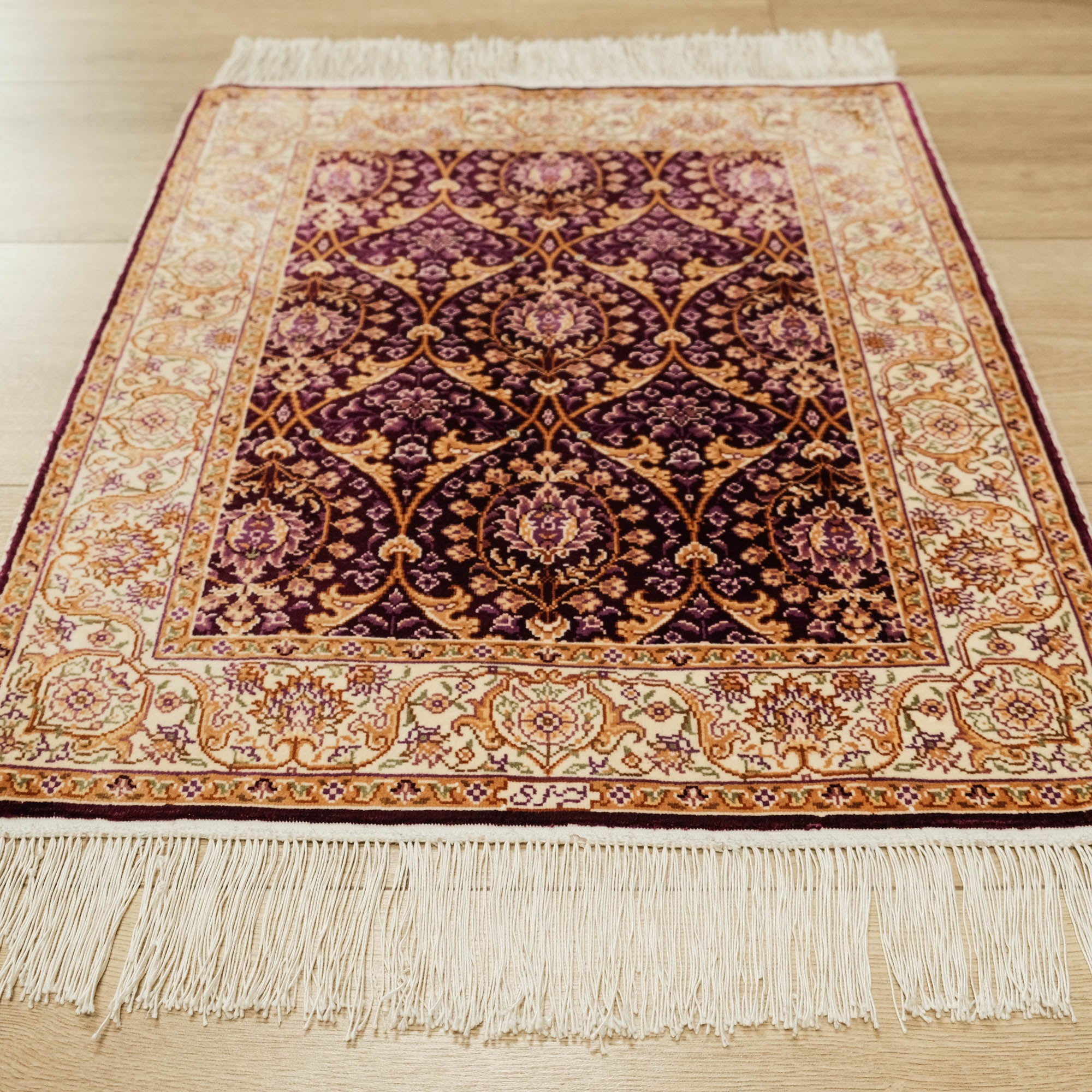
A viscose rug is woven from viscose (rayon) yarn, a semi-synthetic fiber made from processed plant cellulose, prized for its silk-like sheen and soft hand at a fraction of the cost of pure silk.
Viscose exists specifically to solve a design problem, how to get silk's light-catching sheen into larger, more affordable rugs, and understanding that origin explains both its appeal and its specific care requirements.
Developed Specifically to Approximate Silk
Viscose gives designers a way to achieve the light-catching sheen of silk in larger, more affordable formats than pure silk construction allows, which is why it's often used as an accent yarn alongside wool rather than as a full rug's primary fiber, highlighting specific motifs with sheen the way Hereke-style wool-silk blends do, but at a lower price point.
How Viscose Is Made
Viscose fiber is manufactured from processed plant cellulose, chemically treated and respun into a thread that closely mimics silk's smooth, light-reflective surface, engineering silk's visual signature into a semi-synthetic fiber that costs considerably less to produce.
Why Choose a Viscose Rug from Halicizade
Viscose fiber is engineered to mimic silk's luster while remaining significantly more affordable, which is why many of our wool-viscose blends use it to highlight pattern detail and add shine to specific motifs rather than replacing wool entirely.
Where Viscose Rugs Work Best
Viscose's delicacy relative to wool means placement should favor visibility over heavy use.
- Formal living rooms and bedrooms: low-traffic rooms where viscose's sheen can be appreciated without excess wear.
- As an accent within a wool-viscose blend: highlights specific pattern elements without full-rug fragility.
- Avoid high-traffic areas and anywhere prone to spills or moisture exposure.
- Works particularly well under indirect, ambient lighting where the fiber's sheen catches subtly.
Viscose vs. Silk vs. Wool
| Viscose | Silk | Wool | |
|---|---|---|---|
| Sheen | Pronounced, silk-like | Warm, distinctive | Minimal |
| Price | More accessible | Premium | Mid-range to premium |
| Durability | Lower, moisture-sensitive | Lower, delicate | High |
| Best use | Accent highlights, low-traffic rooms | Low-traffic, decorative | Nearly any room |
Care & Maintenance
Blot spills immediately and avoid excess water, as viscose fiber can stain and lose its sheen when wet; professional cleaning is recommended for anything beyond light dusting.
Frequently Asked Questions
Is viscose the same as silk?
No, viscose is a semi-synthetic fiber made from processed plant cellulose that visually resembles silk but has different care requirements and durability.
Are viscose rugs durable?
Viscose is more delicate than wool and can flatten or discolor with heavy foot traffic or moisture, so it's best used in low-traffic, decorative settings.
How do I clean a viscose rug?
Blot spills immediately and avoid excess water, as viscose fiber can stain and lose its sheen when wet; professional cleaning is recommended for anything beyond light dusting.
Why is viscose used as an accent rather than a full rug material?
Because it's more delicate and moisture-sensitive than wool, viscose works best highlighting specific pattern elements within a wool-viscose blend rather than serving as a rug's sole fiber.
Is viscose more affordable than silk?
Yes, significantly, viscose was developed specifically to approximate silk's sheen at a fraction of the cost, since it's manufactured from processed plant cellulose rather than silkworm fiber.
Can viscose rugs be placed in sunny rooms?
Moderate sun exposure is fine, but like most fibers, prolonged intense direct sun can affect viscose's color and sheen over time.