
Six by six knots, and the center deliberately left bare
 202×284 cm



Rugs & Kilims
Find Your Rug
For those who already know what they are looking for — Halıcızade's most visited collections.
Six by six knots, and the center deliberately left bare
202×284 cm
Şeki silk, a Heriz drawing, cream held inside red
 250×337 cm
Coffee-brown panels carved above the pile, cream between them
 204×302 cm
One purple medallion, and the whole rug folds into two hands
 170×240 cm
Burgundy silk that goes brown by lamplight, blue at the border
 220×303 cm
Cream and gold swapping places along the pile: 100% silk
 207×303 cm
The Hereke drawing scattered small, on silk in dark red
 170×251 cm
Bahtiyari deseni bir eşarba geçmiş, tek lifi ipek
 90×90 cm
Mihrabı tek yöne bakıyor: elde dokunmuş saf ipek
 104×155 cm
 305×414 cm
 239×301 cm
 245×309 cm
One of a kind
from
495.000 TL
≈ 65.000 TL/m²
 198×307 cm
Turkmen gül medallions on cream, in silk and viscose
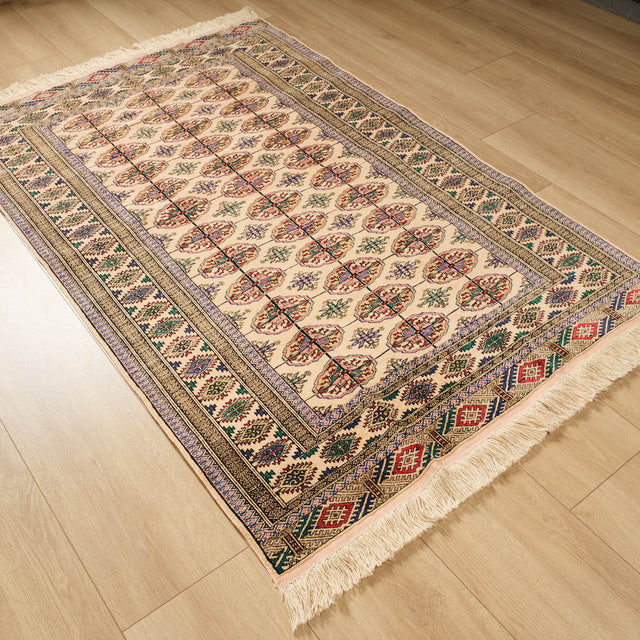 115×175 cm
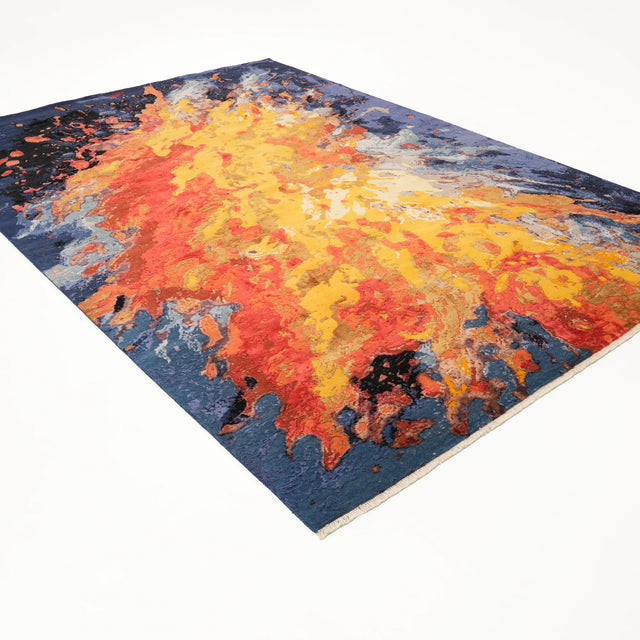 251×357 cm
One of a kind
from
1.000.000 TL
≈ 110.000 TL/m²
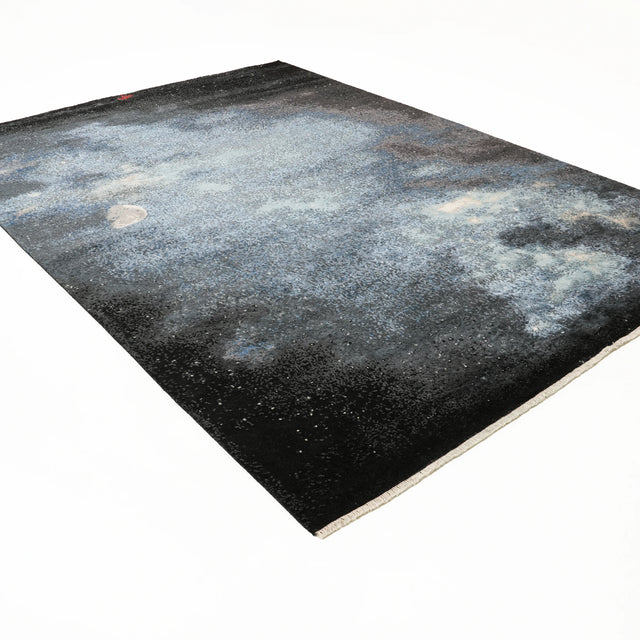 251×352 cm
One of a kind
from
750.000 TL
≈ 85.000 TL/m²
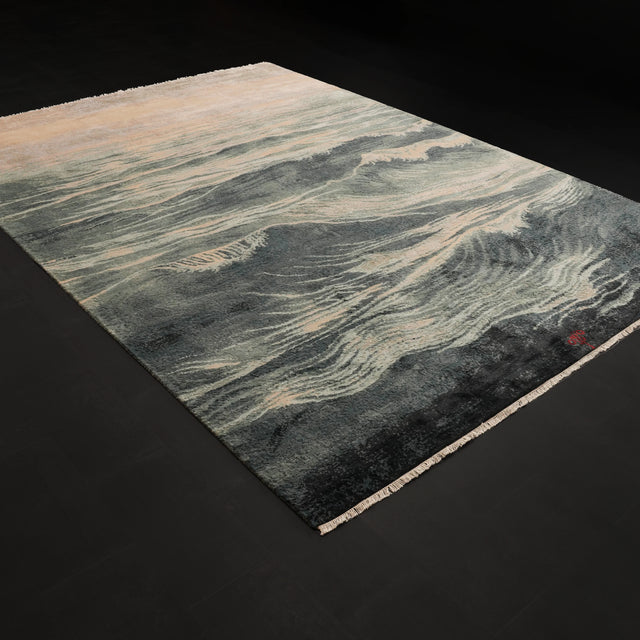 251×352 cm
 268×365 cm
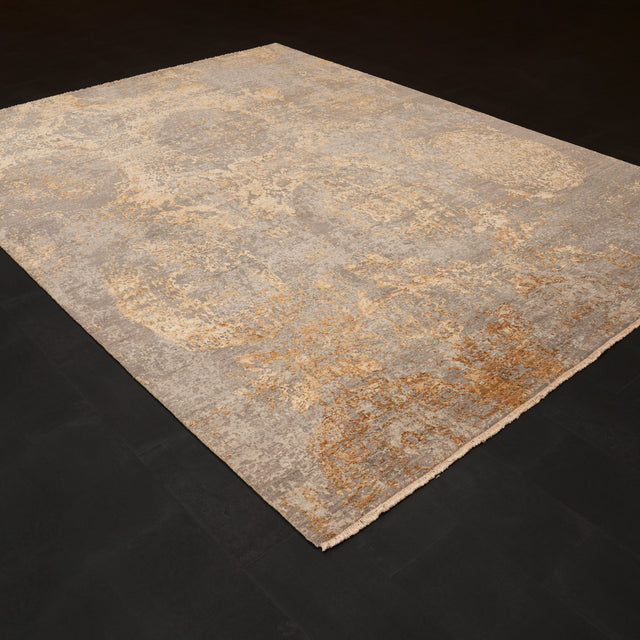 273×365 cm
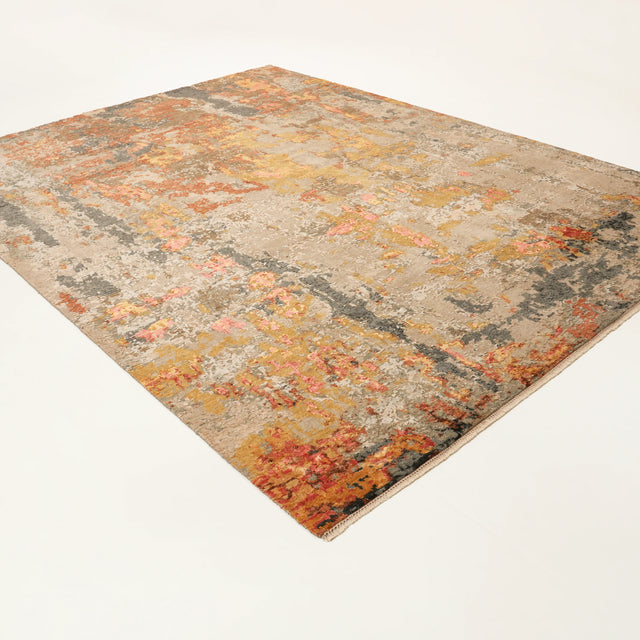 276×364 cm
One of a kind
from
660.000 TL
≈ 66.000 TL/m²
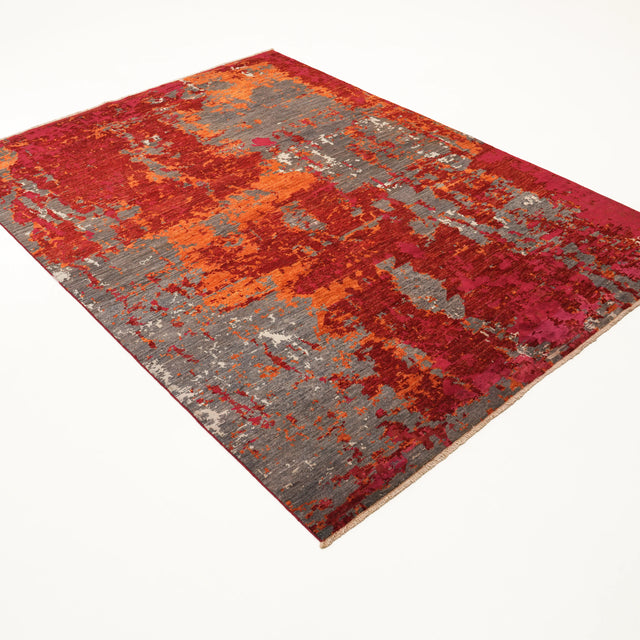 167×233 cm
One of a kind
from
137.000 TL
≈ 35.000 TL/m²
 167×245 cm
One of a kind
from
144.000 TL
≈ 35.000 TL/m²
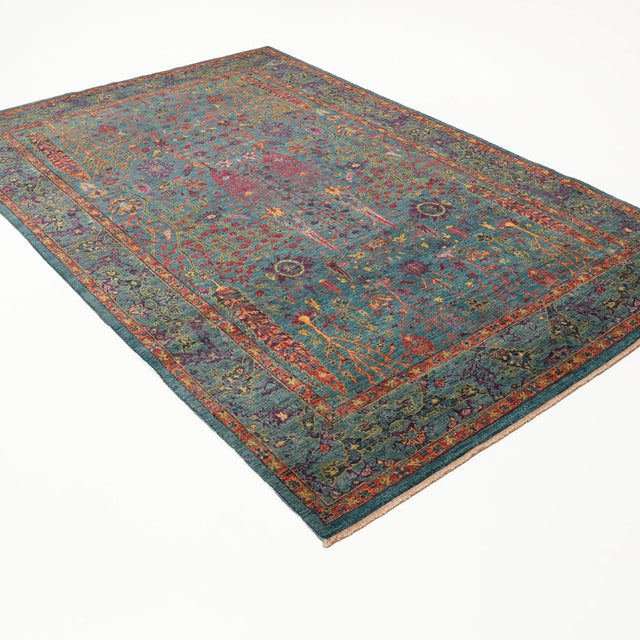 195×300 cm
One of a kind
from
205.000 TL
≈ 35.000 TL/m²
İpek iplikler ışığı tutuyor, antrasit ona göre değişiyor
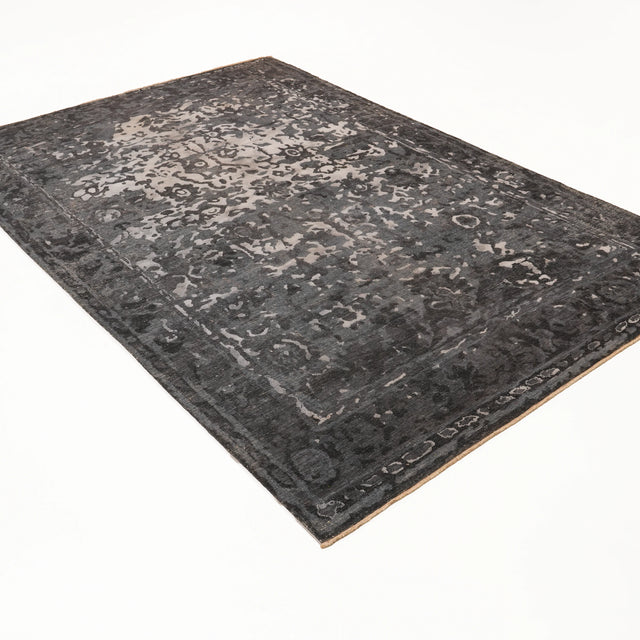 194×291 cm
One of a kind
from
148.000 TL
≈ 26.000 TL/m²
A silk rug is a hand-knotted floor covering whose pile is spun from silkworm cocoon filament rather than from wool or cotton. The fiber is fine enough to carry between 36 and 400 knots per square centimeter, and smooth enough that the rug changes color as you walk around it. Türkiye's principal silk weaving centers are Hereke and Kayseri.
Search traffic calls these silk carpets. The trade calls them rugs, because a carpet is fitted to a room and cut to it, while a silk rug is laid on top of one and moved. What follows is how to tell silk from the several materials sold under its name, why the color of a silk rug depends on where you stand, and where in a house a silk pile actually belongs — which is not everywhere.
By hand first, then by fire, and only on a thread you can spare. Four tests, in ascending order of destructiveness.
One warning about the last two, which most guides leave out: the fringe is the warp, not the pile. Plenty of good rugs are knotted in silk on a cotton warp, and on those the fringe test tells you about the foundation rather than about the surface you are buying. If the fringe is silk as well as the pile, the rug belongs to the narrower category described on our pure silk rugs page. Take the test thread from a shed tuft of pile if the seller will allow it, and do not cut into a rug you do not own.
Because a silk fiber is smooth and a wool fiber is not. Wool is scaled along its length and scatters light in every direction, which is why a wool field looks broadly the same from any chair in the room. Silk filament is unbroken and reflects light along its axis, so what reaches your eye depends entirely on the angle between the light, the lie of the pile and your head.
Weavers use this deliberately. A field woven so the pile runs away from the window will hold light and read pale from the door; the same field, from the window end, goes deep. Hereke drawing in particular relies on it, with grounds that lift and drop as you move rather than colors laid on flat. It is also the reason a silk rug photographs badly and has to be seen turned in the hand.
Hereke was an imperial workshop; Kayseri was a market.
The Hereke works were founded in 1843 on the Marmara coast to weave for the Ottoman court, and the house style that came out of them is tight, small-scale and drawn with a fine brush: dense borders, medallions built from curves rather than steps, prayer designs, and knot counts at the upper end of what a hand can tie. Hereke silk is knotted with the symmetrical Gördes knot, looped around two warp threads — the harder knot to tie in a fiber this fine, and the reason a Hereke silk takes as long as it does. See Hereke rugs.
Kayseri, in central Anatolia, is where classical court designs were rewoven for buyers outside the palace, in wool, in silk and in mercerized cotton. That last material is the origin of most confusion in this market. See Kayseri rugs.
Only one of the three comes from a silkworm.
Mercerized cotton — cotton treated under tension in caustic soda so the fiber swells, straightens and takes a shine — has been woven in Kayseri alongside wool and silk, and it reaches English-language markets as art silk, short for artificial silk. Bamboo viscose is cellulose dissolved and extruded as filament, and reaches the market as bamboo silk. Both are lustrous, both take dye brilliantly, and neither is silk. Neither is a fraud either, so long as it is named honestly and priced as what it is; the problem is a label that borrows the word silk and a price that borrows it too. Compare our bamboo rugs, which are sold under their own name.
| Material | What it is | How it behaves | Suited to |
|---|---|---|---|
| Pure silk | Cocoon filament in both warp and pile | Warms to the hand, strong color shift, very fine drawing | Display, low-traffic rooms, wall hanging |
| Silk pile on cotton warp | Silk surface, cotton foundation | Same surface behavior, flatter and more stable underfoot | Formal rooms in light domestic use |
| Silk and wool | Wool ground with silk worked into chosen motifs | Silk lifts only where it is used; wool carries the wear | Living rooms in ordinary daily use |
| Mercerized cotton (art silk) | Cotton chemically treated for luster | Bright, cooler to the touch, does not warm under the palm | Pattern and shine at a lower price |
| Bamboo viscose (bamboo silk) | Regenerated cellulose filament | Very soft, flat shine, crushes and marks readily | Bedrooms and other light-use floors |
Four things set the figure, and size is the least interesting of them.
The first is fiber grade, since reeled cocoon filament and spun silk waste are both called silk and are not the same purchase. The second is knot density: a rug at 36 knots per square centimeter is roughly 300,000 knots to the square meter, one at 400 is around four million, and every one of those knots is a hand movement. The third is who drew the design and how many colors the drawing needs, because each additional color is another bobbin the weaver must handle at every row. The fourth is whether the rug was knotted at all — a machine-woven bamboo viscose piece in a silk-looking design costs a fraction of a hand-knotted silk one and is a different object, not a cheaper version of the same one. We quote current prices per piece on each product page rather than in bands here, because size, density and fiber grade move independently.
Compare rugs by price per square meter rather than by ticket price, so that two rugs of different sizes answer to each other. Measured across the Anatolian stock at Halıcızade Halı Kilim (Ankara) in September 2026, a hand-knotted pile rug with silk worked into it runs about 1.4 times a wool pile rug of the same size, and about 3.2 times a flat-woven wool kilim. Taxes, shipping and duties on orders outside Türkiye are calculated and collected at checkout.
Silk is strong for its diameter and thin in absolute terms, which is the whole trade-off. A silk pile crushes where a heavy chair leg stands, shows a footpath sooner than wool does, and marks visibly when it is wet. It also holds detail no wool rug can hold.
Day to day, vacuum with the beater bar off and in the direction of the pile, wipe with a barely damp cloth along the pile rather than across it, and air the rug until it is fully dry before it goes back down. Send it to a washer who handles silk specifically, and read how a rug is washed before you hand it to anyone.
Draw a palm across the pile: silk warms and its sheen shifts, while mercerized cotton and viscose stay cool and flat. To confirm, burn one fringe filament — silk chars black, smells of burnt hair and self-extinguishes, whereas cellulose fibers burn on and smell of paper.
Silk filament is smooth and reflects light along its length, so a pile that all lies one way reads pale from one end of the rug and several shades deeper from the other. Wool fiber is scaled and scatters light, which is why a wool rug looks the same from anywhere.
No. Bamboo silk is viscose, a filament made by dissolving and extruding cellulose, and mercerized cotton sold as art silk is chemically treated cotton. Both are lustrous and both take dye well, but only filament reeled from a silkworm cocoon is silk.
A pure silk pile is a poor choice for that room, since it crushes under weight, marks when wet and shows a walking path early. A silk-and-wool rug gives much of the same light on a wool ground that takes the traffic, and a wool rug takes it better still.
Fiber grade, knot density, the number of colors in the drawing, and construction. Density alone spans a factor of ten, from roughly 300,000 knots per square meter to about four million, and each knot is a separate movement of the weaver's hand.
Measured per square meter across the Anatolian stock at Halıcızade Halı Kilim, a hand-knotted pile rug with silk worked into it runs about 1.4 times a wool pile rug of the same size, and about 3.2 times a flat-woven wool kilim. Fiber grade and knot density then move a rug within those bands.
Hereke is the imperial workshop founded in 1843 to weave for the Ottoman court, and its silk work is fine, curvilinear and densely bordered. Kayseri in central Anatolia rewove classical designs for a wider market in silk, in wool and in mercerized cotton.
Last updated: 10 September 2026
Related collections: pure silk rugs, silk warp and pile · Hereke rugs · hand-knotted rugs · Turkish rugs · Sultan Series


