

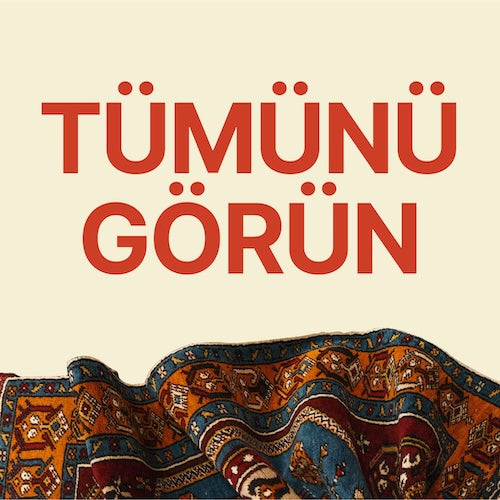
Its History, Technique, Types, and Cultural Meaning
Let’s say what we will say at the beginning: The rug is not just a floor covering. At least, it is not only a floor covering. The rug is the emotion of a civilization, the memory of a geography, the soul of a home. Buying a rug without understanding this is like looking at a painting only in terms of the paint used.
We wrote this for those considering buying a rug and for those who want to understand the rug. We hope it will be useful and inspiring.
“If you have a rug, you have a lot.”
Jack Kerouac
What is a Rug?
The rug is a floor covering with a three-dimensional woven surface created by knotting pile yarns onto a base made of warp and weft yarns. This technical structure gives the rug visual depth, physical softness, thermal insulation, and sound isolation properties.
But this definition is as incomplete as calling a poem a "series of words." The true meaning of the rug is not in its technique but hidden in the culture it carries. Rug types are classified according to production technique, yarns used, and patterns into hand-woven rugs, loom-woven rugs, machine-made rugs, Kilim, and flat weave. Each has its own unique spirit and usage area.
The rug is the home itself. Why? When Turkish tribes migrated in Central Asia, before setting up their tent, they would first take the rug off the horse’s back and set up the tent around the rug. Because wherever the rug was, the home was there.
Features That Distinguish the Rug from Other Floor Coverings
Kilim is flat; the rug has pile. This difference may seem small but it is actually the boundary between two different worlds. The pile layer of the rug consists of yarn ends formed by cutting knots. Therefore, the rug is actually a surface made up of a very large number of yarn ends. Kilim, on the other hand, has no pile height and is formed by interlocking yarns; the yarn ends are not visible, resembling a cover.
Acoustic comfort:
The rug absorbs sound. Sound insulation is especially important for homes with children, as well as for homes where loud music or movies are played, or in cases where downstairs neighbors are sensitive.
Thermal insulation:
The floor is cold. The rug places a warm barrier between the foot and the floor. The difference created by a quality wool rug is noticeable during winter months. Although spaces now often have underfloor heating, especially on stone floors, feeling warmth is one of the innate human desires.
Defining the area and spatial arrangement:
In the language of interior design, "defining the area" — the rug fulfills this function in the most natural way. The place where it is laid becomes the ‘space’.
Aesthetic depth:
The floor is the largest surface of a space. It is often neglected; yet it deserves the most attention.
The Historical Origin of the Rug
What common items exist between the houses we live in today and those from centuries ago? While stoves and sofas have changed shape, one of the few fixed items is the rug. Rugs, which have made the place they are laid a home for hundreds of years, are positioned right at the center of our lives.
The Oldest Known Rugs in the World
The oldest known rug in history is the Pazırık Rug, excavated from the Pazırık kurgan in Siberia, dating back to the 5th century BC. Displayed at the St. Petersburg Hermitage Museum, this rug shows extraordinary craftsmanship despite being made 2,500 years ago. It is believed to belong to a nomadic community of Central Asian origin, with approximately 36 knots per square centimeter.
This discovery tells us something important: The rug was not a luxury. It was a necessity.
Note, the oldest known rug was not found in an archaeological excavation of a marketplace. Nor was it a flat rug. A person loved their colorful rug with deer and figures so much that they wanted to be buried in the same grave to take it to the next life. The rug is not a commercial object, nor just a floor covering.
It is a feeling.
Among the oldest rug examples in Anatolia are the Seljuk period rugs from Konya and Beyşehir. Regional rugs continue this tradition today; Hereke, Isparta, Uşak, Kayseri, and Milas rugs are living geographical identities of Turkish rug weaving. Those interested can visit the Turkish and Islamic Arts Museum in Sultanahmet Square. We assure you will see exquisite rugs.

The Place of the Rug in Nomadic Cultures
For the nomadic Turkish and Mongol communities living in the Central Asian steppes, the rug was not just a floor covering — it was a portable home. In this ground culture, where sitting, eating, sleeping, and worshipping all took place on the floor, the rug was at the very center of life. This tradition, brought from Central Asia to Anatolia, took root and deepened here.
The Cultural and Symbolic Meaning of the Rug
Imagine, how are the patterns and motifs on a rug decided before it is woven? What are the differences in the stories told by a rug from Egypt and one from Anatolia? Throughout history, classic rugs bear traces of local cultures. Modern designs convey today's emotions onto the rug, which is why every rug's meaning can be both unique and shared.
The Place of the Rug in Anatolian Culture
In Anatolia, a rug was never an ordinary object. It was the most valuable part of the dowry. Rug art was not just a craft but a form of cultural expression. Rug motifs were an alphabet: elibelinde symbolized motherhood and abundance, ram's horn represented strength and courage, the eye motif conveyed protection from the evil eye. The traditional weaving tradition still lives today; although Turkey is not among the countries producing the most qualified handwoven rugs, it holds a leading position in industrial machine-made rug production. Although the spirit of the times has changed the fact that weaving is handmade, Anatolian hospitality still brings along leading rug manufacturing.
Rug Perception in Eastern and Western Cultures
In Eastern cultures, rugs are laid on the floor, sat on, used for prayer, and to host guests. In Western cultures, they serve as an aesthetic element and floor organizer. In the East, the rug speaks to the soul; in the West, it speaks to the space. The Halıcızade product range brings these two perspectives together: both rooted and contemporary.
Technical Structure of the Rug
Like every production process, a rug has various components. Threads, dyes, knots all contribute to the rug while also influencing the rug preferences of different regions. Below you can find details about the technical components of the rug:
Weaving System: Warp, Weft, Pile
- Warp: Threads stretched vertically on the loom. They are the backbone of the rug.
- Weft: Threads passed horizontally between the warp threads. They fix the knots and provide structural integrity.
- Pile Yarn: Threads tied to the warp with knots and cut at the ends to form the pile surface.
Knot Density: Indicator of Resolution
One of the technical criteria determining the value of a handwoven rug is how many knots are tied per square meter.
| Knot Density | Quality Level |
|---|---|
| 30,000 – 80,000 / m² | Entry-level handwoven |
| 80,000 – 200,000 / m² | Medium-high quality |
| 200,000+ / m² | Museum quality, collectible |
However, the number of knots is only one aspect; there are many other factors such as color, pattern, uniformity, and pile height. Knot count alone is far from determining the value of a rug. Pile height also affects the choice: High pile (8mm+) gives a luxurious feel; short pile (4–6mm) provides durability and easy cleaning. Short pile should be preferred in high-traffic areas.
You can think of high knot density somewhat like screen resolution. The more knots there are, the higher the resolution. But remember, we love our favorite movies not always because of high resolution, but because of their spirit and what they make us feel. So, many knots do not necessarily mean high quality. However, it is enjoyable to look at rug models with high knot density.
Knot Techniques
- Turkish Knot (Gördes): Both yarn ends come out. Its symmetrical structure allows for tighter, more durable rug production. It is the essence of Anatolian rug making. Also seen in Afghanistan and Pakistan weavings. Also called the double knot.
- Iranian Knot (Sine): Asymmetric structure. Allows very fine patterns to be processed. Common in Iranian and Indian rugs. Also known as the single knot.
- Nepal Knot (Tibet): Also called the spike knot technique, in this method, yarns are passed through a spike to continue weaving, and when the spike is pulled out, many knots are tied at once. It offers a more flexible weaving feel.
A rug woven with the Turkish knot generally has a more durable and tight structure compared to a rug woven with the Iranian knot using the same yarn quality.
Yarn Types: Fiber Quality Is Everything
As important as looking at which yarn is preferred is the quality of the yarn chosen. Very high-quality, oily fleece wool is both rare and soft and shiny, but low-quality wool, despite being called "wool," is hard, not shiny, and deforms over time. Therefore, it is not enough to look only at the type of yarn; what matters is which quality class of yarns is preferred.
- Wool: The most traditional natural yarn. It is flexible, does not leave marks, and becomes more beautiful over the years. It retains heat and breathes.
- Cotton: Commonly used in warp and weft. As pile yarn in summer rugs, it provides a cool and matte surface.
- Silk: The pinnacle of rugs. It offers incredible shine and fineness. It is the rug type that requires the most delicate care.
- Bamboo and Viscose: Derived from vegetable cellulose, it offers a silk-like shine. It does not attract dust or cause static electricity.
- Tencel: Cellulose fiber obtained from the eucalyptus tree. It stands out with its silky texture and eco-friendly production process.
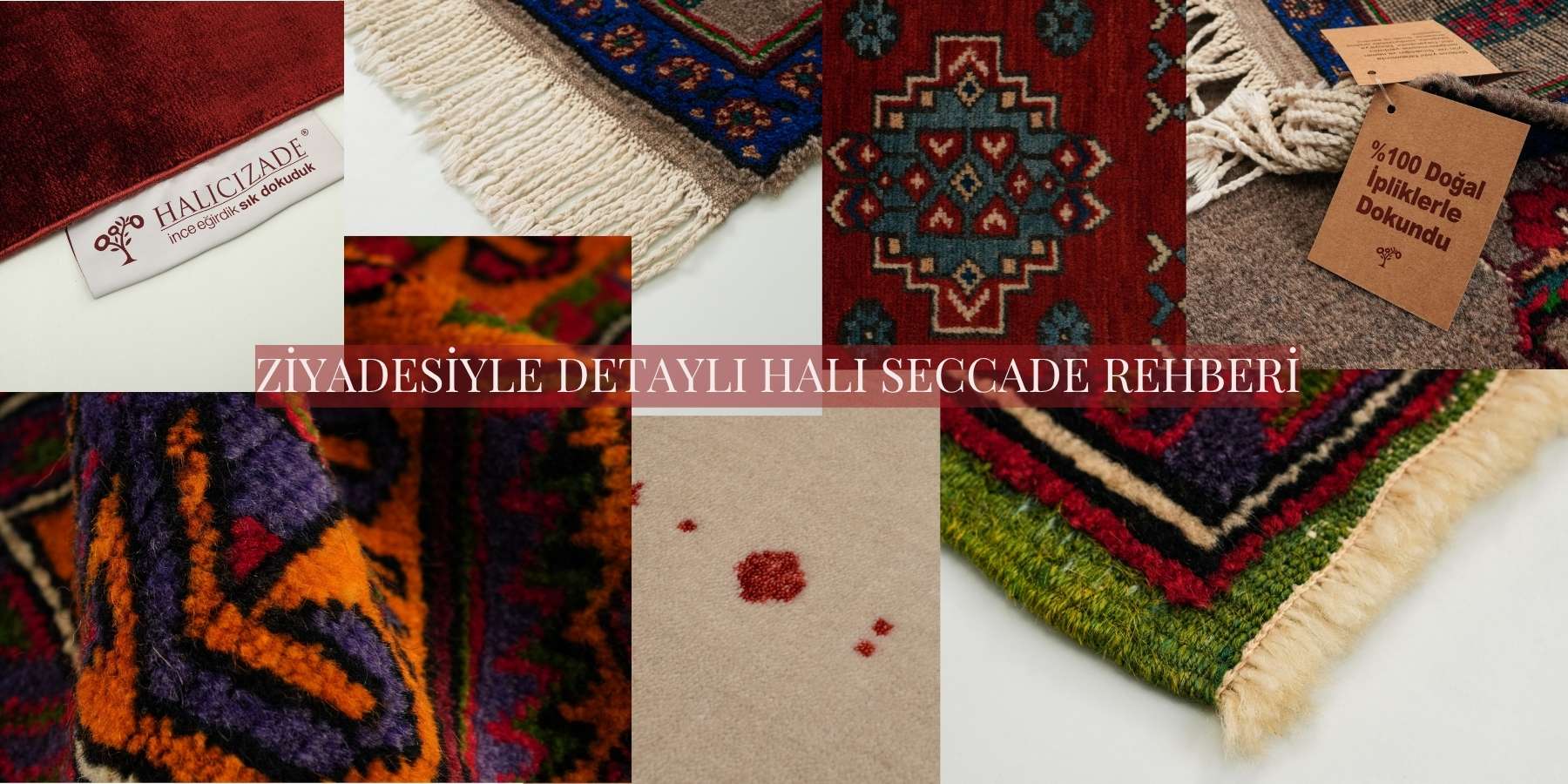
- Root Dye and Vegetable Dyes: Root dye for red, chehre for yellow, indigo for blue. It does not fade over the years; it matures and deepens. Whether a rug is root dyed can be detected by laboratory analyses and expert eyes.

How Is a Rug Produced?
The production process of the rug directly affects the feel of the resulting patterns. If handwoven rugs are likened to handwritten works, machine rugs resemble printed texts, and loom weaving is like typing on a typewriter. While the amount of handwoven rugs decreases day by day, the prevalence of industrial and semi-industrial productions increases with the intervention of technology.
Handwoven, Handloom, and Machine-made Rugs
- Handwoven rug: Each knot is tied by hand. Unique; with slight asymmetries and a human touch. It is the highest expression of rug art. It should be remembered that there are different weaving techniques; not all handwoven rugs are the same.

- Handloom weave: Yarn and pattern quality are preserved while the process is partially standardized. Halıcızade’s handloom collection is produced with natural yarns and quality dyes. It is the hybrid weaving technique of this era, offering quality and authenticity together.
- Machine-made rug: Completely industrial process. High price advantage, limited use of natural yarns. Suitable for short-term use or if budget is a priority.
Rug Types: Which Rug for Which Need?
- Handwoven Rug: The highest craftsmanship value. The right choice for comfortable budgets, those who value authenticity, interior designers, rug enthusiasts, and lovers of cultural productions.
- Seccade: A sacred ground of 2 square meters. The Halıcızade seccade collection is produced entirely with natural yarns.
- Kilim: Flat weave, no pile layer. Thinner, lighter. Ideal for bohemian and eclectic spaces.
- Regional Rugs: The silk fineness of Hereke, the floral patterns of Isparta, the village geometry of Milas, the medallions of Uşak. Not just a rug, but sharing a story.
- Vintage Rugs: 20–40 years old, carrying the patina of time. Some are made with wash & distressed technique; others are genuine antiques. They breathe life into spaces by creating a wonderful contrast with modern minimalist decor.

- Handloom Weaves: Accessible luxury, a popular choice of this era with its natural and budget-friendly structure.
How Are Rug Patterns Determined?
When creating Halıcızade’s collections, we ask three questions: “How does this pattern feel combined with this yarn and color?”, “Do we like these patterns and colors together?”, “Does it meet today’s needs and decoration?”. Then our designers work on their creations, and we start production of those that pass through our expert team’s filter.
Cultural, Artistic, or Commercial?
There are three main points when determining rug patterns. Classic patterns reflect culture. The seven mountains flower in Hereke rugs, the stylized flowers in Uşak rugs, and more are the remnants of hundreds of years and when we see them, they "make us feel at home."
On the other hand, an artistic production process is operated in authentic rug designs. Designers create rugs like writing poetry or taking photographs, considering color, pattern, and knot density. The resulting rug design is likely to appeal to fewer people but touches a unique point in their soul.
The purpose of commercial patterns is to be preferred by the largest number of people. Generally, less risky, plain, simple motifs, tone-on-tone colors are preferred. More important than how much it is loved is how little it is disliked. Many plain rugs that have appeared recently are produced with such commercial approaches due to the requirements of high production volumes, with the logic of "the more it fits into homes, the better." Therefore, rugs laid by large masses become objects that are not much loved or embraced.
Why Is a Rug Valuable?
People think their rugs are valuable even after many years, but as with many things, time usually wears out, sometimes it adds value. The value of a rug is as much as the value given to it, and used rugs generally lose their worth. On the other hand, the beauty of the rug, the materials used, and its rarity are the main factors determining its value.

Usage Purpose or Meaning?
You should ask yourself this question when buying a rug. If the purpose is usage, durability and easy cleaning should be prioritized. If meaning is the priority, the story of the pattern, yarn quality, and craftsmanship value become decisive.
What Halıcızade observes is this: The best purchases are made by those who answer these two questions together. It is possible to find a rug that is both beautiful and durable, both aesthetic and functional.
For those who can't decide which rug to buy, our advice is; "choose the rug that smiles at you."
The Value a Rug Gains Over Time
A good handwoven rug can lose value over time. Wool rugs dyed with natural dyes can look more beautiful after ten years than on the first day. Buying a rug can also mean leaving a legacy. Or it might not, if you are not thinking of profiting from collecting, you can focus on those produced in limited numbers with high-quality yarns.
Custom Designed Rugs
The essential function of the rug is what you feel when you see it, and at the core of this function is design. Custom-designed rugs come into play here and are divided into two. Those produced specifically for customers, usually with the hand tuft technique, based on pre-production requests. Those created by design artisans and then put on sale. The first allows laying rugs according to the space and needs, while the second enables the emergence of authentic, unique, and characterful rugs. Since its establishment, Halıcızade has been one of the right alternatives to access rugs with high design value. And as experienced artisans in rug design say:
"Only those who have lost their minds design rugs."

Rug and Space Relationship
When you lay a rug, you intervene not in the room but in the room's emotion. A large rug gathers the space and makes it feel warm. A small rug defines a regional area and gives a sweet feeling. Color choice sets the mood of the space: earth tones provide warmth, dark colors depth, and light colors a sense of spaciousness.
Basic rule: There is no objective right in rugs. You can choose colors based on the dominant tones in the room, or we can place part of the rug under the furniture. Or conversely, you can select a rug in contrasting tones to the most prevalent color in the room and position it in the center or beside the furniture. A rug is also about laying down what suits the person.

Rug in Today's Life
In contemporary interior design, the rug is regaining its central place. With the rise of natural yarns, health awareness, and eclectic styles, natural fibers like bamboo, wool, and silk are coming to the forefront again. Vintage handwoven rugs combine with minimal Scandinavian furniture or simple living rooms; these contrasting combinations are now seen not as mismatches but as conscious choices.
Now, the rug is positioned not as a piece of furniture but as an accessory reflecting the soul of the home. The simple and clear production perspective in furniture and decoration manufacturing rapidly highlights two distinct wings in rug models. The first is rugs in plain, simple, pastel, and faded colors that create a harmonious base for the rest of the home. The other is focal points emerging with more colorful, maximalist, contemporary, classic, or authentic patterns. In recent years, the amount of red rugs we have displayed as Halıcızade has increased more than ever. The reason is precisely this desire and need to "add color."
Especially in projects we realize with interior designers, either tone-on-tone, as simple and plain rugs as possible, or rugs in dominant colors that breathe character into the space with authenticity are preferred.
Rug from the Halıcızade Perspective
Since 2004, we have not only sold rugs. We strive to turn rug buying into a meaningful experience. Customers who choose a rug for their youth room today buy a rug for their children's room.
Buying a rug should be a pleasant experience. You should smile for years seeing the beauty it adds to your space. To us, a good rug purchase is exactly that.
And the most beautiful rug is the one that suits its place.
If you want to see our collection halicizade.com or our Ankara showroom is waiting for you. Free shipping, unconditional 14-day returns.

Frequently Asked Questions
What Is the Main Difference Between a Rug and a Kilim?
A rug has a pile; it has a soft layer of cut yarn ends on the surface. A Kilim is flatwoven, with no pile layer. Rugs are softer and provide thermal insulation; Kilims are thinner, lighter, and portable.
How Do I Recognize a Quality Rug?
Look at four main indicators: type of yarn (natural or synthetic), knot density (the higher per square meter, the better), dye quality (natural dye or synthetic), and thickness (fold the rug — if knots are visible where folded, it’s good).
Why Is a Handwoven Rug So Expensive?
A craftsman works 3 to 12 months on a medium-sized handwoven rug. Each knot is placed individually. The resulting product is unique. The price sometimes reflects labor, sometimes the design.
Should I Prefer Wool or Bamboo?
If you want warmth and a natural feel, choose wool; for a shiny and modern look, bamboo. Both are natural fibers and durable. For those with allergies, tencel, bamboo, and viscose are more advantageous due to their plant cellulose structures.
How Should Rug Care Be Done?
Regular vacuuming (with an air suction, brushless rotating head) is basic maintenance. For stains, intervene immediately; dry blotting is recommended instead of wet wiping. We advise minimizing washing to extend the life of your rug.
How to Order Online from Halıcızade?
You can choose and order through halicizade.com. Delivery is available across Turkey and internationally, with free shipping. Trying it at home is very easy with a 14-day return guarantee. If you want to visit the showroom in Ankara, you can see it first and then decide.

Related Articles
- What Is a Rug Prayer Mat? Usage, Selection, and Everything You Need to Know
- How to Distinguish Between Natural Dyes and Synthetic Dyes?
- Is It Possible to Buy Discounted Rugs?
- What Is a Vintage Rug? What Are Its Features?
- What Should a Living Room Rug Be Like?
- How to Wash a Rug?


Leave a comment
This site is protected by hCaptcha and the hCaptcha Privacy Policy and Terms of Service apply.