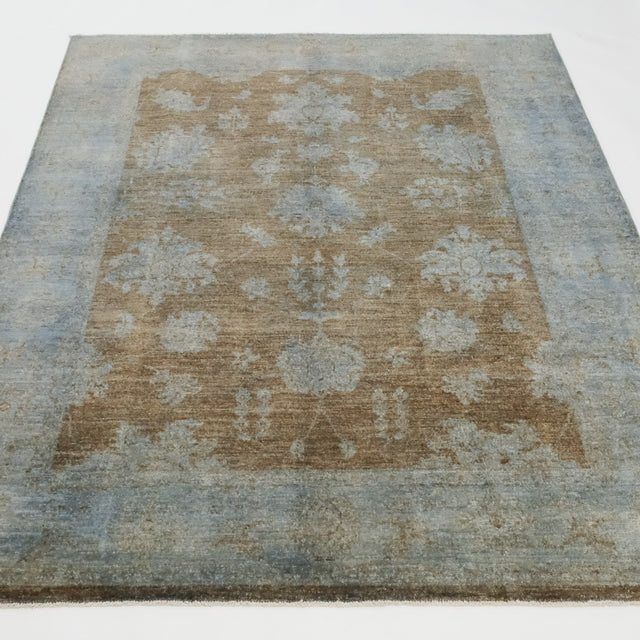
Anthracite gray; the quarter that is not silk is Erzurum wool
 250×312 cm

One of a kind
Anthracite Gray Oushak Handwoven Silk Rug, Hanzade Series
from
470.000 TL
≈ 60.000 TL/m²



Rugs & Kilims
Find Your Rug
For those who already know what they are looking for — Halıcızade's most visited collections.
Anthracite gray; the quarter that is not silk is Erzurum wool
250×312 cm
One of a kind
from
470.000 TL
≈ 60.000 TL/m²
Anthracite left faint, cherry-burgundy viscose catching the light
 200×300 cm
One of a kind
from
54.000 TL
≈ 9.000 TL/m²
Nearly ten square meters, and a single disc holds all of it
 277×358 cm
One of a kind
from
660.000 TL
≈ 67.000 TL/m²
Silver gray through anthracite, 3,300 g/m² of viscose
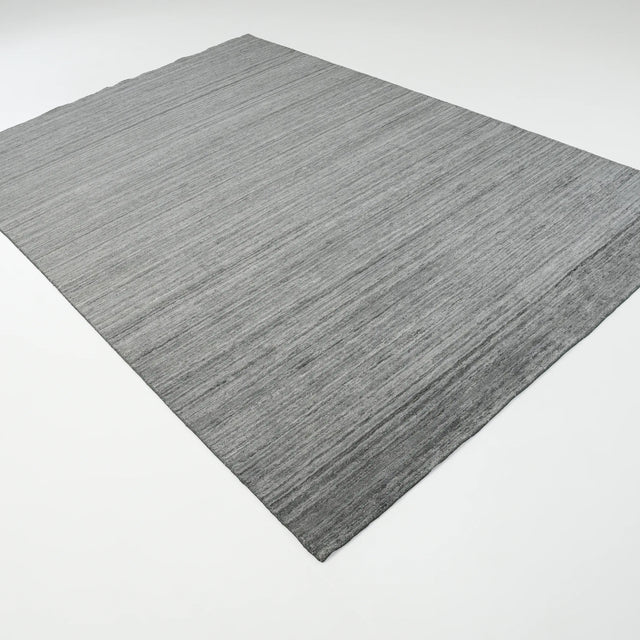 200×300 cm
Knots tight as knitting, anthracite flecked with gray
 170×240 cm
Anthracite in Tencel®, one fine line ruled through the weave
 130×190 cm
Anthracite Oushak, bamboo viscose lighting the motifs
 160×240 cm
Silver shapes adrift on cream, bamboo viscose knotted in India
 226×327 cm
Anthracite jute from the Ganges, and never any water
 170×240 cm
Anthracite with no pattern at all, loom-woven in India
 200×300 cm
Red running through anthracite, wool lifted by bamboo viscose
 200×300 cm
One of a kind
from
54.000 TL
≈ 9.000 TL/m²
Geometry picked out in one tone of anthracite, knotted thick
 80×150 cm
Woven by women in Kütahya: a gray that moves when you do
 300×320 cm
Not one stripe parallel to the next, loom-woven in India
 90×300 cm
A near-square in anthracite, wool above and cotton below
 162×217 cm
One dye lot carried from mid-blue down to near-black
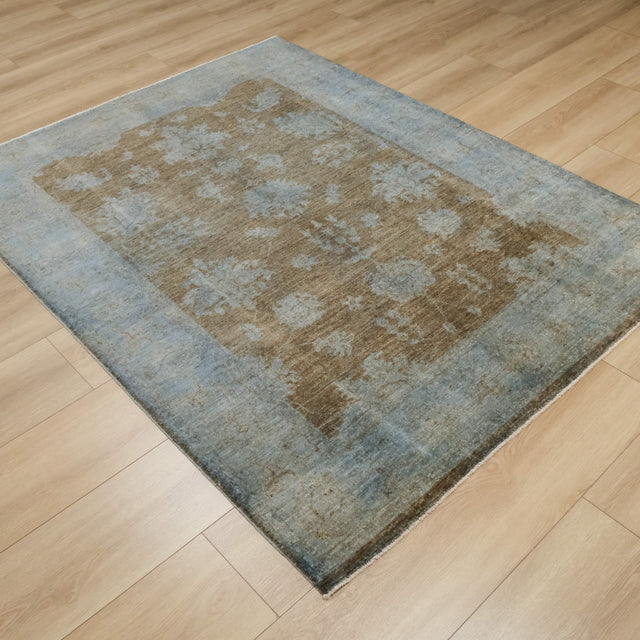 150×193 cm
Loops thick as sweater stitch, anthracite drawn in stripes
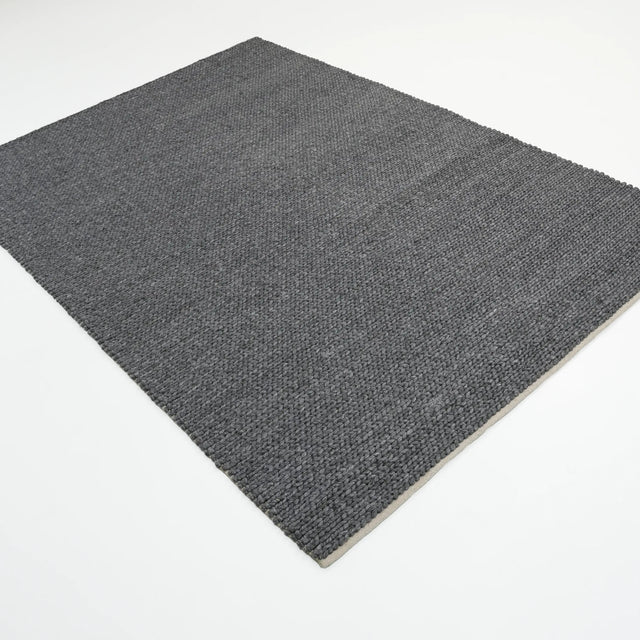 170×240 cm
New Zealand fleece, gray that opens by morning and closes by evening
 200×300 cm
One stripe in its own color, anthracite, 3,250 g/m²
 200×300 cm
Anthracite, no drawing at all — the ribs do the work
 120×180 cm
One of a kind
from
10.260 TL
≈ 4.800 TL/m²
İpek iplikler ışığı tutuyor, antrasit ona göre değişiyor
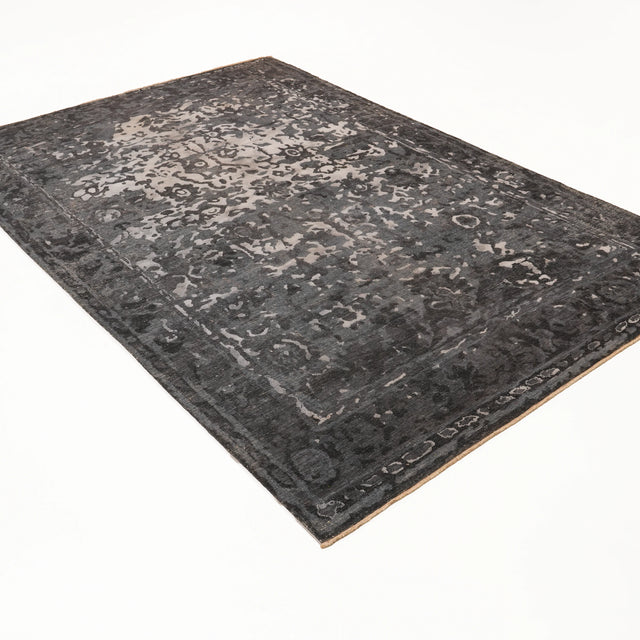 194×291 cm
One of a kind
from
148.000 TL
≈ 26.000 TL/m²
Gri zeminde turkuaz ve turuncu, Afganistan'da çift düğüm
 123×186 cm
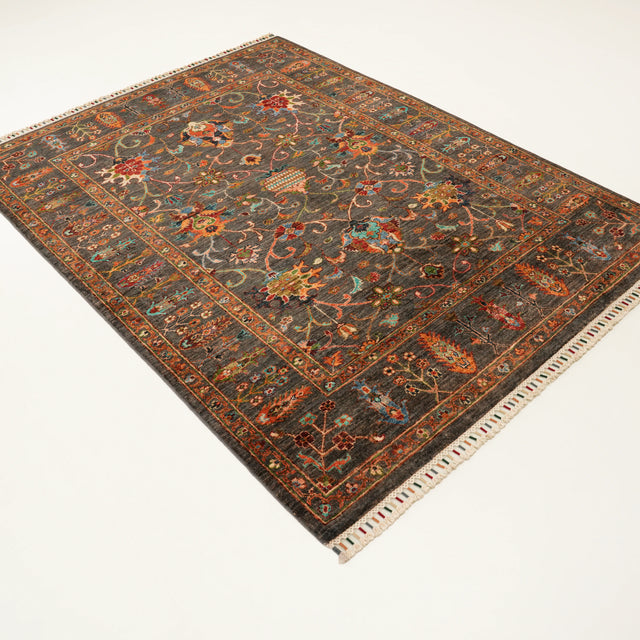 156×204 cm
An anthracite rug is woven in the deep gray named after anthracite coal — dark enough to read as near-black, with no brown or blue cast to it. Halıcızade's anthracite collection covers hand-knotted wool, loom-woven, machine-woven and digital-print rugs, plain and patterned, in runner, round and room-size formats.
Anthracite is the darkest useful neutral before black, and it behaves differently from mid-gray: it grounds a room instead of receding into it. This page covers what the collection contains, how anthracite reads against pale and dark furniture, which construction suits which room, and how the pile is looked after.
The difference is depth, and it changes what the floor does.
| Color | Depth | What it does in a room | Watch for |
|---|---|---|---|
| Anthracite | Very dark gray, near-black | Anchors the floor and throws pale walls and furniture forward | Needs light elsewhere in the room, or the floor swallows it |
| Mid-gray | Middle of the scale | Recedes; reads as a plain, quiet floor | Shows traffic paths more than anthracite does |
| Black | Full black, no gray | Hard graphic contrast, closer to a drawn line than a ground | Shows lint and pet hair immediately |
If the room needs the neutral to stay in the background rather than hold the floor down, compare gray rugs instead.
Both exist in anthracite, and they solve opposite problems.
Plain anthracite rugs are rarely one flat color. The ground is built from several close tones of gray and black, and the slight movement between them is what stops a large dark rug from reading as a hole in the floor. These belong in rooms that already carry pattern in the furniture or the walls.
Patterned anthracite covers four families: geometric designs in the Scandinavian manner, often with a three-dimensional read; floral drawing, which pulls a dark rug toward the traditional; modern work built from lines and half-erased motifs; and classic medallion compositions carrying Ottoman and Seljuk drawing on a dark ground. The last of these is the least expected and the most useful in a room full of wood.
Anthracite is made in every construction the house weaves.
Handwoven pieces are softer than machine-woven ones of the same fiber, because the pile is tied rather than driven; bamboo viscose and silk are the glossiest of the yarns used and make the gray look wet rather than matte.
Size and pile length decide the room more than color does.
Living rooms take the large formats — four and six square meters covering the seating area in one piece, which avoids the visual break of two rugs meeting. Bedrooms take small soft-piled pieces beside the bed and in front of a wardrobe, where the rug is walked on barefoot rather than looked at. Kitchens take short-pile, wipeable formats, kept roughly 20 cm clear of the counter and table. Corridors and entrance halls take runners, standard at 80 and 100 cm wide with the length varied to the hall; two shorter runners are easier to lift and clean than one very long one. Offices take the dark ground for the reason it was chosen in the first place — shoes.
Where a rug has to be lifted and washed often, look at machine-washable rugs before choosing on color alone.
Three decisions, then a short routine.
Decide the pile first: soft and deep for bedrooms and children's rooms, short and firm for kitchens, halls and offices. Decide the format second — a rug should leave a margin of bare floor rather than run to the skirting. Decide the drawing last, because a mix of light and dark tones keeps a large anthracite piece from closing the room down.
For care: vacuum on a regular schedule, blot rather than rub, and dry any damp patch straight away. No bleach on a dyed pile, and no fabric softener on a long-pile rug — it flattens the fiber it is meant to help. Wool, silk and bamboo-viscose pieces go to a specialist washer. Fringes can be brushed out and set with a light starch spray, which stops them straggling.
An anthracite rug is woven in the deep gray of anthracite coal — dark enough to read as near-black, with no brown or blue cast. It sits between mid-gray and black on the neutral scale and is used as a grounding color rather than an accent.
Nothing meaningful. Anthracite is the term used across European furnishing, charcoal the term used in American English, and both name the same very dark neutral gray. Turkish rug catalogs use anthracite, which is why the collection is named that way.
Not on its own. A dark floor lowers the visual weight of a room and makes pale walls and furniture read lighter by contrast. Rooms shrink when the walls, the furniture and the floor are all dark together.
A short-pile machine-woven or digital-print rug, in a narrow runner width for a corridor and a small format for a kitchen. Leave roughly 20 cm between the rug edge and a counter or table so that anything dropped lands on the floor instead.
A dark ground shows dust and traffic marks less than a pale one, which is why anthracite is common in halls and offices. It still needs the same vacuuming schedule; the dirt is less visible rather than absent.
Vacuum regularly, blot spills with a damp cloth and dry the spot immediately rather than leaving it wet. Keep bleach away from the pile. Wool, silk and bamboo-viscose pieces go to a professional washer rather than into a machine.
Unwrap it and lay it flat the same day. A rug sealed in plastic while any moisture remains in the pile will mildew, and the smell is far harder to remove than the original soiling was.
Related collections: gray rugs · plain color rugs · geometric rugs · hallway runners