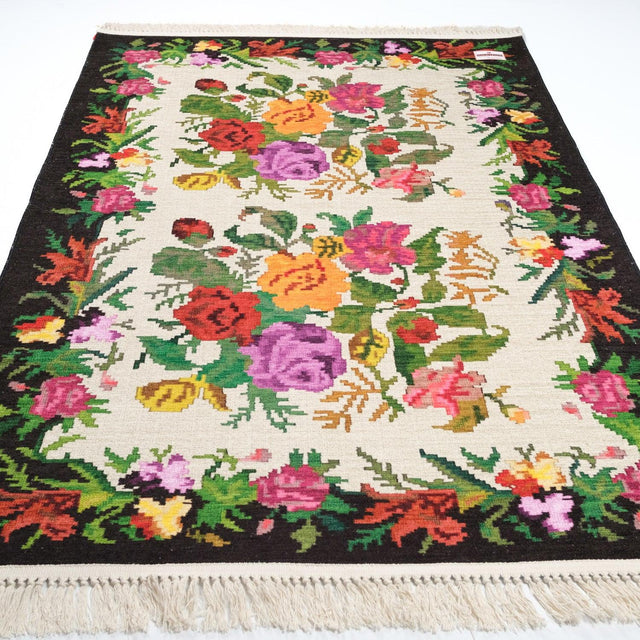
Three weaving traditions printed in blocks, and it washes at home
 %30
75×300 cm
%30
75×300 cm
Bestseller
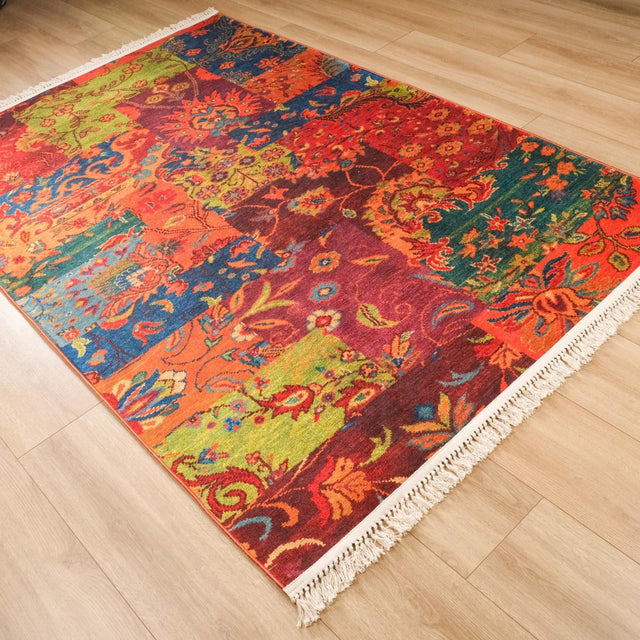
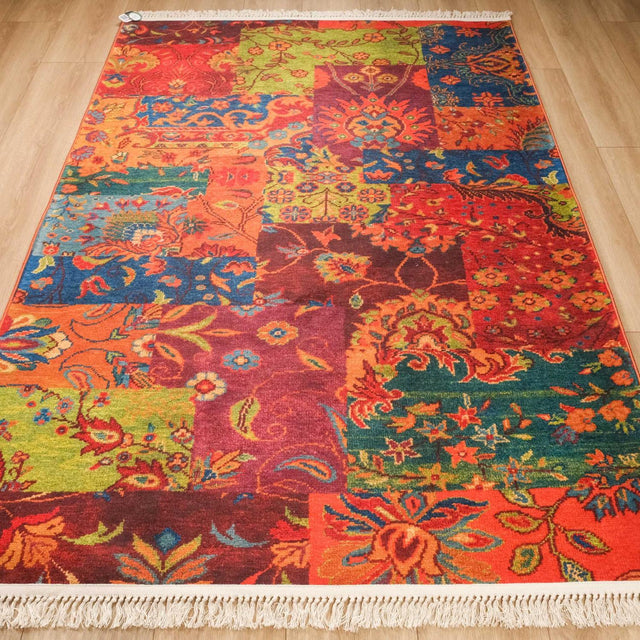
Multicolor Patchwork Digital-Print Rug, Kehribar Series
from
1.925 TLwas2.750 TL
%30 off≈ 1.700 TL/m²



Rugs & Kilims
Find Your Rug
For those who already know what they are looking for — Halıcızade's most visited collections.
Three weaving traditions printed in blocks, and it washes at home
%30
75×300 cm
Bestseller
from
1.925 TLwas2.750 TL
%30 off≈ 1.700 TL/m²
Cairo's Mamluk geometry in burgundy, machine-woven in acrylic
 %30
80×300 cm
%30
80×300 cm
One of a kind
from
5.250 TLwas7.500 TL
%30 off≈ 2.200 TL/m²
 %30
155×230 cm
%30
155×230 cm
from
1.925 TLwas2.750 TL
%30 off≈ 1.700 TL/m²
Two rows of medallions on mustard, knotted thin and close
 80×111 cm
A thin rug is one whose total thickness — backing and pile together — is small enough to pass under a door, sit flat beneath a chair leg or lie over another rug without a ridge. In practice that means a flatweave, a low-pile machine-woven rug or a thin handwoven village weaving.
Thickness is a measurement, not a style. It decides whether a door will clear the rug, whether a chair on castors will roll or dig in, and how a vacuum has to be set up. This page covers what a low pile does and does not do, and where in a house a thin rug is the right answer.
Measure the whole sandwich, not the pile.
A weft-faced flatweave has no pile at all; its thickness is the thickness of the fabric, and it is the thinnest thing you can put on a floor short of a mat. A low machine-woven pile adds a few millimeters of yarn to a woven backing. A short handwoven wool pile sits a little above that. A shaggy pile can be thirty millimeters or more, which is a different category of object entirely — see shaggy rugs for that end of the range.
The number that matters is the one you measure yourself: put a ruler against the edge of the rug, then measure the gap under your door at its lowest point. Interior doors are hung with a small undercut for airflow, and it is usually the hinge side of the swing that runs out of clearance first.
Three practical consequences, and they are the reason this collection exists.
The trade-off is real and it is worth stating plainly: a thin rug gives back almost nothing underfoot. It will not soften a hard floor, it will not deaden footsteps in the way a deep pile does, and it needs an underlay on a smooth floor or it will travel.
Two quite different kinds of thin rug, gathered by construction rather than by pattern.
The first is machine-woven and synthetic: acrylic and polyester pile on a woven backing, in the Kehribar Series, some of it digital-printed, in patchwork, Mamluk and Karabakh drawing. These are made in Türkiye, come with a non-slip backing, and can go into a domestic washing machine — which is the whole argument for them in a kitchen, an entry or a balcony. Sizes run from 2 m² to 6 m², and the same models are available as 80 × 300 cm (2'7" × 9'10") runners.
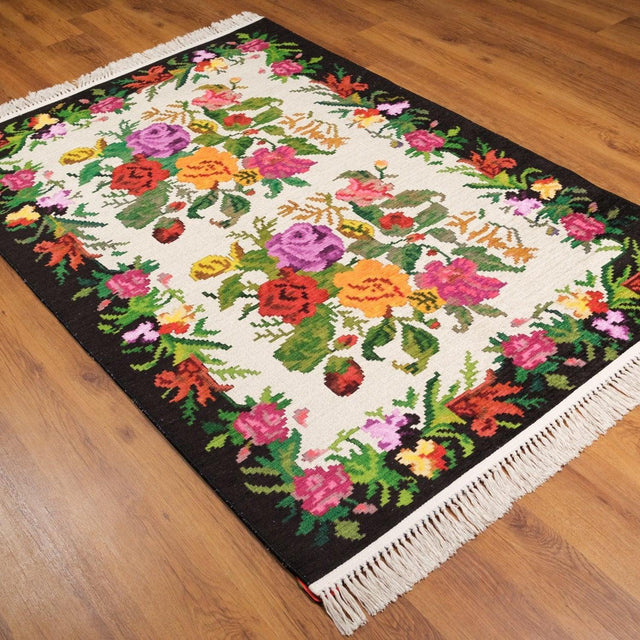
The second is handwoven wool: thin village weavings, such as the Turkmen-pattern Bukhara rug at 85 × 140 cm (2'9" × 4'7"), where the pile is short because that is how the region weaves rather than because a specification called for it. Anatolian, Shahsavan, Bergama and Malatya flatweaves belong to the same group, and a short-pile Oushak or Afghan weaving reads thin for the same reason. Browse the wider flatweave range and handwoven kilims for more of it.
| Flatweave | Low machine-woven pile | Deep pile | |
|---|---|---|---|
| Clears a door | Almost always | Usually | Rarely |
| Chair on castors | Workable; use a mat for a desk chair | Workable if densely woven | No |
| Vacuuming | Suction only, beater bar off, both faces | Suction, beater bar optional | Slow passes, beater bar off, more often |
| Underfoot | Hard; the floor is still the floor | Slight cushion | Soft, warm, quiet |
| Washing | Many synthetics machine-washable; wool by hand | Machine-washable models available | Professional washing |
| Layering | Sits flat over a larger rug | Possible; watch the edge | No |
In the rooms where a thick one causes a problem.
A thin rug is one whose total thickness, backing and pile together, is low enough to pass under a door and lie flat under furniture. Flatweaves with no pile at all are the thinnest, followed by low-pile machine-woven rugs and short-pile handwoven village weavings.
Measure both before buying. Check the gap under the door at its lowest point, usually near the hinges, and measure the rug's total thickness at the edge. A flatweave normally clears an interior door; a pile rug of any depth often does not.
A tight flatweave or a dense low pile takes castors much better than a deep pile, in which the wheels sink and the fibers wrap the axle. For a chair used all day, put a mat under the castors regardless of how thin the rug is.
Turn the beater bar off. A rotating brush catches the weft floats and fringes of a flatweave and does little for a low pile that suction cannot do better. Vacuum both faces of a reversible flatweave two or three times a year.
Durability follows fiber and weave density rather than pile height. A tightly woven wool flatweave outlasts a loose deep pile in the same room. What a thin rug does give up is cushioning and sound absorption, both of which come from pile depth.
Many of the synthetic machine-woven models in this collection can, and they are labeled for it on the product page. Handwoven wool pieces cannot: they are washed by hand or by a professional rug washer, and dried flat out of direct sun.
They can, because there is little weight holding them down. Several models here are made with a non-slip backing; for the rest, a thin gripper underlay solves it and has the side effect of stopping the rug from creeping toward the door.
Related collections: flatweave rugs · machine-washable rugs · entrance hall rugs · hallway runners