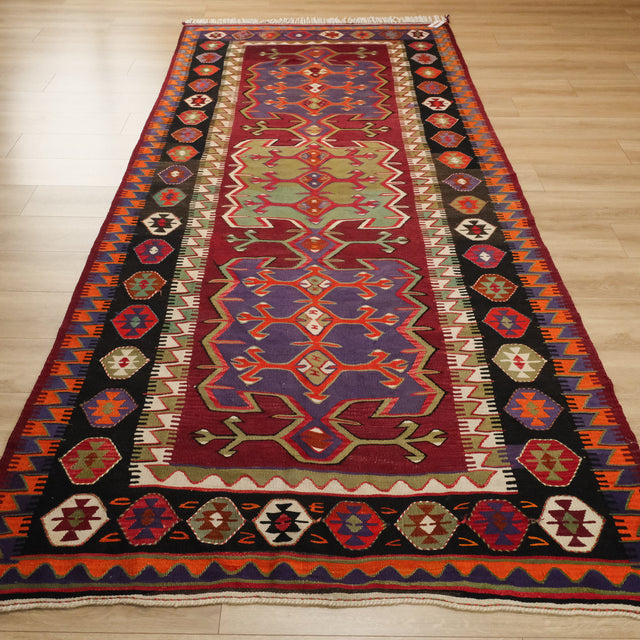
Oushak without the knots: a flat wool kilim, 119 × 188 cm
 119×188 cm



Rugs & Kilims
Find Your Rug
For those who already know what they are looking for — Halıcızade's most visited collections.
Oushak without the knots: a flat wool kilim, 119 × 188 cm
119×188 cm
Bahçecik village wool, 100 × 180 cm and no pile in it
 100×180 cm
Kars Sevan in wool: red leads, and the warp never shows
 184×316 cm
Cicim from Antalya: the wool figures stand above the ground
 163×300 cm
Wool flatweave from Akören, just short of four meters
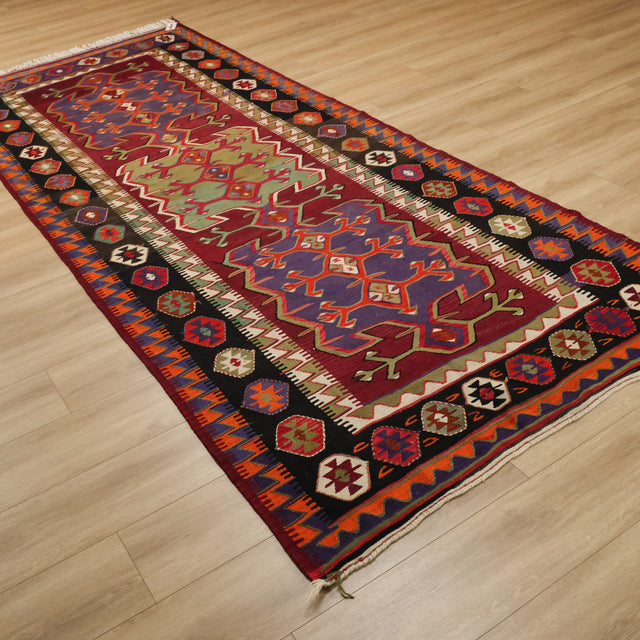 158×393 cm
Root-dyed wool, a village kilim from the Konya plain
 91×190 cm
Reversible wool flatweave, from eighty centimeters to two meters
 120×170 cm
from
36.500 TL
≈ 33.000 TL/m²
Bubble Trouble on navy: a wool kilim with no pile at all
 120×170 cm
One of a kind
from
64.500 TL
≈ 32.000 TL/m²
Cotton right through, no pile, and the geometry mostly yellow
 120×180 cm
Turkmen and Afghan motifs in one kilim, orange over cream
 101×154 cm
Barak, south of Gaziantep: wool on cotton, 78 × 98 cm
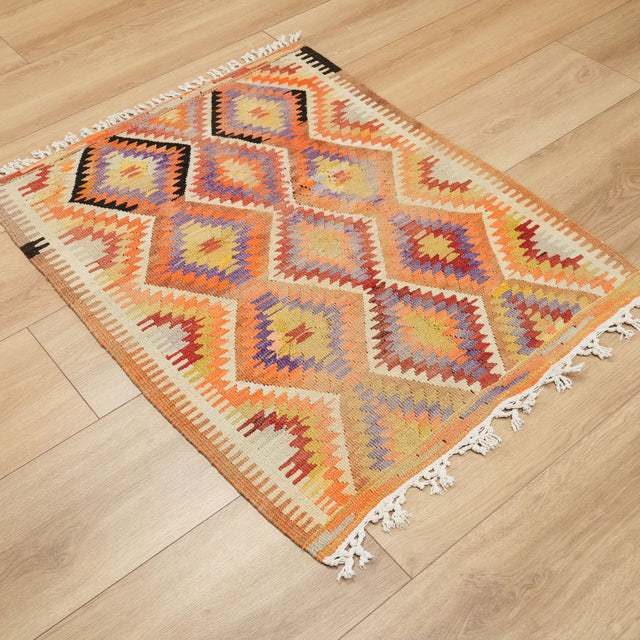 78×98 cm
Karapınar cicim in burgundy, 54 × 81 cm and all wool
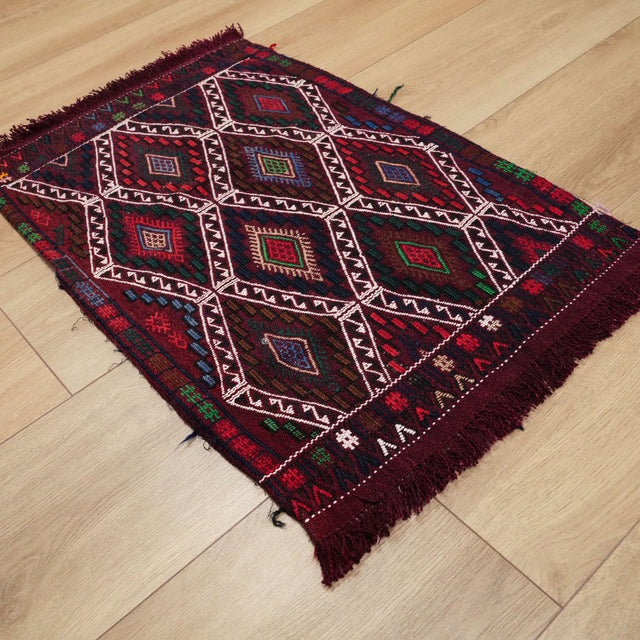 54×81 cm
Karabagh roses at full size, woven in Moldova
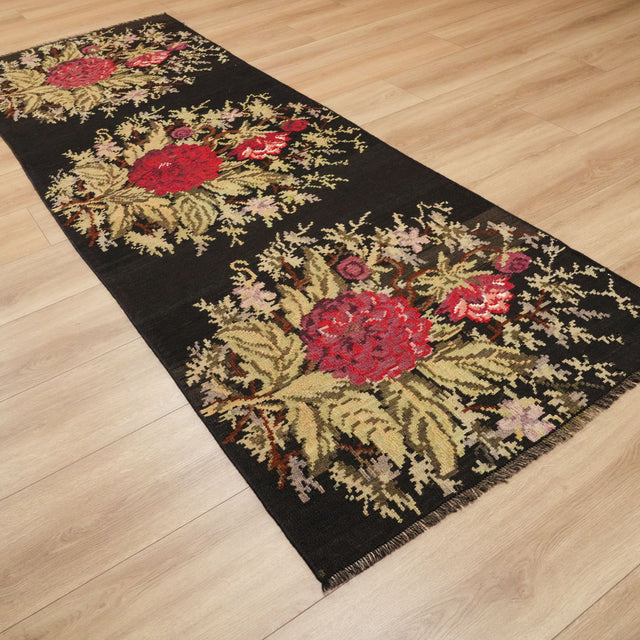 94×268 cm
Yellow where Karabagh is usually black, the roses unchanged
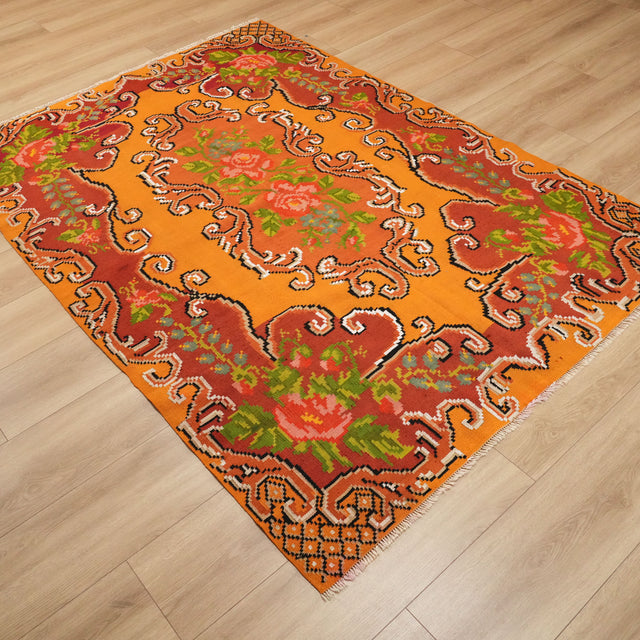 162×232 cm
Denizli's Çal district, cicim brocade raised off the weave
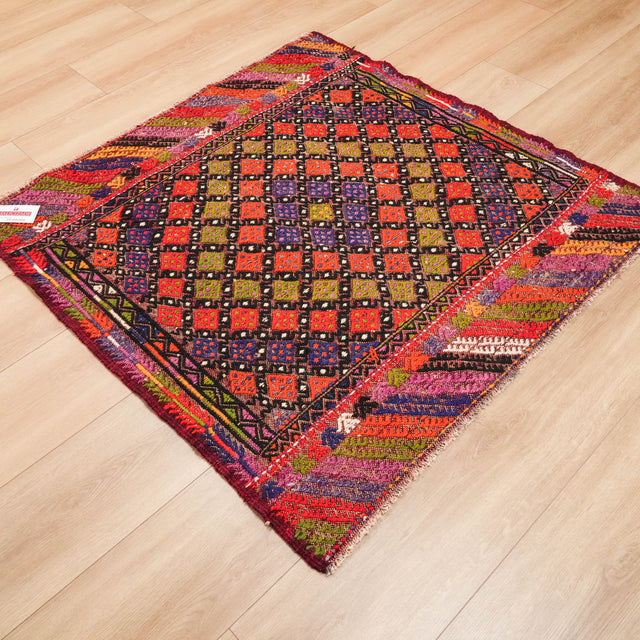 126×130 cm
Kozak cicim above Bergama, wool from end to end
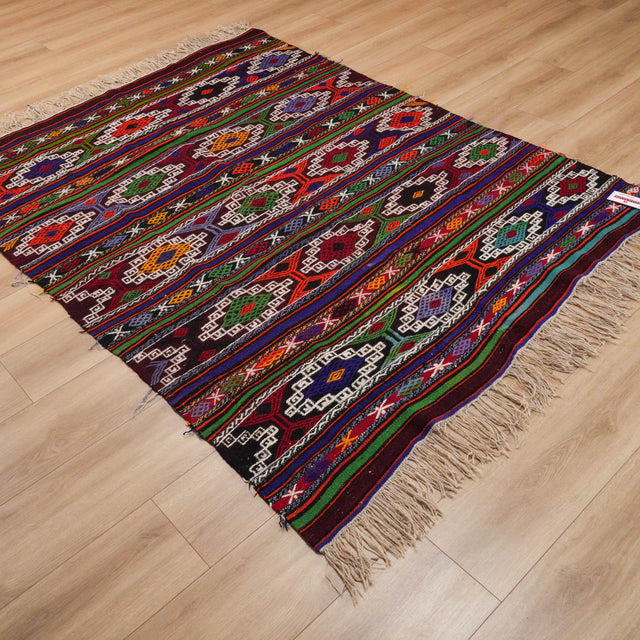 171×231 cm
Cream flatweave from Afghanistan, its geometry drawn in silk
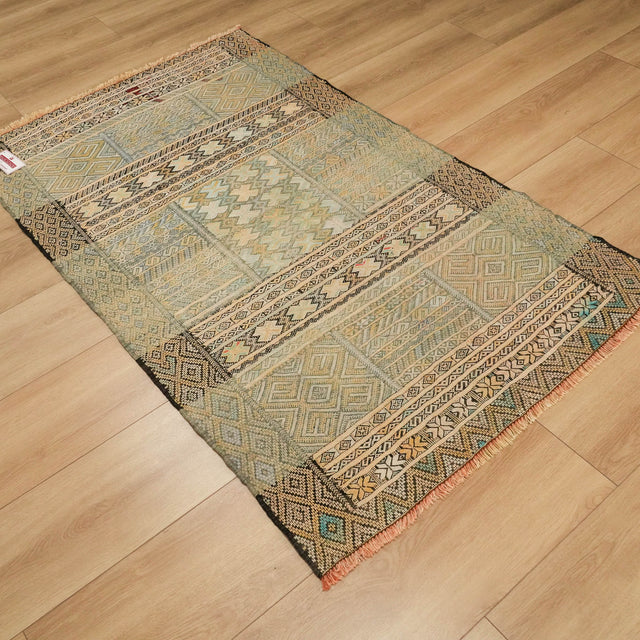 104×168 cm
Mut, under the Taurus: wool both faces, 97 × 212 cm
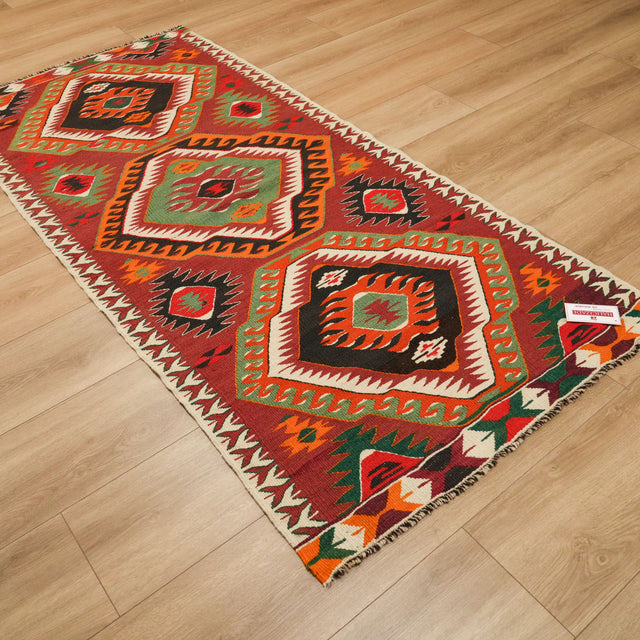 97×212 cm
Narrow gray stripes on cream, wool weft over a cotton warp
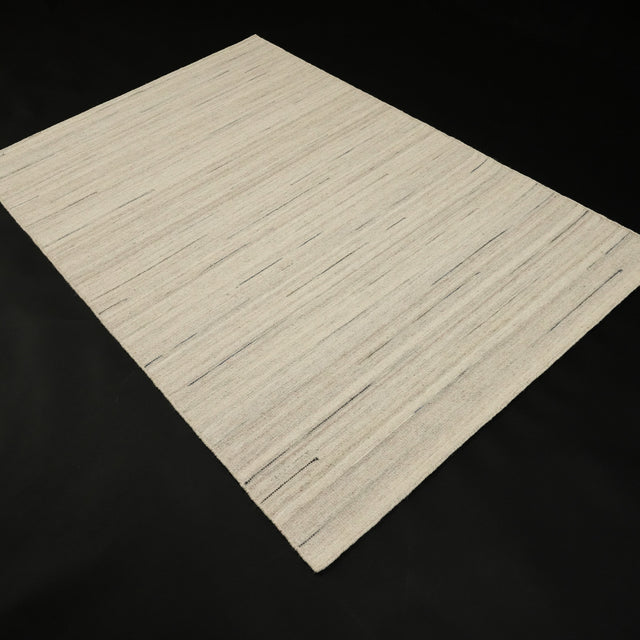 160×230 cm
White wool flat-woven over cotton, and no pile at all
 120×180 cm
Navy cicim at 47 × 102 cm, sized for a wall
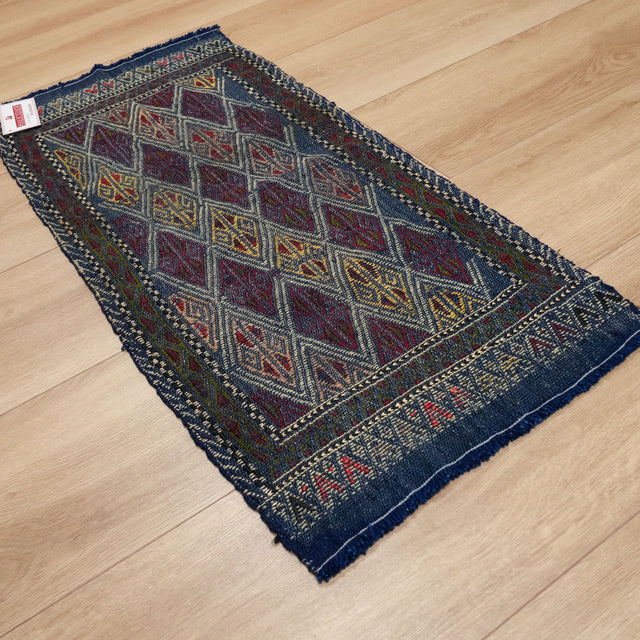 47×102 cm
Star ranks brocaded over orange, root-dyed wool from Fethiye
 127×176 cm
Cream flatweave with silk in it, wrapped rather than tied
 123×193 cm
Root-dyed reds, blues and yellows, a kilim 77 cm wide
 77×102 cm
A kilim is a flat-woven rug with no pile. The pattern is made by the weft alone, packed down hard enough to bury the warp completely, so the rug is thin, reversible and light. Anatolian kilims are woven in wool and goat hair on a ground loom, and the technique is among the oldest known.
A kilim is not a cheaper version of a knotted rug. It is a different structure with different uses, and the district it comes from changes it more than the district changes a pile rug. What follows is how the weave works, what each of the main Anatolian traditions does with it, and how to keep one.
The warp is strung on the loom and then hidden. The weaver passes colored weft yarn over and under the warps and beats each pass down with a comb until no warp shows at all, which is what weft-faced means. There is no knot and no pile. Wool carries the color and goat hair carries the strength, and in most Anatolian kilims both are in the same piece.
The result is thin but firm rather than soft. A kilim has weight for its thickness, lies flat, folds into a bag, and reads the same on both faces. That last property is why kilims end up on walls and over furniture as often as they end up on floors.
Where two colors meet along a vertical line, the two wefts turn back around their own last warp instead of crossing. That leaves a narrow slit in the fabric, and slit-weave is the reason kilim design is built from diagonals and stepped shapes rather than long vertical edges — a long vertical would open a slit wide enough to weaken the rug.
So the constraint made the style. The lozenges, hooks and zigzags in an Anatolian kilim are not a decorative preference; they are what the loom permits. Held up to a window, a good slit-woven kilim shows a fine broken line of light along every color change.
Anatolia and the Caucasus each hold a cluster of kilim traditions, and they are told apart by yarn, palette and format before motif.
| Tradition | Where | What distinguishes it |
|---|---|---|
| Bardız | Erzurum | The thinnest of the group. Light enough to be used as a divan or sedir cover as well as on a room or tent floor. |
| Bayat | Afyon | Woven from Afyon fleece and colored with natural dyes; walnut and brown tones that hold their own in a pale room. |
| Denizli | Denizli | Yarn hand-spun by the local kirman method and dyed naturally, giving an unusually wide range from soft to vivid, in both traditional and modern drawing. |
| Eşme | Oushak | Thick goat hair or wool in the weft, which makes it the most durable of these, worked in pastel tones with Oushak's own motifs. See Oushak weaving. |
| Kayseri | Kayseri | Shares its structure with Anatolian kilims generally; the motif drawing is what identifies it. |
| Milas | Muğla | Colors and motifs pitched to each other rather than contrasted. About a month on the loom for one piece. |
| Karabağ | Azerbaijan | Roses on a black ground. Known as chest kilims because they were woven, folded away unused into a dowry chest, and only later brought out. See Karabagh kilims. |
| Sumak | Iran and the Caucasus | Named for its weaving method, and the name is also given to the geometric motif family that method produces. |
Structural variants cut across the map. A relief kilim is worked so that parts of the surface stand proud of the ground. A patchwork kilim joins panels from separate pieces into one, and a kilim runner is woven long and narrow for a corridor. See Anatolian kilims, patchwork rugs and hallway runners.
Three techniques sit next to plain kilim on the same loom. In sumak, a supplementary weft is wrapped around the warps rather than passed straight through, which produces a raised, braided-looking surface and no slits. In cicim, narrow bands of extra yarn are laid on the ground weave so the motif sits above it like embroidery. In zili, the supplementary weft floats across several warps at a time, giving a flatter relief than cicim.
All three are handwoven and flat, and all three are sold as kilims. Turning the piece over settles which one you have: sumak and zili show their floats on the back, and a plain slit-woven kilim shows the same face twice.
Look at the back and look for imperfection. In a handwoven kilim the rows advance slightly unevenly and the occasional junction sits out of line, because the beat of the comb is a human beat. A machine-woven kilim is flawless: rows perfectly parallel, color changes exactly repeated, and the reverse face often finished differently from the front. Neither is a fault in itself, but only one of them is hand work. See machine-woven kilims for the other kind.
No pile means no knots, and knots are where the months go. A kilim of a given size uses far less yarn than the equivalent hand-knotted rug and takes weeks rather than months to weave, and the price follows the labor. Compare hand-knotted rugs for the other end.
The absence of pile also changes what a kilim is for. Nothing traps heat against the floor, so a room stays cooler with a kilim on it than with a wool pile — the reason kilims come out in Anatolian houses in summer. Nothing traps dust either, which makes routine cleaning quicker. Against that, a kilim gives nothing back underfoot and shows wear along the slits first. It also does duty as a chest cover, a divan throw and a wall hanging, and the motifs are the reason people hang them; read what kilim motifs mean.
Day to day, a vacuum is enough. Beyond that, wipe the kilim with a natural rug shampoo and a damp cloth, and keep harsh products away from it entirely. Naturally dyed wool needs a mild soap or a shampoo made for rugs; bleach and strong detergents will move the color. Professional cleaning is worth having done at most once a year.
To wash one at home, lay it out on a clean, flat surface and wet it with cool or lukewarm water. Work up a light lather with a sponge or a soft brush, rinse until no cleaner remains, and dry it flat and out of direct sun. Before it is put away it should be cleaned and preferably washed, then rolled rather than folded, and stored out of the light, since sunlight is what fades a natural dye. See how a rug is washed.
A kilim is flat-woven: the pattern is made by the weft, with no pile above it, and the rug reads the same on both faces. A pile rug is knotted, so it has a raised surface, more weight and a right side and a wrong side.
Slits appear where two colors meet along a vertical line and each weft turns back around its own warp instead of crossing. It is a feature of the slit-weave technique, and it is why kilim patterns are built from diagonals and steps.
A plain slit-woven kilim is reversible and can be used either face up. Sumak, cicim and zili pieces are not, because the supplementary yarn floats across the back and only the front carries the finished motif.
A Karabağ kilim comes from the Karabakh region of Azerbaijan and is drawn as roses on a black ground. It is often called a chest kilim, because pieces were woven, folded into a dowry chest and stored unused for years.
Eşme kilims from the Oushak district are the most durable in this group, because they are woven with thick goat hair or wool in the weft. They are worked in pastel tones and carry the motif repertoire of the Oushak region.
A kilim has no knots. It uses less yarn than a knotted rug of the same size and takes weeks rather than months on the loom, so the labor behind it is a fraction of the labor behind a hand-knotted piece.
Vacuum it for routine dust, then wipe it with a natural rug shampoo and a damp cloth. Avoid bleach and strong detergents, which move natural dyes. Professional cleaning is worth having done at most once a year.
Halıcızade Halı Kilim, Çayyolu, Ankara, keeps handwoven and machine-woven kilims in the same room, which is the fastest way to see the difference described above.
Last updated: 10 September 2026
Related collections: Anatolian kilims · modern kilims · flatweave rugs · wool rugs