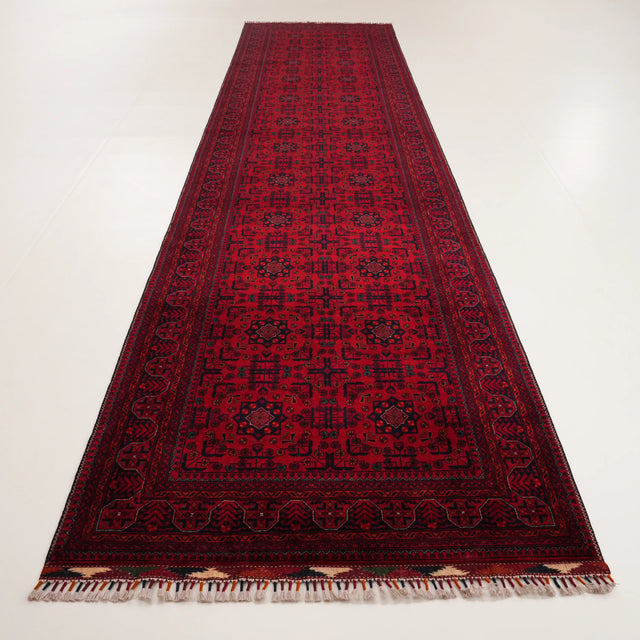
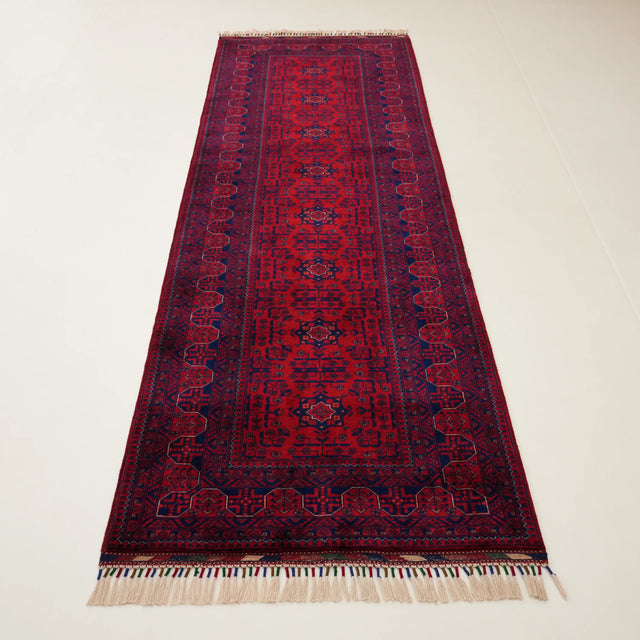
Bukhara and Herat motifs, burgundy on navy, tied from memory
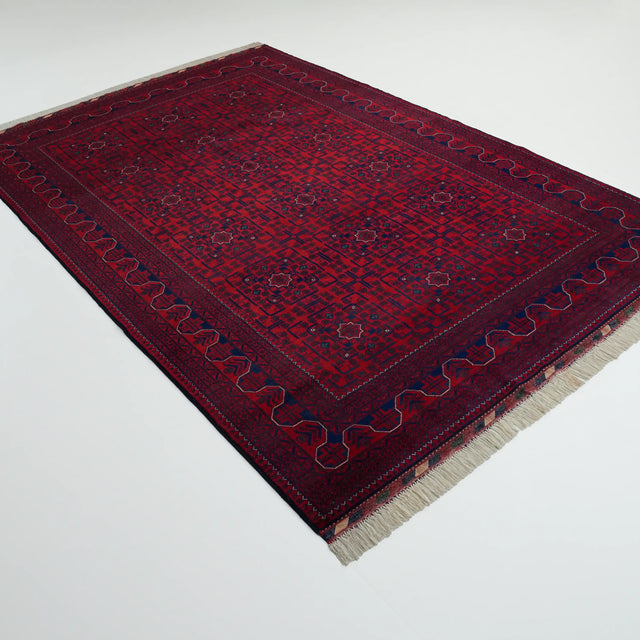 195×298 cm
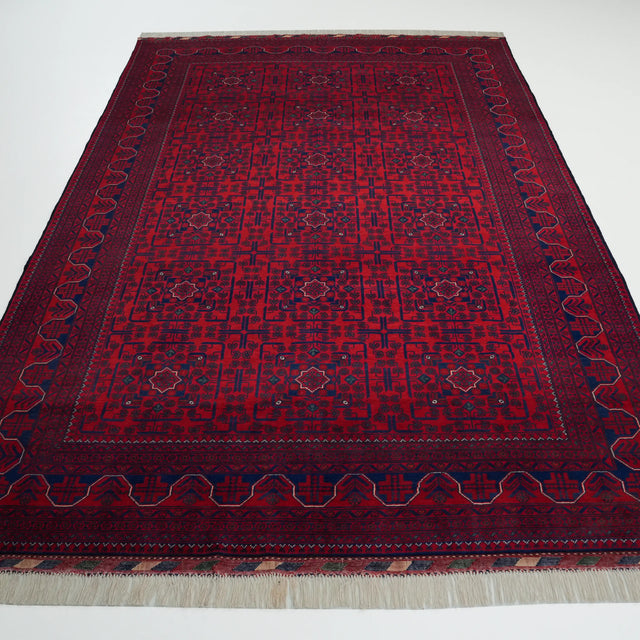
One of a kind
Burgundy Afghan-Pattern Hand-Knotted Wool Rug, Khamyap Series
from
88.000 TL
≈ 15.000 TL/m²



Rugs & Kilims
Find Your Rug
For those who already know what they are looking for — Halıcızade's most visited collections.
Bukhara and Herat motifs, burgundy on navy, tied from memory
195×298 cm
One of a kind
from
88.000 TL
≈ 15.000 TL/m²
Bukhara and Herat drawing in burgundy, knotted by Turkmen hands
 253×350 cm
Khamyap in burgundy, two square meters knotted in Afghanistan
 121×176 cm
Ninety-nine centimeters wide, and green instead of red
 99×147 cm
Burgundy for 485 cm, tied dense enough to lie flat
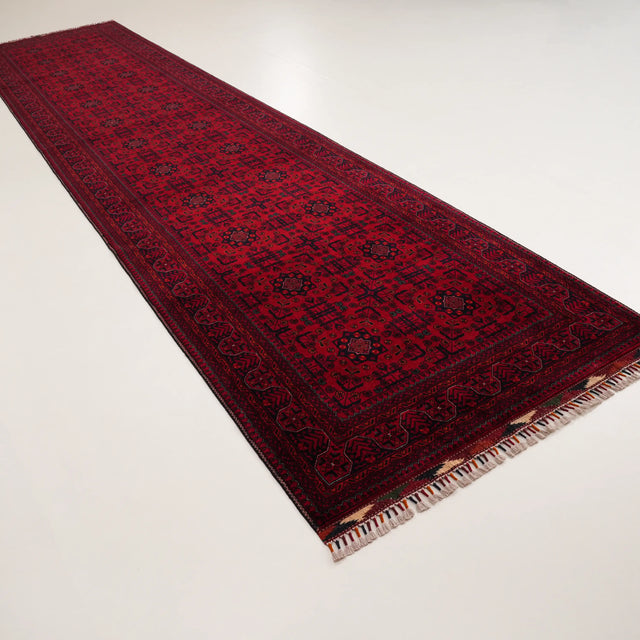 108×485 cm
Navy figures repeating on burgundy, three meters of corridor
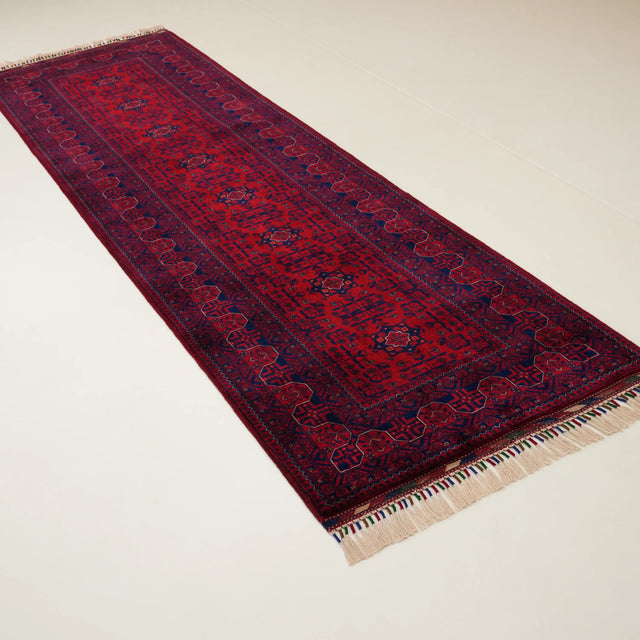 86×309 cm
Hoca Roşnai in burgundy, wool from warp to pile
 85×192 cm
One of a kind
from
35.000 TL
≈ 21.000 TL/m²
Burgundy on cotton, four weeks of knotting to the square meter
 87×296 cm
One of a kind
from
52.000 TL
≈ 20.000 TL/m²
Afghan stars in beige and mink, off a Kütahya loom
 300×390 cm
Afghan stars off the burgundy and onto gray, 200 × 290 cm
 240×340 cm
Two rows of medallions on mustard, knotted thin and close
 80×111 cm
Ranks of Turkmen medallions, hand-knotted in Afghan wool
 85×140 cm
Burgundy under navy, gold scattered through, not a thread of wool
 190×190 cm
The Tekke repeat on burgundy, cream and yellow at even spacing
 133×187 cm
Turkmen tent drawing, closely knotted, cream and black on burgundy
 131×184 cm
A two-meter circle, Turkmen figures cut by its own edge
 160×160 cm
Bestseller
from
20.500 TL
≈ 8.000 TL/m²
Woven at home by women in northern Afghanistan, 200 × 290
 200×290 cm
Five and a half meters long, hand-knotted in Afghanistan
 357×522 cm
Turkmen gül medallions on cream, in silk and viscose
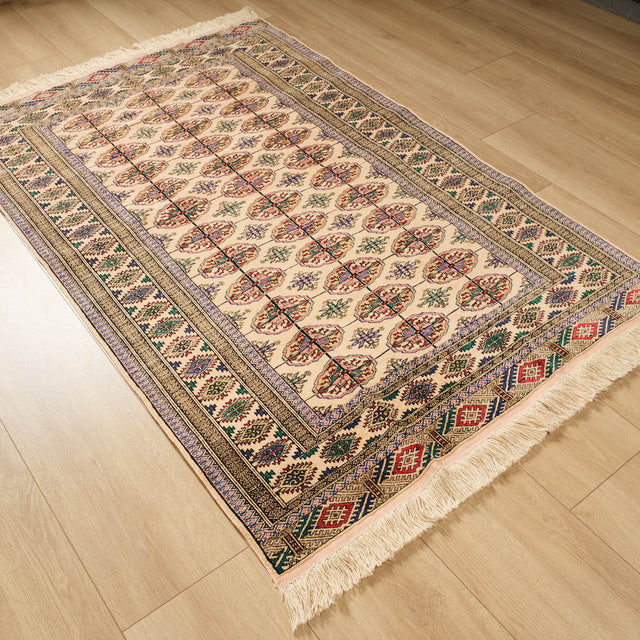 115×175 cm
Gold breaking up burgundy and navy, on old-style looms
 160×230 cm
Turkmen rows in burgundy and navy, fringes tied in Oushak
 200×300 cm
A straight-sided medallion on blue, 174 × 250 cm
 174×250 cm
One of a kind
from
77.000 TL
≈ 17.500 TL/m²
Seventy years of walking already in the pile, Baloch, Herat
 126×185 cm
One of a kind
from
64.000 TL
≈ 27.000 TL/m²
One figure repeated the length of it, four square meters
 168×239 cm
An Afghan rug is a hand-knotted wool rug woven in Afghanistan and by Afghan weavers in Pakistan, built on a cotton warp and patterned with rows of octagonal guls — the medallion the trade calls the elephant's foot — across a deep red or burgundy ground. Named types include Khamyap, Bilicik, Khoja Roshnai and Khal Mohammadi.
Two kinds of rug sit in this collection, and the difference is worth stating plainly. Most of it is hand-knotted work from Afghanistan and from the Afghan weaving communities of Pakistan — wool pile on a cotton warp, bought and sold one piece at a time. The rest is loom-woven in Türkiye to the same drawing: the Zade and Nostalji series, in wool, Tencel and viscose. Each product page says which it is.
A pattern family, a palette and a place — and the place is the part most often assumed rather than checked. Afghan rugs come from the ground where Turkmen and Persian weaving traditions overlap, and the drawing belongs to the Turkmen side of that meeting: angular, organized in rows, with almost nothing curvilinear in it. The field is dense. A weaver working from memory rather than from a paper cartoon repeats a unit until the field is full, and the repetition becomes the design.
Because there is no paper guide, no two rugs of the same named type match. Rows drift by a knot; a border turns one corner in a way the opposite corner does not. That is the ordinary condition of hand work, not a fault in it.
The gul is an octagonal medallion set out in rows across the whole field, and it began among the Turkmen as a mark of tribal identity rather than as ornament. English-speaking dealers call the broad, flattened Afghan version the elephant's foot; the Turkish trade calls it fil ayağı, which means the same thing. It is the fastest way to recognize the family from the other side of a room.
Around the guls sit stretched, stylized human and animal figures, elongated on purpose and drawn in the same angular vocabulary, with small stars and rosettes filling the gaps. The two designs named most often in the trade are the Bukhara star and Kel İsa. The source tradition is worth seeing beside it: in Turkmen rugs the gul still belongs to a particular tribe, where in Afghan weaving it has become a shared language.
Madder gives the red, and madder is why the palette holds together across so many workshops. The root of Rubia tinctorum yields anything from brick to burgundy depending on the mordant and the length of the bath, and Afghan weaving has settled at the deep end of that range — oxblood, wine, rust — with indigo blue and undyed ivory doing the outlining.
Not every rug in this tradition is dyed with plants. Natural and chemical dyes are both in use, and anyone who claims otherwise for a whole category is guessing. There is a test you can run with your hands: fold a tuft of pile back on itself and look down the length of the fiber. A natural dye usually shifts in value from tip to root, while a chemical dye reads flat all the way down. Many Afghan rugs are also given a wash after weaving that softens the color on purpose — a finishing decision, not age.
These are workshop and regional labels, not grades or sizes.
Sizes across the collection run from roughly 2 to 12 square meters (22 to 129 square feet), with runners and small entry pieces at the lower end.
Both are sold here, and they are not the same object.
| Type | Where and how it is made | Fiber | What it is like to own |
|---|---|---|---|
| Hand-knotted Afghan | Knotted by hand in Afghanistan or by Afghan weavers in Pakistan; months of work for one rug | Wool pile on a cotton warp, wool or cotton fringe | Heavy, dense, individual; professional washing; the piece you keep |
| Loom-woven, made in Türkiye | Woven on a hand-operated loom to the Afghan drawing — the Zade and Nostalji series | Wool, Tencel, viscose, bamboo-derived yarn | Even sizing, lighter, repeatable patterns and round formats |
| Machine-woven, made in Türkiye | Power loom, Afghan patterns reproduced at scale | Synthetic yarn | The lowest-effort option; the maker states some of these may be machine-washed cold at 30 °C on the gentlest spin |
Compare across construction in hand-knotted rugs, wool rugs and machine-woven rugs, or read the store's guide to Afghan, Karabakh, Oushak and Yağcıbedir patterns.
Turn it over before anything else. A hand-knotted back carries the pattern almost as clearly as the front, in rows that are slightly uneven, and the fringe is the warp itself running out of the weave rather than a strip sewn on. Then check three things: whether the wool springs back after you press a thumb into it, whether the color shifts down the length of a fiber, and whether the two ends of the rug measure the same — they rarely do, and a centimeter or two of difference is a sign of the loom, not of carelessness.
In a room, the density does the work. A field this busy wants plain furniture around it, and it holds a light-colored room together better than a patterned one. Walnut and other dark woods sit well against the reds. Vacuum without the beater bar and in the direction of the pile, blot spills rather than rubbing them, rotate the rug twice a year, and keep it off a full south-facing window, which fades madder faster than feet wear it. Hand-knotted pieces should go to a professional washer rather than into a machine, since heavy detergents strip the dye and repeated soaking loosens knots; the store's guide to how a rug is washed covers what to ask for.
A gul is an octagonal medallion repeated in rows across the field of the rug. It began among the Turkmen as a mark of tribal identity, and the broad, flattened Afghan version of it is known in the trade as the elephant's foot.
Most are. The hand-knotted pieces are woven in Afghanistan or by Afghan weaving communities in Pakistan, while the Zade and Nostalji series are loom-woven in Türkiye to the same patterns. Every product page states the construction and the origin.
The dominant red comes from madder, whose root gives a range from brick to burgundy depending on the mordant and the dye bath. Afghan weaving settled on the deep end of that range, with indigo blue and undyed ivory used for outlines and borders.
They share the gul, and the Afghan design descends from the Turkmen one. In Turkmen weaving the gul identifies a specific tribe, such as the Tekke; in Afghan weaving it has become a common vocabulary used across workshops rather than a tribal signature.
Some are and some are not. Plant dyes and chemical dyes are both in ordinary use in the tradition. Folding a tuft of pile back on itself shows the difference, because a natural dye shifts in value from the tip of the fiber to the root and a chemical dye stays flat.
Vacuum without the beater bar in the direction of the pile, and blot spills instead of rubbing them. Send the rug to a professional washer rather than a machine, because heavy detergents strip the dye and repeated soaking loosens the knots.
Halıcızade Halı Kilim has brought Afghan weaving into Ankara since 2004, and states the country of weaving on each piece rather than on the collection.
Last updated: 10 September 2026
Related collections: Turkmen rugs · hand-knotted rugs · ethnic rugs · Anatolian kilims