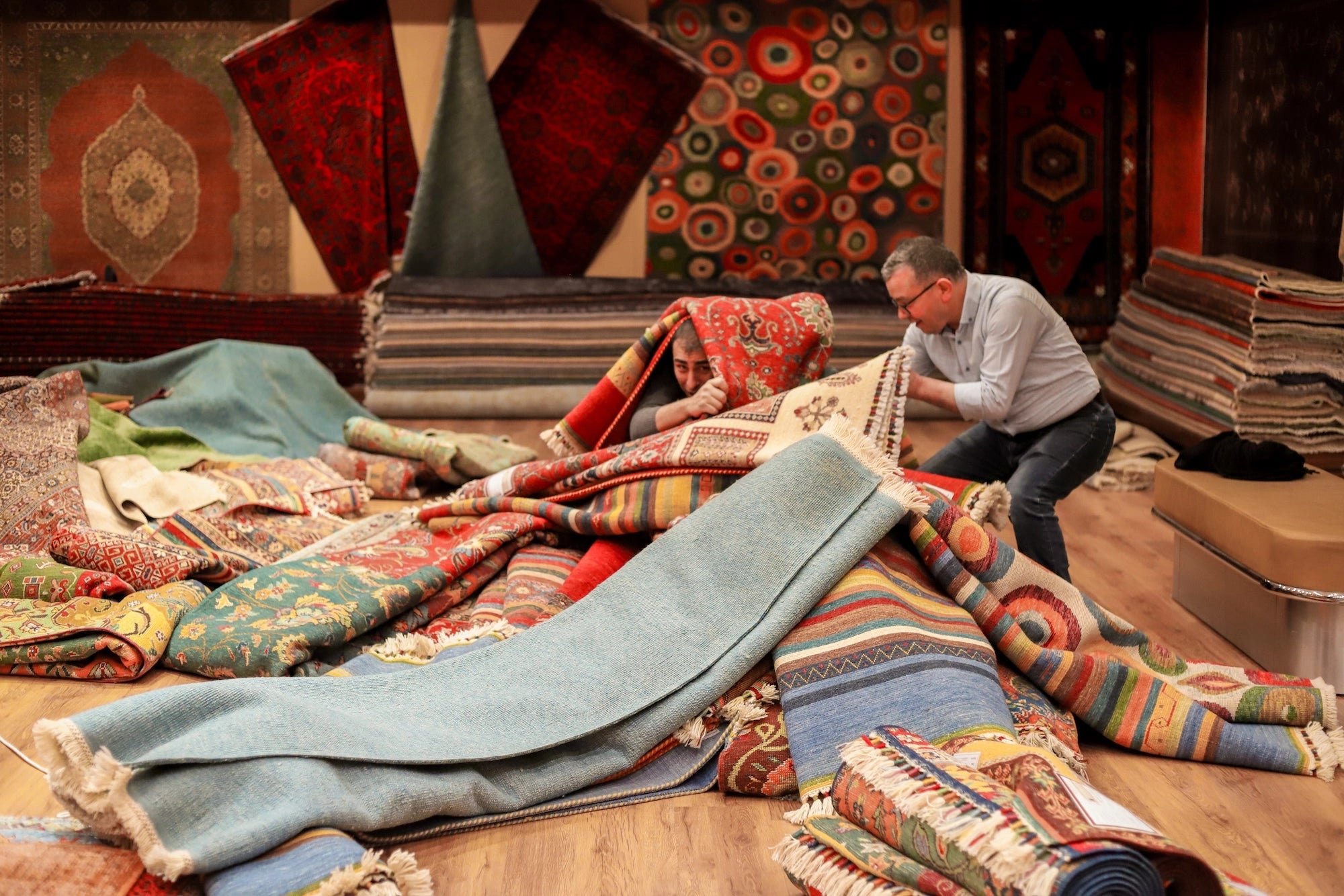
About Halıcızade
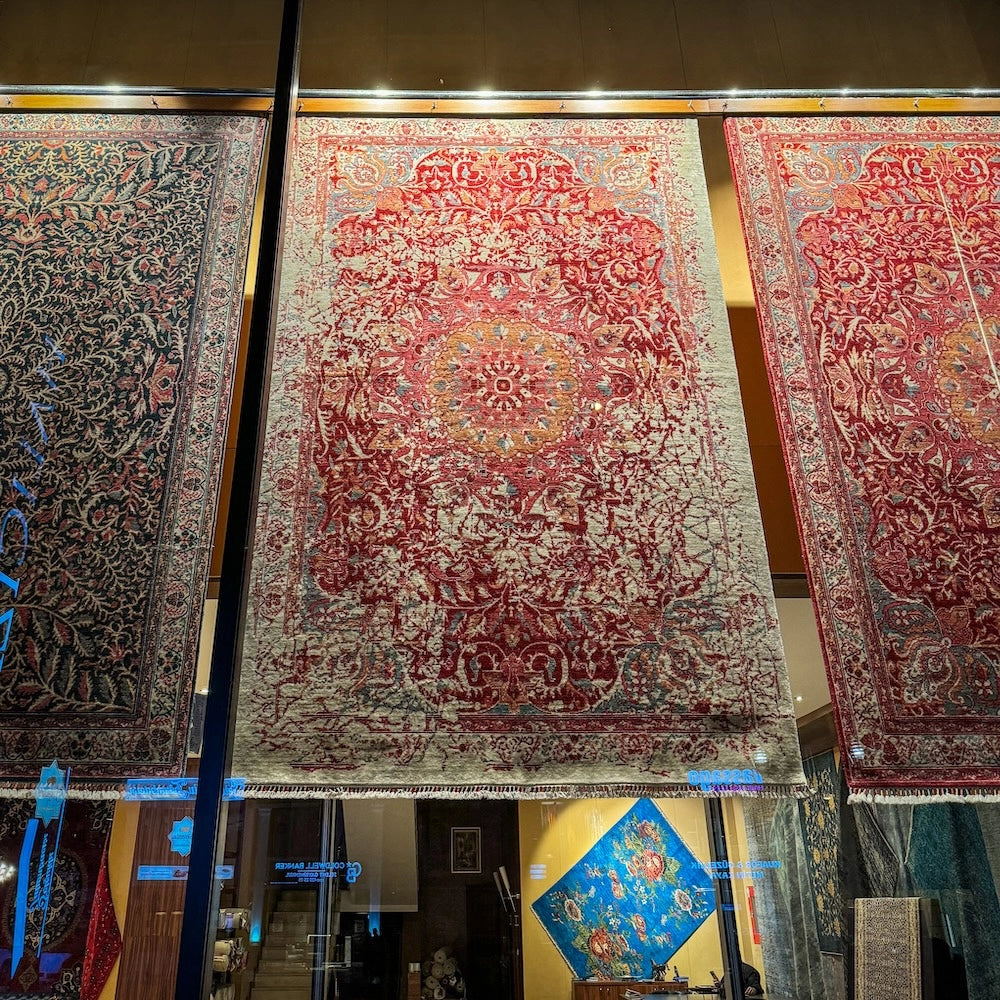
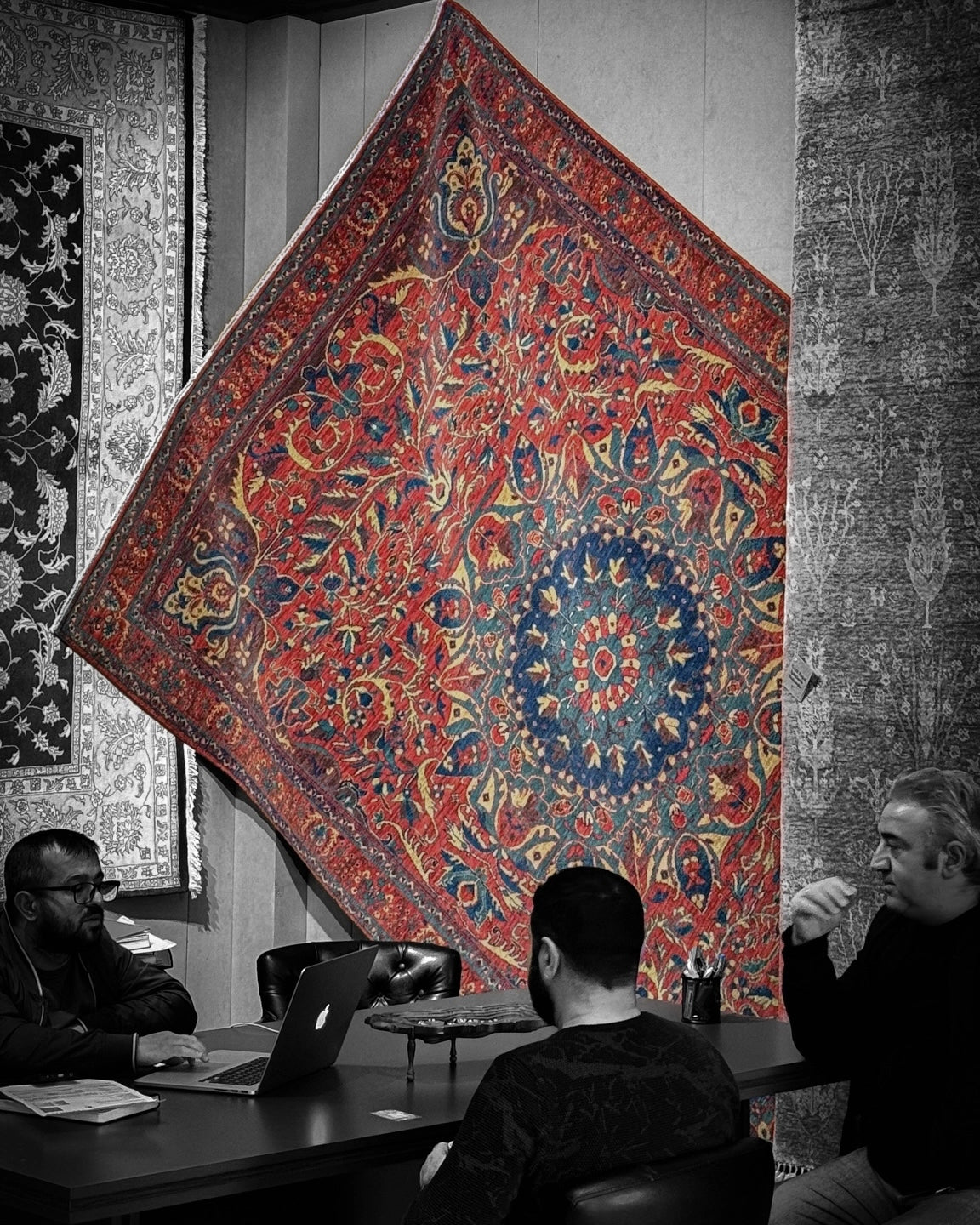
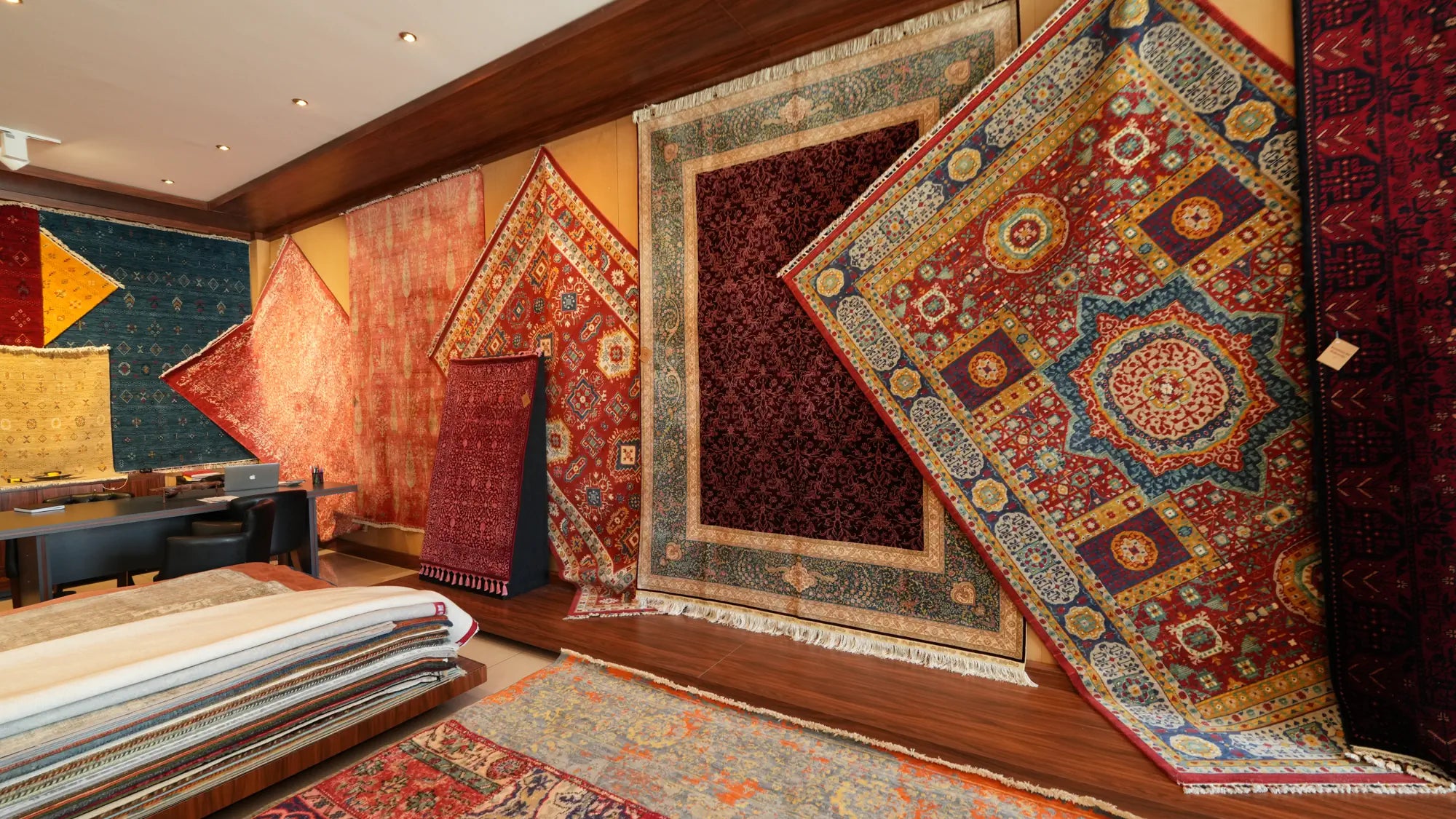
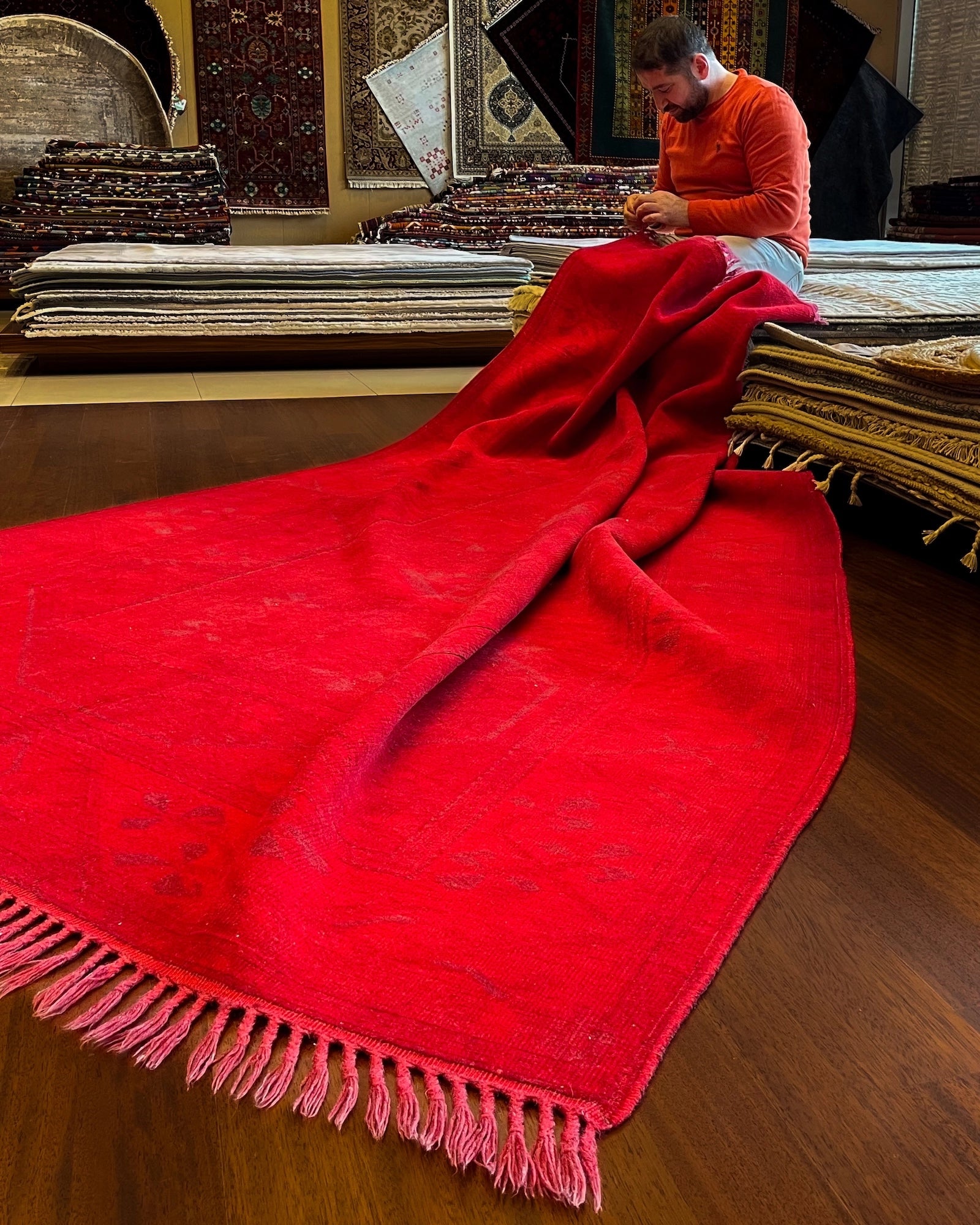
Halıcızade Halı Kilim is a rug house in Çankaya, Ankara, trading since 2004 from a Çayyolu showroom and from halicizade.com. It is both a design office, drawing rugs found nowhere else, and a curation center for the higher grades of the rugs everybody knows — hand-knotted, handwoven, loom-woven and machine-woven, from Anatolia, Afghanistan, India, Pakistan, Nepal and China.
This page sets out who the company is, how the catalog is chosen, what is in it, and how an order placed from outside Turkey works. The measurements below are samples of the store’s own product records, taken on September 8, 2026, and each is given with its sample size attached so that it can be checked rather than taken on trust.
Who is Halıcızade?
Halıcızade Halı Kilim Ev Tekstili Ltd. Şti. is a rug dealer registered in Ankara, Turkey, selling rugs and kilims since 2004.
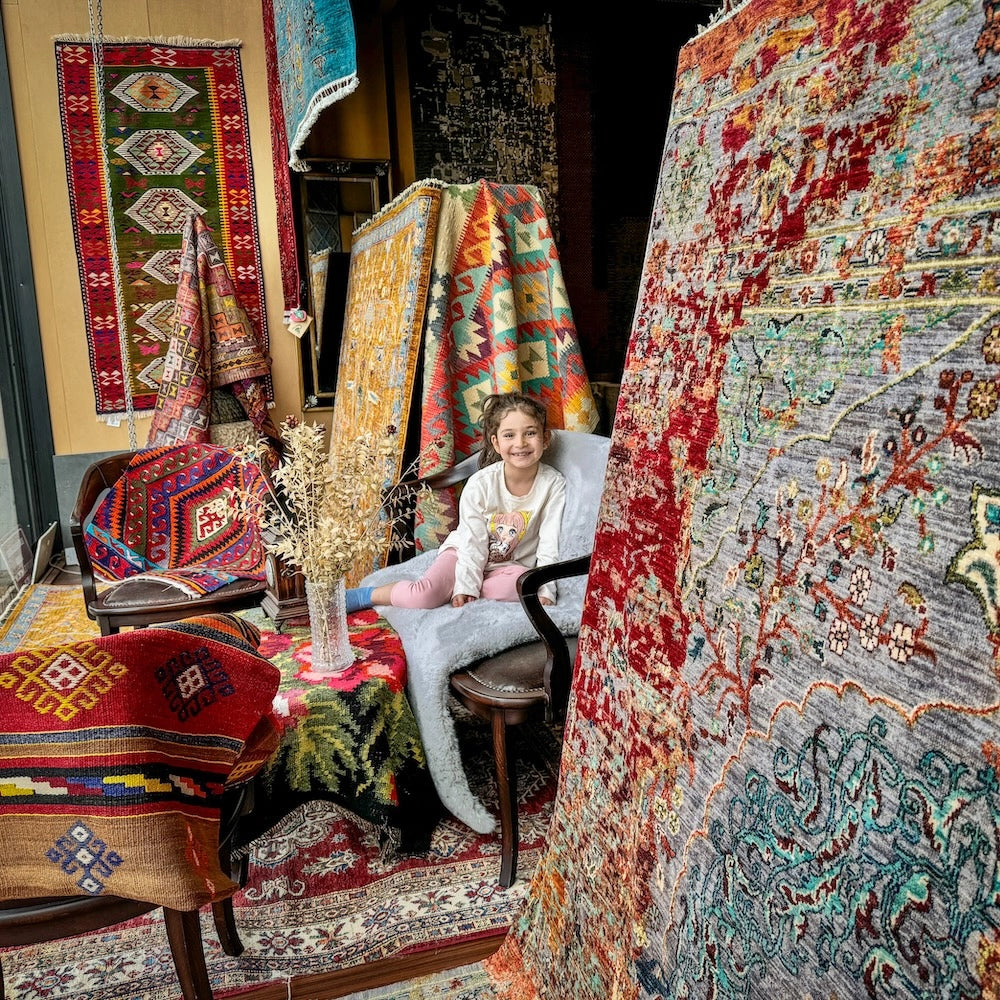
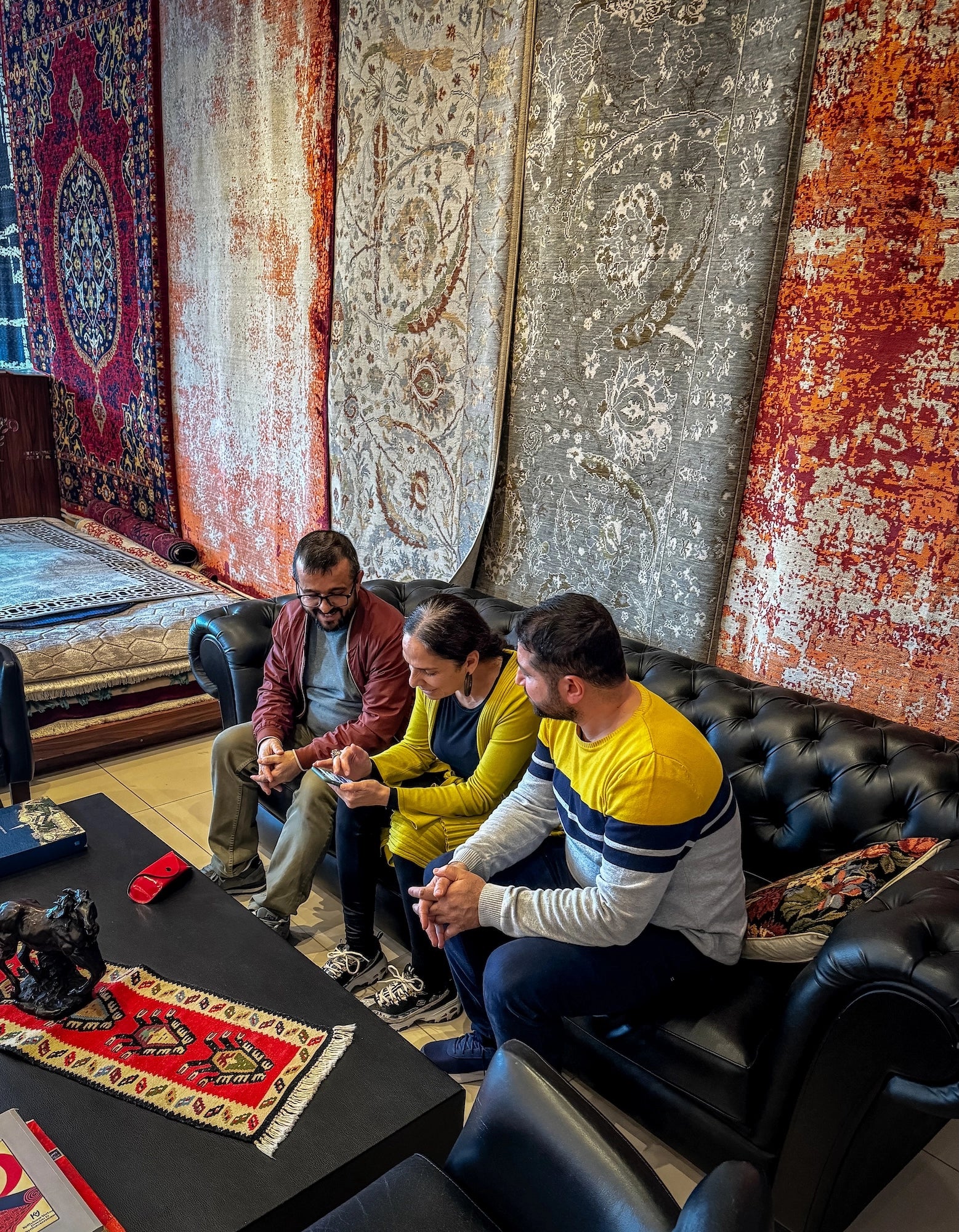
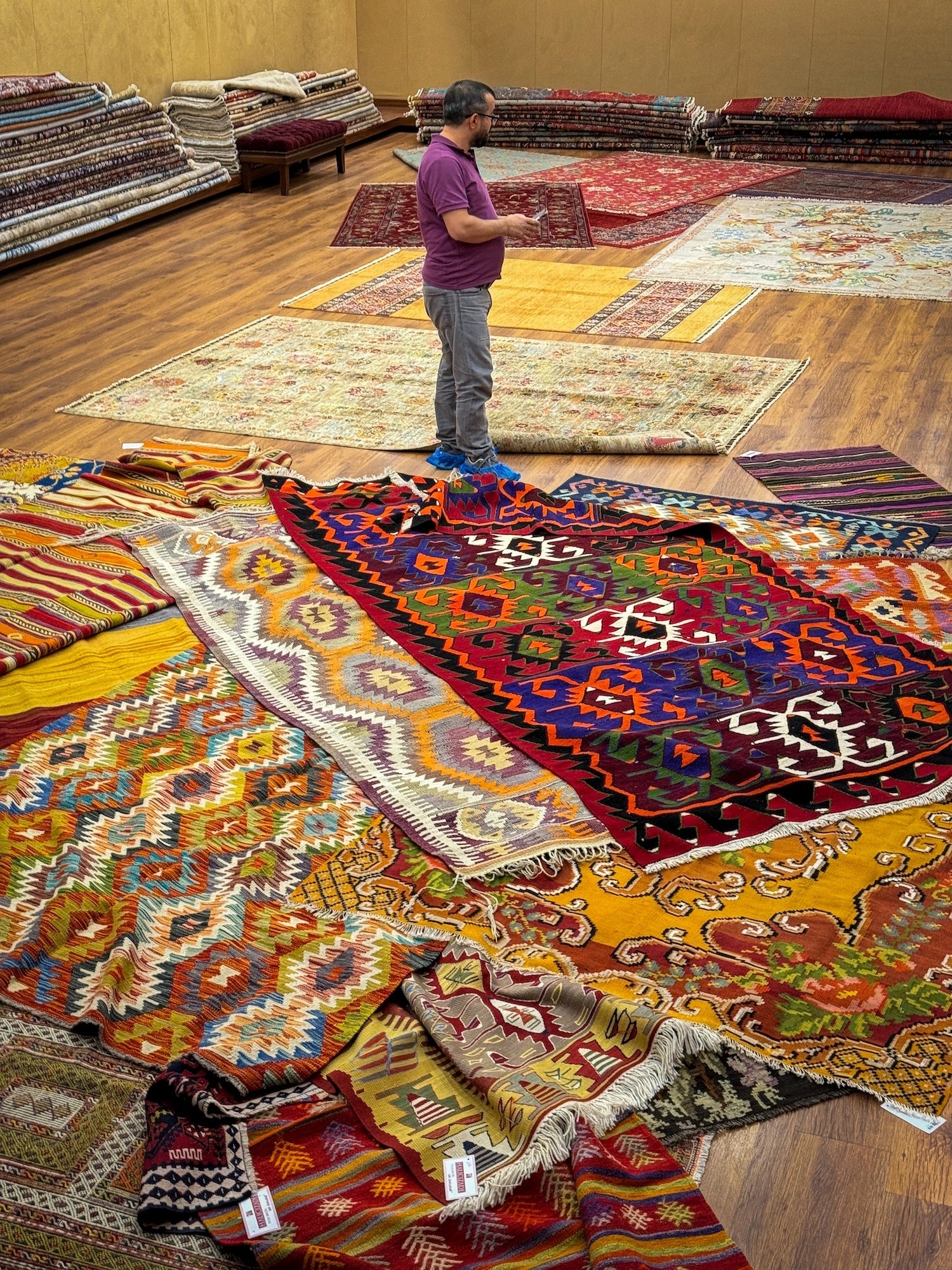
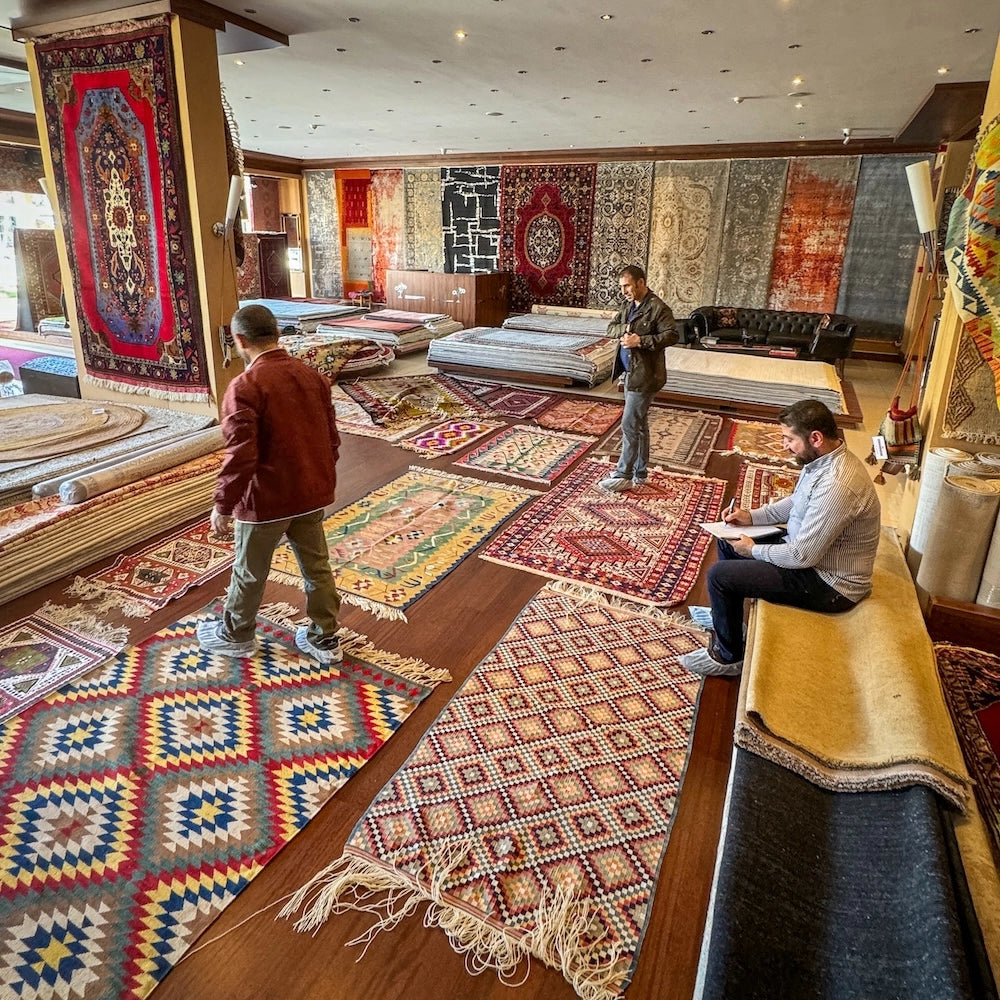
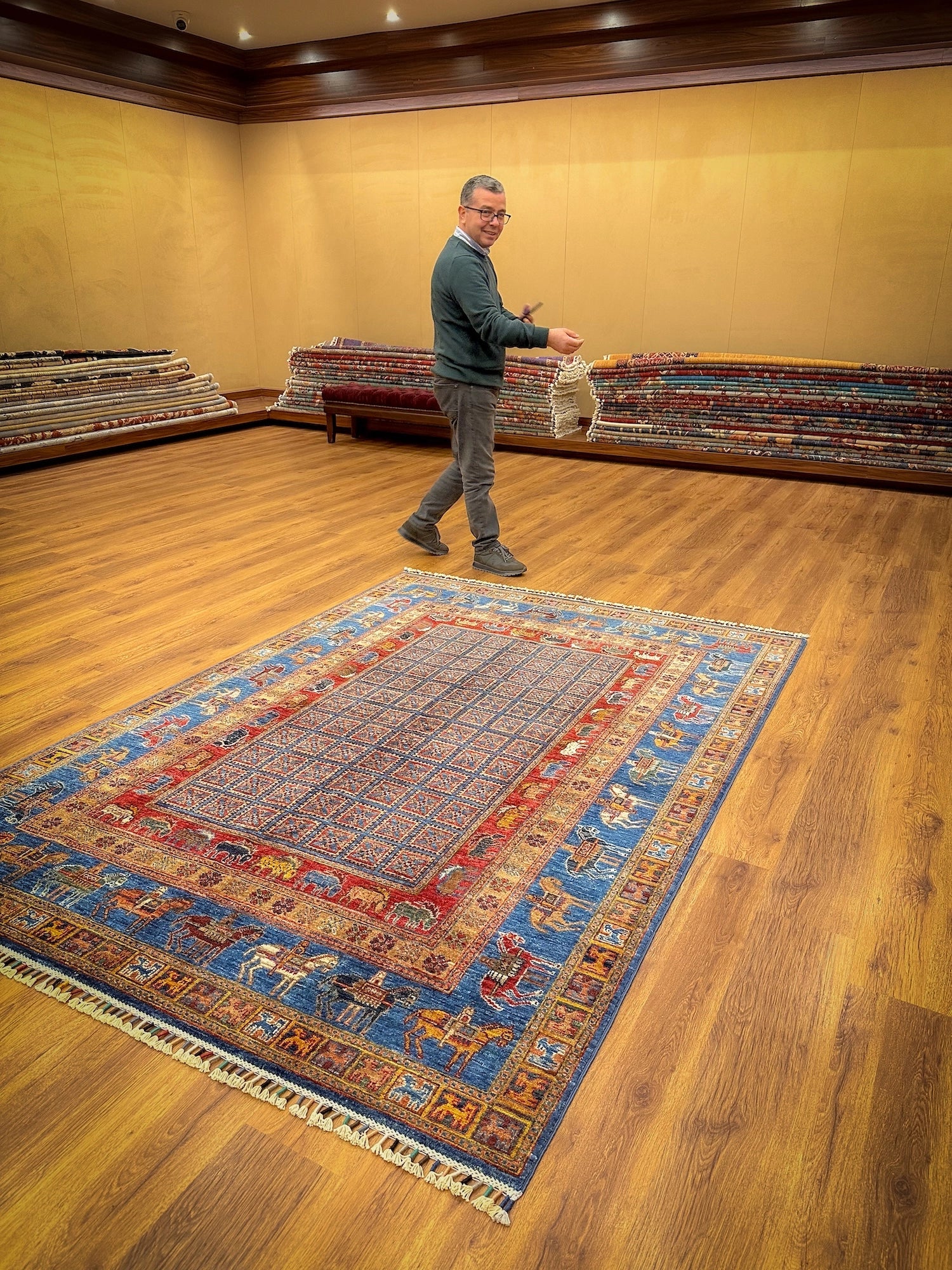
The showroom stands at Prof. Dr. Ahmet Taner Kışlalı Mah., 2873. Cad. No: 3/C, Çayyolu, 06810 Çankaya, Ankara — west of the city center, near the embassy quarter. It opens 09:30 to 18:30 Monday through Saturday and 12:00 to 18:30 on Sunday; it is closed on Tuesdays. The floor stock and the online catalog are the same stock, so a rug seen in the showroom can be bought later from another country, and a rug found online can be held and looked at in person. Telephone +90 312 227 83 73; info@halicizade.com. Visiting is covered on the Ankara rug store page.
A design office and a curation center
Halıcızade does two jobs, and they pull in different directions.
The first is drawing. Four of the series in the catalog are Halıcızade designs — Pinhan, Zima, Günyolu and Zade — their patterns, palettes and proportions drawn by Halıcızade and then put on a loom, rather than chosen out of a wholesaler’s book. Those rugs are in no one else’s catalog because they were in no one else’s drawing.
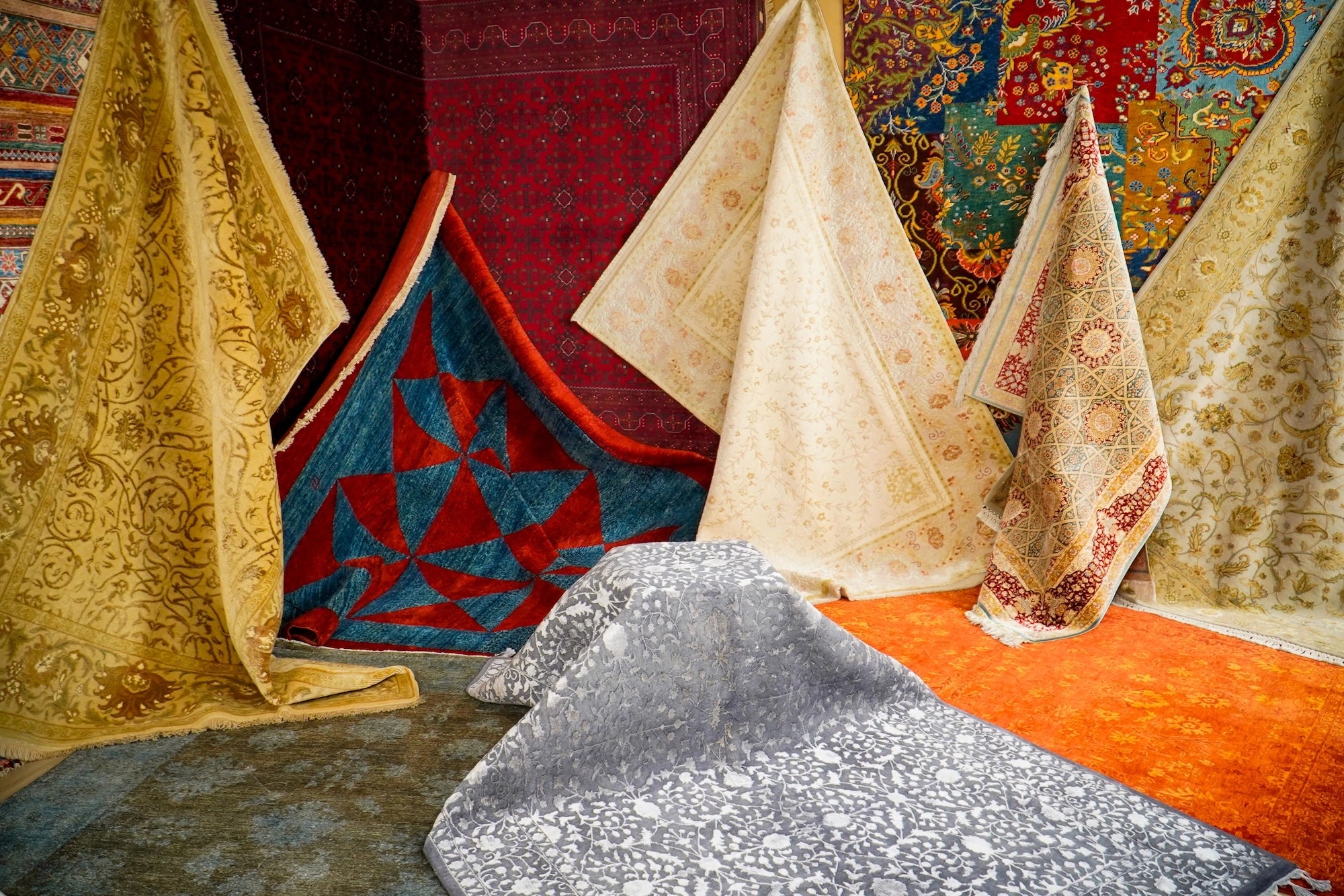
The second is choosing. Hereke, Oushak, Yağcıbedir, Kayseri and Afghan weaving are made at every grade, and the distance between the bottom of that range and the top of it is wider than most buyers expect: the same design, the same region and the same fiber can be a coarse copy or a piece worth keeping. Halıcızade buys in the upper part of the range and passes on the rest, which is why the catalog is narrower than a warehouse’s. Knot density, the wool itself, the dye, and whether the border pattern resolves at the corners are what decide a rug in or out.
One rule sits under both jobs. A rug earns a place here either because it exists nowhere else, or because it is the better version of something a buyer can already compare it against. Everything below — construction, origin, size — is downstream of that.
What is in the catalog?
Four different things, and the store sells all four. Hand-knotted, handwoven, loom-woven and machine-woven are not four grades of one product — they are four methods, with different labor behind them, different structure under the pile and different life expectancy on a floor.
| Construction | How it is made | Where the labor goes |
|---|---|---|
| Hand-knotted | Knot by knot on a vertical loom, each row beaten down with an iron comb | Months at the loom for one rug; the knot count is the work |
| Loom-woven | Structure laid by a loom; knotting and finishing, fringes included, done by hand | Loom time, then hand finishing at both ends, fringe by fringe |
| Handwoven kilim | Weft-faced and flat, no pile, worked by hand and reversible | Weeks rather than months; no pile to tie, so the weft carries the pattern |
| Machine-woven | Power loom, traditional drawing reproduced at scale | Minutes of loom time; the drawing is where the work went |
Hand-knotted pieces are the largest of the four groups and machine-woven the second largest; loom-woven and handwoven kilims follow. The rest of the catalog is prayer rugs, hide and sheepskin, digitally printed rugs and accessories. Which of the four a rug is appears on its own product page, stated rather than implied by its price. Browse hand-knotted rugs, handwoven kilims or machine-woven rugs.
Where are the rugs woven?
Mostly in Turkey, and the rest in five other countries: India, Afghanistan, Pakistan, China and Nepal, in that order of volume.
Turkish production runs on looms between Uşak and Kütahya in western Anatolia. The loom lays the structure and the ends are finished afterwards by hand in the surrounding villages, fringe by fringe. Uşak is also the district behind the English word Oushak — the open field and wide-set medallion that European painters put under the feet of their sitters in the fifteenth and sixteenth centuries. See Oushak rugs and Turkish rugs. Second-hand Anatolian pieces are bought in and resold as well, a handful at a time.
Why are the sizes so strange?
Because a hand-knotted rug is whatever size it was when it came off the loom.
Machine-woven rugs are cut to a chart. Across 250 machine-woven variants sampled from the catalog, only 33 different sizes appear, and three of them — 120 × 180, 80 × 150 and 160 × 230 cm — account for nearly two thirds of the sample. The rest of the chart runs 200 × 290, 200 × 300, 240 × 340 and 300 × 400 cm, with runner widths of 80 and 100 cm.
Across 250 hand-knotted variants sampled the same way, 161 different sizes appear, and 145 of them occur exactly once. They measure 172 × 241 cm (5'8" × 7'11"), 205 × 310 cm (6'9" × 10'2"), 238 × 331 cm (7'10" × 10'10") — numbers no size chart would produce. A weaver sets up the warp, works until the design closes and cuts. The measurement records what happened on the loom; it is not a specification the loom was given. Two samples of 250 are not a census of the catalog, but the gap between 33 sizes and 161 is too wide to be an artifact of sampling: it is the difference between a size chart and a loom.
That is worth knowing before measuring a room. A hand-knotted rug will rarely be the size wanted. It will be within a few centimeters of it, and where those few centimeters fall is decided by the furniture.
How does an order from outside Turkey work?
Taxes, shipping and duties are calculated and collected at checkout. There is no cash on delivery. Return shipping is the buyer’s responsibility. The 14-day right of return applies outside Turkey as well.
Every handmade rug leaves with a document recording where it was woven and how, and that document travels with the rug on a shipment abroad. The full terms are set out on the shipping and returns page.
Frequently asked questions
Where is Halıcızade?
Halıcızade Halı Kilim is at Prof. Dr. Ahmet Taner Kışlalı Mah., 2873. Cad. No: 3/C, Çayyolu, 06810 Çankaya, Ankara, Turkey. The showroom opens 09:30 to 18:30 Monday through Saturday and 12:00 to 18:30 on Sunday, and is closed on Tuesdays.
How long has Halıcızade been selling rugs?
Since 2004. The company is registered as Halıcızade Halı Kilim Ev Tekstili Ltd. Şti. and has traded from Ankara for more than twenty years, first from the showroom floor and later online as well.
Where can you buy rugs made in Turkey?
Halıcızade sells Turkish-woven rugs and kilims from its Ankara showroom and ships them worldwide from the same stock. Most of the catalog carrying an origin tag was woven in Turkey, on looms in Uşak, Kütahya and across Anatolia.
What is the difference between hand-knotted, handwoven, loom-woven and machine-woven rugs?
Hand-knotted rugs are tied knot by knot on a loom. Handwoven kilims are flat and weft-faced, with no pile. Loom-woven rugs have their structure laid by a loom and their finishing, fringes included, done by hand. Machine-woven rugs are made on a power loom.
Why do hand-knotted rugs come in odd sizes?
Because the size is the result rather than the plan. Across 250 hand-knotted variants sampled from the catalog, 161 different sizes appear and 145 of them occur exactly once. The same sample taken across 250 machine-woven variants produces only 33 sizes.
Does Halıcızade ship outside Turkey?
Yes. Taxes, shipping and duties are calculated and collected at checkout. There is no cash on delivery. Return shipping is the buyer’s responsibility. The 14-day right of return applies outside Turkey as well.
Last updated: September 8, 2026.
Related: Turkish rugs · hand-knotted rugs · handwoven kilims · Oushak rugs · Zade Series.