
Lake blue beside forest green, viscose lifting the brighter parts
 270×372 cm



Rugs & Kilims
Find Your Rug
For those who already know what they are looking for — Halıcızade's most visited collections.
Lake blue beside forest green, viscose lifting the brighter parts
270×372 cm
Şeki silk, a Heriz drawing, cream held inside red
 250×337 cm
Months in women's hands: Anadolu Şal patchwork in wool
 209×298 cm
One of a kind
from
225.000 TL
≈ 36.000 TL/m²
Six by six knots, and the center deliberately left bare
 202×284 cm
A museum pattern copied line for line, woven in Oushak in 2023
 204×349 cm
First-grade fleece, a green ground holding five colors in bands
 122×174 cm
One of a kind
from
77.000 TL
≈ 36.000 TL/m²
Nearly ten square meters, and a single disc holds all of it
 277×358 cm
One of a kind
from
660.000 TL
≈ 67.000 TL/m²
Gold on burgundy, every knot of it silk: 207 × 309 cm
 207×309 cm
Cream and gold swapping places along the pile: 100% silk
 207×303 cm
Plant-dyed terracotta around a medallion, wool over cotton
 120×180 cm
Even the fringe is silk; red field, beige drawing
 218×302 cm
Turquoise at many depths, 270 × 360 cm without a motif
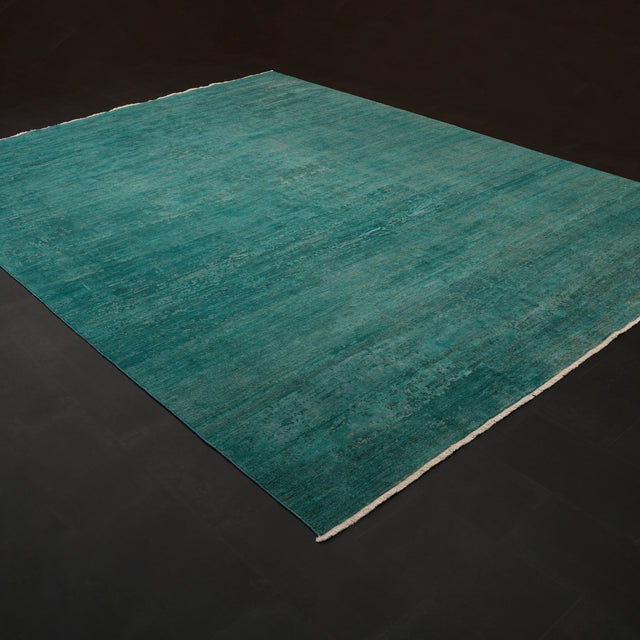 270×360 cm
One of a kind
from
500.000 TL
≈ 51.000 TL/m²
Brick orange only where the silk runs, over deep red
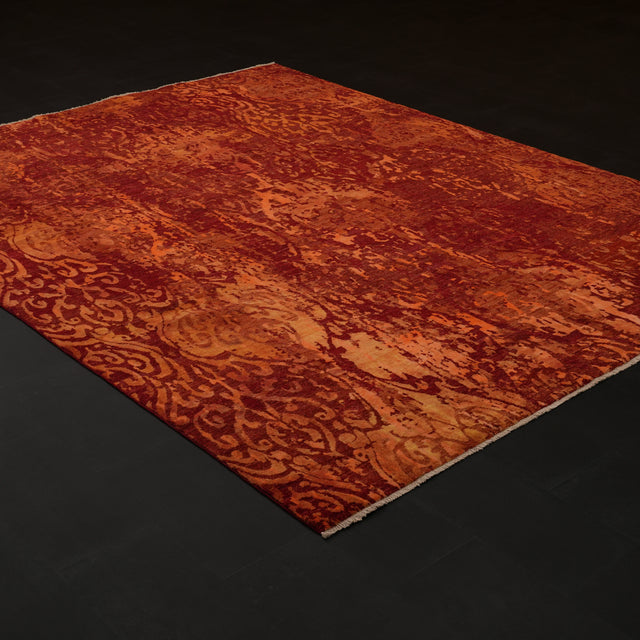 234×303 cm
The Jaipur mark on it, and a blue that reads green
 201×297 cm
Burgundy silk that goes brown by lamplight, blue at the border
 220×303 cm
Silk kept to the vine, wool everywhere else, gray beneath
 170×244 cm
One of a kind
from
167.000 TL
≈ 40.000 TL/m²
Burgundy band wide around pale gray, figured in green and cream
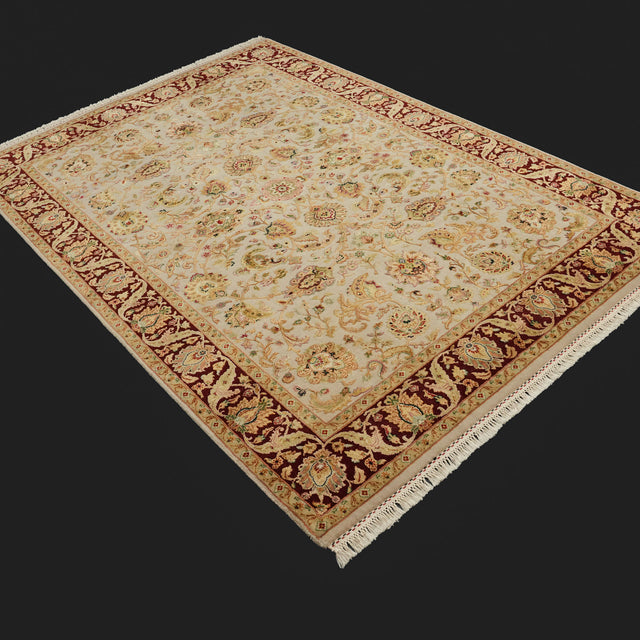 168×244 cm
One of a kind
from
165.000 TL
≈ 40.000 TL/m²
One purple medallion, and the whole rug folds into two hands
 170×240 cm
Out of direct sun: cream ground, silk run into the wool
 184×260 cm
Tobacco and orange outlined in a navy that reads black
 360×276 cm
Erzurum fleece, a brown field, a border pulled back to slate
 206×283 cm
The Hereke drawing scattered small, on silk in dark red
 170×251 cm
Silk warp, silk weft, silk pile: cream inside red borders
 171×242 cm
Turquoise used sparingly, gold-yellow across the rest, in silk
 167×241 cm
One of a kind
from
610.000 TL
≈ 150.000 TL/m²
The Special Collection is Halıcızade's group of artisan rugs: more than 150 hand-woven pieces, each chosen individually for the quality of the weave, the wool or silk, and the color. It gathers Oushak, Afghan, Yağcıbedir and Damask drawing alongside Anatolian shawl, patchwork and pure-silk work, and every rug exists in one size only.
This is a selection rather than a design line. Nothing here shares a pattern book or a production run, and the only thing the rugs have in common is that each took months of hand work and was judged worth keeping. What follows is what the collection contains, how the pattern families differ, and what to settle before buying a rug that exists once.
Execution, and the fact that it cannot be repeated.
Every piece is hand-woven, and most take months at the loom. Selection turns on the things that are visible at close range and impossible to fake: the density and regularity of the knotting, the depth a dye reaches in the fiber, the accuracy of a border where it turns a corner. Materials run from madder-dyed Anatolian wool to pure silk. Because the work does not scale, the numbers stay small and a rug that sells is not rewoven.
For the constructions behind the collection, see hand-knotted rugs and pure silk rugs.
Four traditions, four different arguments about what a field should do.
| Family | Origin | Drawing | Palette |
|---|---|---|---|
| Oushak | Western Anatolia, from the fifteenth century | Large medallions on open fields, unhurried floral work | Apricot, madder red, ivory, soft blue |
| Afghan | Afghanistan and the Turkmen tradition | Repeated octagonal figures across a dense field | Deep red grounds, ivory and navy outlining |
| Yağcıbedir | Village weaving near Balıkesir | Lantern-shaped medallion, dense multi-band borders | Madder red, indigo, white |
| Damask | Adapted from figured silk and linen cloth | Symmetrical floral and geometric repeat, no single center | Tonal, often one color at two values |
Alongside these are Anatolian shawl compositions, patchwork pieces assembled from sections of older weaving, and abstract work in wool and silk. See Oushak rugs, Afghan rugs, Yağcıbedir rugs and Damask-patterned rugs for each tradition on its own.
The fiber decides how the rug behaves under light and under feet.
Wool takes a dye to depth, keeps a matte surface that hides traffic, and springs back after furniture has stood on it. It is the fiber for a room that is lived in. Silk is cold at first touch, changes value completely with the angle you look from, and carries a far higher knot count, which is what allows the fine curvilinear drawing in the Azerbaijani and Anatolian classic pieces here. It belongs in rooms that are looked at more than walked through. Madder-dyed wool from Oushak-region production sits between the two: a natural dyebath, a coarser knot, and a color that will keep shifting for the life of the rug.
One rug, one room, chosen in that order.
A piece from this collection is normally the reason a room is arranged the way it is, rather than the last thing added to it. In a living room it sets the palette everything else answers to; in a bedroom a smaller piece works underfoot and out of the main traffic. Modern rooms take the abstract and Damask work most easily, traditional rooms the Oushak and Yağcıbedir drawing, and patchwork sits between the two. See living room rugs for sizing against seating.
Measure first, because the size is not a variable here.
Settle six things: the room and the light it gets, the size against the furniture, the color and drawing, the fiber, the standard of weaving you want, and how the rug will be cleaned. Every rug in this collection was woven once, so a size is a particular rug rather than an option to be ordered.
For care, treat the rug as a textile rather than a floor covering. Daily cleaning is a soft brush, or a vacuum with the beater bar off and the suction low. Air the rug regularly, out of direct sunlight, which fades a natural dye faster than use wears it. Blot spills with a white cloth from the outside in, and use a stain treatment only if it is safe for the fiber. Washing is left to professionals who work on hand-woven rugs.
A special collection rug is a hand-woven piece selected individually for the quality of its weave, its wool or silk and its color, rather than ordered as part of a production run. Halıcızade lists more than 150 of them, and each rug exists in a single size.
Oushak medallion and floral work from western Anatolia, Afghan field designs, Yağcıbedir village drawing in red, blue and white, Damask compositions adapted from silk and linen weaving, and Anatolian shawl, patchwork and abstract pieces.
A rug carrying the symmetrical floral and geometric repeat that first belonged to damask cloth, a figured weave made in silk, wool and linen. Transferred to a rug, the repeat gives a quiet all-over field with no single center to it.
A narrow palette and a fixed vocabulary. The Yağcıbedir tradition works in madder red, indigo blue and white, with dense borders and a lantern-shaped medallion that has passed through generations with very little change.
Each one takes months of work at the loom, and the wool, silk and dyes used are chosen piece by piece rather than bought to a specification. Neither part of that scales, so the collection grows slowly and pieces are not repeated.
For everyday care, use a soft brush rather than a vacuum with a rotating beater bar, and air the rug out of direct sunlight. Blot spills with a white cloth. Full washing is left to professionals who work on hand-woven rugs.
The room and the light it gets, the size against the furniture, the fiber, the drawing and the palette, and how the rug will be cleaned. In a collection where each piece is unique, the size is fixed and the room has to be measured first.
Related collections: Oushak rugs · pure silk rugs · Harem Series · rare rugs


