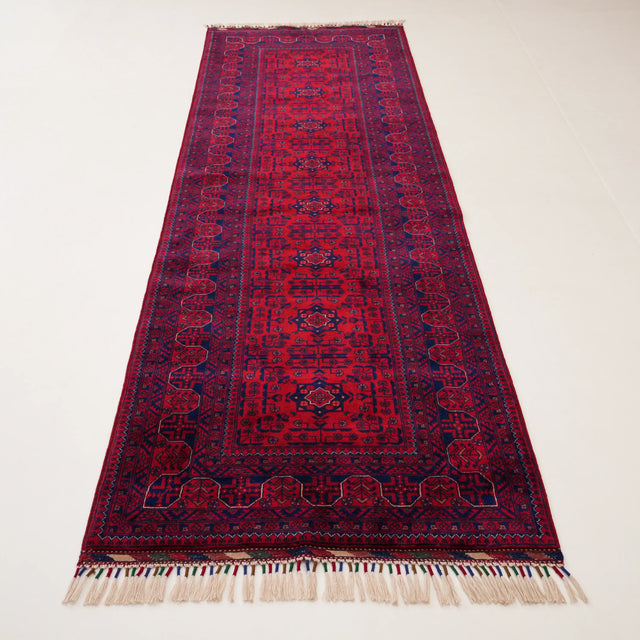
Turkmen rows in burgundy and navy, fringes tied in Oushak
 200×300 cm



Rugs & Kilims
Find Your Rug
For those who already know what they are looking for — Halıcızade's most visited collections.
Turkmen rows in burgundy and navy, fringes tied in Oushak
200×300 cm
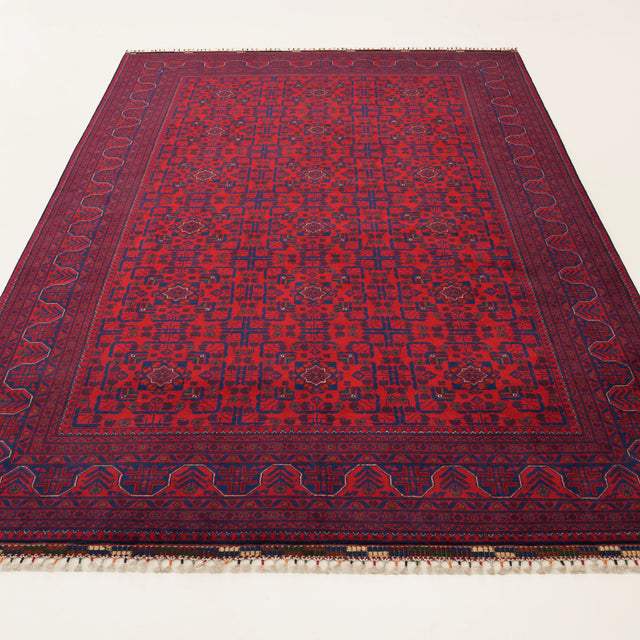
Fringes tied in Oushak, the drawing borrowed from Yağcıbedir
 200×300 cm
A two-meter circle, Turkmen figures cut by its own edge
 160×160 cm
Bestseller
from
20.500 TL
≈ 8.000 TL/m²
Gold breaking up burgundy and navy, on old-style looms
 160×230 cm
Gabbeh figures set symmetrically, 100% wool, red into burgundy
 200×300 cm
Flat flowers linked on thin stems, fire red in Tencel®
 200×300 cm
Burgundy filled edge to edge, no open ground, all viscose
 200×300 cm
Pastel blue inside the red, a tree of life in the frame
 200×290 cm
A two-meter circle: navy and gold medallion on deep red
 200×200 cm
Burgundy silk that goes brown by lamplight, blue at the border
 220×303 cm
Burgundy under navy, gold scattered through, not a thread of wool
 190×190 cm
The Hereke drawing scattered small, on silk in dark red
 170×251 cm
A Yağcıbedir with three colors and no fourth: burgundy, navy, white
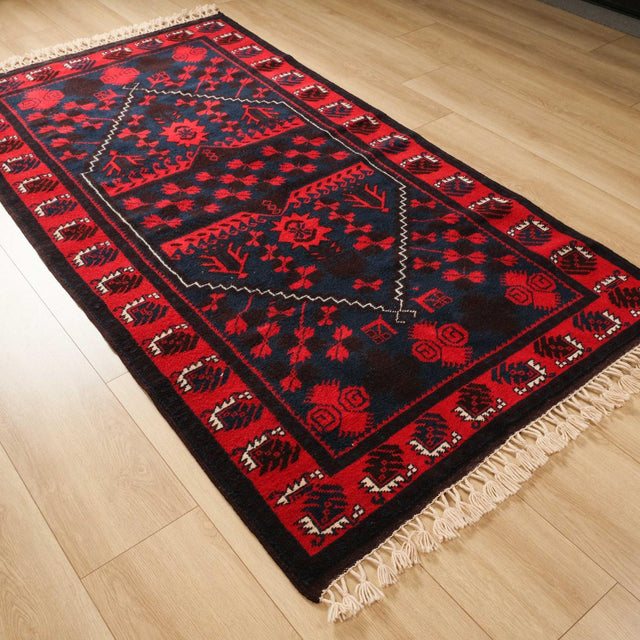 120×220 cm
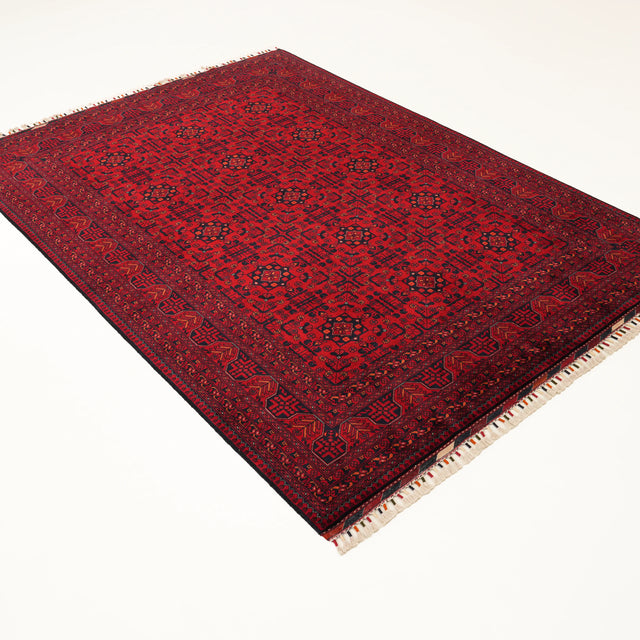 164×232 cm
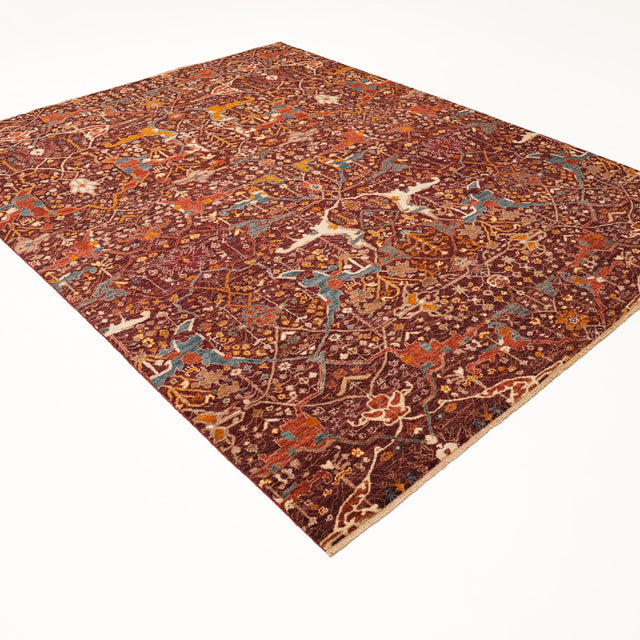 241×312 cm
86 cm wide and three meters long, burgundy Turkmen work
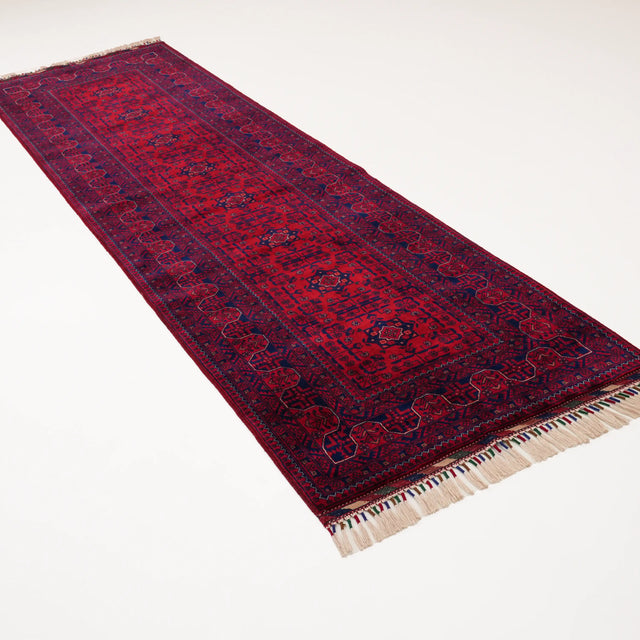 86×302 cm
One of a kind
from
52.000 TL
≈ 20.000 TL/m²
İkinci elden geliyor: elde dokunmuş, tek ipliği yün
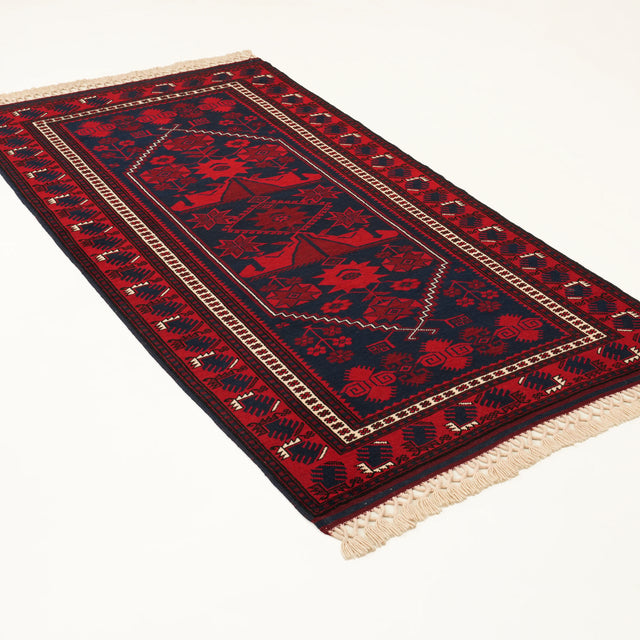 117×217 cm
Motifler zihinden dokunuyor: bordo üstüne lacivert
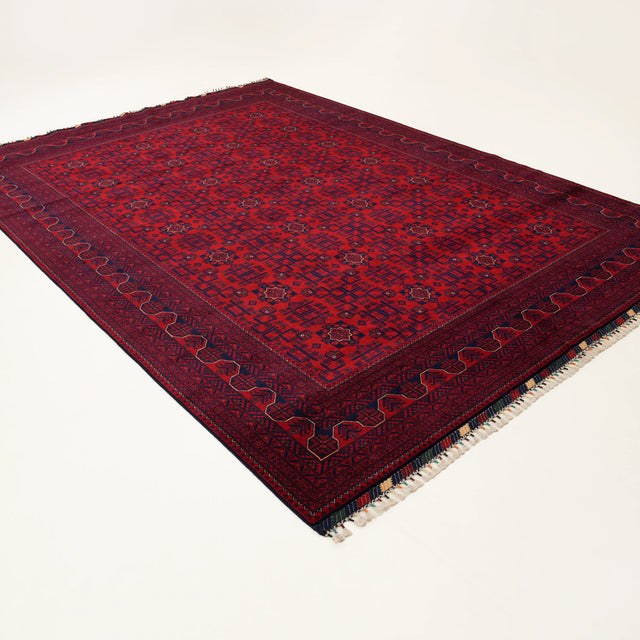 249×344 cm
A nightingale's eye repeated on navy, wool over cotton
 126×178 cm
Bukhara and Herat drawing at 206 × 303 cm, Khamyap
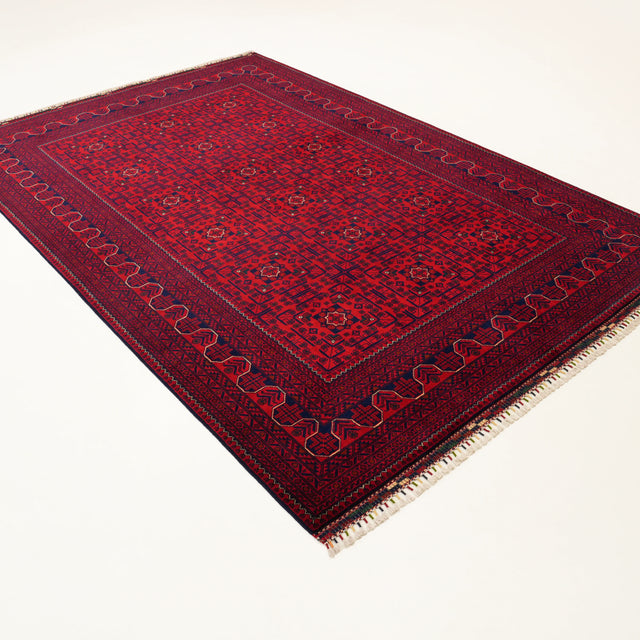 206×303 cm
Enough floor for a whole seating group, burgundy Khamyap
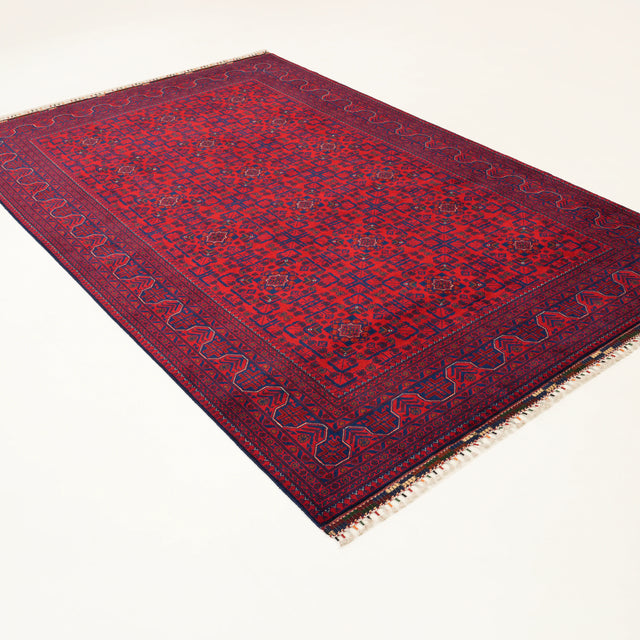 194×297 cm
Navy keeps the burgundy company, 196 × 300 cm
 196×300 cm
Geometry spread evenly, so nothing has to be centered
 122×181 cm
A meter wide, for a hall that cannot take more
 100×153 cm
One of a kind
from
31.000 TL
≈ 20.000 TL/m²
A burgundy rug is woven in deep wine red — the dark, slightly blue-shifted red that a concentrated madder dyebath gives, and the standard field color of Turkmen and much Anatolian weaving. Halıcızade's burgundy collection runs to about a hundred rugs in Afghan, Turkmen, Yağcıbedir and Mamluk designs, machine-woven, loom-woven and hand-knotted.
Burgundy is the color most people mean when they picture a traditional rug, and it is worth knowing why: the historical dye reached its best depth in that register, so the patterns of the region were drawn to sit on it. This page covers where the color belongs in the weaving traditions, what the collection contains, and how a dark red floor behaves in a room.
Four dark reds, and only one of them is neutral enough to live with easily.
| Color | Cast | Reads as | Best against |
|---|---|---|---|
| Burgundy | Blue-shifted, deep | Quiet, formal, settled | Walnut, cream walls, brass, gray |
| Bright red | Pure, high chroma | Active, foreground | White and pale wood, in small formats |
| Rust and brick | Orange-shifted | Warm, earthy, matte | Terracotta, oak, natural fibers |
| Maroon | Brown-shifted, flat | Heavy, close to brown | Dark rooms with strong artificial light |
It is the ground the patterns were drawn for.
Turkmen weaving is built on a red field broken by repeated octagonal güls; take the red away and the design loses its structure. Afghan rugs in this collection follow the same logic, with a dark red ground and ivory or navy outlining that defines the drawing rather than decorating it. Yağcıbedir rugs, woven by a Turkmen-descended community near Balıkesir, work a narrower palette still — madder red, indigo and white, densely bordered, with a lantern-shaped medallion that barely changes from one generation to the next.
Mamluk-pattern pieces come at the same color from a different direction, with concentric geometric medallions on a red field. See Afghan rugs and Turkmen rugs for the traditions in full.
Three constructions and a wide spread of drawing.
Machine-woven acrylic pieces carry Afghan and Mamluk patterns at the lightest weight and the shortest pile, some with a non-slip backing that keeps a hall rug from traveling. Loom-woven rugs in the nostalgic and vintage manner sit in the middle, in rectangular and round formats. Hand-knotted wool and silk pieces are the heaviest and the only ones where the red shifts as you walk around the room.
Alongside the patterned work there are plain burgundy grounds, long-pile shaggy pieces and burgundy-with-cream and burgundy-with-gray combinations for rooms that need the color without the drawing. Browse acrylic rugs for the machine-woven end and hand-knotted rugs for the other.
It closes a room down and warms it, in that order.
Under walnut and dark wood a burgundy rug reads as part of the furniture, which is why it has been the default in formal dining rooms for a century. Under pale upholstery it does the opposite and becomes the darkest thing in the room, and the contrast is what makes cream sofas look deliberate. With gray it sits between warm and cool and settles both. With brown and earth tones it disappears into the palette, which suits a study better than a living room.
Deep red also carries into bedrooms and offices, where the light is lower and a pale rug looks washed out by evening. In kitchens, choose a short pile and a small format instead of a shaggy one, and see kitchen rugs for the sizes that fit between counter and table.
Match the construction to the traffic, then keep to a routine.
Pattern hides wear; a plain ground shows it. In a busy hall or dining room, a geometric or Afghan-patterned rug in a short pile will look unchanged for years longer than a plain long pile in the same place. Vacuum every two or three days where the room is used daily. Blot spills with a white cloth rather than rubbing them, and treat the mark from the outside in. Keep bleach away from the pile entirely. The washing instructions are printed on the reverse of the rug; hand-knotted wool and silk go to a rug washer rather than a general cleaner.
Burgundy is a deep wine red carrying a trace of blue or brown, darker and quieter than a bright red and warmer than maroon. On a rug it reads almost black at the edges of a room and opens into red where the light falls.
Afghan and Turkmen field designs, Yağcıbedir village drawing in red, blue and white, Mamluk medallion compositions and plain modern grounds. Deep red has been the standard field color of Turkmen weaving for long enough that most of its patterns were designed for it.
Walnut and dark wood, brass, cream and white walls, and gray. A burgundy rug under pale upholstery is the most reliable pairing in the collection; against brown and earth tones it reads as part of the same family rather than as contrast.
No. A deep red ground in a bedroom reads warm rather than formal, particularly in a soft or long pile, and it holds up better against low evening light than a pale rug does.
Most machine-woven and loom-woven pieces are not machine-washable. Spot-clean with a damp cloth and a mild detergent, follow the instructions on the reverse of the rug, and send hand-knotted wool and silk to a specialist.
A dark red ground shows everyday soiling less than a cream or beige one, which is part of why it is used in halls and dining rooms. It still needs vacuuming every few days in a busy room.
Related collections: red rugs · Afghan rugs · Yağcıbedir rugs · classic rugs