



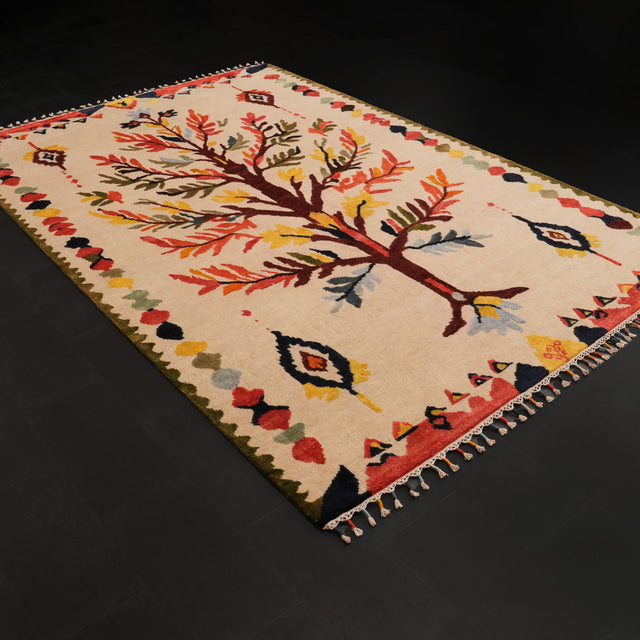
 206×306 cm
Products
-
 206×306 cm
-
 208×302 cm
-
 167×245 cm
One of a kind
Ayan Serisi El Dokuma Anadolu Desenli İpekli Lacivert Halı
from 144.000 TL
≈ 35.000 TL/m² -
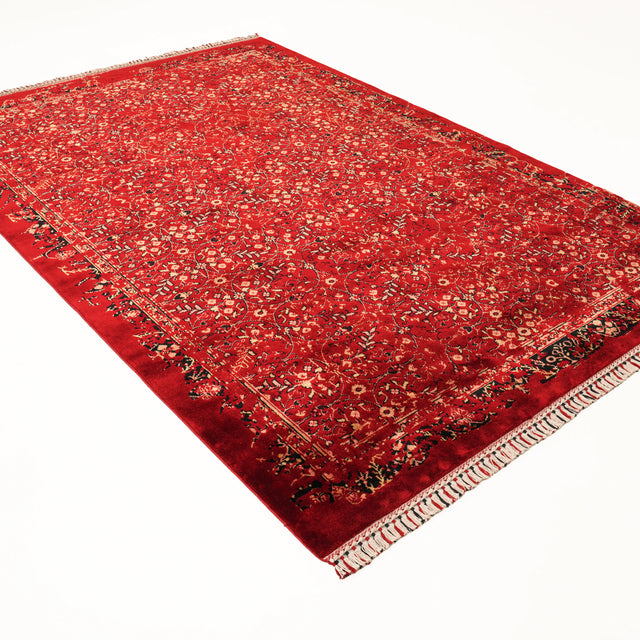 200×300 cm
-
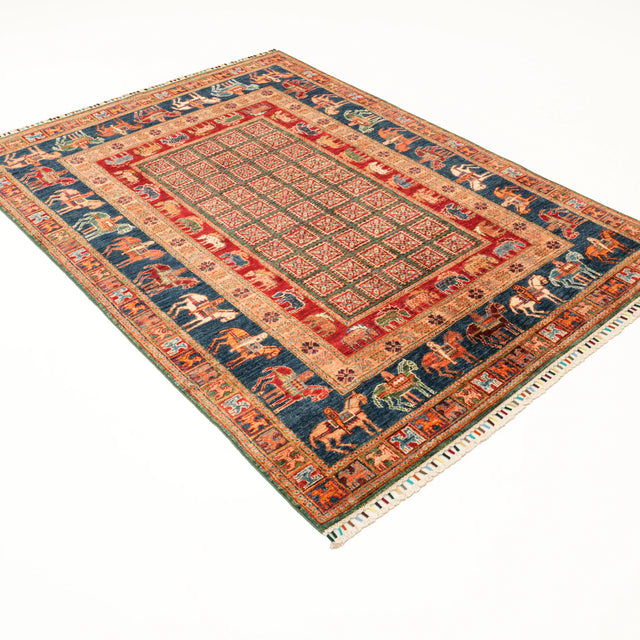 149×208 cm
One of a kind
Multicolor Pazyryk-Pattern Handwoven Wool Rug, Şahzade Series
from 55.000 TL
≈ 17.500 TL/m² -
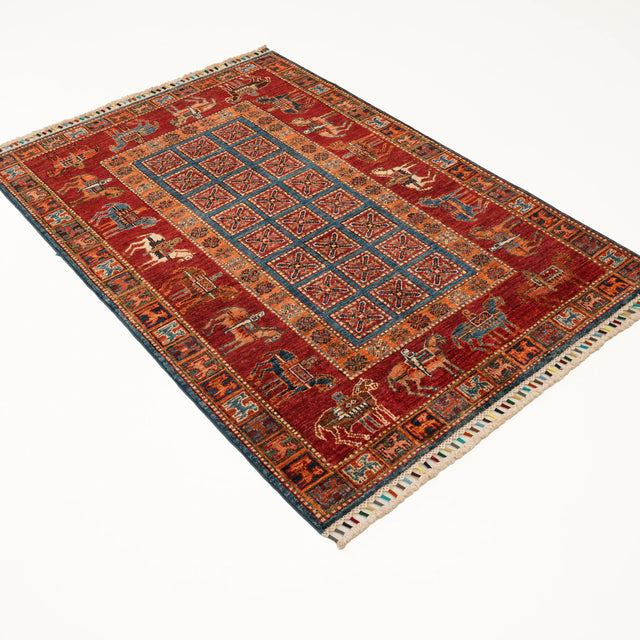 107×154 cm
One of a kind
Multicolor Handwoven Wool Rug with Pazyryk Pattern, Şahzade Series
from 29.000 TL
≈ 17.500 TL/m² -
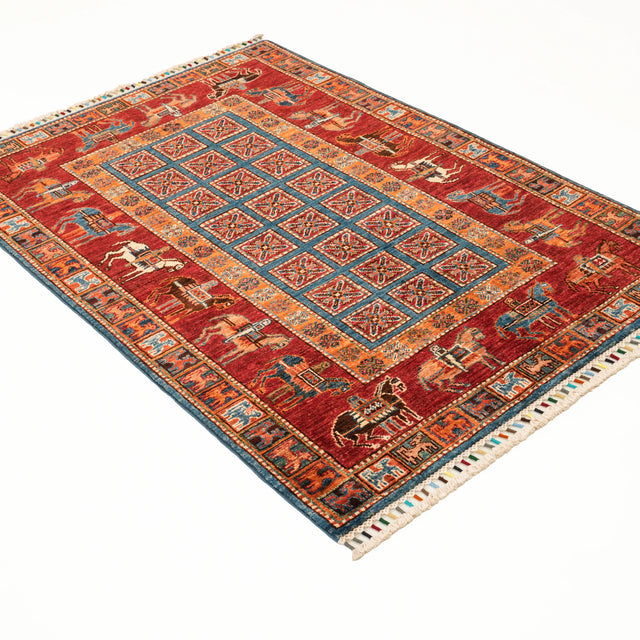 108×157 cm
One of a kind
Handwoven Multicolor Wool Rug with Pazyryk Pattern, Şahzade Series
from 30.000 TL
≈ 17.500 TL/m² -
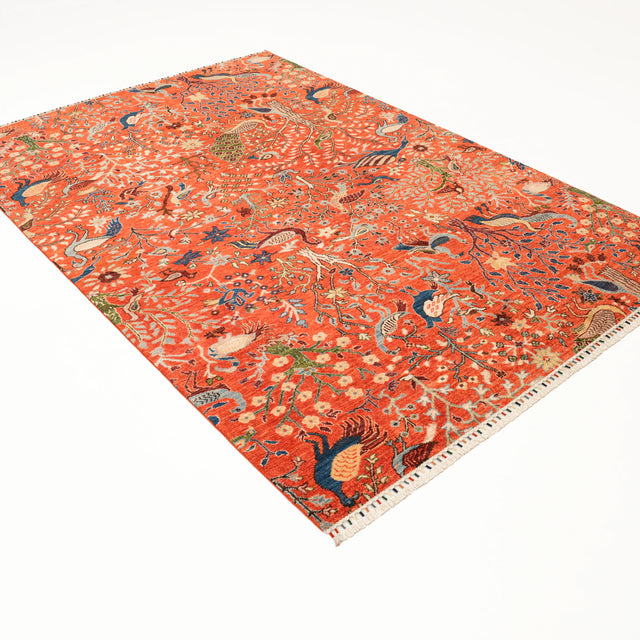 188×274 cm
-
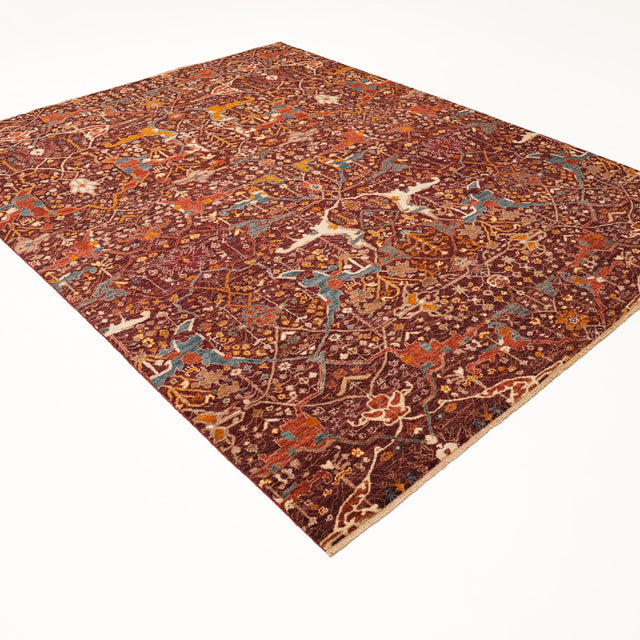 241×312 cm
-
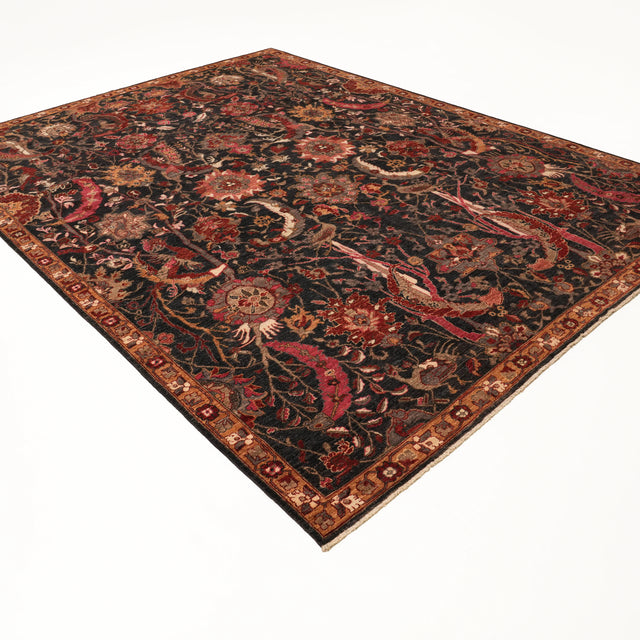 266×357 cm
-
Saçakları Kütahya'da, evlerde tek tek örülüyor
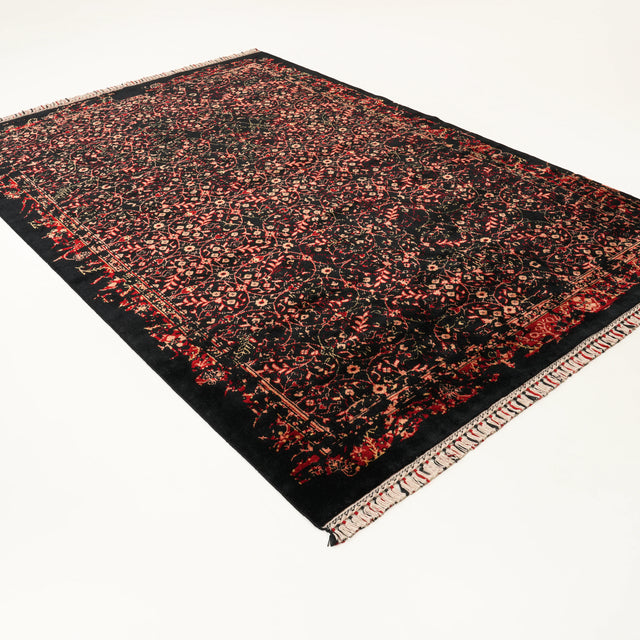 200×300 cm
-
Ortada sekizgen bir madalyon, iki yanında iki küçüğü
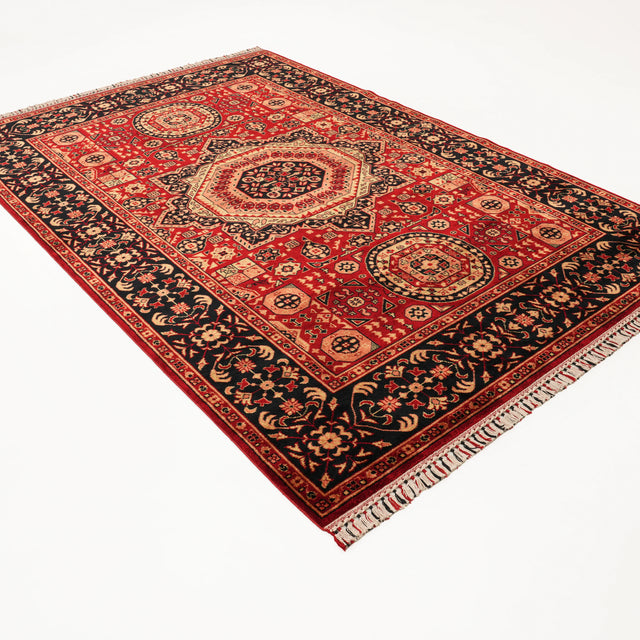 200×300 cm
-
Altay kurganlarındaki 2500 yıllık halının deseni
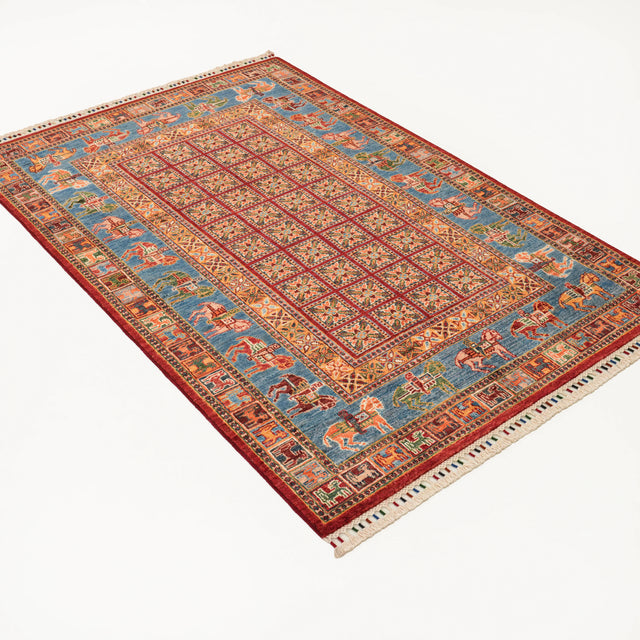 127×187 cm
One of a kind
Multicolor Pazyryk-Pattern Handwoven Wool Rug, Şahzade Series
from 42.000 TL
≈ 17.500 TL/m² -
Dokumada kuşlar var, on santimetrekarede iki bin düğüm
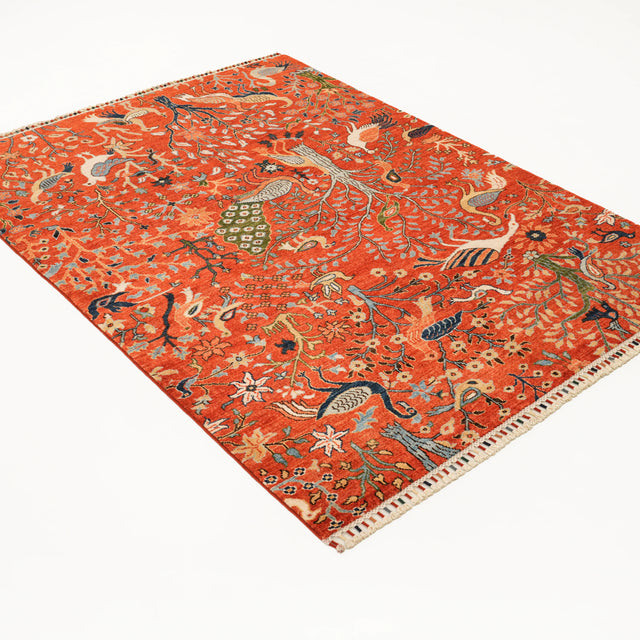 152×203 cm
-
Bahtiyari düzeni, kırmızı ve bordo merkezden dağılıyor
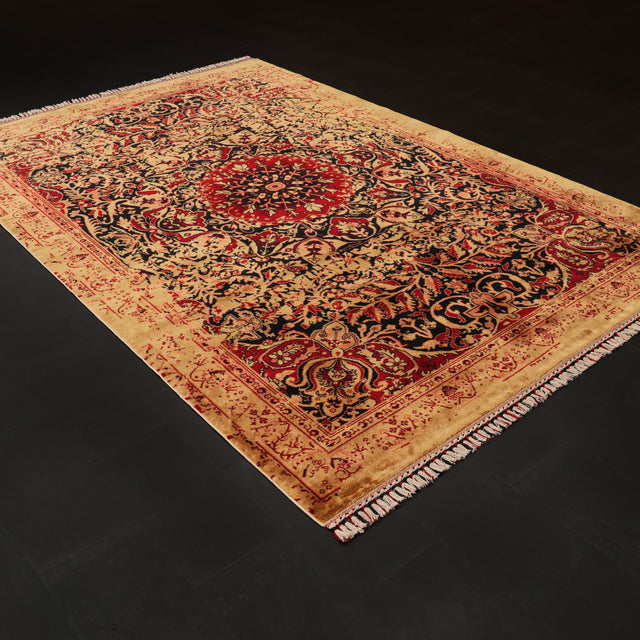 200×300 cm
-
Tencel® ve pamuk aynı dokumada: mat yanında parlak
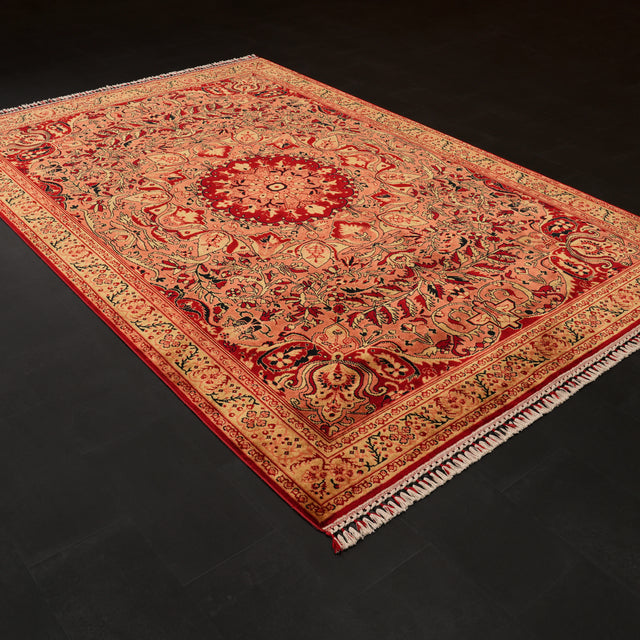 200×300 cm
-
Zamanla silinmiş gibi duran motifler, krem ve bej içinde
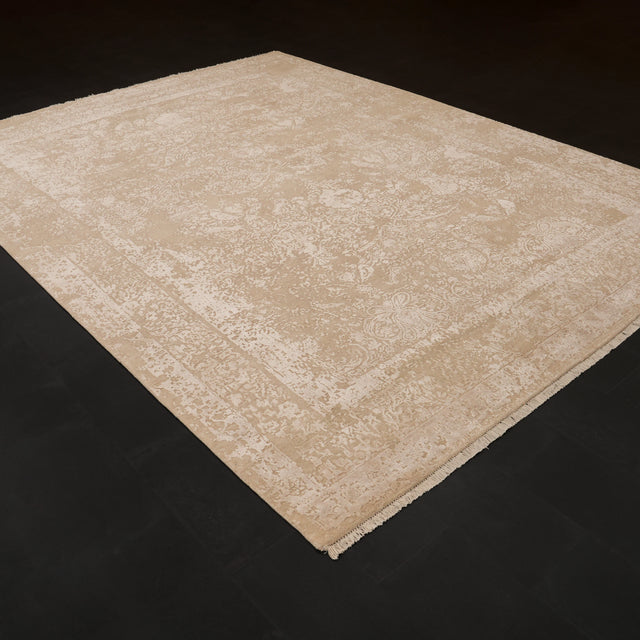 274×375 cm
-
İkinci elden geliyor: elde dokunmuş, tek ipliği yün
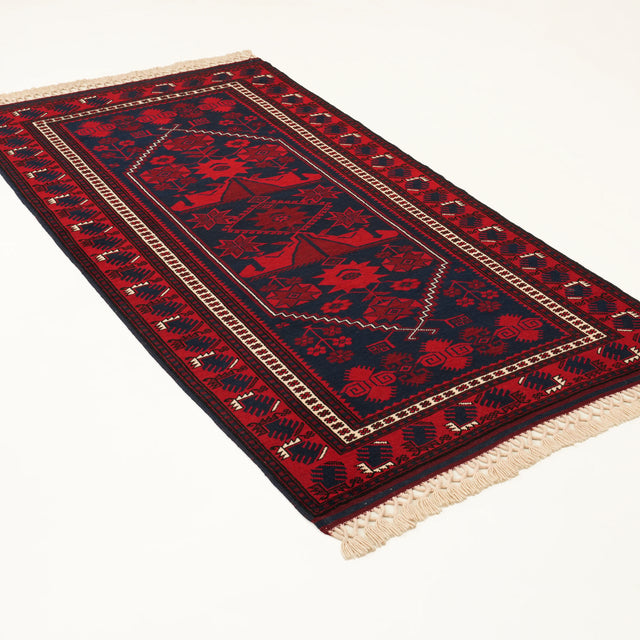 117×217 cm
-
Motifler zihinden dokunuyor: bordo üstüne lacivert
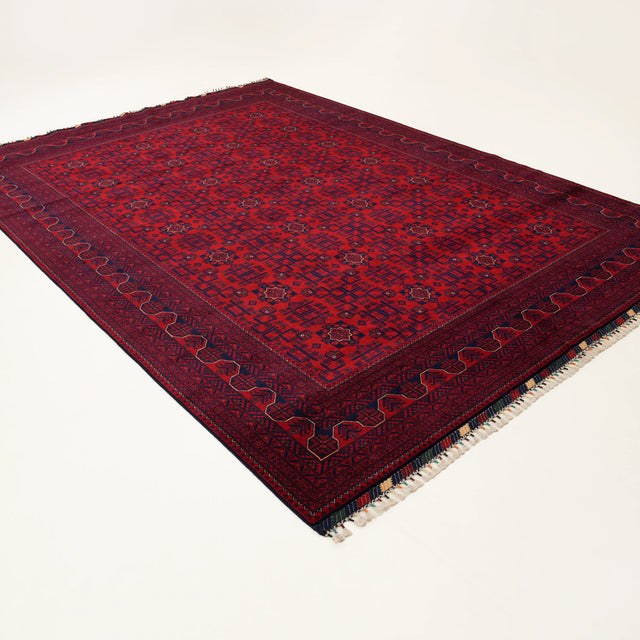 249×344 cm
-
Kula in Manisa: hooked figures over a cream ground
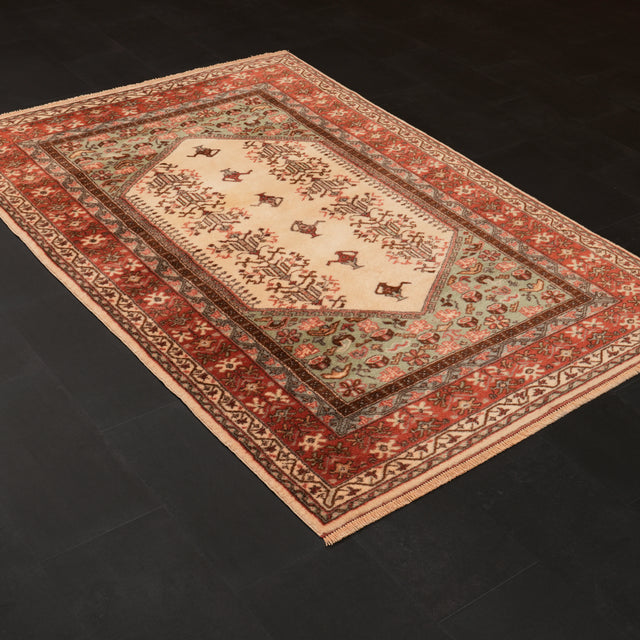 132×190 cm
-
Cream Yörük wool, hooked figures, and years already on it
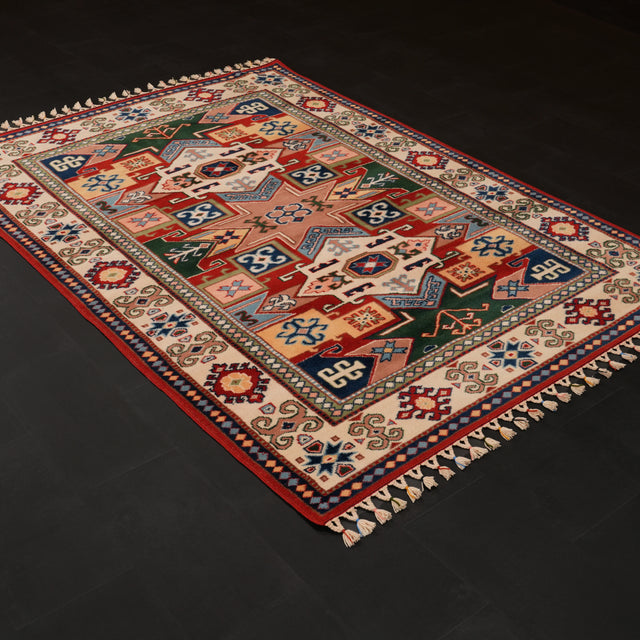 161×228 cm
-
Navy keeps the burgundy company, 196 × 300 cm
 196×300 cm
-
Enough floor for a whole seating group, burgundy Khamyap
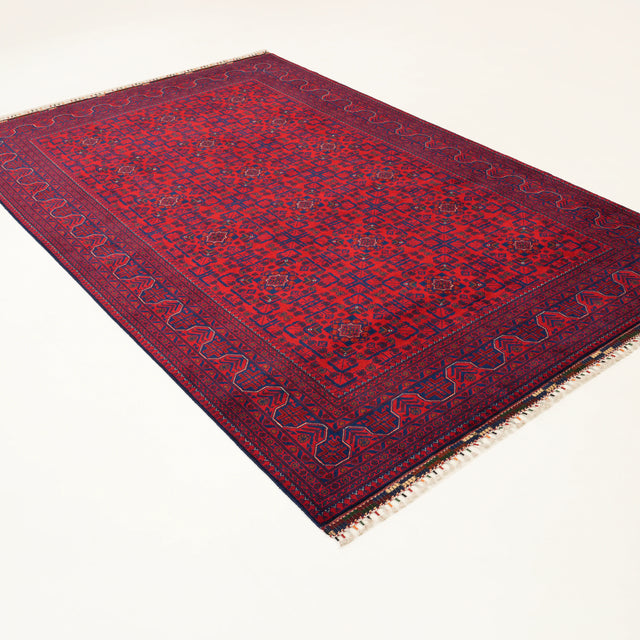 194×297 cm
-
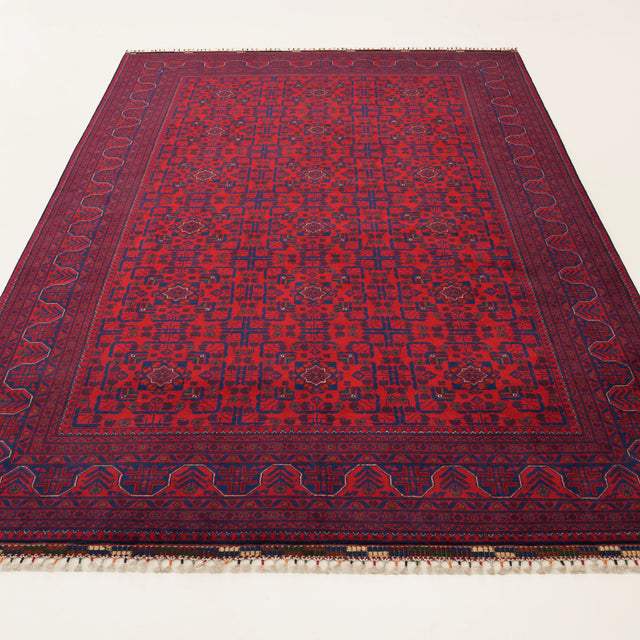
Bukhara and Herat drawing at 206 × 303 cm, Khamyap
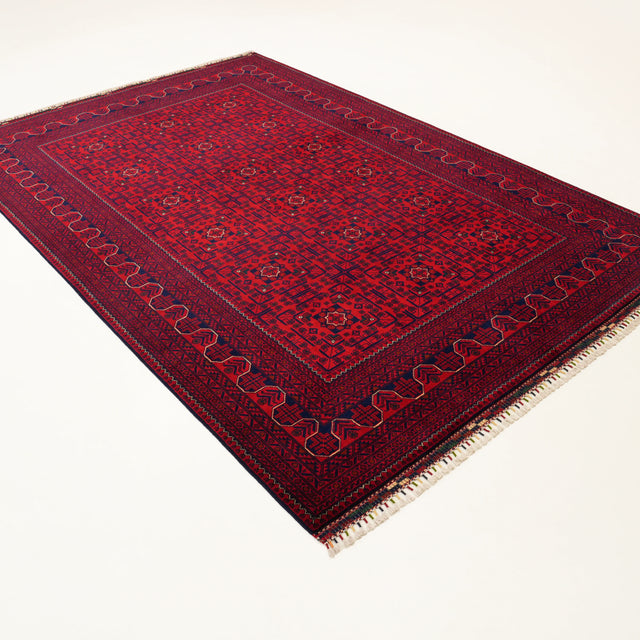 206×303 cm



An ethnic rug is a rug drawn from a village or tribal weaving tradition rather than from a workshop cartoon — Turkmen and Yörük work in Anatolia, Baluch and Khamyap weaving in Afghanistan, Karabakh in the southern Caucasus. The motifs come from memory, the drawing is angular, and the palette is short because it was dyed locally.
"Ethnic" is a shop word. No weaver ever called a rug ethnic; she called it by the village, or by the name of the pattern the woman at the next loom had taught her. What the word does mark, usefully, is a real division in how rugs are designed — on paper, for a workshop, or in the head, at the loom. This page is about the second kind, and about the traditions gathered here.
What "ethnic" means on this page
It means village and tribal weaving, and nothing about brightness.
The category is not a style and not a color scheme. It is a group of named traditions that share a method: the weaver holds the design in memory, works to the width of her own loom, and dyes or buys yarn in small lots. Some of the results are loud. A great many are not — a Yağcıbedir rug is almost black-blue and madder red and very little else, and a Baluch rug from around Herat can be so dark that the pattern only opens up in daylight. Treating "ethnic" as a synonym for colorful misses most of what is on the shelf.
The Turkish page this collection was built for uses the word the way Turkish retail uses it. The English is more literal: these are rugs from particular places, made by particular people, and the pattern on each one belongs to somebody's tradition before it belongs to a room.
The traditions this collection draws on
Five broad groups, all of them named after places rather than after a look.
- Anatolian village weaving. Small workshops and single household looms across central and western Türkiye — Konya Karapınar, Niğde, Nevşehir, Denizli Çal, Afyon Dazkırı, Antep, Ayvacık, Kars, and Sivas Zara. Coarse wool, madder and indigo, and a motif set that changes from one valley to the next. See Anatolian rugs and Anatolian kilims.
- Yörük. The weaving of Anatolia's pastoral, formerly migratory communities. Rugs made to be rolled and carried: strong wool, few colors, large motifs that read from across a tent or a room. See Yörük rugs.
- Turkmen and Yağcıbedir. The Yağcıbedir are a Turkmen-descended community near Balıkesir who weave small, dark, densely bordered rugs with a lantern-shaped medallion that changes very little across generations. The wider Turkmen repertoire is built on the repeated gül, a lobed octagonal device tied to a particular group. See Turkmen rugs and Yağcıbedir rugs.
- Afghan and Baluch. Khamyap, Bilicik and Hoca Roşnai rugs in deep madder reds, and Baluch weaving from around Herat in western Afghanistan — small formats, dark grounds, tight geometric fields. See Afghan rugs. There is no separate Baluch page; look for Herat and Baluch in the individual rug titles.
- Caucasian. Karabakh drawing from the southern Caucasus, and Azerbaijani sumak, a flat weave in which the pattern is wrapped around the warp rather than knotted. See Karabakh rugs.
Two house series sit alongside them and are drawn from the same sources: the Anatolian shawl rugs, which enlarge shawl and needlework motifs onto a floor format, and the patchwork rugs, assembled from sections of older pile.
How village drawing differs from workshop and court design
The difference is not quality. It is where the design lives before it becomes a rug.
In a workshop — Hereke on the Marmara coast after 1843, or the Kayseri ateliers that rewove court designs for a wider market — a designer draws the rug at scale on gridded paper. A master reads that cartoon aloud, row by row, and the weavers tie what they are told. The result is symmetrical, the border turns the corner cleanly, and a curve can be carried across dozens of knots without breaking.
A village weaver has no cartoon. She has a repertoire, and she sets it out as she goes.
| Workshop and court design | Village and tribal drawing | |
|---|---|---|
| Where the design lives | A scaled cartoon on gridded paper, called out row by row | In the weaver's memory, learned at the loom from the woman who taught her |
| Symmetry | Left and right halves match | Halves rarely match; a motif grows or shrinks as the field goes up |
| Corners | The border repeat is planned to turn the corner | The repeat runs until the rug ends, then stops mid-motif |
| Line | Curvilinear — floral scroll, script, fine detail | Angular; a knot is a rectangle, and a curve is expensive in knots |
| Palette | Wide and graded, from bought-in dye lots | Short — often four to six colors, dyed from what grew nearby |
| Knot density | High, because fine drawing requires it | Coarser, matched to the wool and the time available |
| Woven for | A patron, a court, or an export market | A household, a dowry, or a local sale |
Three consequences follow, and they are the things people notice first. Motifs drift in size up the field. The border is cut rather than resolved at the corners. And bands of slightly different color cross the rug where one dye lot ran out and the next began — abrash, which is evidence of hand-dyed yarn in small quantities and is never corrected. Compare a finely drawn field in the Oushak rugs against a Yörük piece and the two habits are obvious within a second.
Who wove these rugs, and why
Women, in households, mostly not for a market.
Across Anatolia and the Turkmen and Baluch weaving areas, pile weaving was domestic work and it was women's work, done in the months when there was time for it. A girl learned by sitting beside her mother at the loom and being given the plain ground to fill in. The motifs she ended up with were the ones her family used — which is why a pattern can be traced to a district, and why two rugs woven fifty kilometers apart look like different arguments.
The rugs had jobs. Some were floor covering, and those are the ones that wore out. Some were made for a dowry chest and folded away, which is what the Turkish trade means by sandık eskisi — "old from the chest." A piece like that can be eighty years old and barely walked on, and it is the reason an old village rug sometimes arrives with its pile intact and its colors unfaded. Some were sold to a dealer at the nearest town for cash, and it is that trade, not the court workshops, that produced most of the surviving nineteenth- and twentieth-century Anatolian pile. Several of the older pieces here carry kök boya in their description, meaning the yarn was dyed with root and plant dyes — madder for the reds, indigo for the blues — rather than with synthetics.
What is in the collection, and how it is made
Three constructions, one motif vocabulary.
- Hand-knotted. Tied knot by knot on a vertical loom, in wool on a wool or cotton warp. This is where the old Anatolian, Afghan and Caucasian pieces sit, along with hand-woven kilims and cicim. Browse hand-knotted rugs, handwoven kilims and wool rugs.
- Loom-woven. The house series — Zade, Günyolu, Kadim, Ihlara — reproduce village and Mamluk-derived drawing on a hand-operated loom, in wool, in Tencel and viscose, and in bamboo viscose. Even sizing, lower price, the same patterns.
- Machine-woven and digital print. The same motifs at scale, in synthetic and blended yarns. See machine-woven rugs and digital print rugs.
Sizes are grouped by area rather than by fixed dimensions, from about 2 m² up to 10 m²; a common band is 6 m², which is roughly 200 × 300 cm (6'7" × 9'10"). Prayer rugs, runners and square formats are in here too. Each rug's real dimensions, fiber and construction are on its own product page, and price follows fiber, knot density and size in that order.
Care is ordinary. Vacuum in the direction of the pile and without a beater bar. Blot a spill rather than rubbing it, since rubbing drives liquid down into the knot collar. Keep bleach away from the wool entirely, and send a hand-knotted piece in daily use to a rug washer every twelve to eighteen months.
Age, condition, and what the trade words mean
The house uses four bands, and they are trade conventions with no issuing authority behind them.
- Antique — 100 years or more.
- Semi-antique — 50 to 100 years.
- Vintage — 20 to 80 years.
- New — recently woven, whether by hand or by machine.
Nobody certifies these. A dated rug is rare; age in village weaving is judged from wool, dye behavior, wear pattern and the way the back has hardened, and honest dealers give a range rather than a year. Where a rug in this collection is described as "70+ years" or "130 years," that is the house's own reading. The oldest pieces are gathered in rare rugs; softer, more recent work is in vintage rugs.
Frequently asked questions
What does "ethnic" mean when applied to a rug?
In the rug trade, "ethnic" marks a rug whose pattern comes from a village or tribal tradition rather than from a workshop design drawn on paper. It is a retail label rather than a weaving term. The weavers named their rugs after villages and patterns.
What is the difference between a tribal rug and a workshop rug?
A workshop rug is woven from a scaled cartoon that a master reads out row by row, so the two halves match and the border turns the corner. A village rug is drawn from memory, and the border repeat stops where the rug stops.
Which weaving traditions does this collection draw on?
Anatolian village and Yörük weaving, Yağcıbedir work from near Balıkesir, Khamyap and Baluch rugs from Afghanistan, Karabakh and sumak weaving from the southern Caucasus, and Anatolian shawl and patchwork pieces. Each rug's origin is stated on its own product page.
Why are the motifs in these rugs uneven?
The weaver carries the pattern in her head rather than reading it from paper. Motifs change size as the field goes up, the two halves rarely match, and the border repeat is cut where the rug ends. That is how the work is identified, not a fault.
Are ethnic rugs hand-knotted?
Some are. This collection holds hand-knotted rugs and handwoven kilims alongside loom-woven and machine-woven pieces that carry the same motif vocabulary. The construction of each rug is stated on its own product page.
What does sandık eskisi mean on a Turkish rug?
Sandık eskisi means "old from the chest" — a rug woven for a dowry chest and stored rather than laid on a floor. A piece like that is old by date but shows little wear, because it spent decades folded away.
When is a rug called antique?
In trade usage a rug is antique at 100 years or more, semi-antique between 50 and 100 years, and vintage between roughly 20 and 80 years. These are conventions of the trade, and no authority issues or certifies them.
Related collections: Anatolian rugs · Turkmen rugs · Afghan rugs · authentic rugs