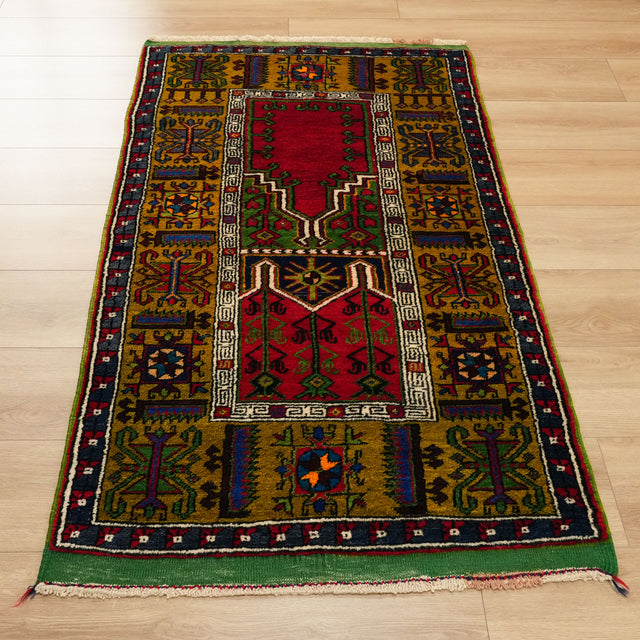
Cotton right through, no pile, and the geometry mostly yellow
 120×180 cm



Rugs & Kilims
Find Your Rug
For those who already know what they are looking for — Halıcızade's most visited collections.
Cotton right through, no pile, and the geometry mostly yellow
120×180 cm
Eight sizes, and the same faint moiré runs through all of them
 160×230 cm
Beige squares in a grid that drifts, wool knotted loop by loop
 170×240 cm
Stripes you feel rather than see: cream, knotted in India
 170×240 cm
Knots as thick as stitches, cream wool out of India
 200×300 cm
White wool flat-woven over cotton, and no pile at all
 120×180 cm
Geometry picked out in one tone of anthracite, knotted thick
 80×150 cm
Gray, and thick as a pullover: hand-knotted in five sizes
 170×240 cm
Scandinavian lines in mink, and the rush throws its own shadow
 120×180 cm
Colors that look accidental and are not, wool on cotton
 170×240 cm
A colder yellow than gold, over fine old Anatolian drawing
 154×253 cm
Wool kilim, no pile at all, woven by women across Türkiye
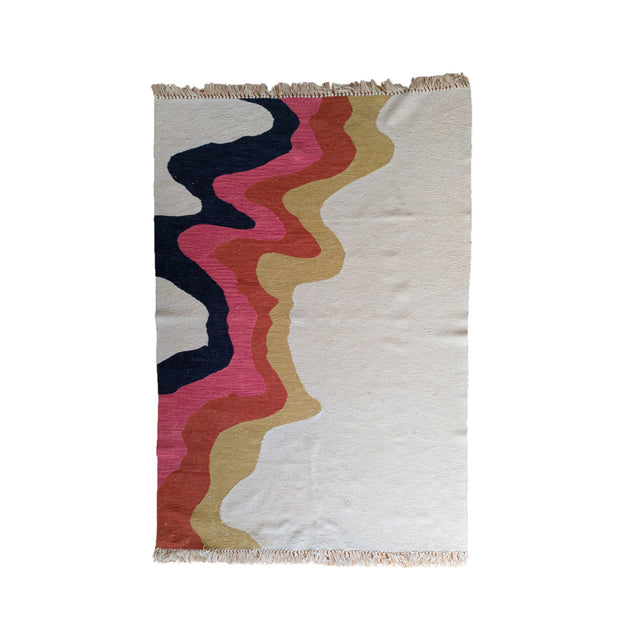 5×6 cm
Terra Potta in blocks and split fields, dyed from plants
 160×210 cm
One of a kind
from
105.000 TL
≈ 31.000 TL/m²
Coiled discs laid over each other, five colors, no pile
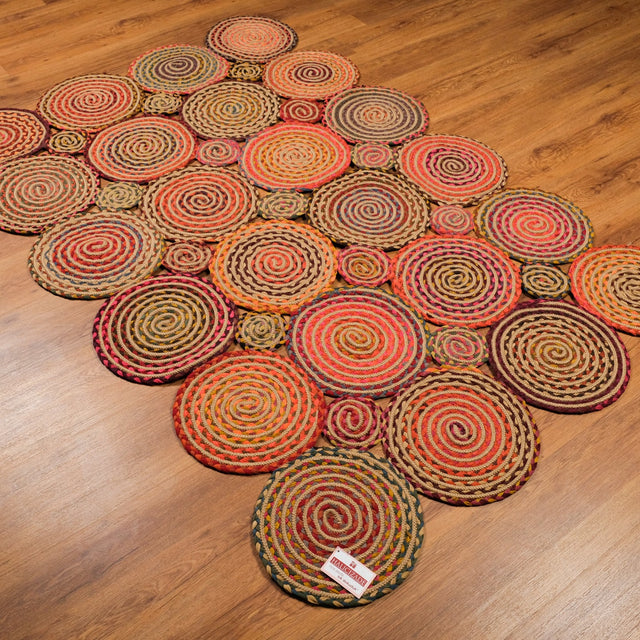 170×240 cm
Sixty-one by ninety-three centimeters, wool and nothing else
 61×93 cm
Not one stripe parallel to the next, loom-woven in India
 90×300 cm
Raised loops in banded grays, 250 × 350, made in India
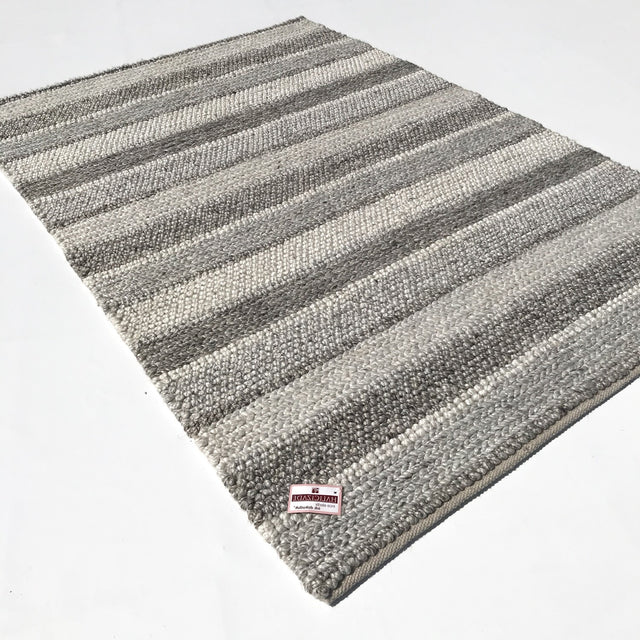 250×350 cm
Pink opening out into neutrals, flat-woven in cotton and wool
 120×180 cm
Indian patchwork in tan to coffee, seams left showing
 120×180 cm
Prayer-rug proportions at 100 × 175 cm, İnlice wool
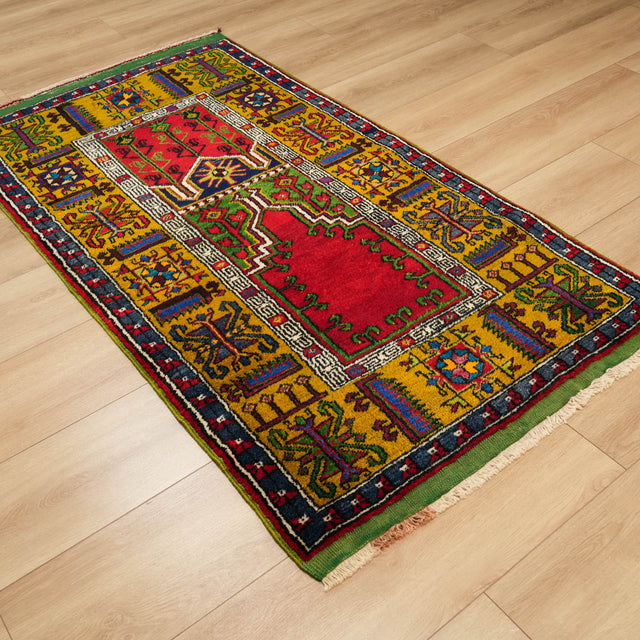 100×175 cm
Rush beside wool: cream, and dry cleaning only
 170×240 cm
Color bands in Eşme wool, and either face can be the front
 115×178 cm
Turkmen and Afghan motifs in one kilim, orange over cream
 101×154 cm
Denizli's Çal district, cicim brocade raised off the weave
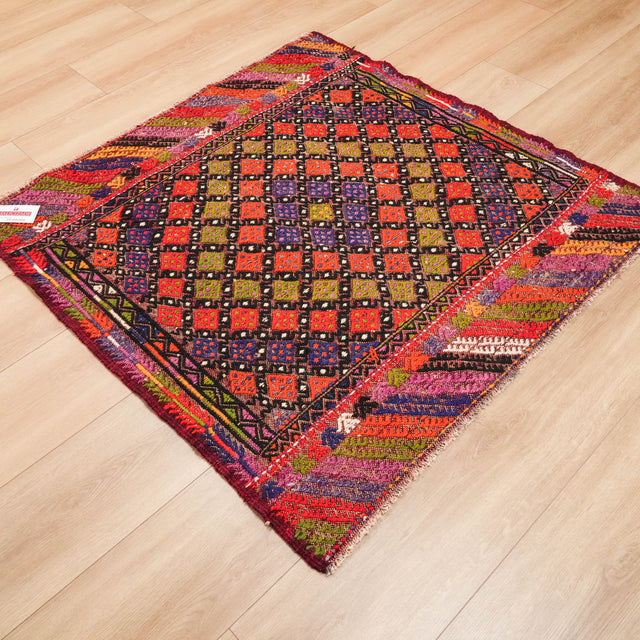 126×130 cm
A balcony rug is a floor covering laid on a balcony, terrace or winter garden rather than in a room. The rugs on this page are handwoven and loom-woven in wool, cotton, jute and viscose, flat or low in pile, light enough to lift and shake out, and cut from 61 × 93 cm (2' × 3'1") to 250 × 350 cm (8'2" × 11'6").
A balcony is a floor with different problems from a living room: tile or stone underfoot, dust arriving from outside all summer, and low sun crossing it at an angle for part of every day. This page covers what suits a covered or glazed balcony, where the collection sits against a fully open one, and how to size and care for the rug once it is down.
Covered, glazed and roofed ones. On an enclosed or glazed balcony almost any rug works, because the floor is a sheltered interior floor with a better view — and that is the balcony this collection is built around.
A fully open balcony that takes direct rain and hours of unbroken sun is a different job. That floor wants a purpose-made outdoor rug in a UV-stable synthetic, and we do not describe the rugs here as weatherproof, water-repellent or fade-resistant, because they are not sold as any of those things. What they are is light, flat, and easy to pick up when weather is forecast — which for a Turkish balcony in July is usually the practical answer anyway.
Thirty-five rugs, and the fiber split matters more than the pattern.
| Fiber | Underfoot in summer | Dust and grit | Care route |
|---|---|---|---|
| Jute and grass fiber | Cool, coarse, dry | Hides grit in the weave; shake it out | Dry cleaning — do not soak |
| Cotton flatweave | Cool and thin | Shakes out easily; the lightest to lift | Professional washing |
| Wool, handwoven | Warmer; springs back after chairs | Sheds grit well, hides it well | Professional washing |
| Viscose, loom or machine-woven | Smooth, slightly cool, with sheen | Shows footmarks; vacuums clean | Professional washing — never soak |
Note the last column. Almost everything in this collection is tagged for professional washing, and the jute pieces for dry cleaning. If the balcony floor is genuinely going to get muddy, the honest answer is a different page: see machine-washable rugs, where the maker states the rug can go into a domestic machine.
Furniture first, rug second. Set the table, the chairs and the planters where they will live, then measure the clear floor that is left and buy for that. A balcony rug that has to be cut around a planter has been bought too large.
Lift and shake it. That single habit does more for a balcony rug than any product, because most of what lands on it is dry grit rather than stain. Vacuum without the beater bar; on a jute weave, vacuum along the grain rather than across it.
Do not leave a rug lying on a wet balcony floor. Water trapped between a rug and stone has nowhere to go, and the mark it leaves on the tile is harder to remove than anything on the rug. Roll the rug up when the balcony is being hosed down, and let the floor dry before putting it back. Turn the rug end to end every few weeks in summer: sun crossing a balcony hits the same strip of pile every day, and rotation is the whole of fade management for a rug that is not sold as fade-resistant.
No. They are handwoven and loom-woven rugs in wool, cotton, jute and viscose, sold for covered, glazed and roofed balconies. A balcony that takes direct rain needs a purpose-made outdoor rug in a UV-stable synthetic, which is a different product.
One made and sold as an outdoor rug, in a fiber chosen for sun and damp. On an open balcony the practical alternative is a light flatweave that can be rolled up and brought in, rather than a rug left out through the season.
Jute and cotton flatweaves suit a summer balcony because they are cool, thin and easy to shake out; wool suits a glazed balcony used in cold months because it holds warmth and recovers after furniture. Viscose gives the most sheen and the widest size range.
Any dyed textile in strong direct light will lose color over time, and none of these rugs is sold as fade-resistant. Turning the rug end to end every few weeks spreads the exposure instead of bleaching one strip.
A runner. Standard widths of 80, 90 and 100 cm at lengths of 300 or 400 cm run the depth of most balconies and leave stone or tile showing at both sides, which keeps a narrow space from reading as smaller than it is.
Shake it out and vacuum without the beater bar. Most rugs in this collection are tagged for professional washing and the jute pieces for dry cleaning, so soaking one on the balcony is not the route.
Yes, and it is one of the better choices. A flat-woven kilim has no pile to crush under a chair leg, weighs little enough to lift with one hand, and is reversible, so a worn side can be turned over.
Related collections: jute rugs · handwoven kilims · winter garden rugs · thin rugs