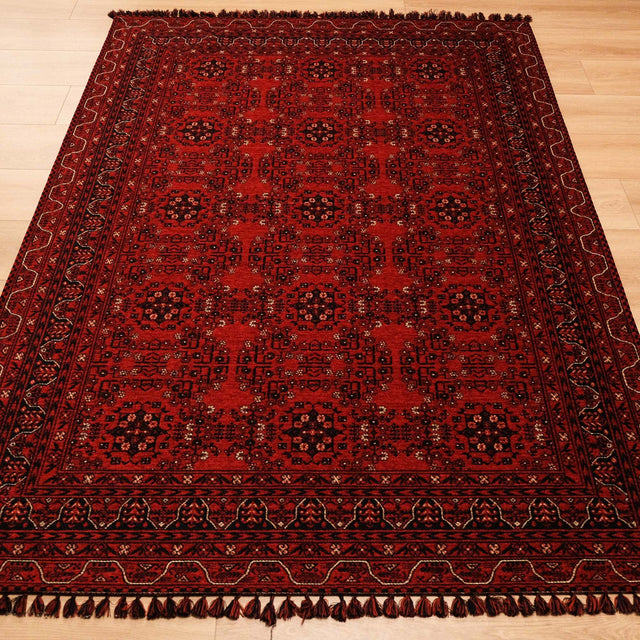
Şeki silk, a Heriz drawing, cream held inside red
 250×337 cm



Rugs & Kilims
Find Your Rug
For those who already know what they are looking for — Halıcızade's most visited collections.
Şeki silk, a Heriz drawing, cream held inside red
250×337 cm
Washable at home: burgundy, an Afghan drawing in acrylic
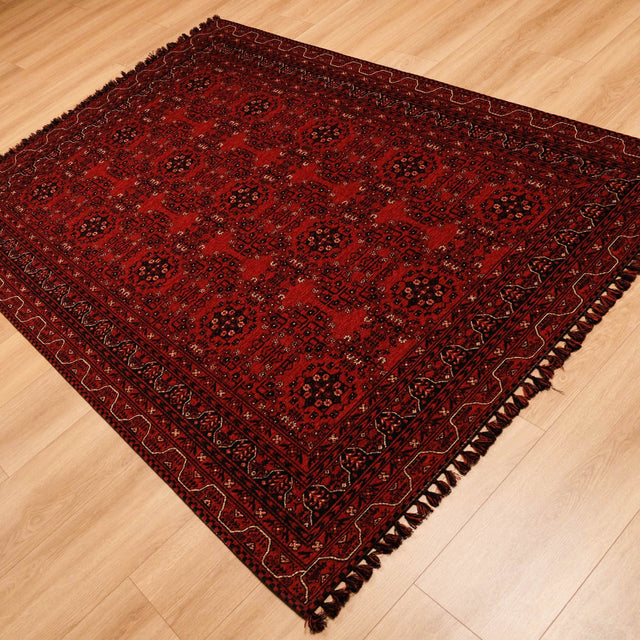 80×150 cm
Bestseller
from
2.625 TL
≈ 2.200 TL/m²
Cotton right through, no pile, and the geometry mostly yellow
 120×180 cm
Wool over cotton on a Konya village loom, 95 × 130 cm
 95×130 cm
Two feet by three, a full Oushak medallion, hand-knotted in wool
 62×90 cm
Yedi Dağın Çiçeği on cream wool, in a near-square format
 191×223 cm
One of a kind
from
106.500 TL
≈ 25.000 TL/m²
Taşpınar drawing, wool over wool, with abrash across it
 183×272 cm
Pile deep enough to catch a low door, purple over undyed wool
 200×290 cm
Angora goat hair throughout, roses and Oushak motifs on cream
 %60
228×284 cm
%60
228×284 cm
A Yahyalı in stepped geometry, wool from the Kayseri highlands
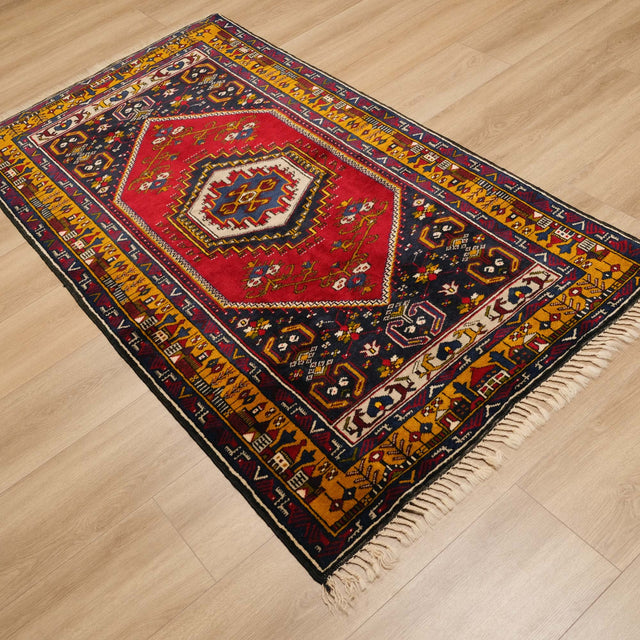 108×194 cm
Copper, gold and silver on wool, 195 × 300 cm
 195×300 cm
One of a kind
from
176.000 TL
≈ 30.000 TL/m²
Spun on a kirmen spindle, colored out of plant roots
 162×252 cm
Chest-kept village wool, turned into a cushion at 45 × 91 cm
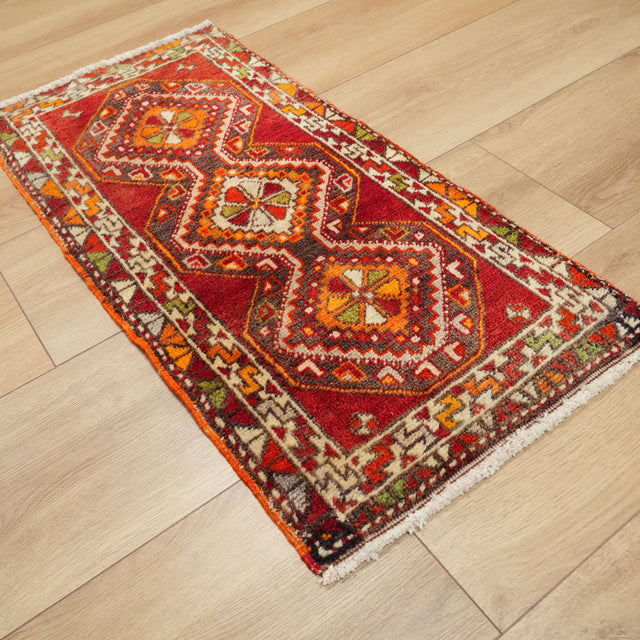 45×91 cm
Navy for night, burgundy for fire: wool knotted onto wool
 110×173 cm
The Hereke drawing scattered small, on silk in dark red
 170×251 cm
Wool in the foundation as well, Oushak flowers in gray and mink
 300×400 cm
Mink under coffee and red-brown, the silk catching a lamp
 244×298 cm
One of a kind
from
485.000 TL
≈ 67.000 TL/m²
Motifs you feel before you see them: cicim wool, nearly four meters
 161×392 cm
Room for a twelve-seat table, cream, and second-hand
 308×420 cm
Cicim from Antalya: the wool figures stand above the ground
 163×300 cm
Customer favorites is a list of the twenty rugs and kilims that Halıcızade's visitors looked at most over the previous thirty days. It is generated from browsing behavior rather than chosen by an editor, and it refreshes automatically about every two weeks, so it shows which weaves, patterns and colors are drawing attention now.
Shops usually decide what to put in the window. This page does not: the ranking comes out of what people actually opened, compared and came back to. It is worth reading as a barometer rather than a recommendation, and what follows explains how it is built, what is in it, and how it differs from the best-sellers list.
By interest, measured over a rolling thirty days. Every rug on the site is tracked for how often it is opened and examined; the twenty with the most attention become this collection, and the whole set is rebuilt automatically roughly every fortnight. Nobody promotes a piece into it, and a rug that stops being looked at drops out on the next rebuild.
That has one consequence worth knowing. Because attention and purchase are not the same thing, the list often contains rugs people are studying rather than buying — a silk piece being admired, an antique being researched — alongside the ones actually going out of the door.
A cross-section of the whole range, which is the point. Recent versions of the list have held all four constructions at once.
Two different lists, built from two different signals, and they overlap by roughly half.
| Customer favorites | Best-selling rugs | |
|---|---|---|
| Built from | Views and time spent on the product page | Completed orders |
| Window | Rolling thirty days | Sales history |
| Tends to show | Rare and single pieces, silk, antiques — the rugs people study | Repeatable sizes and colors, series pieces in stock |
| Refreshed | Automatically, about every two weeks | As orders accumulate |
If you want the list weighted toward what actually leaves the warehouse, use best-selling rugs instead.
Start with the fiber line in the description, because it determines everything else. Every listing states material, weaving technique and origin — hand-knotted or loom-woven, wool, silk, cotton or Tencel, and the town or country it came from.
Then turn the rug over, or ask for a photograph of the back. On a hand-knotted rug the pattern reads on the reverse almost as clearly as on the front, in rows that are very slightly uneven; the unevenness is the record of a hand tying each knot, and it is not a fault. On a machine-woven rug the back is a regular mesh with the pattern muffled behind it.
Wool holds its shape for decades under regular low-suction vacuuming, and a wool rug in daily use is worth having professionally washed every twelve to eighteen months. Silk is the more delicate case: no wet cleaning at home, no stiff brush, dust lifted at low suction with a brushless head, and any spill blotted at once with a damp cloth rather than left to dry. Deep cleaning of a silk rug belongs with a specialist washer. Our guide to cleaning a rug covers the rest.
It is the twenty rugs that visitors viewed and examined most over the previous thirty days. The ranking is generated from browsing data rather than chosen by staff, and it is rebuilt automatically about every two weeks.
All of them, in practice. Recent versions have held hand-knotted wool village rugs, pure silk Hereke and Caucasian pieces, loom-woven house series such as Zade and Maison, flat-woven Anatolian kilims, and machine-woven rugs in traditional patterns.
Not quite. This list is built from viewing interest, while the best-selling collection is built from completed orders. The two overlap by roughly half, and the difference is usually rare or single pieces that attract study more than purchase.
About every two weeks. A rug that keeps drawing attention stays in; one that stops being opened drops out at the next rebuild, and a new piece can enter within a fortnight of being listed.
Not at home, beyond the basics. Lift dust at low suction with a brushless head, blot any spill immediately with a damp cloth, and avoid wet cleaning and stiff brushes entirely. A deep clean should go to a washer who handles silk rugs.
Some of these are single pieces. Hand-knotted village rugs, antiques and silk pieces exist in one size and one colorway, so a rug that has drawn attention for two weeks can go quickly. Series pieces in wool or Tencel are the ones most likely to be repeatable.
Related collections: new arrivals · wool rugs · rare rugs · Turkish rugs