
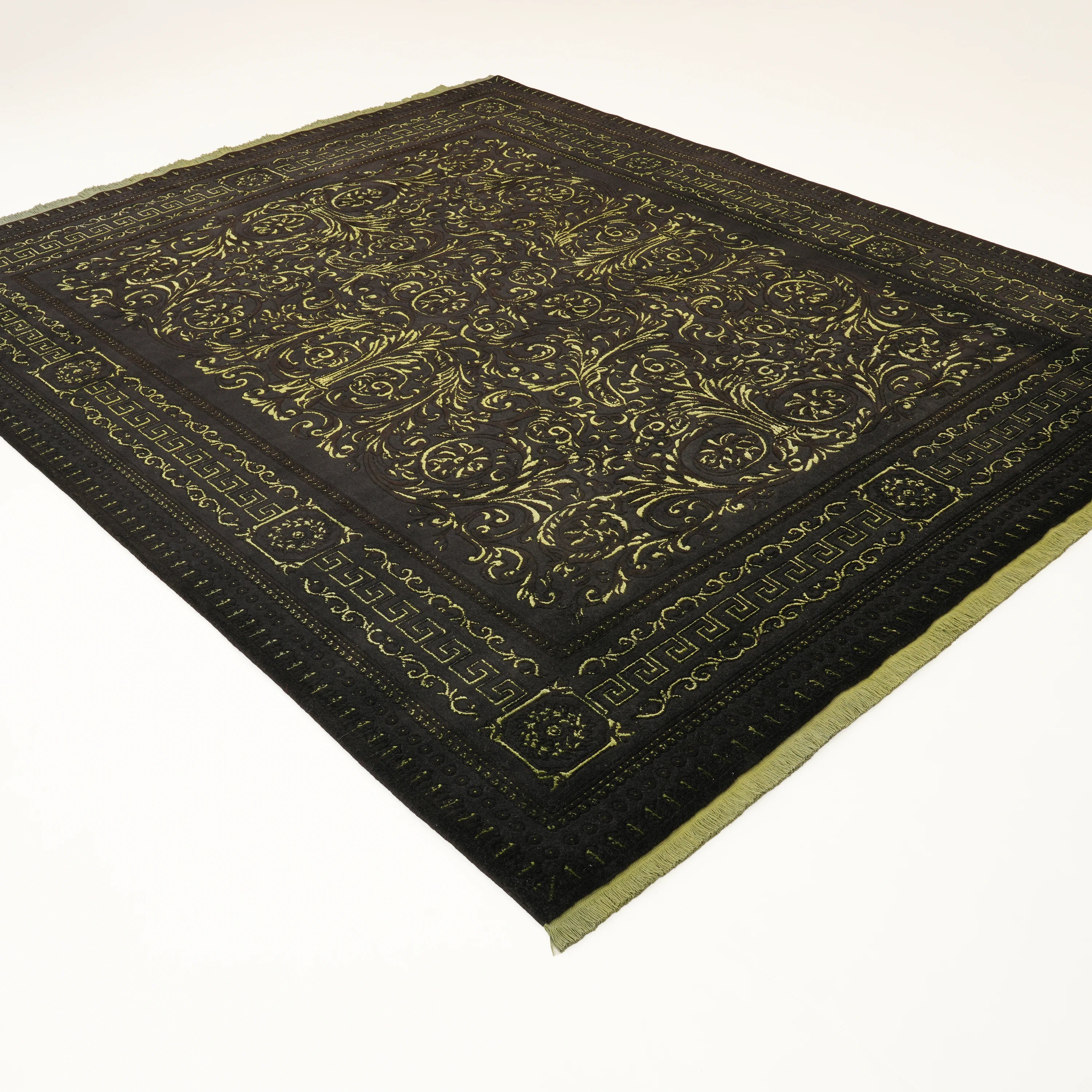
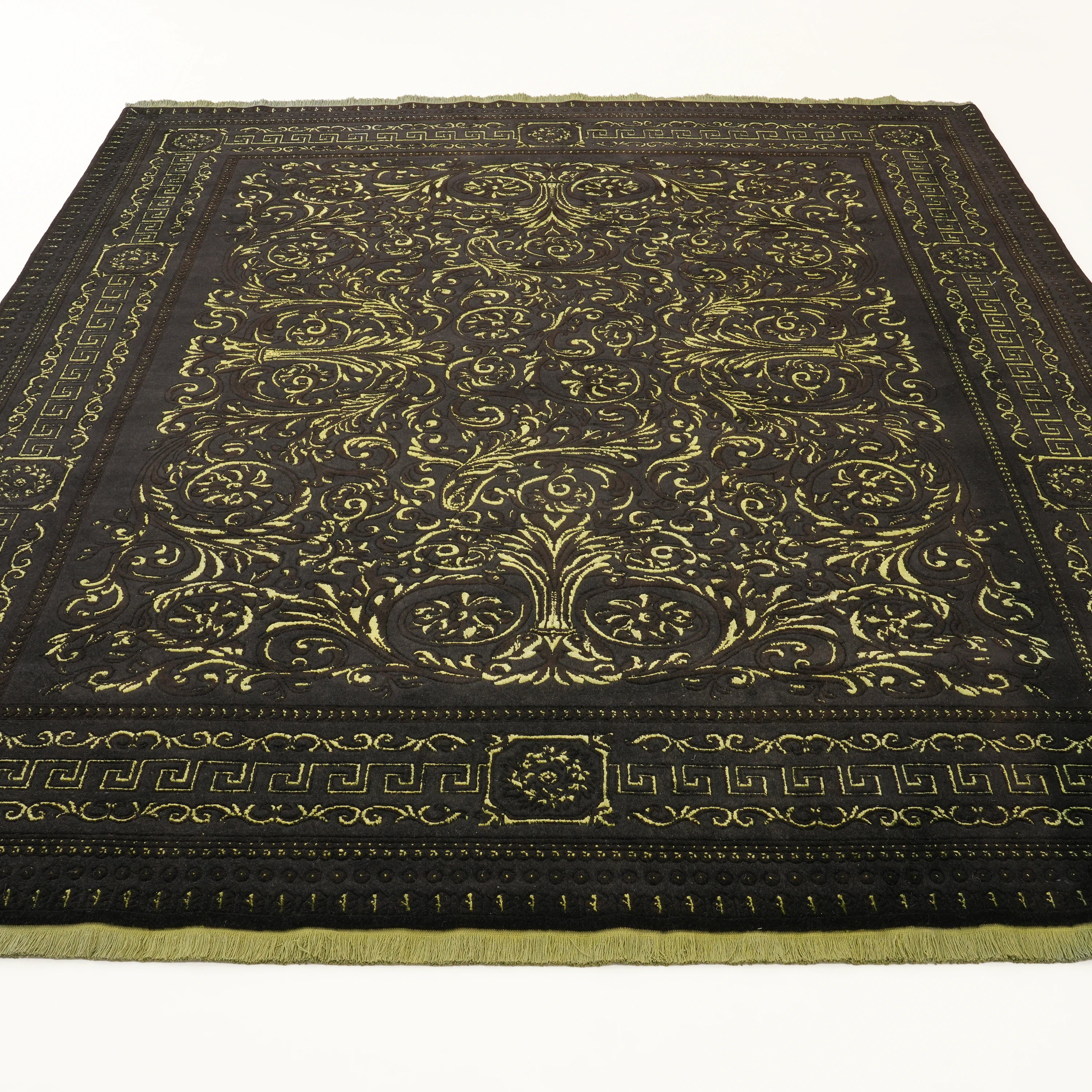
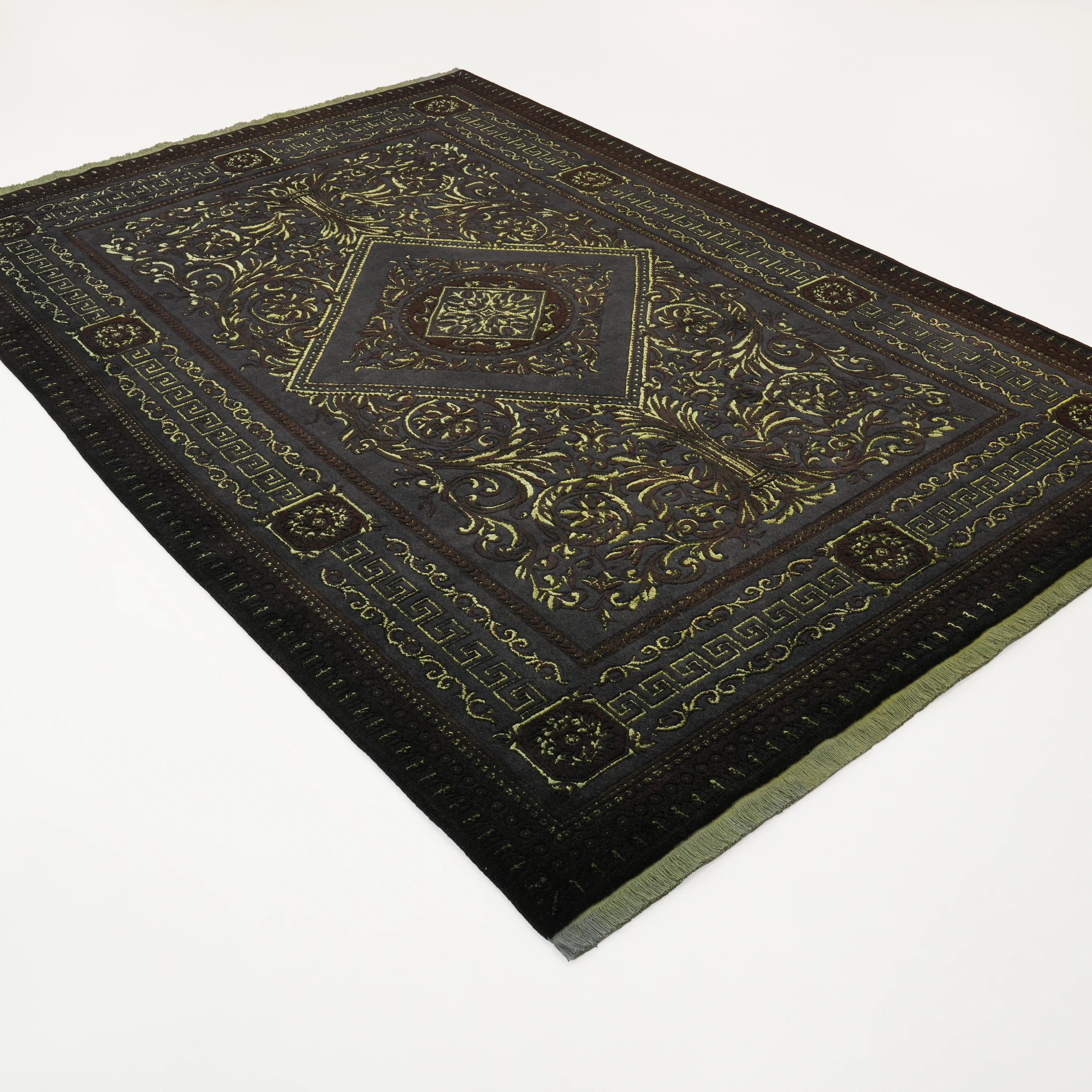
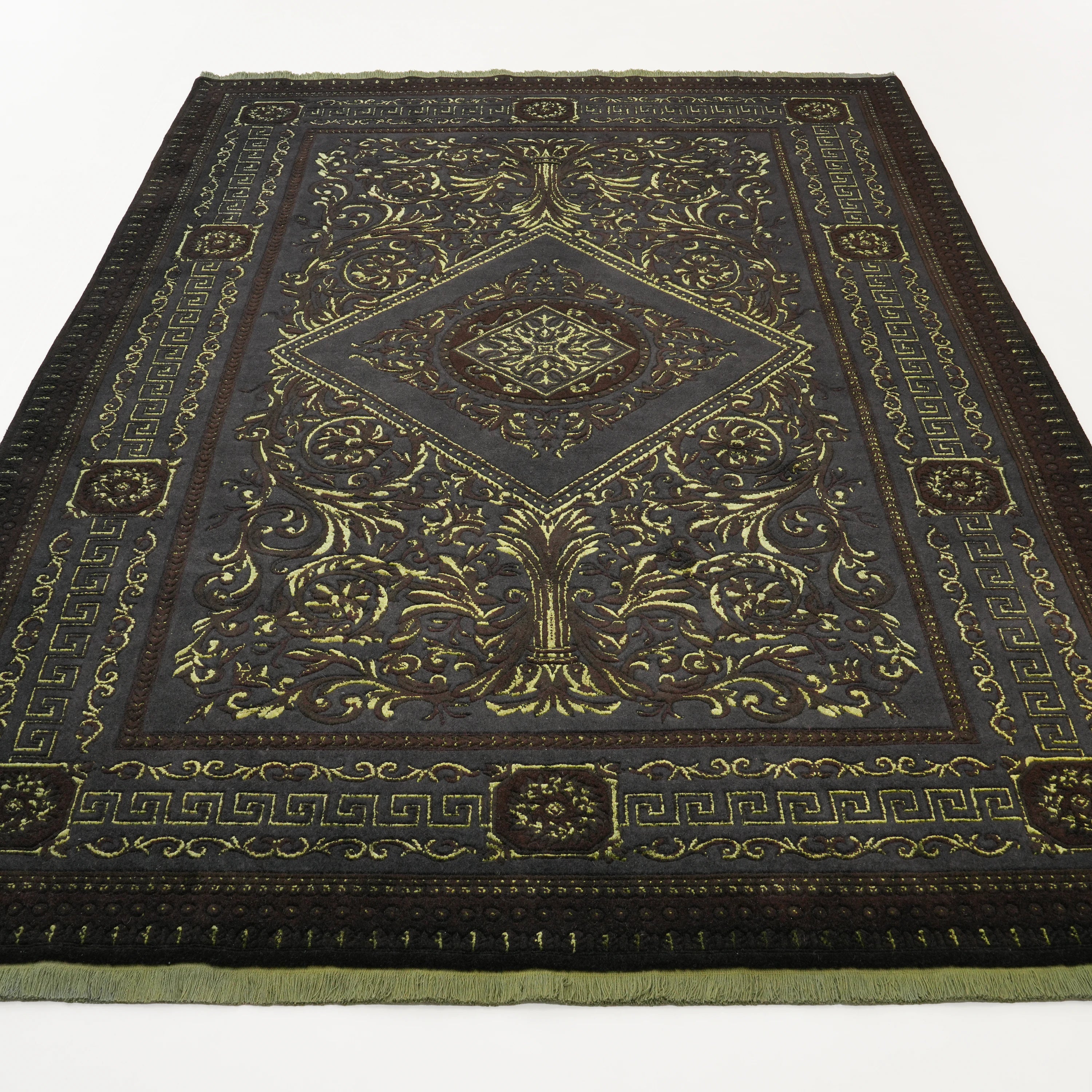
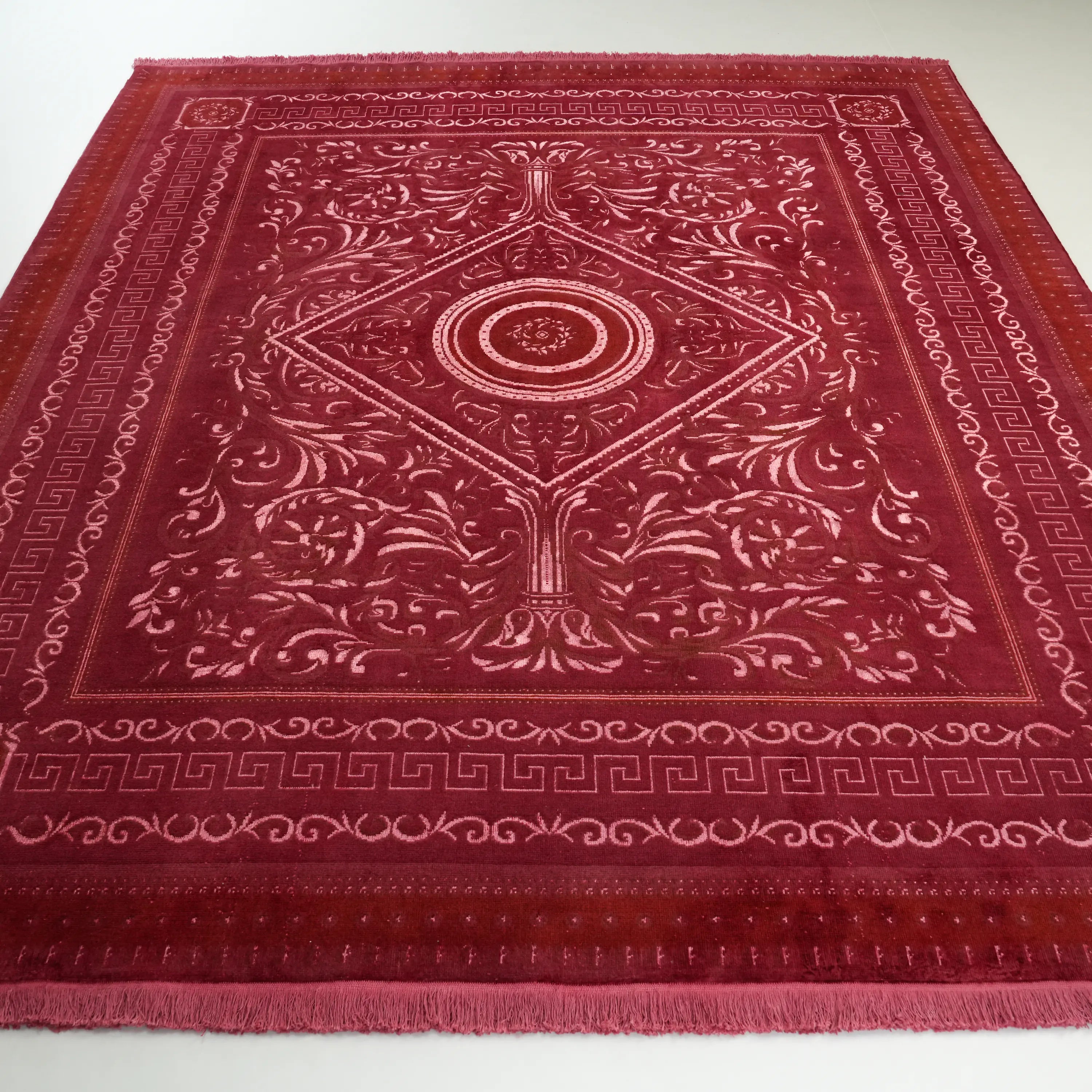
A rug from the Versace-Pattern Rugs collection Rug on the coverVersace-Pattern Rugs

Collection

Versace-Pattern Rugs

Gilding, splendor, palaces, and Versace patterns. The Versace collection, made exclusively for Halıcızade with dense knots, silk, and wool, is for those who love bold rugs.

Look Closer
  • 5rugs and kilims

5 products shown

Products

  1. Black under a Versace drawing, pure silk motifs, woven in Vietnam

    Black Versace-Pattern Hand-Knotted Wool and Silk Rug, 200×300 cm Halıcızade 200×300 cm

    One of a kind

    Black Versace-Pattern Hand-Knotted Wool and Silk Rug

    Handwoven Rug · İpek · Wool · Cotton ·Black

    from 270.000 TL 45.000 TL/m²

    • Silk blend
    • All-natural fibers
    • Woven in wool
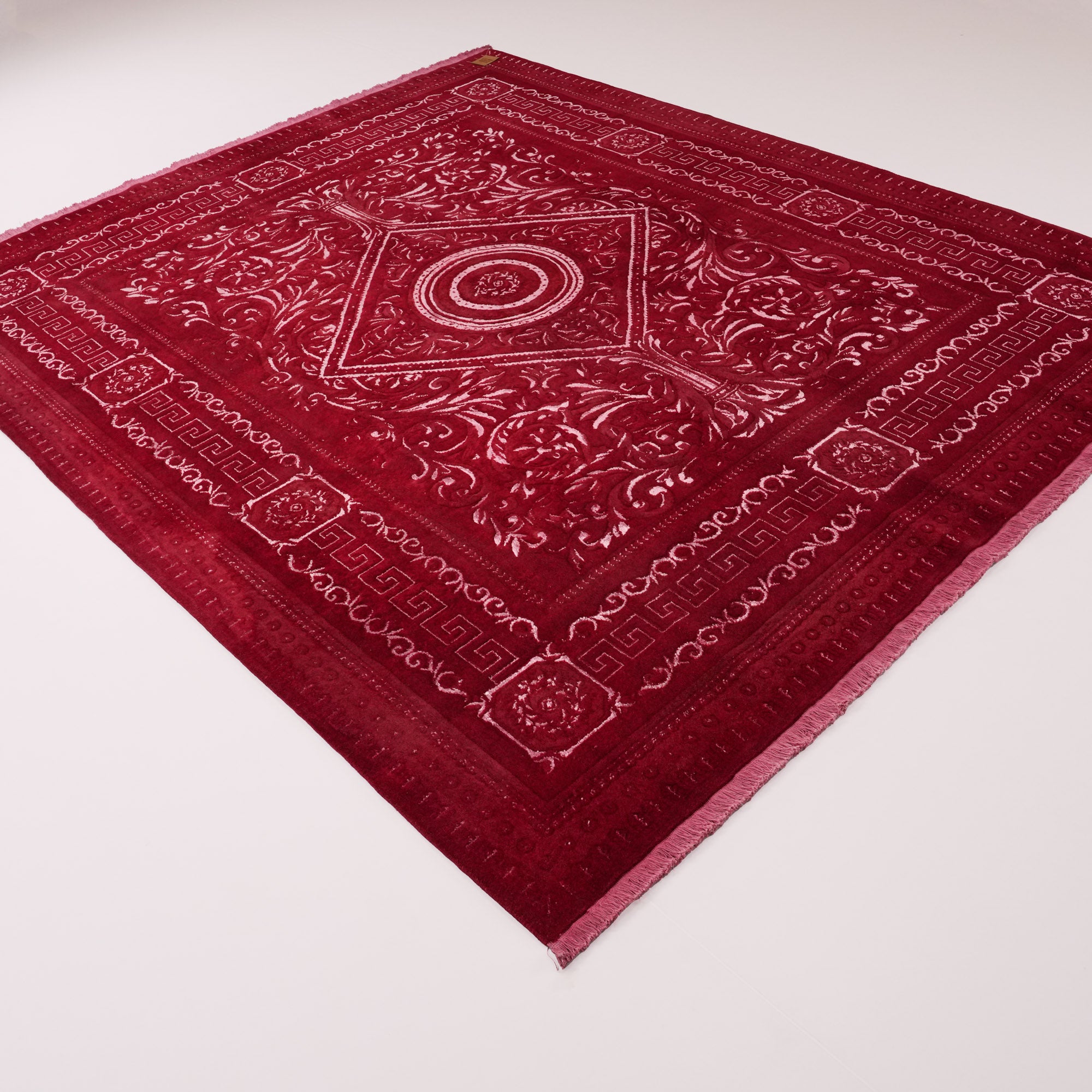
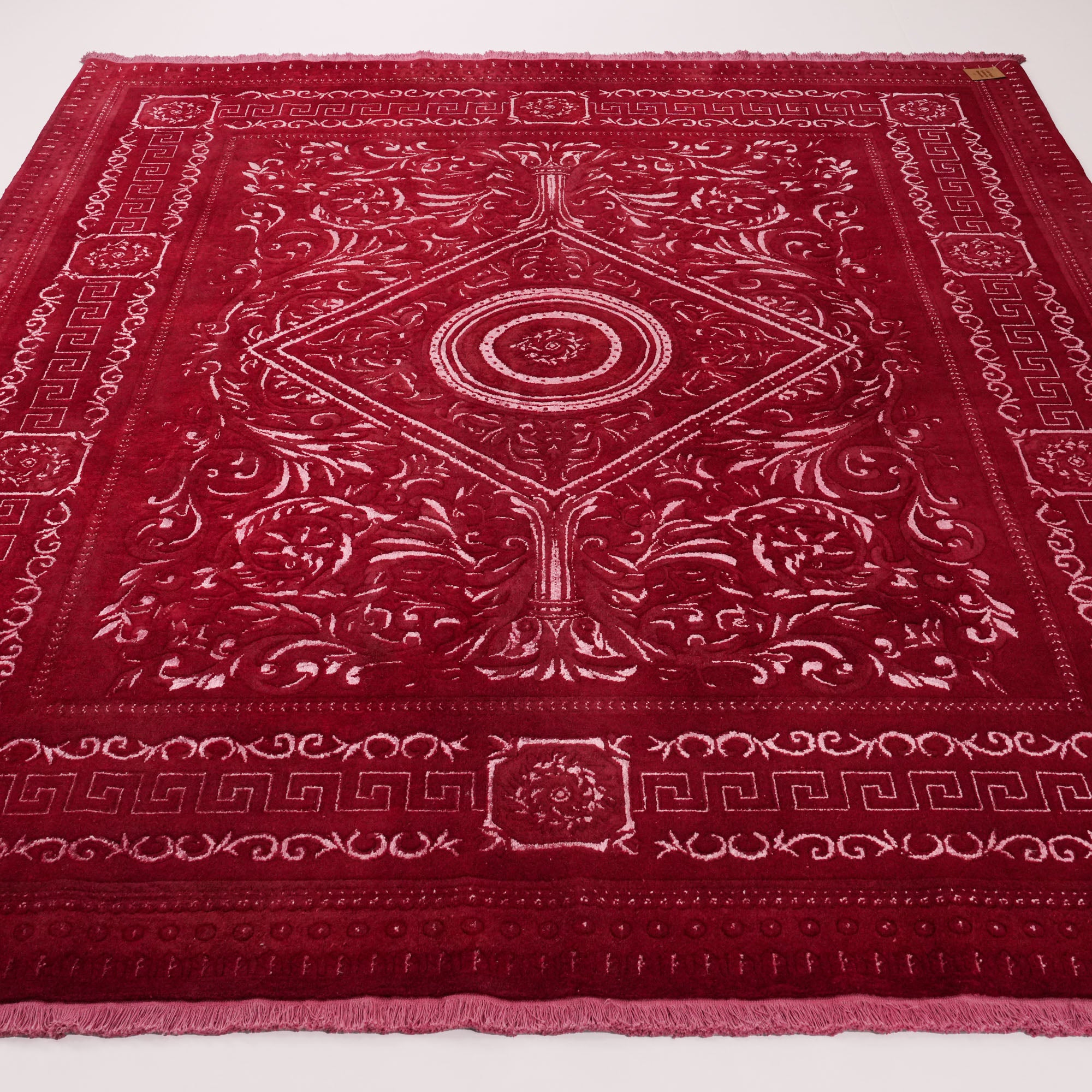
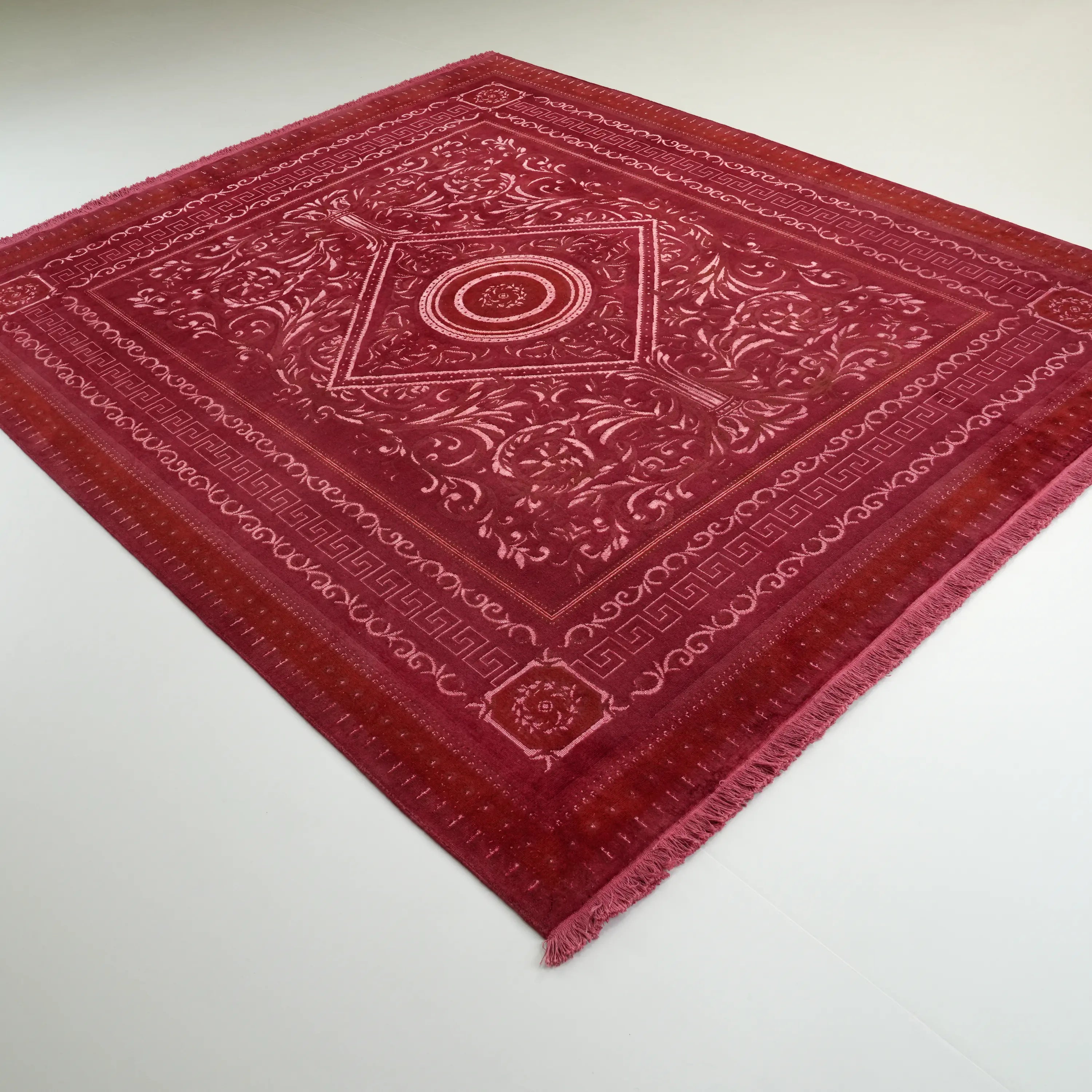
  2. Mirrored figures on strong red, two and a half by three meters

    Red Versace-Pattern Hand-Knotted Wool and Silk Rug, 250×300 cm Halıcızade 250×300 cm

    One of a kind

    Red Versace-Pattern Hand-Knotted Wool and Silk Rug

    Handwoven Rug · İpek · Wool · Cotton ·Red

    from 135.000 TL 18.000 TL/m²

    • Silk blend
    • Woven in wool
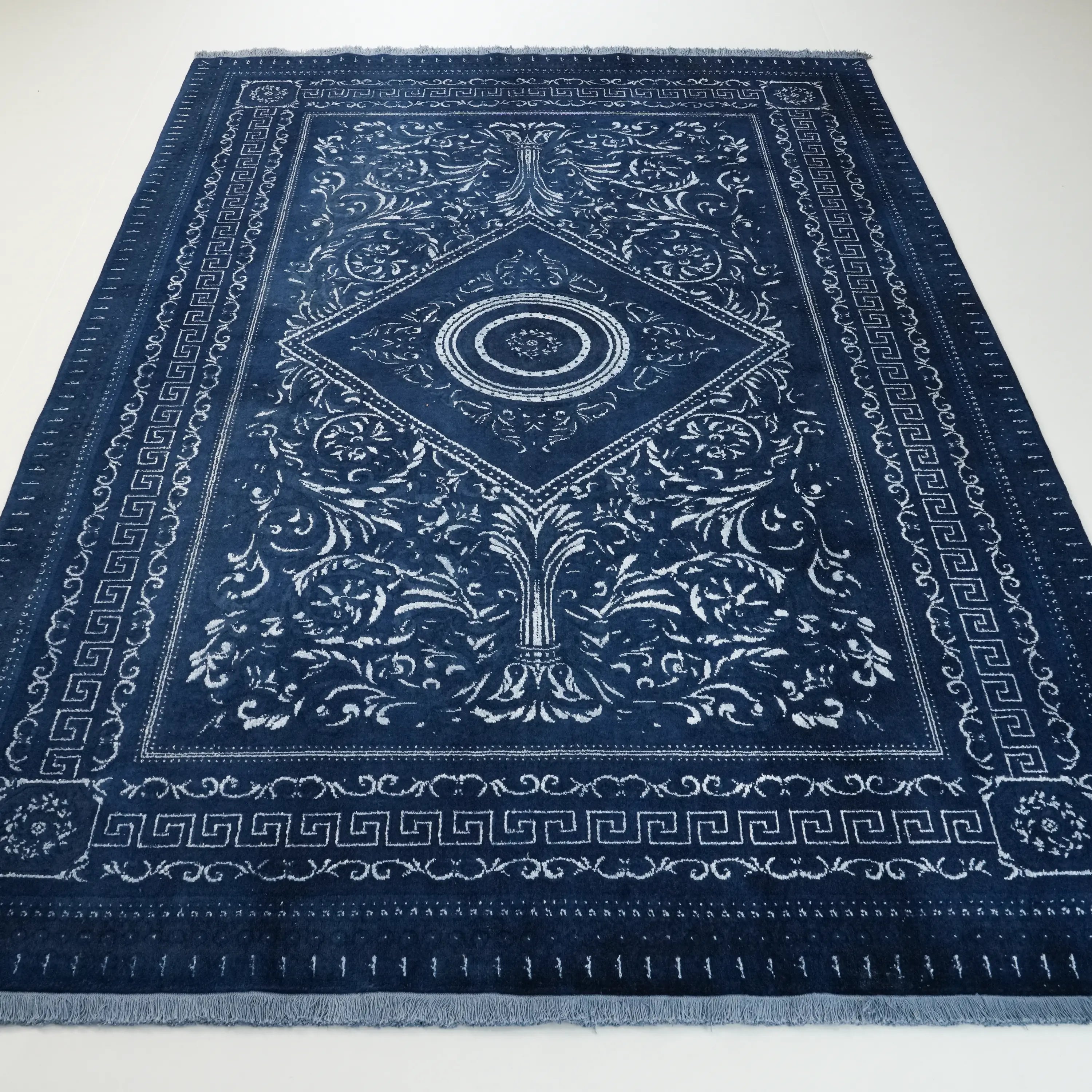
  3. Silk motifs standing off a navy ground, 200 × 300 cm

    Navy Versace-Pattern Hand-Knotted Wool and Silk Rug, 200×300 cm Halıcızade 200×300 cm

    One of a kind

    Navy Versace-Pattern Hand-Knotted Wool and Silk Rug

    Handwoven Rug · İpek · Wool · Cotton ·Navy Blue, Blue

    from 108.000 TL 18.000 TL/m²

    • Silk blend
    • All-natural fibers
    • Woven in wool

A Versace-pattern rug is a hand-knotted rug built from three borrowed ornaments — the Greek key meander, a Medusa head in a central medallion, and baroque scrollwork — over a black, navy or red ground. The five rugs here were designed by Claudio Amati and produced for Halıcızade in wool, with pure silk in the pattern.

The ornament is older than the name now attached to it. What follows is where each of the three elements comes from, what the rugs are made of and how they are built, and which of the five pieces suits which floor.

Where the drawing comes from

Three ornaments, three different centuries, one field.

The meander — the interlocking right-angle band that English calls the Greek key — is Greek architectural and ceramic ornament, a single line that turns on itself and never closes. On a rug it does the work a frame does on a painting: it stops the field and tells the eye where the composition ends. Woven, it is unforgiving. Every corner is a stack of right angles, and a right angle is the hardest thing to knot cleanly.

The Medusa head is the gorgoneion, the frontal staring face that Greek and Roman builders set over doorways, on shields and on floor mosaics, where it was meant to be looked at from every side at once. In these rugs it sits at the center of the field inside a medallion — the position an Anatolian weaver gives the göbek, the central medallion.

The baroque scroll is the acanthus curl of seventeenth-century European ornament, which fills the ground between border and medallion and keeps the two from sitting on the field like two unrelated objects.

What Halıcızade records about these particular rugs is short. The designs are Claudio Amati's; the weaving was commissioned by the house; each piece is a single weaving, and the same design is not repeated in another size.

What is actually on the loom

Wool ground, pure silk in the pattern, cotton warp.

The cotton warp runs the length of the loom under tension and emerges as the fringe at either end. The pile is wool everywhere except in the parts of the motif that are meant to take light, and those are knotted in pure silk. That is the whole trick of the collection. Matte wool absorbs light and silk returns it, so the edge of a Medusa or the turn of a meander is read off a change in surface rather than only a change in color, and the pattern shifts as you walk around the room.

Knot density is kept high for a reason that has nothing to do with durability. Curves and corners need knots the way a printed letter needs dots: the baroque returns and the meander corners only come out sharp when the rows are close enough. The pattern is tied, not printed — turn a corner over and it reads on the back almost as clearly as on the front, in slightly uneven rows.

Because the pieces are hand-knotted, the finished measurements are not round numbers. The exact width and length and the yarn specification for each rug are on its own product page, as is its place of manufacture. These are not Anatolian weavings: of the five, the three that state a place of manufacture give India. Compare the rest of the house's hand-knotted rugs if origin matters to you.

The five rugs, by ground and size

GroundSizePatternSuits
Black250 × 300 cm (8'2" × 9'10")Olive green and gold, silk-litLarge salon, dining table with chairs pulled out, wide entrance hall
Black200 × 300 cm (6'7" × 9'10")Olive green and gold, silk-litSeating group between facing sofas, eight-seat dining table
Navy200 × 300 cm (6'7" × 9'10")Silk motif on deep blueRooms with dark boards, where black would close the floor
Red250 × 300 cm (8'2" × 9'10")Silk motif on redFormal salon, library, a room lit mostly at night
Red250 × 300 cm (8'2" × 9'10")Framed composition on redUnder a large table, where the border can be read all the way round

All five grounds are dark, which is a decision rather than an accident: a pattern this dense needs a ground that stops competing with it.

Where a rug like this belongs

In a room it is allowed to lead.

The pattern sets the terms, so everything else has to give way — the plainer the upholstery around it, the more of the drawing you actually see. It sits well with dark solid wood, with gilt and bronze, with marble and with velvet, which is the vocabulary of classic rugs generally. A salon or an entrance hall is where these are usually laid. A corridor is the one place to avoid: constant traffic along a single line wears fine pattern detail before it wears the wool, and the detail is the point.

Living with silk in the pattern

Vacuum in the direction of the pile, slowly, without the beater bar. Do not beat or shake the rug hard, since a sharp blow works knots loose. Blot spills with paper towel and never rub — rubbing drives liquid down into the knot collar, where it sets. Flooding the pile with water and rug shampoo is what damages the silk-worked areas, so leave any real cleaning to a specialist in hand-knotted rugs and read how a rug is washed first. Air the rug in shade; direct sun fades the ground faster than feet wear it.

Frequently asked questions

What is a Versace-pattern rug?

It is a rug drawn in a fixed combination of three ornaments: a Greek key meander border, a Medusa head in a central medallion, and baroque scrollwork filling the ground between them. In this collection the combination is hand-knotted in wool and silk rather than printed.

Who designed and made these rugs?

The designs are by Claudio Amati and the rugs were produced for Halıcızade, which sells them. Each rug in the collection is a single weaving, and the same design is not woven again in another size.

What are these rugs made of?

Wool pile on a cotton warp, with pure silk knotted into the parts of the motif meant to catch light. The silk is what makes the pattern change as you move around it, because it returns light the matte wool absorbs.

Is the pattern knotted or printed?

Knotted. The motif is tied knot by knot on the loom, which is why the pattern is legible on the back of the rug in slightly uneven rows rather than muffled behind a backing.

What sizes are available?

Two sizes across the five pieces: 200 × 300 cm (6'7" × 9'10") in black and in navy, and 250 × 300 cm (8'2" × 9'10") in black and in red. Hand-knotted measurements vary slightly, so each product page carries the exact figures.

Where should a rug like this not go?

A busy corridor. Traffic concentrated along one line wears the fine pattern detail before it wears the wool, and in a rug bought for its drawing that is the wrong thing to lose first.

How is a silk-patterned rug cleaned?

Vacuum in the pile direction without a beater bar, blot spills instead of rubbing them, and keep water and shampoo off the pile. Deep cleaning belongs to a specialist in hand-knotted rugs rather than to a general cleaning service.

Related collections: silk rugs · medallion rugs · black rugs