Dark green packed tight, the drawing arriving after the color
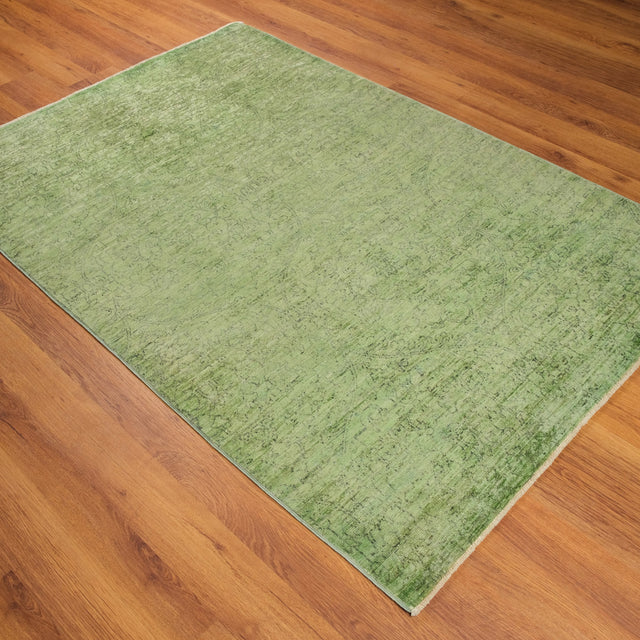 125×183 cm

One of a kind
Dark Green Vintage-Pattern Handwoven Wool Rug, Retro Series
from
58.000 TL
≈ 25.000 TL/m²



Rugs & Kilims
Find Your Rug
For those who already know what they are looking for — Halıcızade's most visited collections.
Dark green packed tight, the drawing arriving after the color
125×183 cm
One of a kind
from
58.000 TL
≈ 25.000 TL/m²
Anatolian motifs a half-tone under the beige, sharpening by lamp
 300×390 cm
Turquoise and gold on a cream frame, red at the center
 76×122 cm
Five colors, 81 × 129, small enough to carry under an arm
 81×129 cm
One of a kind
from
38.000 TL
≈ 36.000 TL/m²
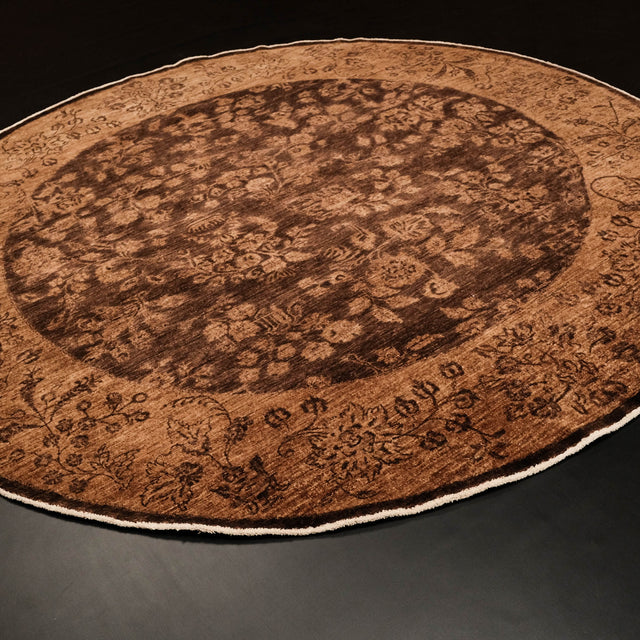
Oushak drawing pulled into brown across a 240 cm square
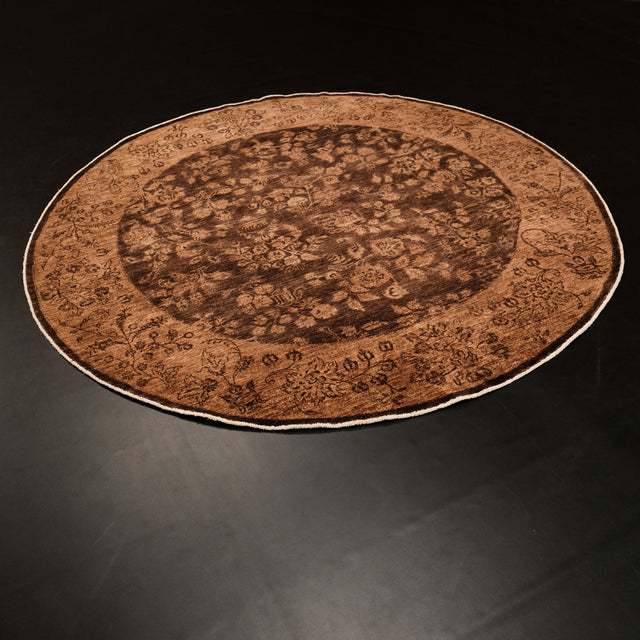 240×240 cm
One of a kind
from
144.000 TL
≈ 25.000 TL/m²
Red until you are close, then a blue-green medallion
 123×183 cm
Cream medallions at intervals over turquoise, viscose on cotton
 123×185 cm
Nine parts silk, one part wool, a medallion opening in layers
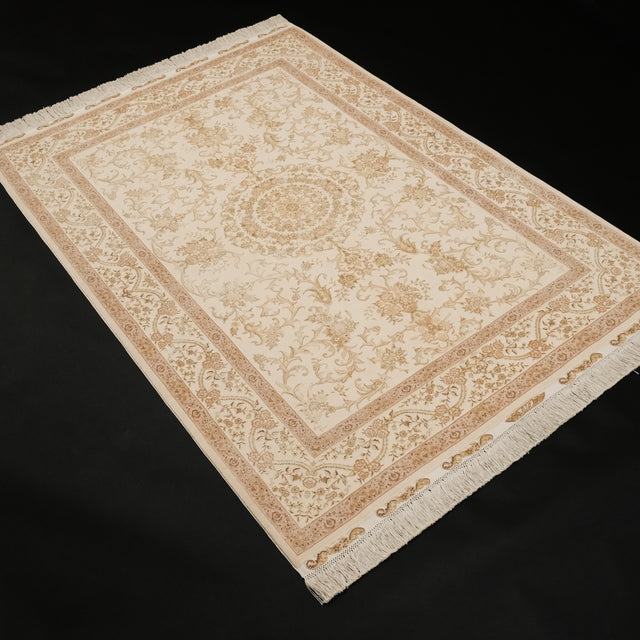 126×182 cm
One of a kind
from
148.000 TL
≈ 65.000 TL/m²
Burgundy field inside a cream frame, silk and viscose over cotton
 171×243 cm
Blue washed back on purpose, and only 84 cm across
 84×302 cm
One of a kind
from
17.800 TL
≈ 7.000 TL/m²
Blue at full strength, with the Oushak field sunk into it
 99×301 cm
One of a kind
from
21.000 TL
≈ 7.000 TL/m²
The series inverted: blue drawing on a cream ground
 100×284 cm
One of a kind
from
20.000 TL
≈ 7.000 TL/m²
Deep blue that needs a lamp before the Oushak pattern appears
 100×300 cm
One of a kind
from
21.000 TL
≈ 7.000 TL/m²
Border wider than usual, and it shortens the corridor
 100×317 cm
One of a kind
from
22.200 TL
≈ 7.000 TL/m²
Powder pink inside a blue field, warming under lamplight
 98×320 cm
One of a kind
from
22.000 TL
≈ 7.000 TL/m²
An Oushak medallion stretched down 320 cm of blue runner
 101×320 cm
One of a kind
from
22.800 TL
≈ 7.000 TL/m²
Ninety percent silk, ten percent wool, and no longer being woven
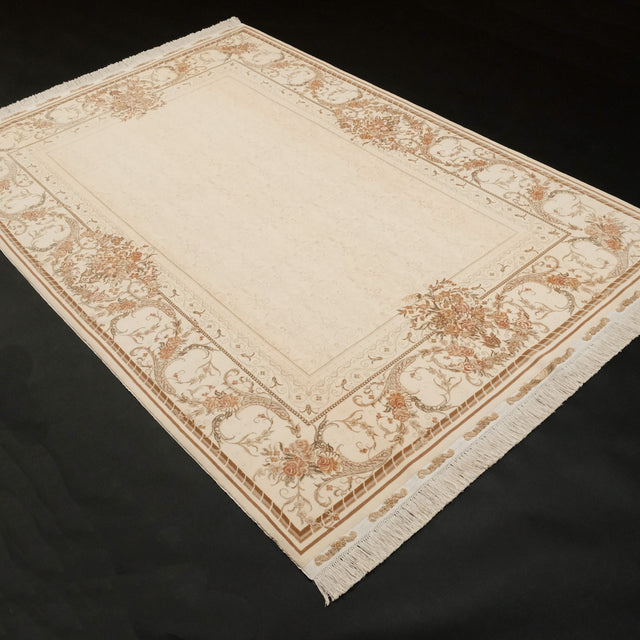 162×240 cm
Cream and red medallion on a black ground, silk in the pile
 167×241 cm
Gold and blue over cream: viscose, knotted in China
 169×240 cm
Black frame around a turquoise center: silk and viscose
 171×243 cm
Blue medallion in a 196 cm circle, its relief cut by shears
 196×196 cm
One of a kind
from
96.500 TL
≈ 25.000 TL/m²
Copper, gold and silver on wool, 195 × 300 cm
 195×300 cm
One of a kind
from
176.000 TL
≈ 30.000 TL/m²
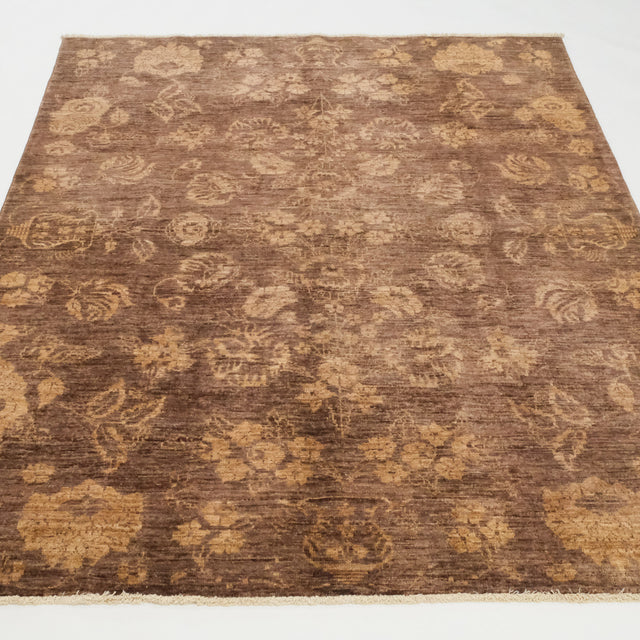
Brown taken to a gloss, densely knotted, 146 × 190 cm
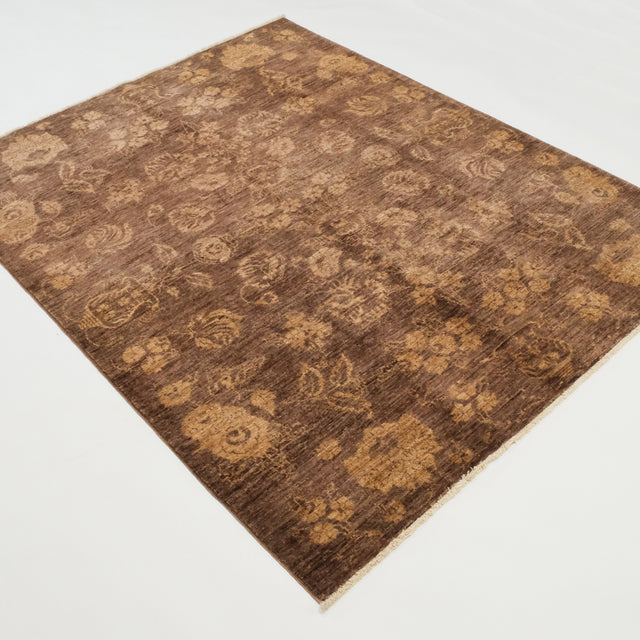 146×190 cm
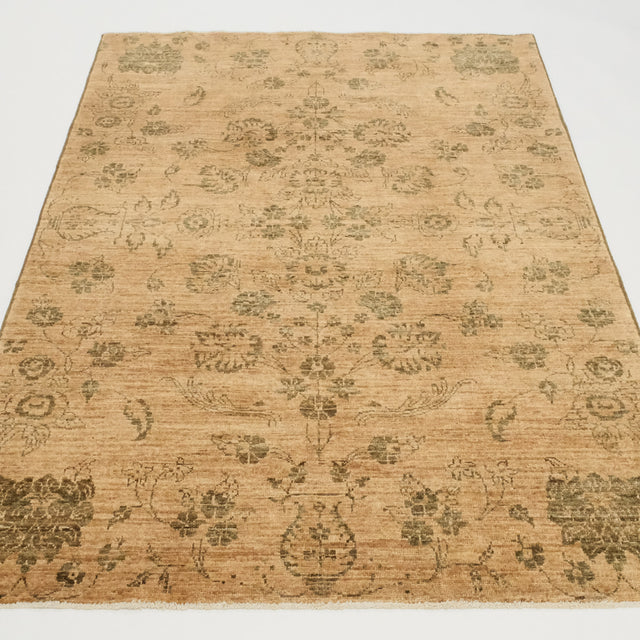
Two yellows and nothing else: 121 × 179 cm, wool on cotton
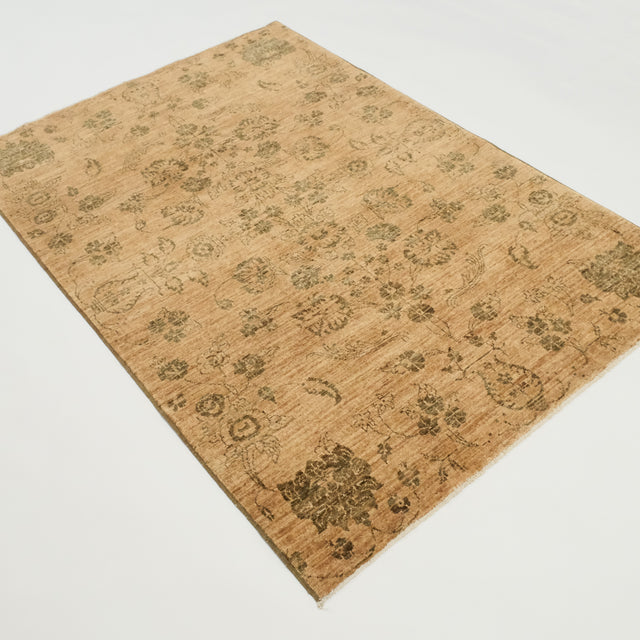 121×179 cm
A classic rug is one drawn to an inherited pattern rather than a current one: a central medallion, a full border in several bands, and stylized floral or vine work handed down through Anatolian and Persian workshops. Halıcızade lists more than four hundred of them, hand-knotted, loom-woven and machine-woven, in wool, silk and cotton.
Classic here describes the drawing, not the date of weaving. The collection runs from hand-knotted wool pieces in the Anatolian shawl and vintage manner to loom-woven and machine-woven rugs that carry the same medallions at a fraction of the labor. What follows is where the patterns come from, how the three constructions differ, and what to weigh before choosing one.
A fixed grammar: field, medallion, corner spandrel, border.
Almost every classic Turkish or Persian design is built from the same four parts. The field is the open ground; the central medallion sits at its center and is usually echoed in quarter form at the corners; the border runs in three or more parallel bands, the widest in the middle, the narrow guard stripes on either side. Within that frame a weaver could draw anything — palmettes, cloud bands, vine scrolls, a tree of life — and the frame held it together. Motifs move between regions, but the architecture does not change.
Some pieces in this collection are given an antiqued finish, a deliberate softening of the pile and palette that reads as an older rug. Isparta and Bünyan, both long-standing Turkish weaving towns, built much of their trade on it. Look at vintage rugs for the same effect at a wider range of ages.
Two traditions, drawn differently.
Anatolian classic design descends from Ottoman court and village weaving, and its instinct is geometric: the medallion is built from straight segments, the flowers are stylized to the edge of abstraction, the borders count in repeats. The earliest Oushak rugs date to the fifteenth century, and their open fields and wide medallions are the reason Renaissance painters kept putting them under the feet of their sitters. Persian classic design leans the other way, toward curvilinear vine work and dense floral fields.
The flower is the most traveled motif of the two — see floral rugs for how far it stretches, from single blossoms scattered across an open ground to fields packed edge to edge. Medallion compositions have their own page in medallion rugs.
The pattern can be identical; the weight, the price and the working life are not.
| Construction | Fiber usually used | Feel underfoot | Suits |
|---|---|---|---|
| Hand-knotted | Wool, wool with silk, pure silk | Dense and heavy, deep pile | Rooms where the rug is the main object and is meant to be kept |
| Loom-woven | Wool, viscose blends | Even, medium weight, flatter | Consistent sizing and repeatable pattern below hand-knotted prices |
| Machine-woven | Acrylic, polypropylene | Light to medium, short pile | Corridors, children's rooms, first apartments, second homes |
Compare the full ranges in hand-knotted rugs and machine-woven rugs.
Start from the wood and the wall color, then choose the ground.
Against walnut, oak and heavy upholstery, a deep red or indigo ground closes the room and makes the furniture look intentional. In a pale room, the same dark ground works as contrast; in a room already crowded with pattern, cream, beige and brown grounds calm it down. A classic rug also holds its own under plain modern furniture, where it becomes the only worked surface in the room.
Corridors and entrance halls take the same patterns in narrow format. Running one design as both a room rug and a hallway runner is the simplest way to tie a hall to the room it opens into.
Routine matters more than product.
Vacuum in the direction of the pile with the beater bar off. Rotate the rug twice a year so that traffic and daylight fall on different parts of it. Blot a spill with a white cloth from the outside in — rubbing drives the liquid down into the knot collar, where it sets. Test any cleaner on a corner first, and keep bleach away from a dyed pile entirely. Hand-knotted wool in daily use is generally washed by a specialist every twelve to eighteen months.
The drawing, not the age. A classic rug carries the inherited grammar of Anatolian and Persian workshops — a central medallion, a full multi-band border, stylized flowers and vines — while a modern rug is drawn free of that grammar.
Both, and loom-woven as well. The same medallion and border patterns are tied by hand in wool and silk, woven on a hand-operated loom, and reproduced on a power loom in acrylic, at three different prices and three different weights.
Cream, beige and brown grounds keep a room quiet; deep red and indigo grounds do the opposite and hold their own against walnut furniture and heavy upholstery. A dark rug under pale walls is the oldest reliable contrast in the trade.
Yes, and the contrast is usually the point. A medallion rug under plain contemporary furniture reads as the single worked object in the room, which is why designers put one under a minimal sofa rather than beside it.
Oushak is a weaving region in western Anatolia whose designs date back to the fifteenth century: open fields, wide-set medallions, soft apricot and madder reds, and drawing loose enough to read from across a room. It is the most forgiving classic pattern to live with.
Vacuum without the beater bar, blot spills rather than rubbing them, and read the label on the back before applying anything wet. Hand-knotted wool and silk pieces go to a rug washer rather than into a machine.
Related collections: Oushak rugs · medallion rugs · hand-knotted rugs · vintage rugs