


Sheepskin and Hide Rugs in Decoration


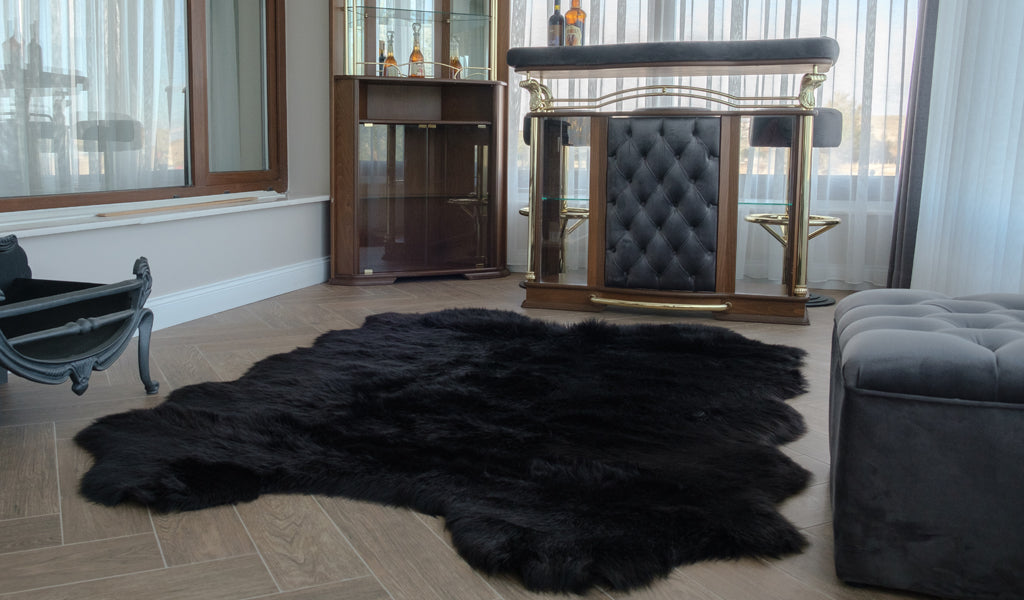
A sheepskin rug — post in Turkish — is a floor piece made from a tanned animal skin with the wool or hair left on. It comes either in the animal's own outline or cut and stitched into a rectangle. Woven rugs that copy the shape without a skin are sold under the same name.
The Turkish word post covers all of it, which is why the English needs unpicking before anything else. What follows is what the three things actually are, how they behave underfoot, where the shape earns its place in a room, and why a skin cannot be cleaned like a woven rug. The pieces themselves are in sheepskin rugs.

Sheepskin, cowhide and the pieced hide rug
Three products, one word. They are not interchangeable.
- Sheepskin and lambskin. The skin tanned with its fleece on. Deep, soft, springy, warm to the touch, and usually left in the animal's own silhouette. This is the one people picture over the arm of a chair.
- Cowhide. The skin with short hair rather than fleece. Flat, tough, patterned with the animal's own markings, and far more resistant to traffic than sheepskin. See cowhide rugs.
- The pieced hide rug. Lambskin or leather cut into strips and panels and sewn into a rectangle with a drawn pattern — stripes, frames, geometric blocks. Most of the rugs in this collection are this kind. They give a room the material without the silhouette, and they come in ordinary rug sizes.
Real hide or a woven imitation?
Both are sold, at very different prices, and the difference is easy to feel and easy to hide in a photograph.
| Real sheepskin or hide | Woven or tufted imitation | |
|---|---|---|
| What it is | A tanned skin with the fleece or hair still attached | Acrylic, polyester or viscose pile woven or tufted onto a backing |
| The back | Suede-like leather, slightly uneven, no woven grid | A woven or latex backing, uniform across the piece |
| The fibers | Vary in length and direction, grow from the skin, cannot be pulled out in tufts | Even in length, set in rows, shed as the backing ages |
| Cleaning | Never soaked, never machine-washed; see below | Usually washable, depending on the backing |
| Wear | Cowhide takes traffic well; sheepskin flattens and mats where it is walked on | Flattens sooner, but is cheaper to replace |
The imitation is not a fake in any dishonest sense as long as it is described as what it is. It is a reasonable choice for a nursery, a rented flat or anyone who does not want an animal product. For a woven pile with a similar shag underfoot, look at shaggy rugs.
Where the shape works, and where it does not
The hide rug is a texture, not a floor plan. It works where a room is otherwise flat and hard-edged, and it works small.
- Beside a bed. The first thing a foot lands on in the morning, and the classic use of the natural silhouette.
- In front of a chair or a sofa. Small enough that it does not have to relate to the furniture legs the way a room-size rug does.
- Over furniture. Across a wooden bench in a hallway, over the back of a chair, or on a wall as a single focal point. The silhouette reads as a shape, which is why it survives being hung.
- Layered. On boards or over a larger flat-woven rug, where the contrast between a woven grid and a soft irregular edge does the work.
Two cautions. A hide sitting on heavily grained wood puts two strong natural patterns in competition, so let one of them be quiet. And keep skins out of kitchens, bathrooms and entryways: they cannot be soaked, and a rug that cannot be washed does not belong where things get spilled. For those rooms, a washable woven piece such as a cotton rug is the sane answer.

Care: a skin is not a woven rug
Everything you would do to a wool rug is wrong here. A woven rug is a textile with a foundation; a hide is a piece of tanned leather that dries hard and shrinks if it is soaked, and the fleece on a sheepskin is held soft by lanolin that detergent strips out.
- Sheepskin and lambskin. Shake it out and comb the fleece with a wide-toothed brush. If it must be washed, use no ordinary detergent, no bleach and no enzyme cleaner. Move it gently through the water by hand, and never wring or scrub it.
- Cowhide. Do not soak it, do not put it in a machine and do not send it for dry cleaning. Vacuum lightly with a brush head, in the direction the hair lies.
- Spills. Press a clean white cloth or paper towel down and lift. Rubbing pushes the stain deeper into the fibers and, on a skin, into the leather itself.
- Drying. Flat, in moving air, away from a radiator and out of direct sun. Heat is what turns a soft skin into a board.
- Storage. Cool, dry and ventilated. Not in a plastic bag for months, where trapped condensation does the damage.
Care instructions vary from piece to piece, so follow the label on the rug you own before following any general rule.
Where the skins come from, and what to ask
Ask the seller, and expect a specific answer. Most sheepskins in trade are a by-product of farming in which the animal's value lies in its meat and wool, and the skin would otherwise be discarded. That is the basis on which Halıcızade selects the hides in this collection: animals not raised or killed for their skin, using the same leather stock that goes into shoes and bags.
Two independent schemes are worth knowing by name. The Leather Working Group audits tanneries on water, energy and chemical management. The Responsible Wool Standard certifies wool from farms audited for animal welfare, including a prohibition on mulesing. Neither is a claim about any particular rug, which is why the useful question is a narrow one: where did this skin come from?
If animal welfare is the deciding factor, the honest recommendation is to buy a woven rug instead. Wool rugs, bamboo and viscose rugs and plant-fiber weaves such as those in our guide to jute rugs cover most of the same ground in a room.
Frequently asked questions
What is a sheepskin rug?
A sheepskin rug is a tanned sheep or lamb skin with the fleece left on, used as a small floor covering. It is sold either in the animal's natural outline or cut and stitched into a rectangle, and it is a leather product rather than a woven textile.
What is the difference between a sheepskin rug and a cowhide rug?
Sheepskin carries a deep, soft fleece and flattens where it is walked on, which suits a bedside or a chair. Cowhide has short hair, lies flat, shows the animal's own markings and stands up to far more traffic than sheepskin does.
How can I tell a real sheepskin from a synthetic one?
Look at the back. A real skin has a suede-like leather underside with no woven grid, and its fibers vary in length and grow out of the skin. A synthetic has a uniform woven or latex backing and pile set in even rows.
Can a sheepskin rug be washed in a machine?
No. Machine washing and soaking make the leather shrink and dry hard, and ordinary detergent strips the lanolin that keeps the fleece soft. Shake and brush the fleece instead, and if washing is unavoidable, move the skin gently through water by hand without wringing.
How is a cowhide rug cleaned?
Vacuum it lightly with a brush head, following the direction the hair lies, and lift spills by pressing a clean white cloth onto them. A cowhide should not be soaked, machine washed or dry cleaned, and it should dry flat away from heat and sunlight.
Where should a hide rug be placed in a room?
Beside a bed, in front of a chair, over a bench or hung on a wall, and layered over boards or a larger flat-woven rug. Keep skins out of kitchens, bathrooms and entryways, because a rug that cannot be soaked does not belong where things get spilled.
Related reading: what a jute rug is · sheepskin rugs · cowhide rugs