
Dry cleaning only: a zebra-marked cowhide from South America
 203×250 cm



Rugs & Kilims
Find Your Rug
For those who already know what they are looking for — Halıcızade's most visited collections.
Dry cleaning only: a zebra-marked cowhide from South America
203×250 cm
A single brown hide from South America, 192 × 207 cm
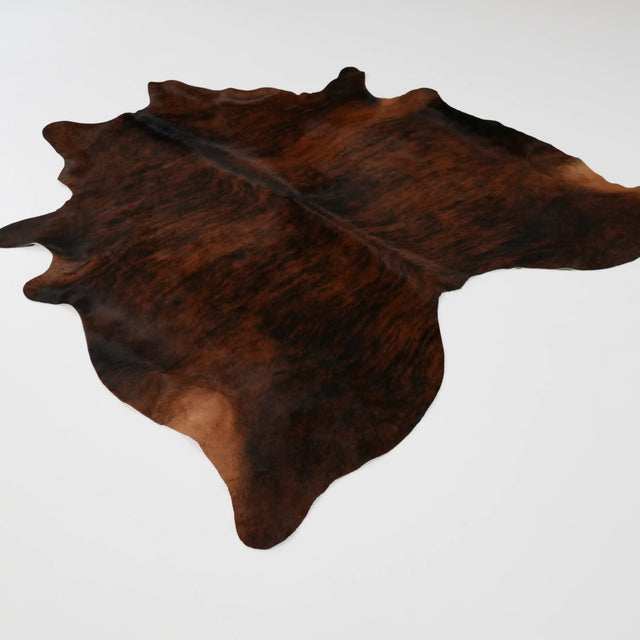 192×207 cm
Black cowhide from South America, no pile and no knots
 197×224 cm
Red laid over cattle hide, the grain still showing through
 165×232 cm
All black, the pattern told by which way the hair lies
 170×237 cm
Narrow honey stripes over cream, more ground than line
 170×240 cm
Squares of South American hide, mink gray-brown throughout
 200×240 cm
Black hide stitched panel by panel inside a silver-gray frame
 170×240 cm
Five rings of hide, each a different skin, darkening inward
 190×230 cm
Black hide laid like brickwork, a few pieces flecked silver
 195×220 cm
Cowhide dyed blue, cut square and stitched panel to panel
 90×147 cm
Hide instead of yarn: brown panels set in a geometry
 122×182 cm
Ninety-two centimeters of squared hide, cream jumping to black
 92×147 cm
Damask drawn in cream over a beige cowhide ground
 180×240 cm
Nothing woven in it: cut skins, blacks gathered to the middle
 119×182 cm
Damask cut in black and tan hide, 89 × 150 cm
 89×150 cm
Pale hide showing its whorls, the damask drawn in tone alone
 89×150 cm
Pale hide in brick courses, no two pieces the same beige
 210×255 cm
Black over white, and the outline belongs to the animal
 170×188 cm
A cowhide rug is a floor covering built from tanned cattle hide rather than woven yarn. Panels are cut from the hide, matched for thickness and tone, stitched edge to edge and backed, producing a rectangular rug whose pattern comes from the animal's own markings rather than from a design drawing.
Nothing in this collection is woven. That is the point of it, and it is also the reason a cowhide rug behaves differently from everything else on the site — different underfoot, different in a doorway, and cleaned by a method that would ruin a wool pile. What follows is how these rugs are put together, how to tell real hide from a woven imitation of the look, what the sizes actually are, and how to keep one.
It is cut and sewn, not tied or woven. A tanned hide is a large, irregular sheet of uneven thickness; the workshop cuts it down into regular panels — squares, rectangles, long strips — sorts them, and rebuilds them into a true rectangle.
Two decisions happen before any needle goes in. The panels are graded for thickness, because a thick panel next to a thin one leaves a ridge that a foot finds and that opens at the seam first. Then they are graded for tone, since a hide runs from near-white through fawn to almost black across a single animal, and the composition is built out of those grades rather than out of dye. The panels are butted edge to edge, machine-stitched, and a backing is laid on to hold the grid square and stop the seams from working against each other.
Two things separate a well-made piece from a poor one, and both are visible from standing height in a photograph. The panels should be even in thickness across the whole rug, and the stitch line should hold straight across a seam instead of wandering. Look for them before you buy.
These are pieced rugs, not single hides with the animal's outline left intact. The distinction matters when you are measuring a room. A whole-hide rug has no true dimensions — the width depends on the animal — while a pieced rug is a real rectangle that sits square against a wall and takes a standard rug pad.
The pieces here run from about 89 × 150 cm (2'11" × 4'11") to 216 × 248 cm (7'1" × 8'2"), and every rug's exact width and length are on its own product page. The store's own records give South America as the place of manufacture for the hides in this collection. The pattern vocabulary is drawn rather than woven: patchwork grids, abstract fields, framed borders, stripes, geometric blocks, a damask layout, one zebra. Colors run brown, black, cream, beige, mink, red, blue, white and silver-gray.
Both are sold under the same name, at very different prices, and a photograph hides the difference almost completely. Everything in this collection is tanned hide, recorded as such in the product data; the comparison below is for reading any other listing you come across.
| Pieced cowhide | Woven or tufted imitation | Woven wool rug | |
|---|---|---|---|
| What it is | Tanned hide, cut into panels and stitched | Acrylic, polyester or viscose pile printed or woven to mimic hide markings | Wool pile knotted or loom-woven on a warp |
| The back | Suede-like leather with a fabric backing; seams readable as raised lines | A uniform woven or latex backing across the whole piece | The pattern shows through in rows of knots or in the weave structure |
| The hair or pile | Short hair growing from the skin, lying in a direction, not pullable in tufts | Even in length, set in rows, sheds as the backing ages | Springy, recovers after pressure, varies slightly by dye lot |
| Underfoot | Firm and flat; no give | Soft to medium, flattens sooner | Soft, warm, resilient |
| Cleaning | Wiped and conditioned; never soaked | Usually washable, depending on the backing | Vacuumed, then professionally washed |
| Weak point | Claw marks, standing water, seam stress | Matting and shedding | Staining, moth, pile crushing |
The imitation is not dishonest as long as it is described as what it is, and it is a sensible choice for a nursery or a rented flat. It is simply a different object. For the fuller version of this argument — sheepskin, cowhide and the pieced rug set side by side — read what a hide rug actually is. The tanned lambskin version of the same idea, made in Türkiye rather than South America, is in sheepskin rugs.
In rooms where a pile is a liability. Hide has no pile for a spill to sink into and no fiber for grit to bed down in, which decides most of the cases for and against it.
This is the sentence to remember: a hide rug is wiped, never soaked. The product records for this collection specify dry cleaning, and the reason is structural rather than cosmetic. Water that reaches the backing sits between the leather and the fabric, swells the stitch holes and slackens the seams; a tanned hide that is soaked and then dried also stiffens and can crack along the fold.
Not in this collection. Each rug is built from panels cut out of tanned hide, sorted for thickness and tone, stitched edge to edge and backed, so the finished piece is a true rectangle rather than the animal's own irregular outline.
No. The markings come from the hides themselves rather than from a printed or woven design, so two rugs built to the same layout in the same size still differ in the distribution of light and dark panels across the field.
Wipe it with a barely damp cloth and a leather-safe cleaner, blotting spills rather than rubbing them. Do not soak it, machine wash it or steam it; water standing on the backing swells the stitch holes and slackens the seams.
Look at the back and at the fibers. Real hide has a suede-like leather underside with the seams readable as raised lines, and its short hair grows from the skin in a direction; an imitation has a uniform woven or latex backing and even, row-set pile that sheds.
Yes. Hide takes foot traffic well and has no pile for grit or liquid to sink into, so what is dropped stays on the surface and comes off with a cloth. Standing water is the thing to keep off it, not footfall.
With dogs, usually. With a cat that claws the floor covering, no — hide records a claw mark far more plainly than wool pile does, and the scratch cannot be brushed out or trimmed away.
They run from roughly 89 × 150 cm (2'11" × 4'11") to 216 × 248 cm (7'1" × 8'2"), in true rectangles rather than irregular hide outlines. Each rug's exact width and length are listed on its own product page.
Related collections: sheepskin rugs · patchwork rugs · geometric patterned rugs · entrance hall rugs


