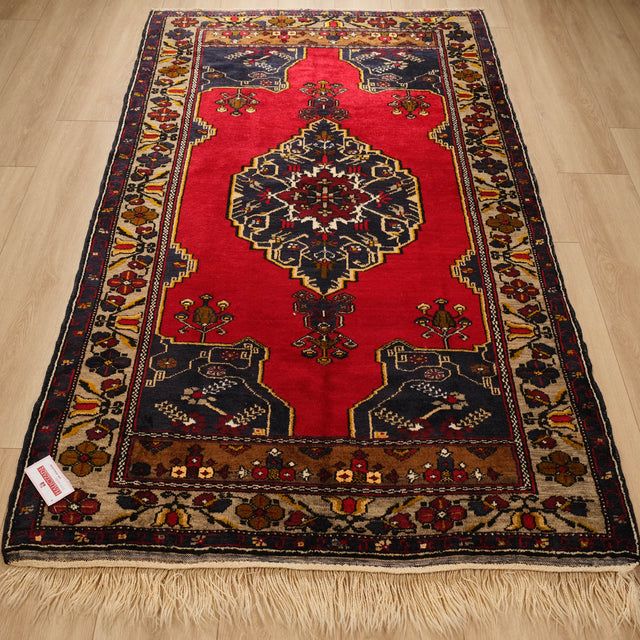
Red kept in a chest, not on a floor: Bünyan knotting
 196×289 cm



Rugs & Kilims
Find Your Rug
For those who already know what they are looking for — Halıcızade's most visited collections.
Red kept in a chest, not on a floor: Bünyan knotting
196×289 cm
Room for a twelve-seat table, cream, and second-hand
 308×420 cm
Abrash across a red ground: Yörük work from the Çukurova
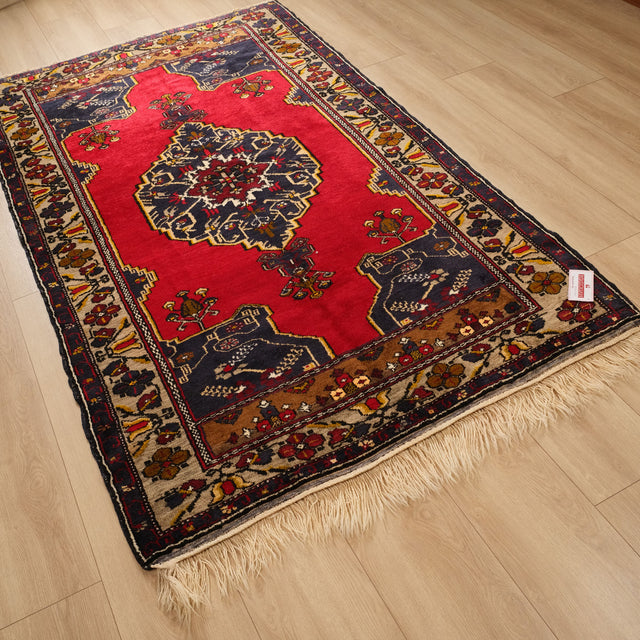 138×235 cm
Bought once already: a cream Kayseri, wool over cotton
 198×288 cm
Same 60 × 90 cm as its twin, a different medallion filling
 60×90 cm
Cream octagon in a red field, hand-knotted at 60 × 90 cm
 60×90 cm
Owned once before: a Yahyalı in red, wool down to the warp
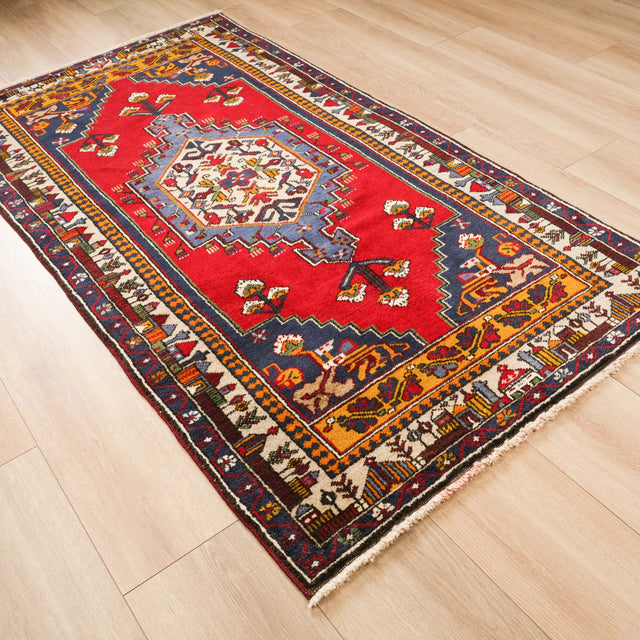 112×210 cm
A Kayseri rug is a hand-knotted rug from the Kayseri region of central Anatolia, woven in three distinct places — the town of Bünyan, the district of Yahyalı, and the central district of Kayseri itself. The pile is wool, the warp is usually cotton, some pieces are silk, and the drawing runs from village geometry to fully resolved medallion designs.
Kayseri is one of the few Anatolian names that covers a workshop tradition and a village tradition at once. Bünyan wove for the market, Yahyalı wove for the household, and the central district has spent a century reworking classical designs for whoever was buying. What follows is what separates the three, how the yarn is made, and what to look at before you pay for one.
They are not variants of one style; they are three different habits of drawing and color.
| Tradition | Ground and palette | Drawing | Typical use |
|---|---|---|---|
| Bünyan | Red, blue and navy grounds; a wide range of secondary colors | Workshop drawing — medallions, corner pieces, floral sprays, borders drawn as a frame | Room-size rugs; the large formats in this collection are Bünyan |
| Yahyalı | Dark, warm tones; dark greens are common | Village geometry — stepped medallions, prayer niches, no living figures | Small formats, prayer rugs, bedside and entry pieces |
| Kayseri central district | The widest palette of the three | Classical Anatolian designs reworked for a modern market, in wool and in silk | Living rooms, offices, hotel interiors |
The distinction is worth holding onto, because it explains the price spread inside a single collection. A Bünyan room rug and a small Yahyalı piece are not the same object at different sizes. See Yahyalı rugs for the village side of the family on its own.
The rug starts on the sheep. Fleece is shorn, washed, dried and opened with combs, then spun into yarn on a çıkrık — a spinning wheel — or on a kirman, the hand spindle a woman can carry and work while walking. Hand-spun yarn is slightly uneven in thickness, which is why the pile of an older Kayseri rug catches light in bands rather than lying flat.
Warps are cotton or wool. Cotton holds a large rug square under tension, which is why the biggest Bünyan pieces have cotton foundations. The dyes are the Anatolian standard: madder root for red, indigo for blue, and plant and mineral sources for the rest. On the older pieces the dye lots run out mid-rug and the weaver starts another, which leaves a band of slightly different color across the field. That band is abrash, and it is evidence of hand work rather than damage. Read how natural and synthetic dyes are told apart if you want the test.
Color in a Kayseri rug is chosen for meaning as much as for effect. Red stands for strength and courage and is the most used ground. Blue, and navy in particular, stands for calm. Green is nature and abundance, and the dark greens of the Yahyalı group are the region's signature. White is used to open contrast rather than as a field, and black sharpens the detail inside a border. Motifs follow the same logic — geometric panels, flower forms, medallions with matching corner pieces, and occasionally an animal figure carrying a story.
Some Kayseri rugs are silk, and mercerized cotton — sold in the trade as floss silk or art silk — has been woven in the region alongside real silk for a long time. The two are not the same fiber and should not be the same price. Three checks with the rug in front of you: real silk is cool at first touch and warms in the hand, it changes value as the angle of light changes rather than holding a fixed sheen, and its knots on the back are individually countable. Mercerized cotton is bright at every angle and stays cool. Ask what the pile is, and ask it before the price is discussed.
Several pieces here are described as sandık eskisi — literally "chest-old". A rug woven for a trousseau was folded into a dowry chest and left there, sometimes for decades, which is why these come out with their color intact and almost no wear on the pile. It is the most interesting category in Anatolian dealing: old fiber, old dye, new-looking surface.
On age terms, the house uses trade convention with no issuing authority behind it — antique means 100 years or more, semi-antique 50 to 100, vintage 20 to 80, and new is new. Where a rug is described as second-hand rather than antique, that is a statement about its history, not its quality. Compare antique and vintage handwoven rugs before you decide which you are shopping for.
Look at four things: whether the weave is tight and even, whether the knot rows run straight across the back, whether the selvedge and the end finishes are sound, and whether the colors are clear rather than muddy. Then measure the room. A rug that is one size too small for a seating group looks like a mistake no pattern can rescue.
In use, vacuum at low power without the beater bar. Lift a stain with a barely damp cloth and gentle strokes instead of a household chemical cleaner. A deep wash should be done flat on the ground by someone who washes hand-knotted rugs — never in an automatic machine — in cool or lukewarm water, and the rug should be dried flat and out of direct sun. Browse hand-knotted rugs and wool rugs for the wider context.
A Kayseri rug is a hand-knotted rug from the Kayseri region of central Anatolia, woven in Bünyan, in Yahyalı and in the central district. The pile is usually wool on a cotton warp, some pieces are silk, and the dyes are traditionally madder, indigo and other plant sources.
Bünyan is the workshop tradition — medallion drawing on red, blue and navy grounds, usually in room sizes. Yahyalı is the village tradition of the same province — darker, warmer color, stepped geometric drawing and prayer niches, usually in small formats.
Real silk is cool at first touch, warms in the hand, and changes value as the light angle shifts. Mercerized cotton, sold as floss silk or art silk, holds a fixed bright sheen from every angle. On the back, a fine silk rug shows individually countable knots.
It means chest-old. The rug was woven for a trousseau and stored folded in a dowry chest rather than used, sometimes for decades, so it comes to market with its color intact and very little wear on the pile.
Red for strength, blue and navy for calm, green for nature and abundance, white for contrast and black for the detail inside a border. Dark green is particularly associated with the Yahyalı group, and red is the most common ground overall.
Flat on the ground, by a washer experienced with hand-knotted rugs, in cool or lukewarm water and without an automatic machine. Household chemical shampoos should be avoided, and the rug should be dried flat and away from direct sun.
Yes. Anatolian weaving including Kayseri uses the symmetrical Gördes knot, which loops around two warp threads rather than one. That knot is what gives Turkish rugs their squarer, more angular drawing compared with Persian work.
Halıcızade Halı Kilim in Ankara records fiber and district on each Kayseri listing, so silk, floss silk and mercerized cotton are not left to the photograph.
Last updated: 10 September 2026
Related collections: Yahyalı rugs · Anatolian rugs · Turkish rugs · rare rugs