
Purple where the Barak usually runs red, wool over cotton
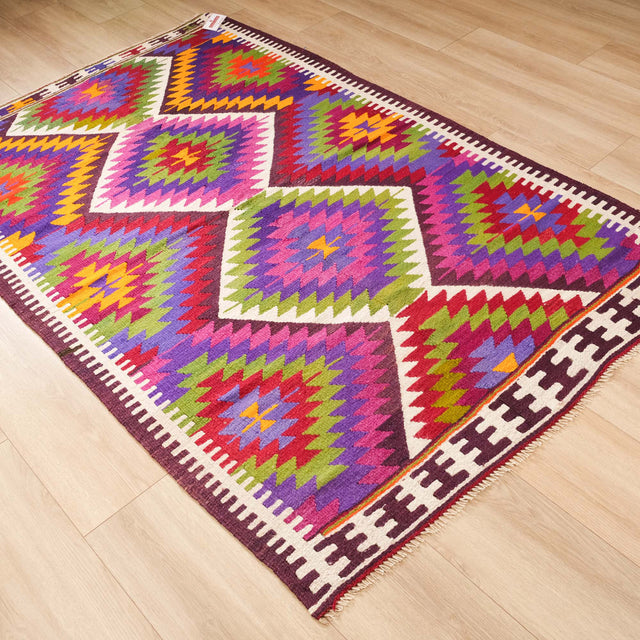 140×215 cm



Rugs & Kilims
Find Your Rug
For those who already know what they are looking for — Halıcızade's most visited collections.
Purple where the Barak usually runs red, wool over cotton
140×215 cm
Purple going near-black as you cross the room, 53 × 67 cm
 53×67 cm
Lilac to purple, carved in relief, round at 150 and 200 cm
 200×200 cm
Oushak drawing bent into a circle, purple leaning lilac
 200×200 cm
Pile deep enough to catch a low door, purple over undyed wool
 200×290 cm
One of a kind
from
36.000 TL
≈ 6.200 TL/m²
Lilac into purple, and the motifs stand a shade higher
 180×240 cm
Purple palmettes standing off a cream ground, cut by shears
 265×355 cm
Hand-knotted purple that reads as two, the outline casting shadow
 255×380 cm
One purple medallion, and the whole rug folds into two hands
 170×240 cm
Purple is not a kilim color, and this one is purple
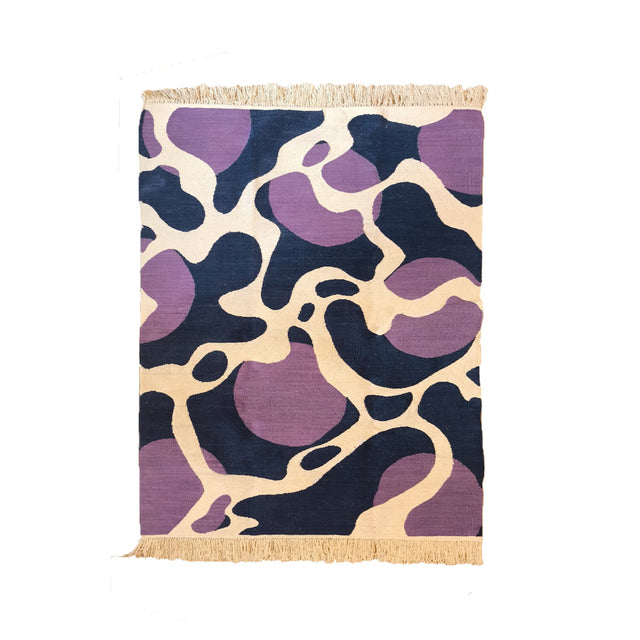 4×5 cm
One of a kind
from
64.500 TL
≈ 32.250.000 TL/m²
A purple rug is one whose ground or principal motifs sit between red and blue, from pale lilac through plum to near-black aubergine. Anatolian dyers had no single purple plant: the color was built by dyeing wool in indigo and over-dyeing it with madder, or by shifting madder or cochineal toward plum with an iron mordant.
Purple is the least stable color in a room and the most rewarding when it is placed correctly. What follows is where the color comes from in a rug, how it behaves under a lamp against north daylight, and what it costs in fading and in patience.
It is nearly always a compound color rather than a single dye.
The red side of the Anatolian palette is madder (Rubia tinctorum), whose root gives everything from brick to rose depending on concentration, water and mordant. The blue is indigo, worked in a fermentation vat rather than a hot bath. A weaver who wanted plum dipped wool in the indigo vat first and then took it through madder, so that the two colors sat on the same fiber. Purples were also reached from the other direction, by mordanting madder or cochineal with iron, which darkens and cools a red toward aubergine — the same reaction that turns a red rug's outlines gray-brown where iron was used deliberately.
Because purple was two operations rather than one, it was expensive in labor and comparatively rare in village weaving. Where you do meet it in old Anatolian work it tends to be in small quantities — an inner border, a medallion field, the ground of a single motif — rather than across a whole rug. Modern purples are a different matter: acid dyes on wool and disperse dyes on synthetics reach violets that no plant reaches, which is why a saturated lilac shag and a plum hand-knotted rug are not the same kind of object at all. The distinction is set out in natural dyes against synthetic dyes.
No color shifts as far between light sources as purple does.
Purple is the sum of a red component and a blue one, and household lamplight at roughly 2700 K supplies plenty of red and almost no blue. Under a warm lamp a plum rug loses its blue half and slides toward maroon or brown; a lilac goes pink and slightly dusty; an aubergine can read simply as very dark brown. Warm light flatters purple's depth and takes away its identity.
North-facing daylight, near 6500 K and blue-weighted, does the reverse. Plum reads truly violet, aubergine holds its blue-black, and lilac — which needs warmth to stay a color at all — can collapse into gray. A north room is where a deep purple looks most like itself and a pale one looks least like itself. Two rugs that match in the shop will not necessarily match at home, which is the practical definition of metamerism and the reason to see purple in the room it is going into.
Three things, and only one of them is about cleaning.
| Tone | Typical construction | Under warm lamplight | Suits |
|---|---|---|---|
| Lilac | Machine-woven microfiber shag and soft synthetic pile | Turns pink and dusty | Children's and teenagers' rooms, bedrooms, low traffic |
| Plum | Hand-knotted wool and bamboo-viscose blends; loom-woven Oushak drawing | Reads maroon, loses the blue | Living rooms with cream or gray walls |
| Aubergine | Hand-knotted wool and silk; flat-woven kilim | Reads near-black brown | Formal rooms, dark floors, layering under furniture |
| Purple as an accent | Anatolian kilim, Oushak-drawn wool, patchwork | Recedes into the ground color | Rooms that want the color without the commitment |
The purple pieces here span hand-knotted wool and silk, carved Oushak-pattern wool in the Safir Series, abstract bamboo-viscose in the Maison Series, a soft microfiber shag, and flat-woven handwoven kilims including old Anatolian Barak weaving.
Yes, but sparingly. No single Anatolian dye plant gives purple, so the color was built by over-dyeing indigo with madder or by shifting madder and cochineal toward plum with an iron mordant, which made it costly in labor and usually confined it to borders and medallions.
Cream, warm gray, anthracite and bare wood let a purple rug lead without competition, and yellow ochre works as a deliberate contrast. Turquoise and warm red fight it. Silver and pewter accents suit aubergine particularly well.
Household lamplight near 2700 K contains a great deal of red and very little blue, so it removes the blue half of a purple. Plum reads maroon and aubergine reads brown under a lamp, then returns to violet in daylight.
Purple fades unevenly rather than quickly. In a natural-dye rug the indigo outlasts the madder, so plum drifts toward blue-gray, and violet dyes on synthetic fiber are generally among the shorter-lived in strong light. Keep the rug out of a full south window.
Aubergine and plum are among the better colors for hiding everyday dry soil, since the tone is dark enough to absorb it visually. Lilac behaves like any pale color and shows traffic lanes first, particularly in a long pile.
A living room or bedroom with cream or gray walls and reasonably steady light. Purple is a dominant color that sets the palette rather than following one, so it needs a room where nothing else is already competing for that role.
Related collections: burgundy rugs · gray rugs · colorful rugs · Oushak rugs


