

Filters
5 products


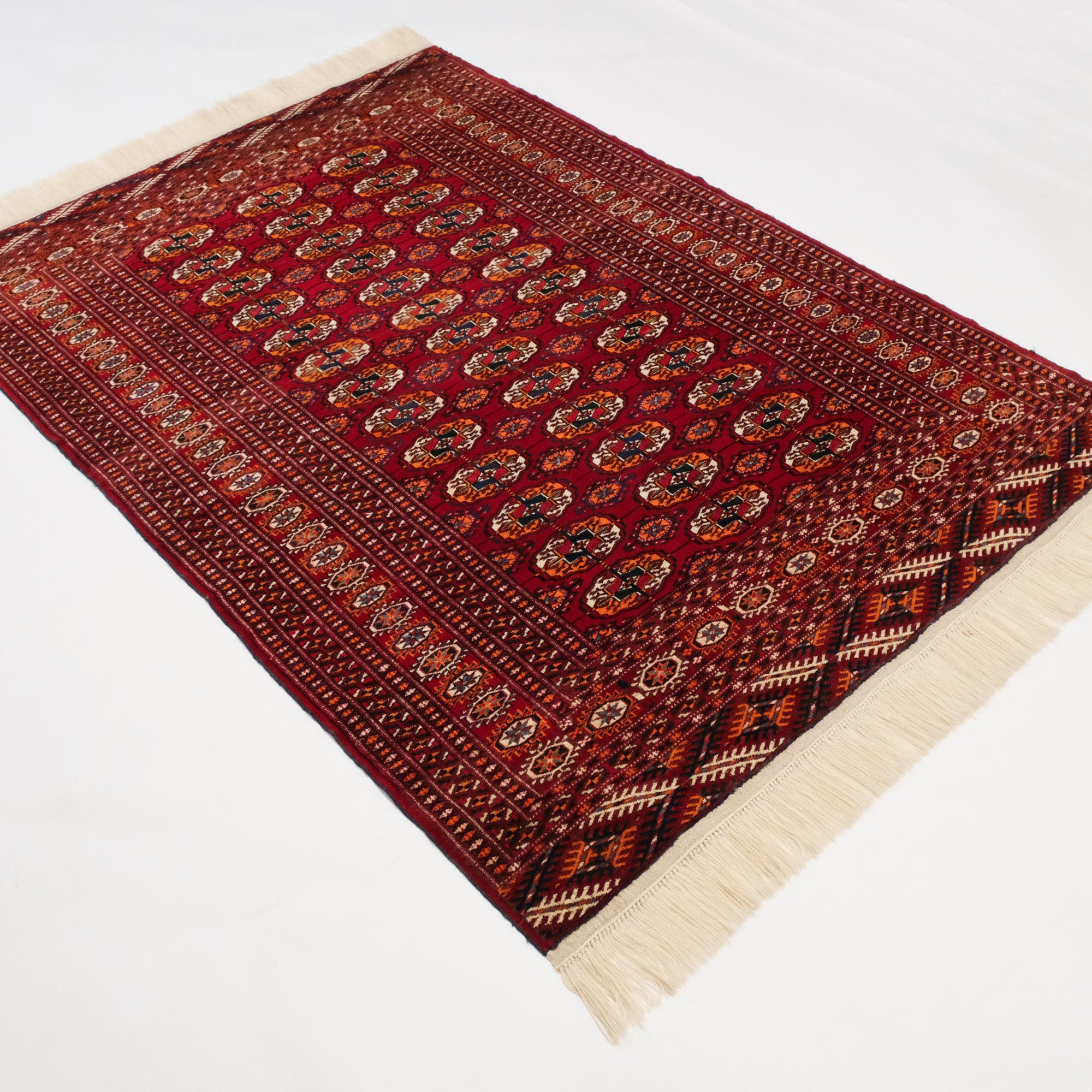
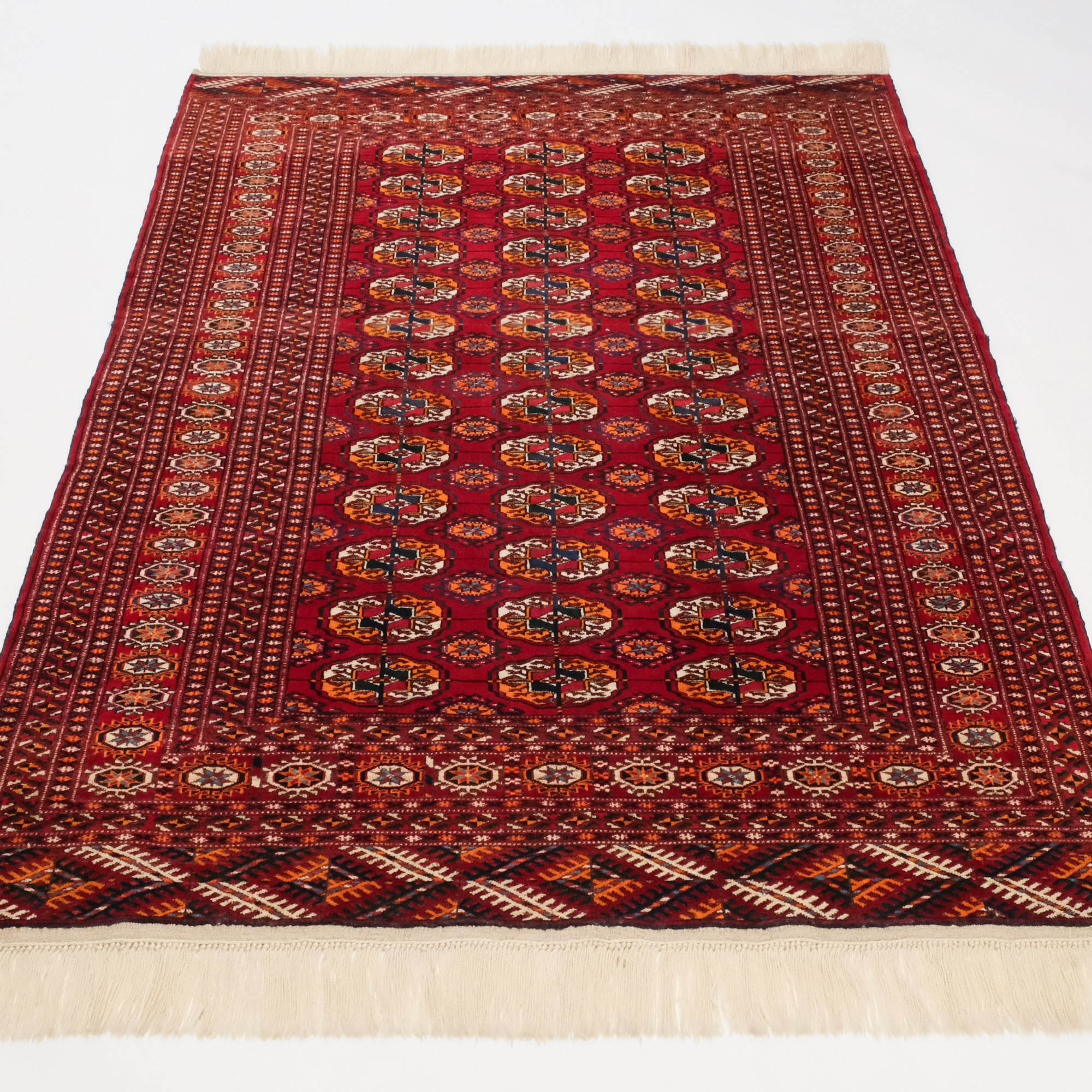
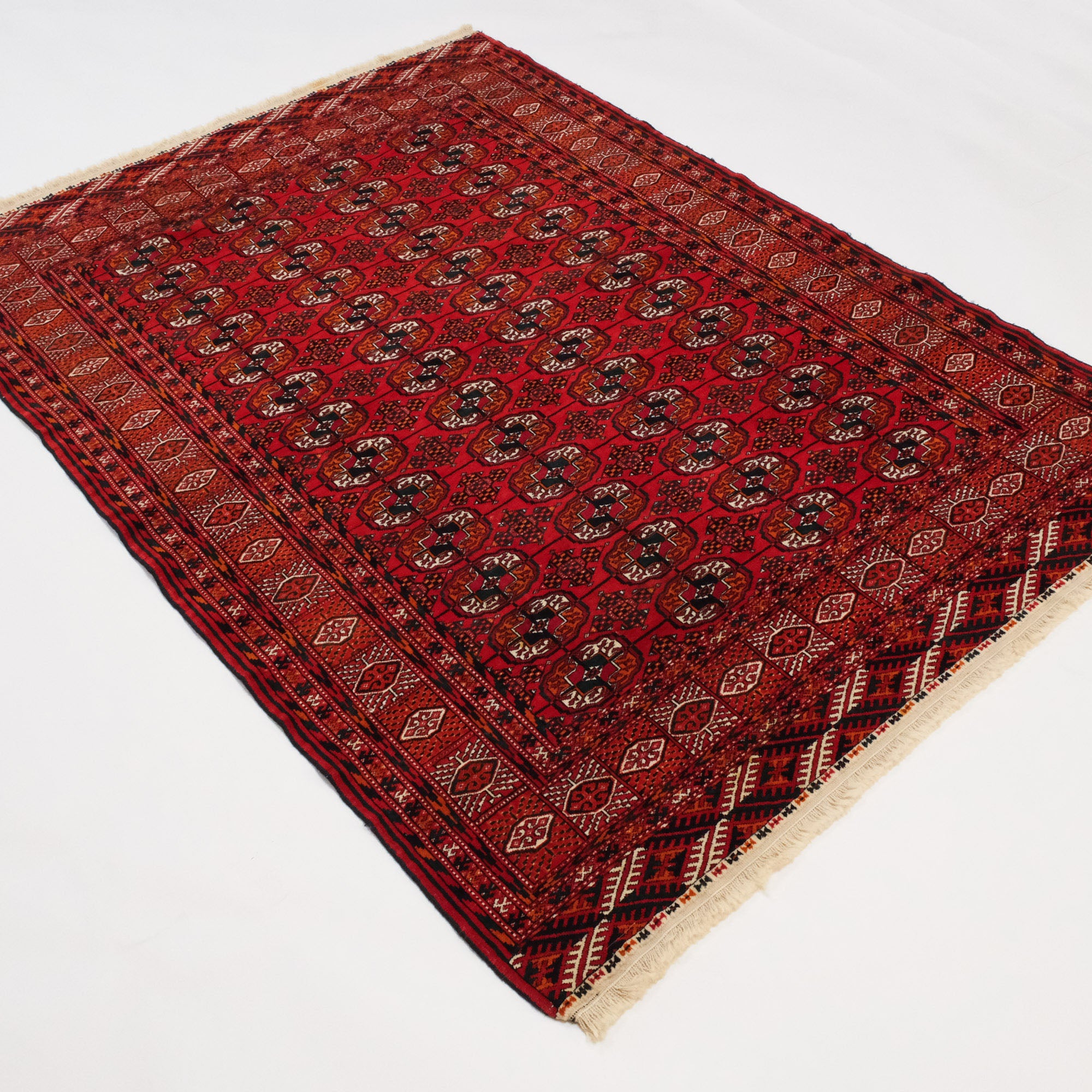
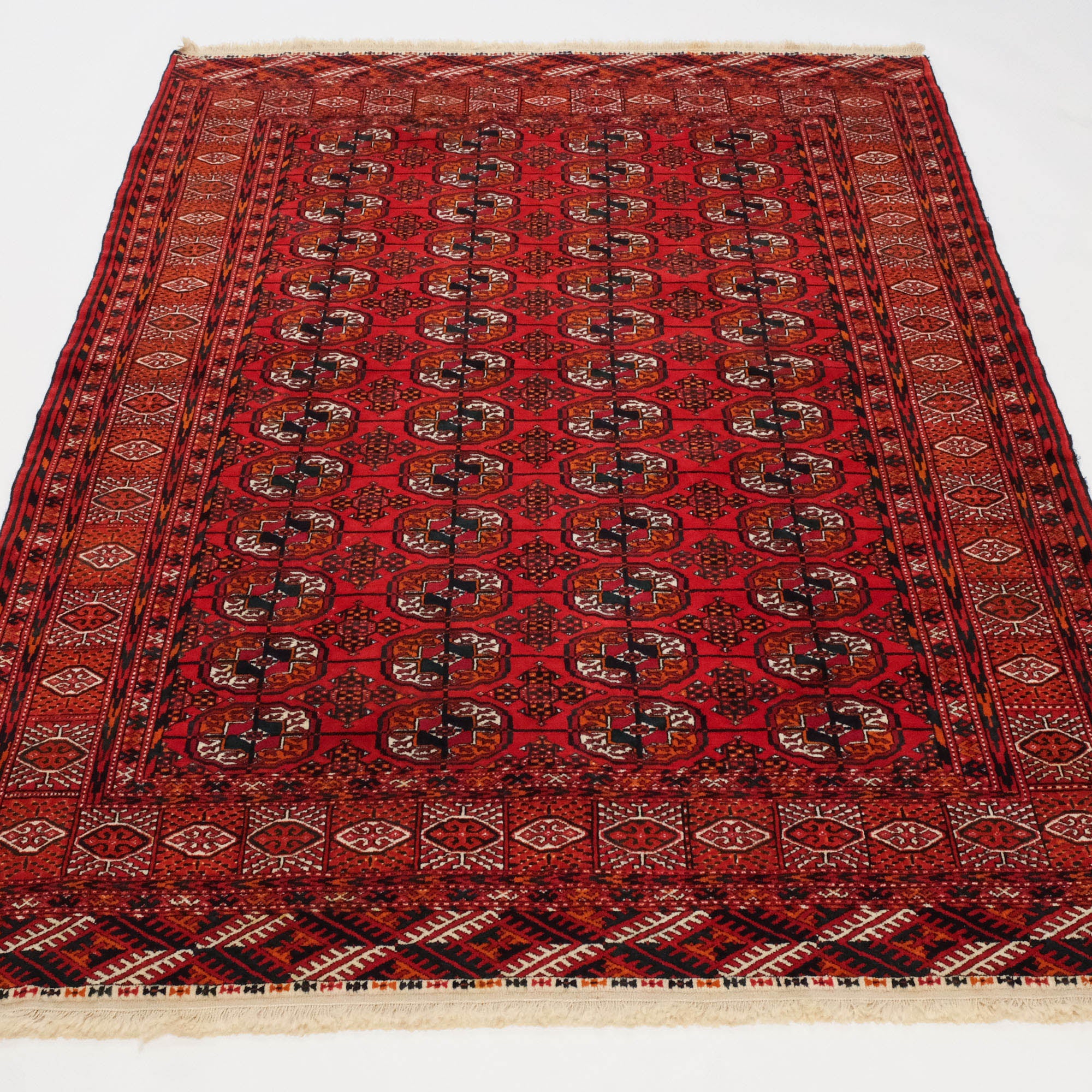
A Turkmen rug follows the weaving tradition of Turkmen tribal groups across Central Asia, characterized by deep red grounds and the repeating octagonal gul medallion, a motif that traditionally identifies the specific tribe that wove the piece.
Turkmen weaving is the original tribal source tradition behind the broader Afghan-design pattern family, and understanding that tribal identity function of the gul motif adds real depth to what might otherwise look like simple repetition.
Tribal Identity Woven Into Pattern
Turkmen weaving is organized around distinct tribal groups, Tekke, Yomut, Salor and others, each historically associated with a specific gul medallion design that functioned almost like a heraldic mark, identifying the weaver's tribal origin directly within the rug's pattern structure.
Deep Red Grounds and Wool Construction
Traditional Turkmen rugs are hand-knotted in wool, typically on a deep red or burgundy ground achieved through natural madder-root dyeing in historical pieces, with the gul motif repeated in a dense, structured grid across the field.
Why Choose a Turkmen Rug from Halicizade
We treat Turkmen weaving as the tribal source tradition behind our broader Afghan-design pattern family, honoring the gul motif's original identity-marking function rather than treating it as purely decorative repetition.
Styling a Turkmen Rug
This pattern's deep, structured character suits traditional and heritage-focused rooms particularly well.
- Living rooms, studies and dining rooms: the pattern's traditional formality suits these spaces well.
- Pair with simple, solid furniture, letting the dense tribal pattern provide the room's visual interest.
- A strong choice for buyers specifically interested in Central Asian tribal weaving heritage.
- Works well as a grounding, textural anchor in an otherwise contemporary, minimal room.
Turkmen vs. Afghan-Design Rugs
| Turkmen Rug | Afghan-Design Rug | |
|---|---|---|
| Relationship | Original tribal source tradition | Draws on and reinterprets Turkmen tradition |
| Gul motif meaning | Tribe-specific identity marker | Adapted decorative repeat |
| Typical palette | Deep red to burgundy, tribe-dependent | Deep red, burgundy |
Care & Maintenance
Standard wool care applies, regular vacuuming, prompt spill treatment, and professional cleaning every 12-18 months, given this tradition's typically dense wool pile construction.
Frequently Asked Questions
What is a Turkmen rug?
A rug following the weaving tradition of Turkmen tribal groups across Central Asia, characterized by deep red grounds and the repeating gul medallion motif.
What does the gul motif represent?
Traditionally, the gul identifies the specific Turkmen tribe that wove the rug, functioning almost like a heraldic mark within the pattern.
What is the difference between Turkmen and Afghan-design rugs?
Turkmen is the original tribal source tradition; Afghan-design rugs draw on and reinterpret that tradition's motifs and palette.
What colors are typical of Turkmen rugs?
Deep red to burgundy grounds are most typical, historically achieved through natural madder-root dyeing.
Are Turkmen rugs hand-knotted?
Traditional Turkmen rugs are hand-knotted in wool; Halicizade's pieces drawing on this tradition may vary in construction, check the specific listing.
Which Turkmen tribes are associated with specific gul designs?
Groups including the Tekke, Yomut and Salor each historically maintained their own characteristic gul medallion design.