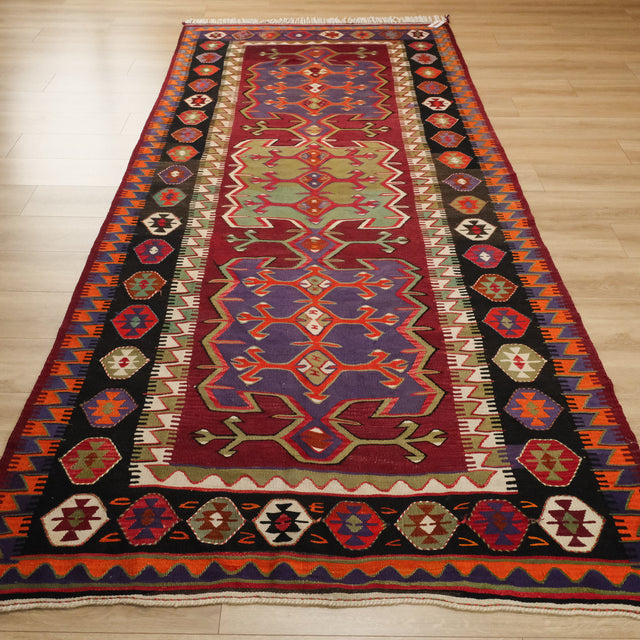
Arısama, in Niğde: navy wool, the yarn spun on a kirmen
 119×221 cm



Rugs & Kilims
Find Your Rug
For those who already know what they are looking for — Halıcızade's most visited collections.
Arısama, in Niğde: navy wool, the yarn spun on a kirmen
119×221 cm
Fifty years old and never walked on, from Konya Işıklar
 158×263 cm
Out of the chest unfaded: Taşpınar, and wool even in the warp
 154×253 cm
One of a kind
from
70.000 TL
≈ 18.000 TL/m²
Red to green across five colors, luster straight from the fleece
 80×128 cm
One of a kind
from
37.000 TL
≈ 36.000 TL/m²
Oushak without the knots: a flat wool kilim, 119 × 188 cm
 119×188 cm
Bahçecik village wool, 100 × 180 cm and no pile in it
 100×180 cm
Seven colors under a meter wide, with mink to steady them
 84×126 cm
Four colors, and months of loom time to place them
 121×185 cm
One of a kind
from
81.000 TL
≈ 36.000 TL/m²
Taşpınar drawing, wool over wool, with abrash across it
 183×272 cm
The Tekke repeat on burgundy, cream and yellow at even spacing
 133×187 cm
Turkmen tent drawing, closely knotted, cream and black on burgundy
 131×184 cm
Spun on a kirmen spindle, colored out of plant roots
 162×252 cm
Kars Sevan in wool: red leads, and the warp never shows
 184×316 cm
Erzurum fleece, a brown field, a border pulled back to slate
 206×283 cm
Silk in the motifs takes the light, Erzurum wool below
 179×260 cm
Beaten hard in the Bijar manner: burgundy on a floral field
 201×247 cm
Cicim from Antalya: the wool figures stand above the ground
 163×300 cm
Wool flatweave from Akören, just short of four meters
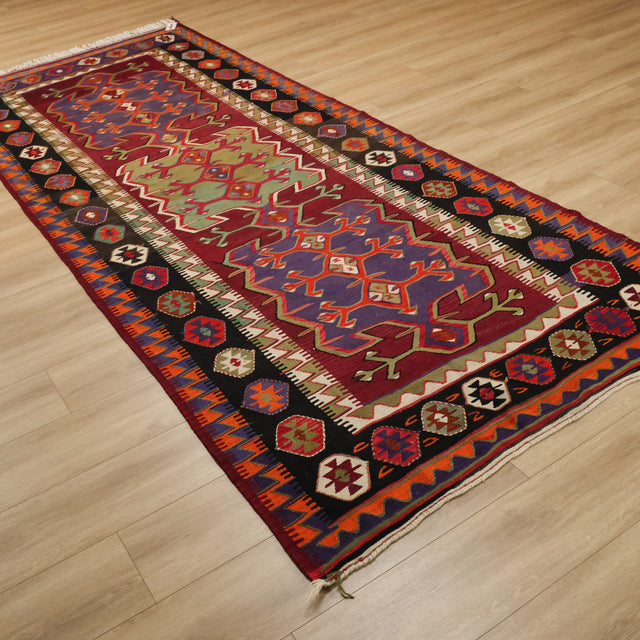 158×393 cm
Sivas Zara drawing running lengthwise, 88 × 155 cm
 88×155 cm
One of a kind
from
29.000 TL
≈ 21.000 TL/m²
Root-dyed wool, a village kilim from the Konya plain
 91×190 cm
Reversible wool flatweave, from eighty centimeters to two meters
 120×170 cm
from
36.500 TL
≈ 33.000 TL/m²
Bubble Trouble on navy: a wool kilim with no pile at all
 120×170 cm
One of a kind
from
64.500 TL
≈ 32.000 TL/m²
Bought once already: a cream Kayseri, wool over cotton
 198×288 cm
Turkmen and Afghan motifs in one kilim, orange over cream
 101×154 cm
A wool rug is one whose pile is spun from sheep's fleece, woven either by hand on a loom or on a power loom, and colored with natural or chemical dyes. Wool insulates, springs back after a chair has stood on it, holds dye deeply, and is the fiber Anatolian weaving has used since the beginning.
Wool is the default answer for a floor, and has been for so long that the interesting question is not whether to buy wool but which wool, in which construction, in which color. This page covers what the fiber does, the types in this collection, how wool compares with the alternatives, and what a wool rug asks of you once it is down.
Four properties account for most of it. Wool is a poor conductor of heat, so a wool rug keeps a floor warmer than a bare one and takes the chill out of a room in winter. It is elastic, so the crushed circle left by a table leg lifts again over a few days. It takes up liquid quickly, which is an argument for blotting a spill the moment it happens rather than fetching a cloth. And it holds color in a way synthetics do not, so the natural tones of an undyed fleece and the deep tones of a dyed one both stay convincing for decades.
Not all fleece is equal. The first clip from a young animal, known in Turkish as yağlı yapığı or greasy fleece, is the finest grade: brighter, softer, still carrying its lanolin. Highland fleece from animals wintered at altitude has a longer, springier staple than lowland wool and is what makes a village rug outlast a finer one. Not every rug in this collection is wool throughout, either — in some pieces wool is the pile and cotton is the foundation, and in others wool carries only part of the pattern.
It began as household work. In a village economy with nothing coming in from outside, a family sheared its own sheep, boiled plant roots to make dye, spun the fleece into yarn and knotted it into a rug over a winter. The Pazyryk rug, cut from a frozen Scythian tomb in the Altai and now in the Hermitage, is roughly two and a half thousand years old and is wool. From it to the present, wool has been the first choice in rug making.
What has changed is scale. Industrial husbandry shears thousands of animals at once, and chemical dyes have largely displaced the madder and indigo that a village dye pot produced. Wool itself did not go anywhere: it is still spun for hand looms and still fed to power looms, and it is still chosen for the same reasons it was chosen in the Altai. Read natural against synthetic dyes for how to tell one dye from the other.
Wool takes every design tradition the house sells, which is why this collection is the broadest one on the site.
Construction splits the same field again. Hand-knotted wool rugs are tied knot by knot and take months. Machine-woven wool rugs run the same fiber through a power loom, which buys standard sizes and a lower price. Flat-woven wool kilims have no pile and go on walls and furniture as readily as on floors, and wool prayer rugs are woven small with a directional niche.
| Fiber | Underfoot | Wear | Best for |
|---|---|---|---|
| Wool | Warm, springy, dense | Decades in domestic use; recovers from crushing | Living rooms, bedrooms, anywhere used daily and kept long |
| Cotton | Cool, flat, light | Good, and many pieces are washable | Summer, kitchens, children's rooms, layering |
| Silk | Cool, slick, reflective | Fine but not for traffic | Formal rooms, wall pieces, fine drawing |
| Viscose | Soft, high sheen | Crushes and marks with water | Low-traffic rooms where the sheen is the point |
| Acrylic | Light, bright, soft | Shorter life; flattens under traffic | Children's rooms, first flats, short-term solutions |
The comparison people actually make is wool against acrylic. Wool is the long purchase: natural, warm, resilient under a chair leg, and reckoned in decades. Acrylic is cheaper, lighter and available in brighter color, and it suits a room whose use will change in three years. A busy living room is a case for wool; a nursery that will be redecorated is a case for acrylic. Compare cotton rugs, silk rugs and viscose rugs as well.
Wool takes dye more deeply than any other rug fiber, which is why the color range here runs from undyed cream through to saturated indigo. The pale end — white, cream, gray, silver — opens a room up and shows a floor plan. The warm middle — brown, mink, copper, terra — settles one. At the saturated end, burgundy and navy add depth to a formal room, while red, yellow and orange raise the temperature of a plain one. Black and anthracite read as modern; blue, turquoise and green read as calm.
Size follows the room rather than the rug. A large wool rug in an open living room gives the furniture something to sit on and holds the plan together. A mid-size piece suits a sitting room or a bedroom, with enough floor left around it to move. Small formats work beside a bed or under a low table. Away from the rectangle, a round rug softens the geometry of a squared-off room and a square rug reinforces it.
Read the wool rug guide and the handwoven wool rug guide before committing to a large piece.
A new wool rug sheds. Short fibers left in the pile from shearing work their way to the surface for the first weeks and come away with each vacuuming, and the shedding tapers off; a well-made rug sheds little, a poorly spun one keeps going. See why a new rug sheds.
For cleaning, vacuum regularly with the flat head rather than the beater bar, working in one direction with the pile. Between vacuumings, a cloth wrung out in mild soapy water and drawn in the same direction lifts what the vacuum leaves. On a spill, lift the excess with a white towel without pressing it in, flush from the back of the rug with warm water, then wipe the face with mild soapy water and a cloth, again without pressing. If the mark stays, hand the rug to a washer who works with wool. Frequent washing shortens a rug's life and the wrong chemistry will damage its color, so wash it when it needs washing and not on a schedule. Any detergent used should be pH-neutral and made for wool, and the water should be warm rather than hot. Read how a rug is washed.
Two other things are worth knowing. A wool pile that has gone dull with age can be sheared level again by a specialist, which evens the surface and brings the color back up. And wool is food for moths: the answer is not a smell in a cupboard but movement and cleaning, since moths lay in undisturbed pile under furniture and in rolled rugs left for years. Vacuum under the furniture, air a stored rug, and use a moth deterrent while it is away.
The pile is sheep's fleece, spun into yarn and either knotted by hand or woven on a power loom. The foundation may be wool or cotton. Some rugs are wool throughout, and in others wool carries only part of the pattern.
Wool conducts heat poorly, so a wool rug keeps the floor beneath it warmer than bare boards or tile and takes the chill out of a room in winter. That insulating behavior is a property of the fiber rather than of any treatment.
Short fibers left in the pile after shearing surface for the first few weeks and come away with vacuuming, after which shedding tapers off. A well-spun wool rug sheds little; a poorly spun one keeps shedding for much longer.
Moths lay in undisturbed pile, so movement is the real defense. Vacuum under furniture, air and unroll a stored rug rather than leaving it for years, and keep a moth deterrent with any rug that is put away.
Use warm water, never hot, with a pH-neutral detergent made for wool. Lift stains with a white towel without pressing, flush from the back, then wipe the face gently. Frequent washing shortens the life of the rug.
Long exposure to direct sunlight yellows wool and fades dye at the same time. Keep the rug out of a full south window, rotate it twice a year so the light falls differently, and dry it out of the sun after any wash.
Wool is natural, warm, resilient underfoot and reckoned in decades, which suits a living room in daily use. Acrylic is cheaper, lighter and brighter in color, which suits a child's room or any floor whose use will change soon.
Halıcızade Halı Kilim has worked in Anatolian wool from Ankara since 2004, and states the fiber content of every rug it lists.
Last updated: 10 September 2026
Related collections: hand-knotted rugs · Sivas rugs · Hereke rugs · bamboo rugs · Turkish rugs · Urkum Series · Afghan rugs