
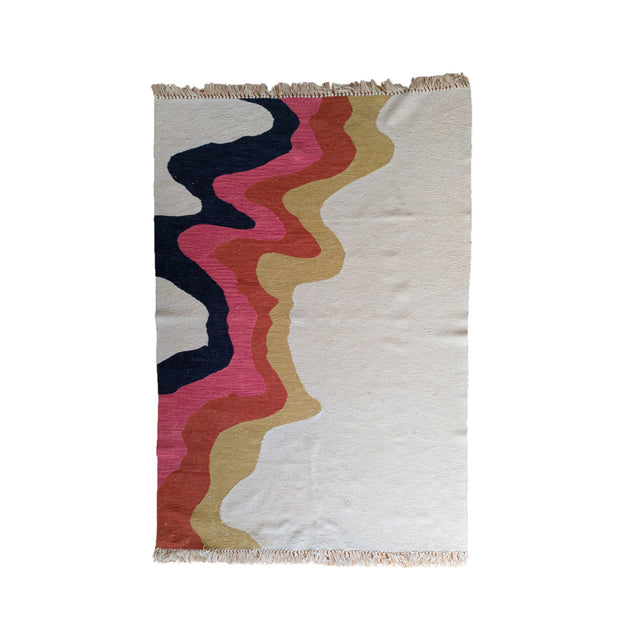
Pink Divison: color blocks meeting on a line, no pile
 200×300 cm



Rugs & Kilims
Find Your Rug
For those who already know what they are looking for — Halıcızade's most visited collections.
Pink Divison: color blocks meeting on a line, no pile
200×300 cm
Wool kilim, no pile at all, woven by women across Türkiye
 5×6 cm
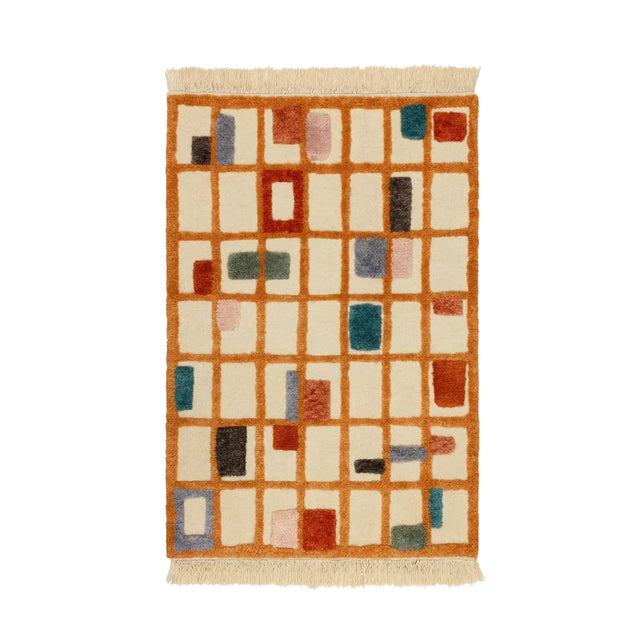
A tulu pile of uneven height, color set in blocks
 4×5 cm
One of a kind
from
80.100 TL
≈ 40.050.000 TL/m²
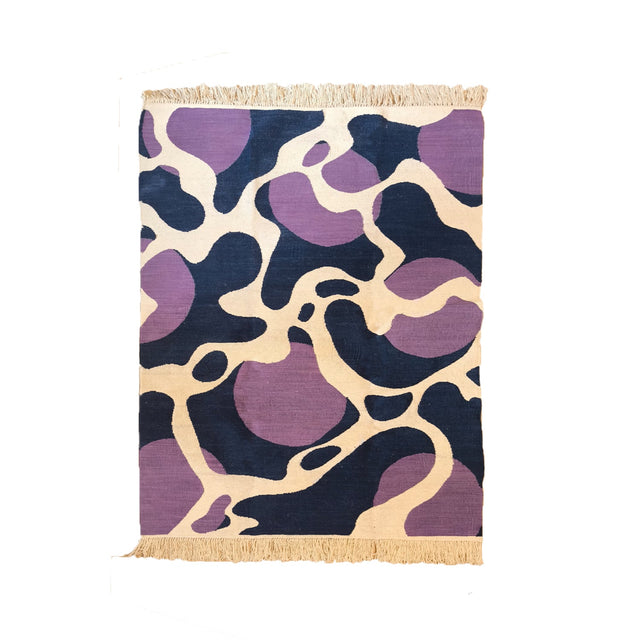
Purple is not a kilim color, and this one is purple
 4×5 cm
One of a kind
from
64.500 TL
≈ 32.250.000 TL/m²
Root-dyed on home looms in Türkiye, no two alike
 5×6 cm
Terra Potta in blocks and split fields, dyed from plants
 160×210 cm
One of a kind
from
105.000 TL
≈ 31.000 TL/m²
Named for the Roman wine god, fringed down its long sides
 120×170 cm
Reversible wool flatweave, from eighty centimeters to two meters
 120×170 cm
from
36.500 TL
≈ 33.000 TL/m²
Bubble Trouble on navy: a wool kilim with no pile at all
 120×170 cm
One of a kind
from
64.500 TL
≈ 32.000 TL/m²
Studio Potato is an independent Istanbul studio, founded by two women, whose handwoven wool and cotton kilims are carried by Halıcızade. Every pattern is drawn for the studio alone and woven by artisan women across Türkiye in madder-dyed wool, in short runs — flat-woven floor pieces, wall hangings, cushion covers and table pieces.
This page covers where the studio came from, how its kilims are built, what the named designs are, and which sizes they are woven in. It is a small, fast-turning collection: pieces are made in short runs, and a design that sells out in one size may not come back in it.
Two founders, a drawing board in Istanbul, and weaving contracted out to women across Türkiye.
The studio was set up around a straightforward observation: Anatolian kilim weaving was being displaced by machine production, and the craft was thinning out with it. Rather than reproduce old patterns, the studio draws new ones and has them woven by hand in the old way — which keeps looms working and puts the weavers on named, paid commissions. Each design belongs to the studio and is not woven for anyone else.
Weft-faced flat weave: no pile, no knots, the pattern made by the weft itself.
The warp runs the length of the loom under tension and stays hidden. The weft crosses it and is beaten down hard enough to cover it completely, so the surface you see is weft and nothing else. That is what makes a kilim thin, reversible, light enough to hang and quick enough to weave in weeks rather than months. It is also why a kilim reads as flat color and hard edges where a knotted rug can shade and curve. More on the structure sits with flat-woven rugs and kilims.
The studio runs two lines, and they are not interchangeable.
| Handwoven line | Machine-woven line | |
|---|---|---|
| Fiber | Wool | Cotton |
| Color | Madder-and-indigo dyeing, in lots | Piece-dyed, uniform |
| Made on | Purpose-built hand looms, one piece at a time | Power loom |
| Weight and feel | Denser, warmer, some tonal drift across the field | Thin, light, flat color |
| Suits | Bedrooms, children's rooms, sitting rooms | Kitchens, balconies, covered terraces, anywhere that gets lifted and shaken out |
Each pattern is drawn and named on its own, and most run across the full size range.
Block Party, Terra Potta, Flow, Liber, Pink Division, Inner Reflection, Drop and Bubble Trouble are compositions rather than motifs — blocks, bands, dropped circles and split fields, in indigo and navy, madder red, terracotta, plum and undyed natural wool. Sizes run as follows.
The studio makes as much for the wall and the table as for the floor.
Wall pieces are woven small and hung as textiles rather than laid down. Cushion covers come with pads and pull off for washing. Placemats and coasters are woven from the same wool in the same palette, which is the cheapest way into the studio's work and the way most people meet it. See the rest of the category in rug and kilim accessories.
A kilim asks less than a pile rug and forgives less.
Shake it out or vacuum it with the beater bar off — a beater bar catches a flat weave and pulls the weft. Rotate it twice a year, and put a thin non-slip pad under it on a hard floor, since a kilim with no pile to weigh it down will travel. Blot spills rather than rubbing them. The wool line goes to a professional rug washer, never into a machine.
Two women who founded the studio in Istanbul to put contemporary drawing back onto a traditional loom. The studio designs every pattern itself and has the weaving done by artisan women in workshops across Türkiye.
No. Studio Potato is an independent label; Halıcızade carries its work alongside its own production. The designs, the dyeing and the weaving are the studio's, not the house's.
A tülü is an Anatolian long-pile weaving, shaggy and thick, made for warmth. A kilim is flat-woven with no pile at all. Studio Potato works mainly in kilim, with some pieces in the tülü tradition.
Wool and cotton. The handwoven line is wool colored with madder-and-indigo dyes; a separate machine-woven line is cotton, which is lighter, thinner and easier to lift and shake out.
Six sizes, from an 80 x 140 cm mat (2'7" x 4'7") up to 250 x 340 cm (8'2" x 11'2"). Not every design is woven in every size, and the larger sizes are made to order more often than they are held in stock.
The studio states that the covers come off the pads and go in a machine. The kilims themselves do not: send those to a professional rug washer when they need more than a vacuum.
No. The smaller wall pieces are made to hang, not to take traffic. Hang one from a sleeve on a batten so the weight is spread across the top edge rather than pulling on two points.
Related collections: modern kilims · wool rugs · Caché Istanbul


