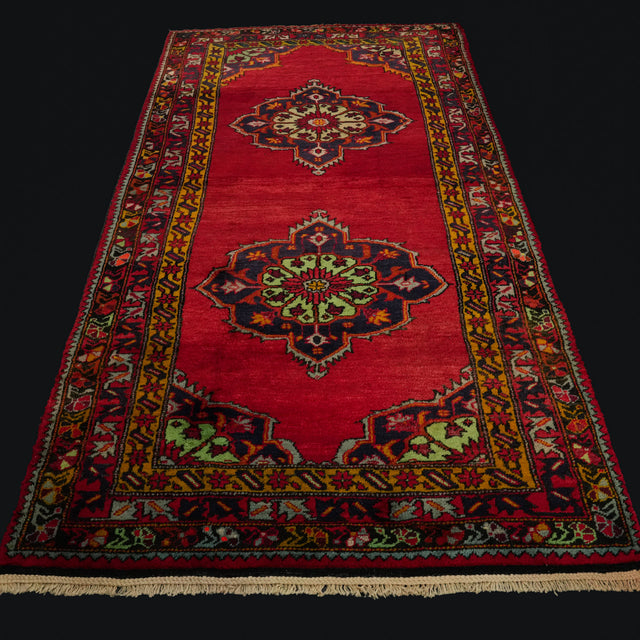
Ortada sekizgen bir madalyon, iki yanında iki küçüğü
 200×300 cm



Rugs & Kilims
Find Your Rug
For those who already know what they are looking for — Halıcızade's most visited collections.
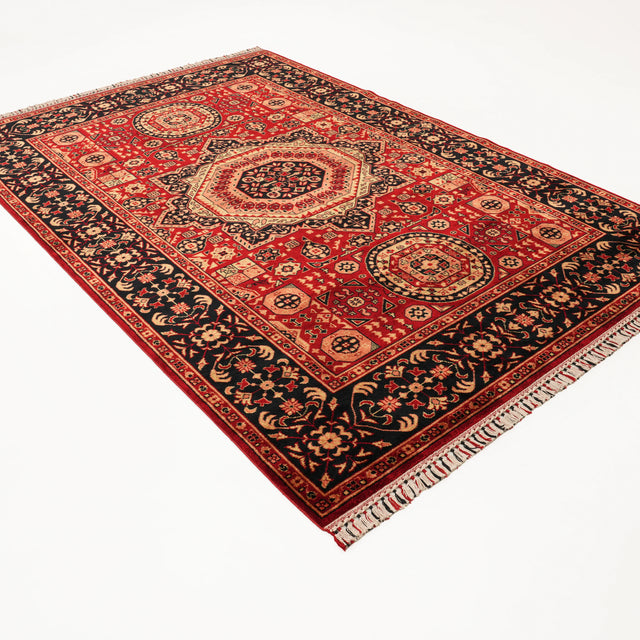
Ortada sekizgen bir madalyon, iki yanında iki küçüğü
200×300 cm
Deseni müze arşivlerindeki Bahtiyari halılarından
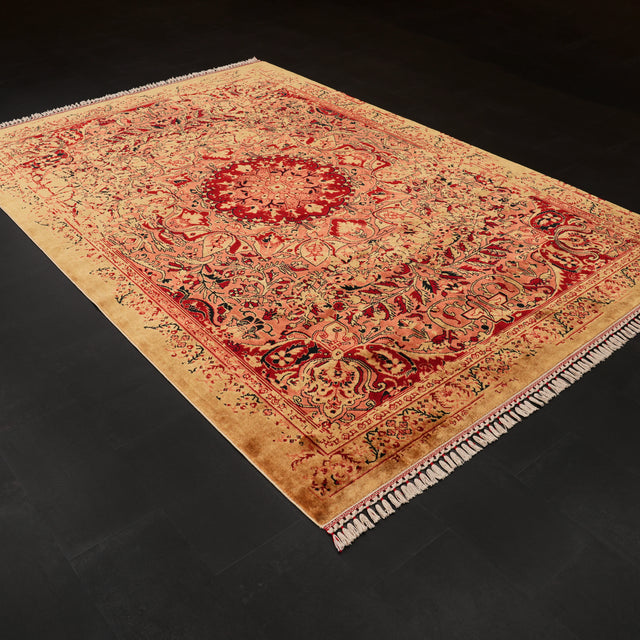 200×300 cm
Bahtiyari düzeni, kırmızı ve bordo merkezden dağılıyor
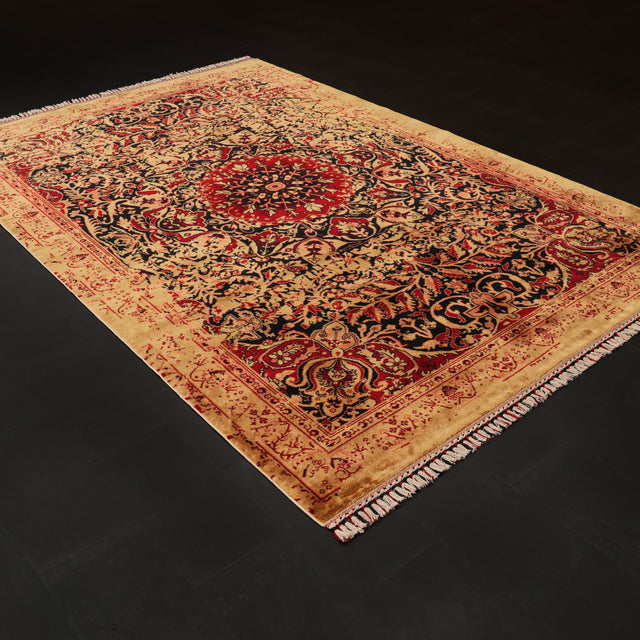 200×300 cm
Tencel® ve pamuk aynı dokumada: mat yanında parlak
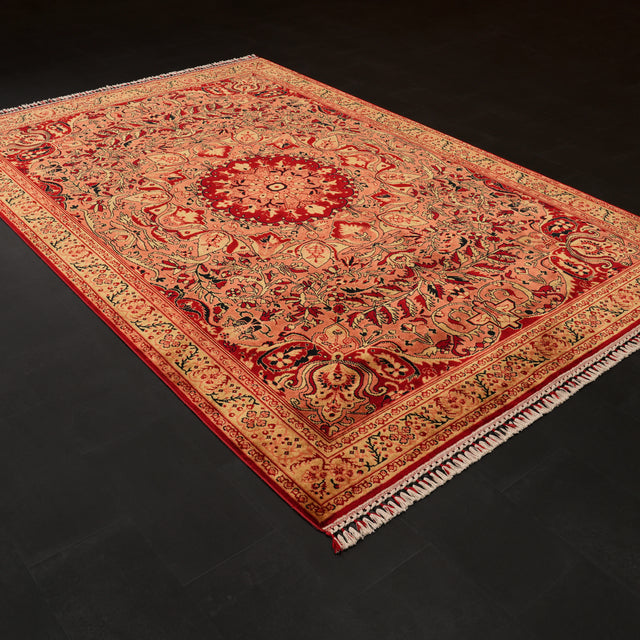 200×300 cm
A navy medallion at the center of brick red, wool on cotton
 200×300 cm
A straight-sided medallion on blue, 174 × 250 cm
 174×250 cm
One of a kind
from
77.000 TL
≈ 17.500 TL/m²
Oushak red gone to brick, wool throughout, 130 years old
 118×164 cm
Flowering branches around a medallion, terracotta in Tencel®
 240×340 cm
Silver inside an ivory star, terracotta all around it
 200×290 cm
Madder root in the wool, one Oushak medallion at the center
 177×238 cm
Mamluk star geometry in cream, silver and mink underneath
 200×290 cm
Bakhtiari medallion faint as a watermark, Tencel® on cream
 200×300 cm
Mamluk geometry out of Cairo: deep blue Tencel® on cotton
 200×290 cm
A Mamluk star on green, Tencel® over cotton and no wool
 200×290 cm
One medallion on burgundy, bamboo viscose at a hundred reeds
 200×290 cm
Sand ground under a segmented star, wool on a Kütahya loom
 200×300 cm
Bahtiyari, or peace with one's fortune: navy wool, orange center
 202×303 cm
A museum-archive Bakhtiari, rewoven in Kütahya wool
 200×300 cm
All wool on an Indian loom, a Mamluk star at the center
 200×300 cm
Red quieted by a cream medallion, silk and viscose in the pile
 91×152 cm
Medallion at the center, burgundy at the edge, silk throughout
 60×93 cm
A blue medallion out of China, and silk doing the shine
 88×310 cm
Madder red gone to brick in seven decades, spun on a kirmen
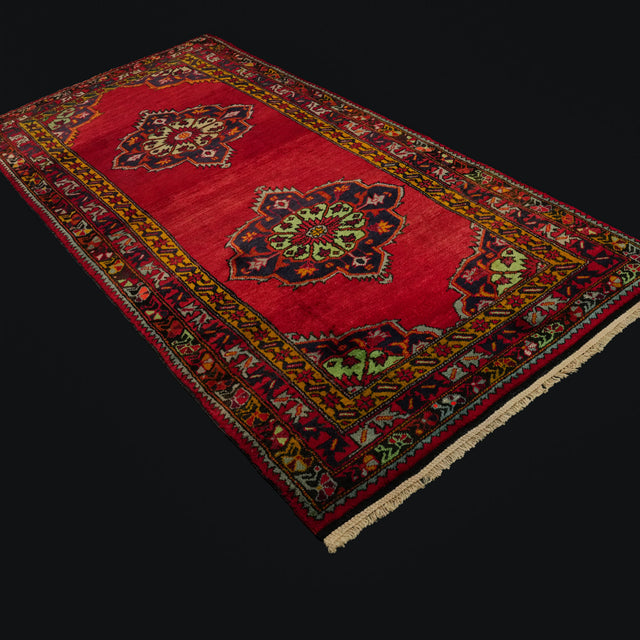 134×242 cm
One of a kind
from
112.000 TL
≈ 35.000 TL/m²
Pastel blue inside the red, a tree of life in the frame
 200×290 cm
A medallion rug is a rug built around a single ornament at the center of the field — the göbek in Turkish — usually answered by quarter-medallions in the corners, an open field between them, and a border that closes the composition. Anatolian weavers have used the layout since the fourteenth century, in hand-knotted wool and silk and, later, on the loom.
The Turkish name for this collection is göbekli halı, a rug with a göbek. Weavers also call the center ornament a sandık, a chest, when it is drawn as a stepped rectangle rather than a lozenge. What follows is how the layout is put together, which Anatolian districts draw a medallion and how each draws it differently, how the three constructions on this page differ, and where a medallion rug can be laid without covering the thing it was woven for.
Four parts in a fixed relationship, and the relationship is the design. The medallion sits at the exact center of the field, usually a lozenge, a stepped octagon or a rounded cartouche with pendants hanging from its top and bottom points. The corner spandrels — köşebent — are a quarter or an eighth of that same medallion, cut by the corners of the field, so that the eye completes the shape it cannot see. The field is the ground the medallion floats on, plain or scattered with small motifs. The border frames all of it, usually a wide main band with narrow guard stripes on either side.
The proportions are the tell. On a well-drawn rug the corner pieces read as fragments of the center ornament rather than as separate ornaments, and the distance from the edge of the medallion to the inner guard stripe is the same on all four sides. Weavers set that spacing at the start, on the warp, before the first row of knots; it cannot be corrected later without cutting the rug.
The layout is shared. The drawing is not.
Two pattern families on this page come from outside Anatolia and are worth naming for what they are. Mamluk drawing, from fifteenth-century Cairo, builds a star at the center and radiates octagons and papyrus fans outward from it. Persian medallion drawing is curvilinear where the Anatolian version is angular, because the asymmetrical Senneh knot loops around one warp thread instead of two.
Three constructions, counted rather than described. Of the 56 medallion rugs Halıcızade currently lists, 31 are hand-knotted, 23 are loom-woven and 2 are machine-woven. That split decides more than price: it decides what sizes exist at all.
Most of the hand-knotted medallions here are single objects at a single size, the size they were when they came off the loom: 76 × 122 cm (2'6" × 4'0"), 118 × 164 cm, 167 × 241 cm, 204 × 349 cm — not one of them a catalog size, because the weaver set the warp for that rug and no other. A few workshop pieces are woven to order and do come in the standard grid. The loom-woven and machine-woven medallions are all on that grid: 130 × 190, 160 × 230, 200 × 290, 200 × 300, 250 × 350 and 300 × 400 cm, plus round sizes at 160 × 160 and 200 × 200 cm.
The fibers follow the construction. Hand-knotted pieces here are wool, silk, silk-blend or viscose, several of them dyed with madder and indigo; the oldest is a Uşak rug of about 130 years, and there is a Konya Derbent rug of 65 to 70 years in the group. Loom-woven medallions are wool or Tencel® lyocell and cotton. The two machine-woven pieces are bamboo viscose and a silk-blend.
| Hand-knotted | Loom-woven | Machine-woven | |
|---|---|---|---|
| Pieces here | 31 | 23 | 2 |
| How it is made | Knot by knot on a vertical loom, months per rug | Structure built on the loom, fringes and finishing by hand | Power loom, pattern reproduced at scale |
| Sizes | Mostly one size per rug, irregular: 76 × 122 to 204 × 349 cm | Standard grid, 130 × 190 to 300 × 400 cm | Standard grid |
| Fibers on this page | Wool, silk, silk-blend, viscose | Wool, Tencel® lyocell, cotton | Bamboo viscose, silk-blend |
| Medallion outline | Curves possible at high knot density; slight asymmetry is normal | Even and repeatable | Exact, and identical on every copy |
| Suits | A room the rug is meant to outlast | A large floor at a lower price than knotting | Corridors, rented rooms, first apartments |
Browse hand-knotted rugs, loom-woven rugs or machine-woven rugs if construction is what you are deciding between.
In a room where the middle of the floor can be seen. Turkish houses put medallion rugs in the entry, in the hall and in the salon, and the reason is the same in all three: the layout announces a center, so it works where people arrive and stand rather than where they sit crowded around a table.
Furniture placement is not a detail here. A coffee table set squarely on the göbek removes the one thing the rug was drawn around. Two arrangements survive it. Float the seating so that the medallion shows in the gap between sofa and chairs, or push the table off-center and let the medallion sit clear on the open side. In a dining room the medallion disappears under the table by definition, which is why a repeating or all-over pattern is the better choice for that floor.
Size follows from the same logic. A medallion needs field around it to read, so the layout opens out above roughly 6 m² — 200 × 300 cm. Below about 2 m² the border and the medallion crowd each other and the field almost vanishes. Color does specific work: a blue medallion cools an entry and forgives daily dirt, a red one makes a hall a focal point, and a cream or white ground keeps a salon looking open. See entrance hall rugs and living room rugs.
Turn it over before anything else, because the back tells you the construction and the construction sets what else is worth asking.
Vacuum, and leave the deep cleaning to a washer. Run the machine in the direction of the pile with the beater bar off, and on a hand-knotted rug keep the suction low so it lifts dust instead of dragging fiber out of the knot collar. Washing a knotted rug at home is not worth attempting: the pile holds far more water than it looks capable of, the backing dries last, and a rug dried folded takes a crease that does not come out. Send it to a professional wash once or twice a year if it is in daily use, and rotate it end to end twice a year so light and traffic land on different parts of the medallion.
A medallion rug is a rug designed around one large ornament at the center of the field, usually with quarter-medallions repeated in the corners and a border framing the whole composition. In Turkish the center ornament is called the göbek, and the rug is called göbekli halı.
Göbek is the Turkish word for the central medallion of a rug. When the ornament is drawn as a stepped rectangle rather than a lozenge, weavers also call it a sandık, meaning chest. Both names describe the same position at the center of the field.
Oushak, Hereke, Kayseri, Milas, Yahyalı and Taşpınar all weave medallion layouts, each with its own drawing and palette. Oushak uses wide-set star and round medallions, Hereke the tightest curved outlines, and Yahyalı and Taşpınar bolder geometric medallions in madder red.
No. A table set on the center ornament covers the part of the rug the whole layout is built around. Float the seating so the medallion shows between the pieces, or move the table off-center. For a dining room floor, an all-over pattern is the more sensible choice.
Large enough that the field around the medallion still reads. The layout opens out above roughly 6 square meters, which is 200 by 300 cm. Below about 2 square meters the border and the medallion crowd one another and the open field almost disappears.
Both are made. Of the 56 rugs in this collection, 31 are hand-knotted, 23 are loom-woven and 2 are machine-woven. Hand-knotted pieces exist in one size each, the size they left the loom at; loom-woven and machine-woven pieces come in standard sizes.
Vacuum in the direction of the pile with the beater bar off, using low suction on hand-knotted pieces. Washing a knotted rug at home is not recommended, because the pile holds water and dries unevenly. Use a professional rug wash once or twice a year for daily-use rugs.
Related collections: Turkish rugs · Oushak rugs · hand-knotted rugs · vintage rugs
Halıcızade Halı Kilim, Ankara Çankaya. Last updated: September 6, 2026.