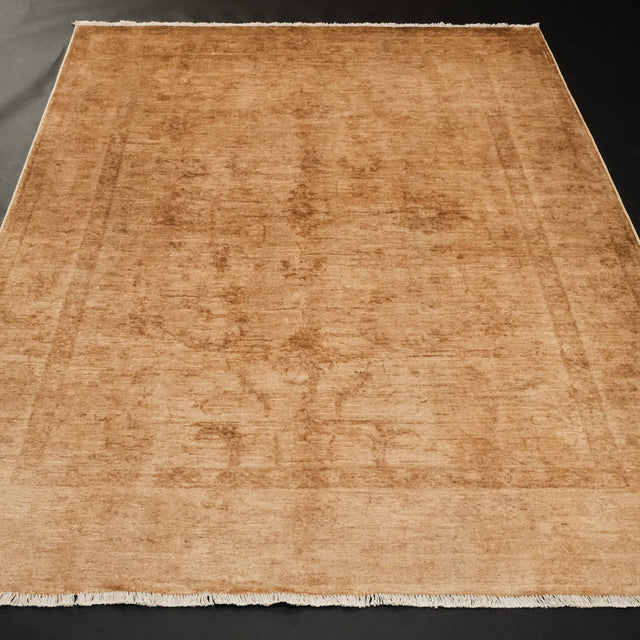
Cotton right through, no pile, and the geometry mostly yellow
 120×180 cm



Rugs & Kilims
Find Your Rug
For those who already know what they are looking for — Halıcızade's most visited collections.
Cotton right through, no pile, and the geometry mostly yellow
120×180 cm
Yellow where Karabagh is usually black, the roses unchanged
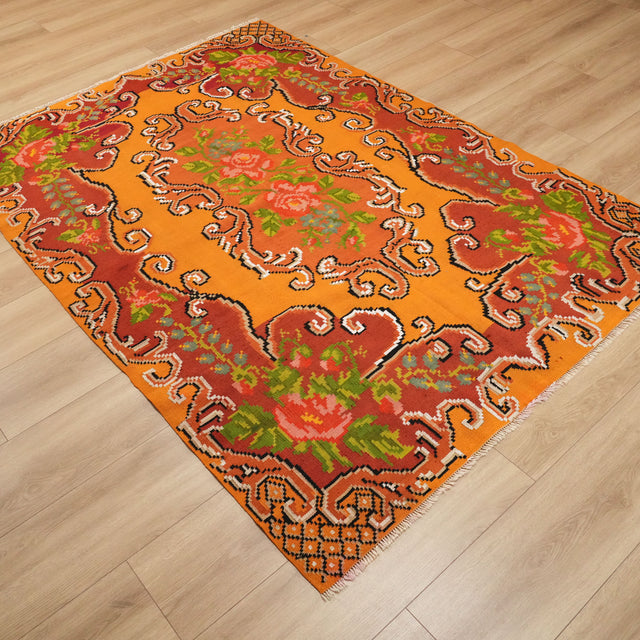 162×232 cm
Two yellows in one Oushak field, wool over a cotton warp
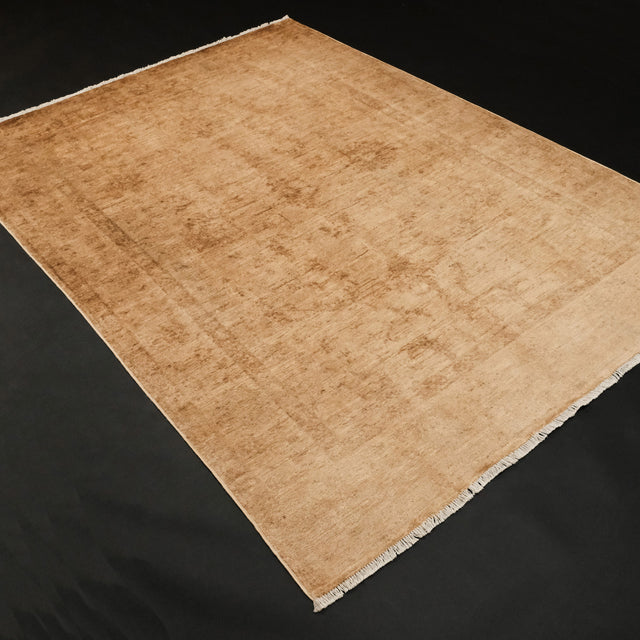 175×244 cm
One of a kind
from
108.000 TL
≈ 25.000 TL/m²
Gold laid over an older Anatolian pattern, 193 × 288 cm
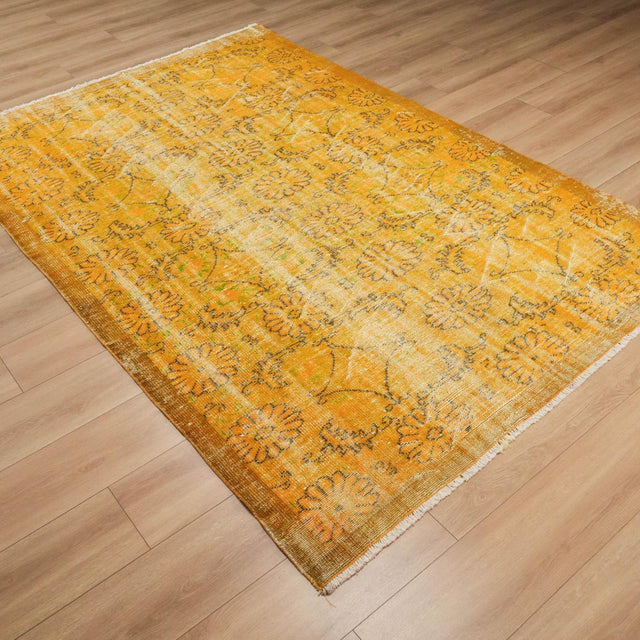 193×288 cm
Honey yellow, wool on cotton, and a south window will fade it
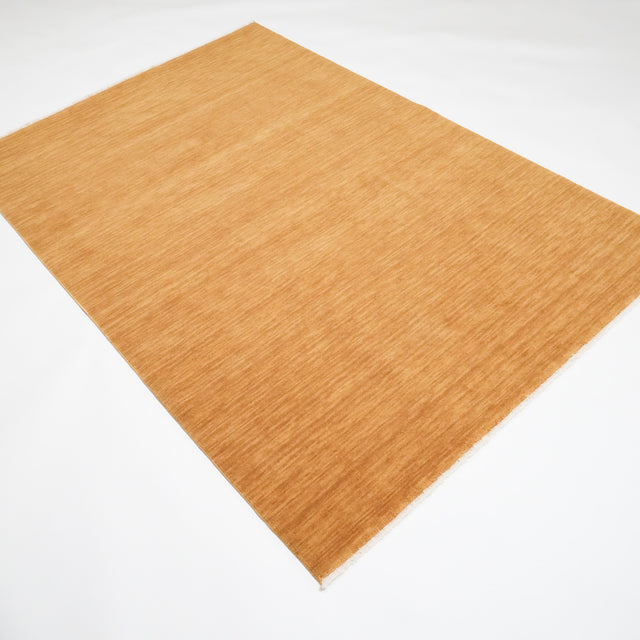 130×190 cm
Forty-nine centimeters wide, a Sivas rug on a yellow ground
 49×100 cm
Gold-yellow around a medallion, the old knotting still fine
 168×277 cm
Warm yellow with grain in the surface, 188 × 271 cm
 188×271 cm
A twice-dyed yellow that will not repeat, 148 × 260 cm
 148×260 cm
Ochre rather than lemon, 165 × 271 cm of thinned wool
 165×271 cm
An empty cream center, mustard bands, wool over cotton
 125×179 cm
One of a kind
from
45.000 TL
≈ 20.000 TL/m²
Turkmen looms, a mustard field, figures a few tones under
 176×246 cm
Zara registers running across a yellow wool ground
 124×178 cm
Two rows of medallions on mustard, knotted thin and close
 80×111 cm
Ranks of Turkmen medallions, hand-knotted in Afghan wool
 85×140 cm
Mustard and gold on wool, tied with the double knot
 202×308 cm
Green, red and blue placed by eye on yellow, wool right through
 230×330 cm
Warm yellow, round, and unwilling to share a room: all wool
 180×180 cm
İnlice, outside Konya: a prayer niche in wool over cotton
 100×161 cm
Sivas Zara bands in a yellow frame, 94 × 146 cm of wool
 94×146 cm
A yellow ground, burgundy and navy bands stacked up it
 85×301 cm
One of a kind
from
93.000 TL
≈ 36.000 TL/m²
Eight millimeters of yellow pile, 2,700 grams a square meter
 160×230 cm
A colder yellow than gold, over fine old Anatolian drawing
 154×253 cm
Blue that turns gray-green under a lamp, beige between
 166×260 cm
A yellow rug is a rug whose ground or principal motifs are dyed yellow — in Anatolian weaving, the plant yellows of weld, chamomile and onion skin, ranging from pale straw through mustard to a deep ochre gold. Most of the yellow rugs here are handwoven wool, and many are vintage pieces whose color has already softened.
Yellow is the most demanding color in a rug and the least stable one on a loom. What follows is where the color comes from, why it behaves differently from red and blue over time, what is actually in this collection, and how a yellow ground reads in a room under warm and cool light.
From three plants, mostly, and from an alum mordant. Weld — Reseda luteola, the dyer's rocket — gives the clearest and strongest yellow of the three. Chamomile gives a softer straw. Onion skin, the kitchen dye that every village had, gives a warm brownish ochre that shades toward bronze in a heavy dye lot.
None of these bind to wool on their own. The fleece is first mordanted, historically with alum, which fixes the dye into the fiber rather than leaving it sitting on the surface. That is why a yellow in a well-made old rug still has depth in it after a hundred years instead of looking like a stain. Chemical yellows arrived in the late nineteenth century and are flat by comparison — even from tip to root, with no drift down the length of the fiber.
Of the traditional dyes, yellow is the least lightfast. Put a madder red, an indigo blue and a weld yellow in the same south window and the yellow will lose depth first, by a wide margin. This is not a defect in the weaving; it is the chemistry of the dye.
It has one famous consequence. Green was never dyed as a single color in Anatolian weaving — wool was dyed blue in an indigo vat and then overdyed yellow, and the two together read as green. As the yellow goes, the green underneath resolves back toward blue. The blue-green fields in old Turkish rugs were not woven that color. They arrived at it.
Two practical consequences follow. Keep a yellow rug out of a full south window, and rotate it twice a year so that the light and the traffic land on different parts of it.
Forty-odd rugs, and the weight of them is handwoven wool. The Retro pieces are vintage rugs that have been shorn down and overdyed, which is how a mustard that saturated is arrived at; the color sits over an older pattern that shows through it. Alongside those are geometric and Karabakh-pattern kilims, shawl-pattern weaves from the Sivas and Zara districts, Pinhan and Mihman village pieces in undyed and dyed wool, and Türkmen Bukhara-pattern weaves in which yellow is an accent rather than the ground.
A smaller group is loom-woven — wool, and a few viscose pieces where the fiber's sheen lifts the yellow a step brighter than wool can. Browse the fiber families in wool rugs, the overdyed and softened pieces in vintage rugs, and the flat weaves in handwoven kilims.
The same rug is two different objects at four in the afternoon and at nine at night. Yellow is a high-value color, so it holds light rather than absorbing it, and it moves further under a change of light source than a red or a blue does.
| Band | Where it comes from in the weave | Under a warm lamp | Under north daylight | Rooms it suits |
|---|---|---|---|---|
| Pale straw | Chamomile, or a light weld dye lot | Warms toward cream; nearly disappears | Flattens and goes slightly gray | Bright rooms with strong south or west light |
| Mustard | Weld at strength, or a vintage rug overdyed | Deepens and pulls the room together | Holds its value; the safest yellow in low light | Living rooms, studies, north-facing floors |
| Ochre gold | Onion skin, or weld over a warm ground | Reads as bronze; sits close to old wood | Stays warm; can look brown against gray walls | Rooms with oak, walnut or terracotta |
| Yellow as accent | Motif and border work in a madder or indigo field | Lifts and carries the eye around the field | Recedes; the ground color leads | Any room where a yellow ground would be too much |
Its opposites, or nothing. Yellow sits against indigo, navy and charcoal without any effort — that is the pairing the weavers themselves used, because the indigo vat and the yellow dye pot stood in the same courtyard. Against the unbleached cream of an undyed wool ground it does the same work more quietly.
Against warm wood, terracotta and brass it stops being an accent and becomes part of the room's temperature, which is a legitimate choice and not a failure. What yellow does not do is share a floor with a second saturated warm color; put it next to a strong red rug and the two argue. For a small room, the square and round formats hold a yellow ground better than a long rectangle does — see round rugs.
The care is the care of the fiber, not of the color, with one addition for the light. Vacuum without the beater bar, in the direction of the pile. Rotate the rug twice a year. Blot a spill by pressing a dry cloth into it rather than rubbing, because rubbing drives the liquid down to the knot collar where it sets.
Have a wool rug in daily use professionally washed rather than treated at home, and read the care line on the individual product page — it states the method for that piece. A pale straw ground shows soil sooner than a mustard one and will want washing more often for the same amount of traffic.
Plant dyes, historically weld, chamomile and onion skin, boiled with an alum mordant that fixes the color to the wool. Each gives a different band: weld a clear lemon-gold, chamomile a softer straw, onion skin a warm brownish ochre.
Yellow is the least lightfast of the traditional dyes. Madder red and indigo blue hold their depth far longer under the same window, which is why an old rug often reads warmer and greener when it is turned over and the protected pile is exposed.
Green was not dyed as a single color. Wool was dyed with indigo and then overdyed yellow, and because the yellow is the first to go under strong light, a green that has aged for a century reads as blue with a faint warm cast.
Yellow sits against its opposites without effort: indigo and navy, charcoal, and the unbleached cream of an undyed wool ground. Against warm wood and terracotta it disappears into the room instead, which is sometimes the point.
Mustard, because it holds its value in low light. A pale straw or lemon ground goes flat and slightly gray under a north window and shows every mark on it, while a mustard ground carries evening lamplight and hides traffic.
Most of them. The collection is led by handwoven wool pieces, including vintage rugs that have been shorn and overdyed, Karabakh and geometric kilims and village weaves from Sivas and central Anatolia, with a smaller number of loom-woven wool and viscose rugs.
Related collections: wool rugs · red rugs · round rugs · 4 m² rugs