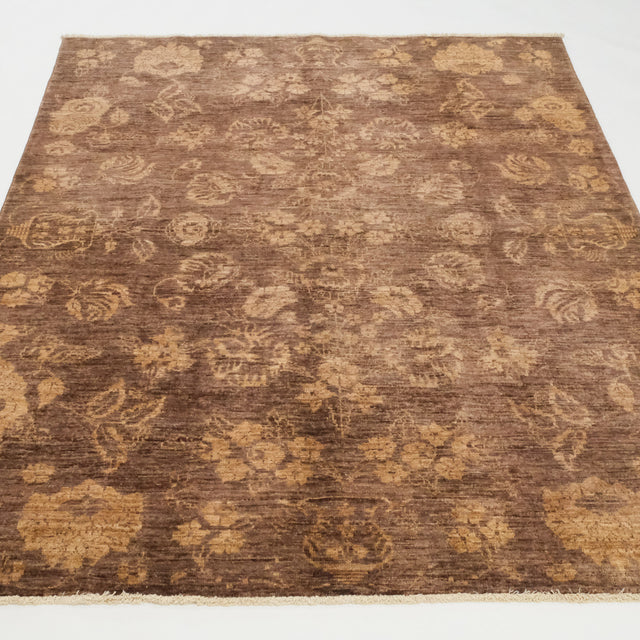
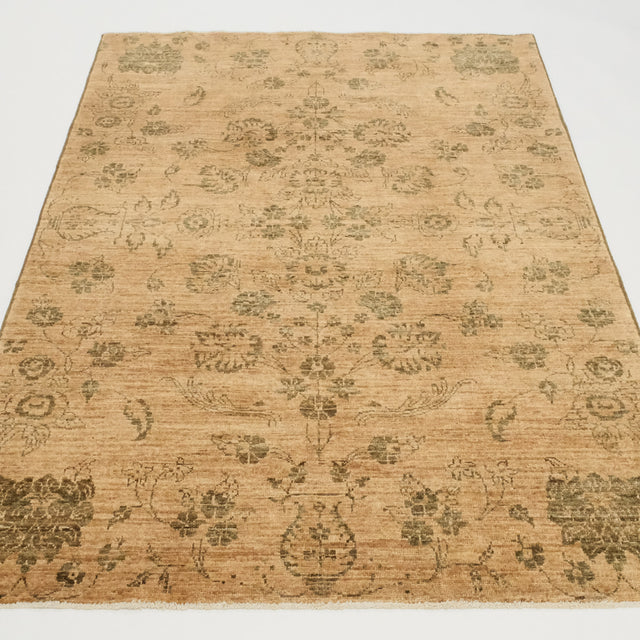
Ninety percent silk, ten percent wool, and no longer being woven
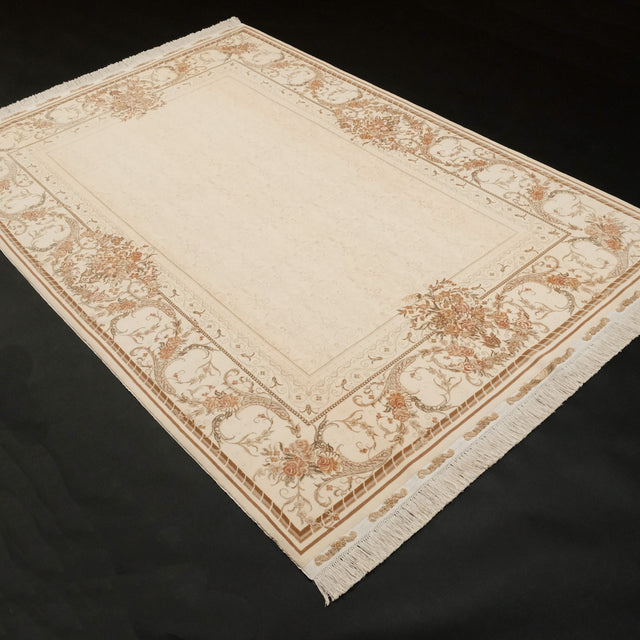 162×240 cm



Rugs & Kilims
Find Your Rug
For those who already know what they are looking for — Halıcızade's most visited collections.
Ninety percent silk, ten percent wool, and no longer being woven
162×240 cm
Fine flowers on cream: pearl in raking light, pastel from above
 157×243 cm
Black frame around a turquoise center: silk and viscose
 171×243 cm
Gold and blue over cream: viscose, knotted in China
 169×240 cm
Brown taken to a gloss, densely knotted, 146 × 190 cm
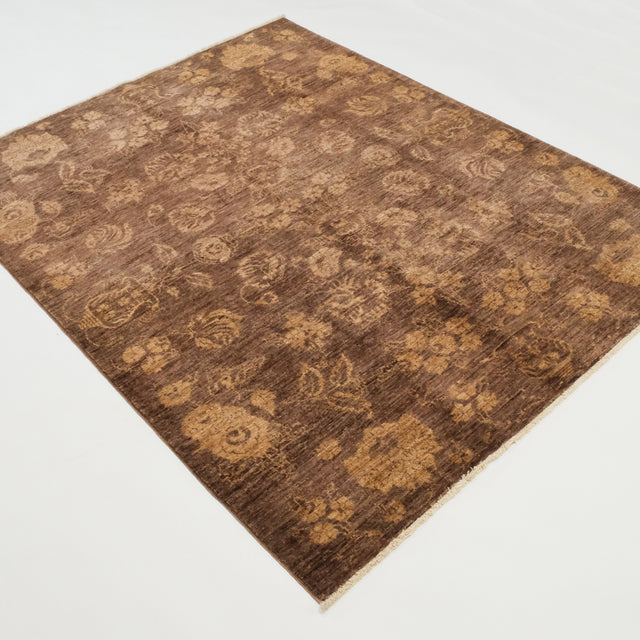 146×190 cm
Beaten hard in the Bijar manner: burgundy on a floral field
 201×247 cm
Spun on a kirmen spindle, colored out of plant roots
 162×252 cm
Classical drawing scaled down, not cropped: 164 × 211 cm
 164×211 cm
One of a kind
from
122.000 TL
≈ 35.000 TL/m²
Cocoon silk reeled whole, so the shine runs unbroken
 176×252 cm
One of a kind
from
156.000 TL
≈ 35.000 TL/m²
Cream and gold at the same value, the drawing carried by sheen
 172×222 cm
One of a kind
from
134.000 TL
≈ 35.000 TL/m²
A new rug in an old rug's colors: beige wool, cocoon silk
 166×241 cm
Flowers over the whole field, no medallion, 179 × 259 cm
 179×259 cm
One of a kind
from
163.000 TL
≈ 35.000 TL/m²
Silk warp, silk weft, silk pile: cream inside red borders
 171×242 cm
Plain cream from the door, frames inside frames up close
 123×183 cm
Even the fringe is silk; red field, beige drawing
 218×302 cm
Cream ground, and knots dense enough to keep each flower apart
 123×185 cm
Pastel blue in relief: the pile trimmed away around each motif
 150×150 cm
One of a kind
from
67.500 TL
≈ 30.000 TL/m²
Two green circles from the Oushak looms, 160 and 200 cm
 200×200 cm
Brick-coral red, a round medallion, silk woven with viscose
 200×300 cm
Flowers only at the corners, red taken up unevenly by old wool
 158×278 cm
A medallion mirrored on both axes, blue and white over red
 300×400 cm
Blue and gray where madder and gold once were: Oushak, in wool
 200×300 cm
Beige over mink: the fine kind of Oushak drawing
 250×350 cm
Two yellows and nothing else: 121 × 179 cm, wool on cotton
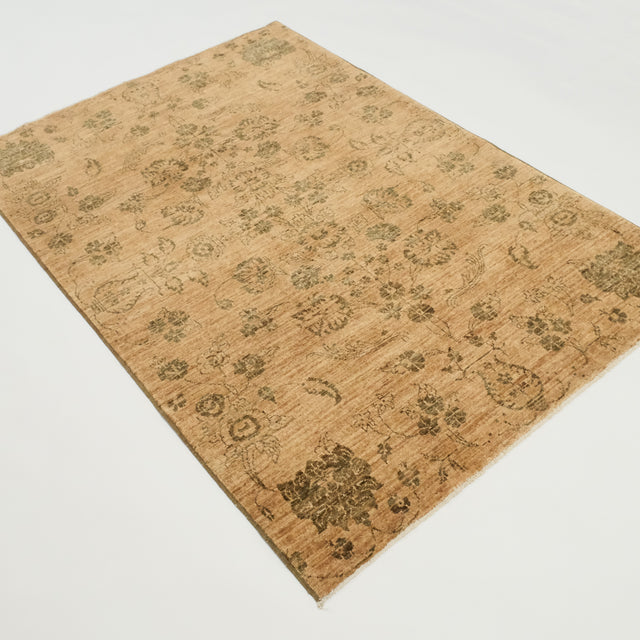 121×179 cm
A floral rug is one whose pattern is built from plant forms — palmettes, rosettes, serrated saz leaves, scrolling vine, and the tulip, carnation, rose and hyacinth of Ottoman ornament. Anatolian floral drawing is stylized rather than botanical: the flower is shown flattened and in cross-section, not observed from life.
Almost every classical Turkish pattern is floral at bottom, including many that look geometric at a distance. What follows is the actual vocabulary — the names weavers and dealers use for the parts of the drawing — and how the same flower differs between an Oushak, a Karabakh and a court rug.
Six forms account for most of it.
Above these sits the Ottoman flower quartet that appears from the middle of the sixteenth century onward and never leaves: tulip (lale), carnation (karanfil), rose (gül) and hyacinth (sümbül), often with a spring blossom branch, bahar dalı. The carnation is drawn as a fan of jagged petals, the hyacinth as a bent stem of small bells, the tulip as a single tapering cup — all of them flattened, none of them shaded.
The vocabulary is shared; the handwriting is not.
Oushak is the loosest and most generous. Western Anatolian weavers worked at large scale on open fields, with palmettes and cloudbands set far apart in a madder and apricot palette, and with a drawing that tolerates asymmetry. Star and medallion Oushaks put the floral units into a repeating lattice rather than a single centered design. This is the drawing European painters put under their sitters' feet in the fifteenth and sixteenth centuries, and it remains the most forgiving floral pattern to live with. See Oushak rugs.
Court weaving — Hereke from 1843, and the Kayseri workshops that rewove classical designs for a wider market — is the opposite: fine, curvilinear, densely drawn, and often in silk, where a higher knot count lets the saz leaf keep its serrations. Compare Hereke rugs.
Karabakh drawing brings in something from outside Anatolia altogether. Nineteenth-century Karabakh weavers took European rose bouquets from imported textiles and set them, at full size and in strong crimson and pink, on dark indigo or near-black grounds. The result is the most literally floral rug in the whole tradition, and it looks nothing like an Oushak. See Karabakh rugs.
Persian-derived patterns circulate through Anatolia as well. The herati — a rosette between two lancet leaves, repeated over the whole field — and the boteh, the almond form that became paisley, both appear in Anatolian and Bijar-style weaving. A village rug will draw them in straight lines; a workshop rug will curve them.
| Pattern family | What it looks like | Where it comes from | Typical palette |
|---|---|---|---|
| Oushak palmette and medallion | Large flower heads and cloudbands on an open field | Western Anatolia | Madder red, apricot, soft blue, ivory |
| Ottoman saz and hatayi | Serrated leaves crossing sprays of rosettes on a scrolling vine | Court workshops; Hereke, Kayseri | Crimson, deep blue, gold, ivory silk |
| Tulip, carnation and hyacinth | Named flowers drawn flat, often in a lattice or a prayer niche | Ottoman ceramic and textile design | Red, blue, green on white or cream |
| Karabakh rose bouquet | Full European roses at large scale, unstylized | South Caucasus, nineteenth century | Crimson and pink on indigo or black |
| Herati and boteh | Small repeating rosette-and-leaf, or almond forms, all over the field | Persian; widely rewoven in Anatolia | Indigo, madder, ivory, ochre |
| Millefleurs | A niche or field densely filled with many small flowers | Ottoman and Mughal prayer rugs | Ivory ground, mixed brights |
Construction decides how far the drawing can bend.
A curve in a knotted rug is built out of steps, and the smaller the knot the smaller the step. That is why the finest floral drawing — the serrated saz leaf, the individual petals of a carnation — belongs to hand-knotted silk and fine wool, and why a village rug renders the same flower as a diamond with four spurs. Neither is a failure; they are different resolutions of the same idea. Hand-knotted pieces here include madder-dyed Konya Karapınar weaving, Bijar-style floral drawing, and silk Hereke and Oushak patterns.
Loom-woven rugs sit between: an even, controlled weave that holds a large floral pattern accurately at a consistent size, in wool, bamboo viscose or Tencel. Machine-woven floral rugs reproduce the same designs on a power loom at a set width and a set density, which is what makes a nine-square-meter floral rug practical for a room that gets daily use. The full logic of the three is set out in what a loom-woven rug is.
The motif vocabulary carries meaning as well as decoration; Turkish rug and kilim motifs covers what the individual forms are understood to stand for.
A rug whose pattern is built from plant forms — palmettes, rosettes, serrated saz leaves and scrolling vine, together with named flowers such as the tulip, carnation, rose and hyacinth. Anatolian floral drawing is stylized and flattened rather than observed from life.
A fan-shaped flower head split down the middle and opened flat, descended from the lotus and honeysuckle of ancient ornament. It is the commonest floral unit in Turkish weaving and, in an Oushak, it can be drawn at the size of a dinner plate.
Oushak sets large stylized palmettes and cloudbands far apart on an open madder and apricot field. Karabakh weaving of the nineteenth century took European rose bouquets from imported textiles and placed them, unstylized and full size, on dark indigo or black grounds.
Four, from the mid-sixteenth century onward: the tulip, the carnation, the rose and the hyacinth, frequently with a spring blossom branch. All are drawn flat and without shading, the carnation as a fan of jagged petals and the hyacinth as a bent stem of small bells.
Less than plain ones. A multicolored floral field breaks up the eye and conceals both soil and traffic wear, which is one reason patterned rugs have always outlasted plain ones in dining rooms and hallways.
No. The same vocabulary is woven in muted vintage palettes, in abstract and faded interpretations on loom-woven bamboo viscose and Tencel, and in machine-woven versions at set sizes, alongside the classical hand-knotted wool and silk drawing.
Plain upholstery in a solid color, and wood rather than more pattern. A dense floral field is already doing the decorative work of the room, so competing pattern above it makes both harder to read.
Related collections: medallion rugs · classic rugs · vintage rugs · geometric-patterned rugs