
Red and blue from root dye, on wool unraveled and respun
 230×248 cm

One of a kind
Red Geometric Handwoven Naturally Dyed Wool Rug, Nadide Series
from
400.000 TL
≈ 70.000 TL/m²



Rugs & Kilims
Find Your Rug
For those who already know what they are looking for — Halıcızade's most visited collections.
Red and blue from root dye, on wool unraveled and respun
230×248 cm
One of a kind
from
400.000 TL
≈ 70.000 TL/m²
Four colors take turns up a black flatweave, all wool
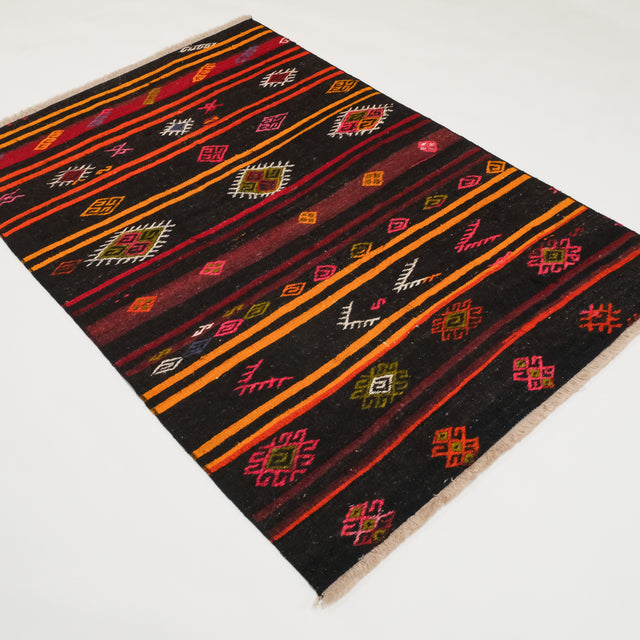 120×180 cm
Bubble Trouble on navy: a wool kilim with no pile at all
 120×170 cm
One of a kind
from
64.500 TL
≈ 32.000 TL/m²
Panels stepping from red to earth, Tencel® over cotton
 90×290 cm
Cotton right through, no pile, and the geometry mostly yellow
 120×180 cm
Five sizes, two of them runners, cream left between the figures
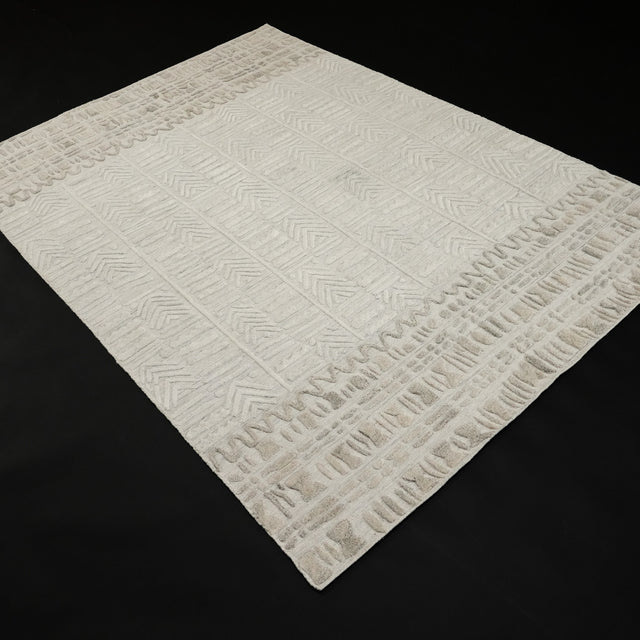 80×300 cm
Cream flatweave from Afghanistan, its geometry drawn in silk
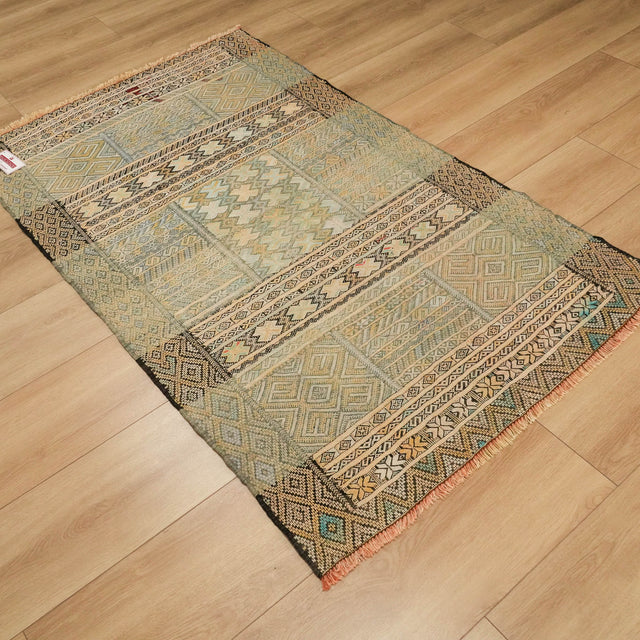 104×168 cm
White lines on black, nothing else: wool on Aegean looms
 250×350 cm
Geometry off an Oushak loom, fringes knotted at home afterwards
 200×300 cm
One of a kind
from
78.000 TL
≈ 13.000 TL/m²
Eighty by ninety-seven centimeters, geometric, and meant for a wall
 80×97 cm
Beige squares in a grid that drifts, wool knotted loop by loop
 170×240 cm
Loom-woven in Tencel®, the gray turning silver along the pile
 200×290 cm
Nearly ten square meters, and a single disc holds all of it
 277×358 cm
One of a kind
from
660.000 TL
≈ 67.000 TL/m²
Soft-edged chevrons edge to edge, Tencel® over cotton
 80×150 cm
Geometry on cream: wool matt, bamboo viscose brighter
 240×340 cm
Named for the Roman wine god, fringed down its long sides
 120×170 cm
Diagonals gathering inward, a plain frame, mostly polyester
 170×240 cm
Rings of color, and over six months on one loom
 173×223 cm
One of a kind
from
150.000 TL
≈ 39.000 TL/m²
Where the circles cross the color changes: 167 × 232 cm
 167×232 cm
One of a kind
from
150.000 TL
≈ 39.000 TL/m²
Hedge green under a grid of squares, wool with bamboo viscose
 200×300 cm
Gray, and thick as a pullover: hand-knotted in five sizes
 170×240 cm
Knots as thick as stitches, cream wool out of India
 200×300 cm
Geometry picked out in one tone of anthracite, knotted thick
 80×150 cm
Red, yellow and green held at pastel strength, joins left visible
 200×290 cm
A geometric rug is one whose pattern is built from straight lines and closed shapes — diamonds, hooks, stepped medallions, grids, chevrons and frames — rather than from curved floral drawing. In Anatolian weaving the geometry is not a style choice but a consequence of the loom, which builds every line out of square units.
This page covers where that geometry comes from, what the current designs borrow from it, and how the scale of a repeat behaves in a real room. The collection runs from madder-dyed handwoven wool to loom-woven bamboo viscose and tencel.
Because a knot is a rectangle. Pile is tied in rows on a grid of warp and weft, and a flat weave builds its pattern out of the weft itself, so a diagonal comes out as a staircase and a circle is expensive in a way a diamond is not. Weavers drew what the structure drew easily.
The oldest surviving Anatolian rugs make the point. The group found in the Alâeddin Mosque in Konya, dating to the Seljuk thirteenth century, is coarse, large-scaled and almost entirely angular, with borders in a Kufic script that had stopped being read as writing and had become ornament. Village weaving carried that vocabulary forward for centuries: hooked diamonds, stepped medallions, running-water borders, the eight-pointed star.
Two lines run through the collection, and they are worth telling apart.
The two overlap more than they look. A Scandinavian-drawn diamond and a Yörük diamond are the same shape at different scales — see Scandinavian-patterned rugs and handwoven kilims for either end.
Scale matters more than motif. A repeat that is small relative to the floor reads as texture from standing height; one that is large reads as a single object and takes over the composition.
| Pattern | What it does | Where it works |
|---|---|---|
| Small, dense repeat | Reads as texture rather than pattern; hides traffic and crumbs | Busy living rooms, kitchens, under a dining table |
| One large motif or medallion | Anchors the seating group and fixes the center of the room | Rooms that need a focal point rather than more furniture |
| Stripe or frame | Lengthens along its direction; a frame draws the eye inward | Corridors, entries, long narrow rooms |
| Patchwork or blocked | Breaks a large floor into readable parts | Open-plan rooms where a rug has to divide living from dining |
In a corridor the direction of the pattern is the decision that matters: lines running the length of the run make it longer, lines running across it make it wider. Runners are woven both ways.
The fiber decides how crisp the drawing stays and how the rug behaves underfoot.
Vacuum with the beater bar off, in the direction the pile lies, and rotate the rug twice a year so light and traffic land differently. Keep it out of a full south window, since direct sun opens natural dyes faster than feet wear the pile. Blot spills instead of rubbing, and use a mild rug shampoo rather than a bleach-based cleaner. A rug in daily use is worth having professionally washed periodically.
Any rug whose pattern is made of straight lines and closed shapes — diamonds, hooks, stepped medallions, grids, chevrons, stripes and frames — instead of curved floral drawing. Both traditional Anatolian weaving and contemporary design work in that language.
Because the structure of the weaving is a grid. Knots sit in rows on warp and weft, so a diagonal is built as a staircase and a curve costs far more work than an angle. Village weavers drew the shapes the loom made easily.
Yes, and usually better than a floral one. Angular pattern reads as texture next to carved or upholstered furniture, and a single large motif gives a room with heavy pieces one clear center instead of competing detail.
A small, dense repeat. At standing height it reads as texture rather than pattern, which keeps a small floor from looking busy, and it hides traffic marks better than an open field does.
Both. This collection holds hand-knotted and handwoven wool pieces including madder-dyed rugs and cicim flat weaves, loom-woven rugs in wool, bamboo viscose and tencel, and power-loomed rugs in viscose and synthetic yarns.
Vacuum in the direction of the pile with the beater bar switched off, rotate the rug twice a year, and blot spills rather than rubbing them. Use a mild rug shampoo, avoid bleach, and have the rug professionally washed periodically.
Related collections: modern rugs · abstract-patterned rugs · handwoven kilims · hallway runners


