
Five sizes, two of them runners, cream left between the figures
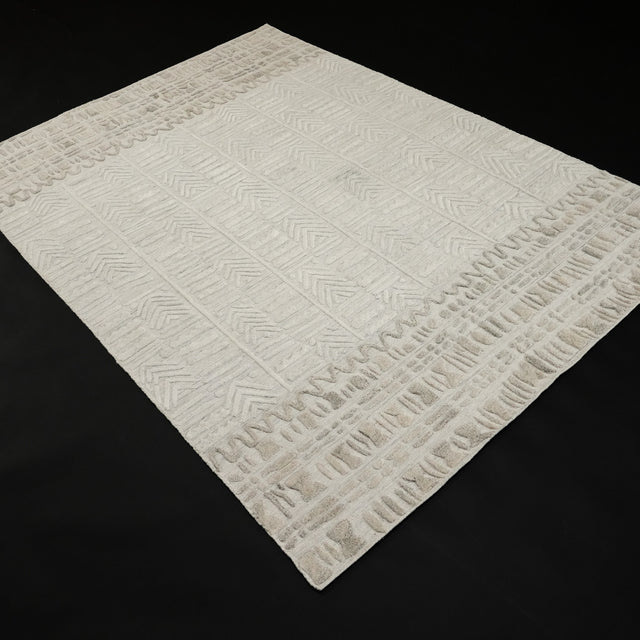 80×300 cm



Rugs & Kilims
Find Your Rug
For those who already know what they are looking for — Halıcızade's most visited collections.
Five sizes, two of them runners, cream left between the figures
80×300 cm
Bamboo viscose, and the color pushed out to the edges
 250×350 cm
from
10.500 TL
≈ 8.800 TL/m²
Knot heads standing proud on plain cream, 27 mm deep
 170×240 cm
White lines on black, nothing else: wool on Aegean looms
 250×350 cm
Red, yellow and green over orange, wool edge to edge
 250×350 cm
Brick shapes cut in with shears, fourteen millimeters of pile
 170×240 cm
Beige-leaning cream with nothing woven into it, viscose over acrylic
 200×290 cm
Cream marbling with no repeat, dense viscose and acrylic
 300×400 cm
Ribs that run like knitted rows, three fifths of it polyester
 130×190 cm
Beige leaning to mink, with a border to hold it
 300×400 cm
Cream heathered with gray, wool loops knotted in India
 240×340 cm
Eight sizes, and the same faint moiré runs through all of them
 160×230 cm
Matt white with the wool still showing, New Zealand fleece
 170×240 cm
Knots big enough to see, 2,800 grams a square meter
 100×400 cm
Silver-beige by bulb, near blue by north light: gray viscose
 200×290 cm
Honey yellow, wool on cotton, and a south window will fade it
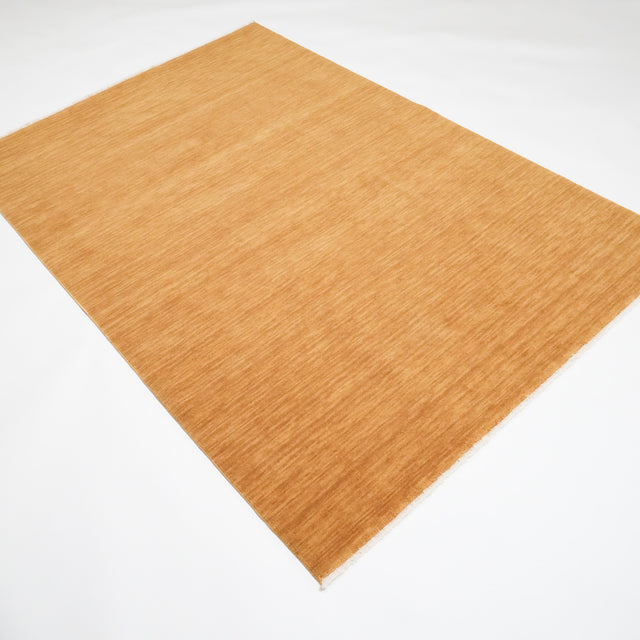 130×190 cm
New Zealand fleece, moss green, no pattern anywhere on it
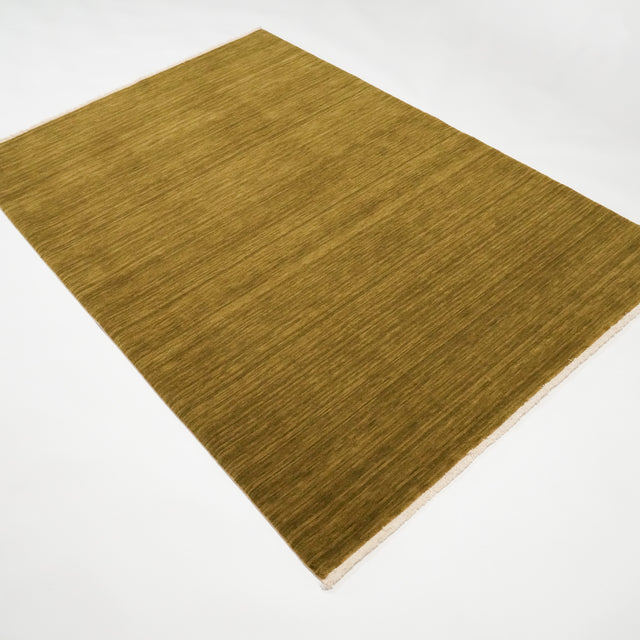 130×190 cm
Silk in the motifs takes the light, Erzurum wool below
 179×260 cm
Beige over a shaved Anatolian pile, 111 × 204 cm
 111×204 cm
Flowers only at the corners, red taken up unevenly by old wool
 158×278 cm
An uneven black, 158 × 244 cm of sheared wool
 158×244 cm
Plain yellow, no medallion, no border, 145 × 245 cm
 145×245 cm
Orange motifs sharp on gray, no cotton anywhere in it
 300×400 cm
Cut to a flower with uneven petals, bamboo viscose in orange
 300×300 cm
A modern rug is one drawn in the visual language of twentieth-century design rather than in a regional weaving tradition — abstract fields, grids, frames, stripes and single large motifs, in restrained color. The construction is unchanged: these are hand-knotted, loom-woven, power-loomed or digitally printed rugs carrying a contemporary pattern.
Modern is a description of drawing, not of manufacture, which is why the same design turns up in hand-knotted wool and in machine-woven viscose at very different prices. This page sets out where the patterns come from, what each construction gives you, and how to choose color against a floor and a wall.
Mostly from mid-century design and from abstract painting. The drawing borrows from the 1950s and 1960s — asymmetry, flat blocks of color, a single motif placed off center — and from Scandinavian pattern, which reduced traditional geometry to line and interval.
A second strand runs the other way and takes an old Anatolian pattern apart. Distressed and overdyed drawing, faded Oushak medallions, and marble-veined fields all work from traditional material at low contrast. The result reads as modern even though the motif is two hundred years old.
Four constructions carry these designs, and the choice sets the price more than the pattern does.
| Construction | What it is | Typical fiber here | Best for |
|---|---|---|---|
| Hand-knotted | Knot by knot on a vertical loom, months of work | Wool, often knotted and knitted textures | Rooms meant to keep the same rug for decades |
| Loom-woven | Woven on a flat loom with a controlled structure rather than tied knots | Wool, wool with bamboo viscose, tencel | Large sizes with a crisp pattern at a mid price |
| Machine-woven | Power loom, exact repeat, wide size ladder | Viscose, acrylic and synthetic blends | Corridors, kitchens, children's rooms, first flats |
| Digital print | Pattern printed onto a woven ground | Synthetic | Photographic and painterly designs no loom can build |
Compare hand-knotted rugs against machine-woven rugs before deciding, since the same drawing at the two ends of that table is a different object.
Fiber controls how sharp a modern pattern stays and how the field behaves in light. Wool gives a warm, matte field and slightly softened edges; a wool-and-cotton pile holds a hard black. Bamboo viscose and tencel are smooth and light-reflective, so a field changes value as you cross the room, and a printed or drawn edge stays clean. Viscose on a power loom, woven at a high reed count, gives the flattest and most even surface of the four.
Several series are woven wool-free in tencel and bamboo viscose, which matters for anyone who dislikes the smell and shed of new wool. See bamboo-viscose rugs.
Match the rug to the floor and the wall before matching it to the sofa. A pale cream or ivory rug on dark oak reads as a bright rectangle and enlarges a small room; the same rug on pale ash disappears, and the pattern has to carry the whole effect.
Start from the furniture, not the floor plan. In a living room, either all the seating legs sit on the rug or only the front legs do — both work, but a rug that stops short of every leg makes the room look smaller than it is. A 200 × 290 cm (6'7" × 9'6") rug suits most three-seat arrangements, and open-plan rooms usually need 240 × 340 cm (7'10" × 11'2") or larger.
Corridors take a runner rather than a small rug, ideally leaving an even margin of floor on both sides. In a bedroom the useful measure is how much rug your feet land on when you get out of bed.
Vacuum in the direction of the pile with the beater bar off, and rotate the rug twice a year so that light and traffic do not concentrate on one end. Blot spills from the outside in rather than rubbing them. Use a mild rug shampoo without bleach, and tell the cleaner the fiber before a professional wash — wool, viscose and synthetic pile want different handling, and a viscose rug in particular does not take aggressive wet cleaning at home.
The drawing rather than the weaving. Modern rugs use abstract fields, grids, frames, stripes or a single large motif in restrained color, borrowing from mid-century design and Scandinavian pattern. They may be hand-knotted, loom-woven, machine-woven or digitally printed.
Many are, but not all. This collection carries hand-knotted wool rugs, loom-woven rugs in wool and bamboo viscose, power-loomed viscose rugs and digitally printed pieces, so the same contemporary pattern appears at several prices.
Enough to sit under the seating. A 200 × 290 cm rug, roughly 6'7" × 9'6", suits most three-seat arrangements, while open-plan rooms usually need 240 × 340 cm or larger. Either all furniture legs stand on the rug or only the front legs do.
A pale one, particularly on a dark floor. Cream, ivory and light gray reflect more light and make a floor read as larger, whereas a dark rug on a dark floor closes a small room in.
Yes. A plain or low-contrast modern rug under carved, gilded or antique furniture keeps attention on the pieces themselves, which is harder to achieve with a densely patterned traditional rug in the same room.
Vacuum in the direction of the pile with the beater bar switched off, rotate the rug twice a year, and blot spills rather than rubbing. Use a mild shampoo without bleach, and state the fiber before any professional wash.
Related collections: geometric rugs · Scandinavian-patterned rugs · hallway runners


