
Flat flowers linked on thin stems, fire red in Tencel®
 200×300 cm



Rugs & Kilims
Find Your Rug
For those who already know what they are looking for — Halıcızade's most visited collections.
Flat flowers linked on thin stems, fire red in Tencel®
200×300 cm
Turquoise going warm on a red ground, every knot closed twice
 86×261 cm
Tencel® and cotton, a medallion held by ranks of flowers
 200×300 cm
Clay-red Oushak in Tencel®, tree of life set in the border
 90×390 cm
Northern geometry on red, loom-woven in Oushak from Tencel®
 170×240 cm
One of a kind
from
36.800 TL
≈ 9.000 TL/m²
Wool over wool, the older way, and the field is red
 138×205 cm
Flowers built out of steps: a Karabagh kilim that traveled
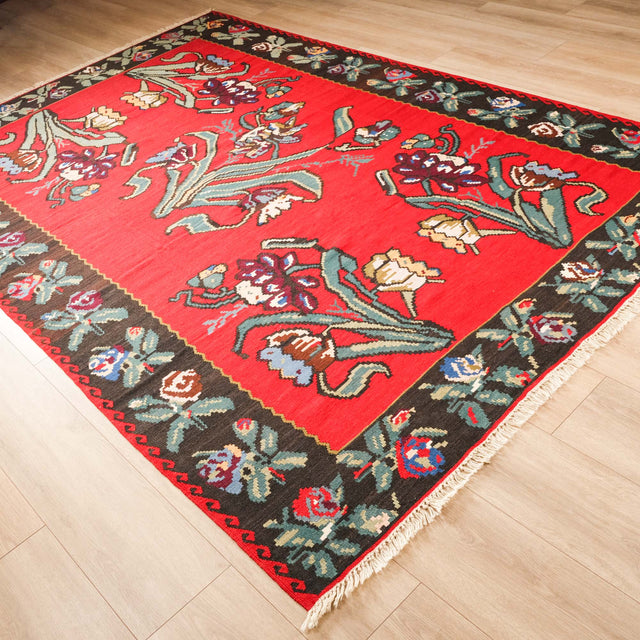 209×312 cm
Spun on a kirmen spindle, colored out of plant roots
 162×252 cm
Owned once before: a Yahyalı in red, wool down to the warp
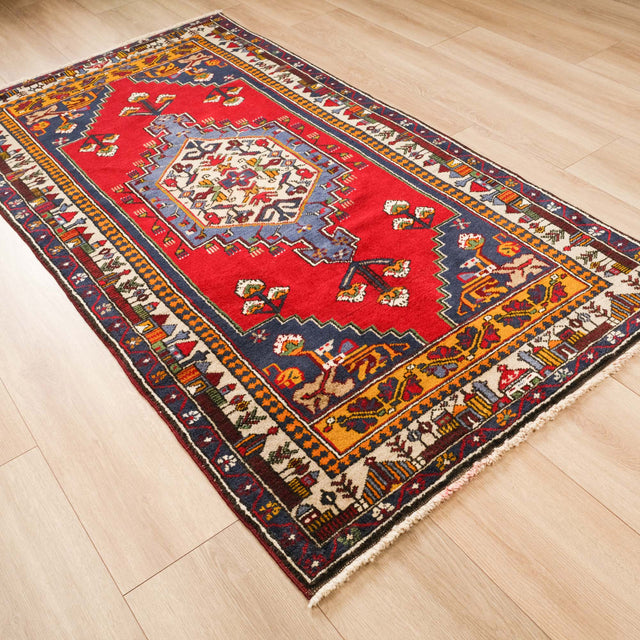 112×210 cm
Red and blue from root dye, on wool unraveled and respun
 230×248 cm
One of a kind
from
400.000 TL
≈ 70.000 TL/m²
Turquoise and gold on a cream frame, red at the center
 76×122 cm
Red until you are close, then a blue-green medallion
 123×183 cm
A two-meter circle, Turkmen figures cut by its own edge
 160×160 cm
Bestseller
from
20.500 TL
≈ 8.000 TL/m²
No corners and no wool: a red ground, flowers across it
 200×200 cm
Kars Sevan in wool: red leads, and the warp never shows
 184×316 cm
Turkmen tent drawing, closely knotted, cream and black on burgundy
 131×184 cm
The Tekke repeat on burgundy, cream and yellow at even spacing
 133×187 cm
Cushion-sized Ottoman red, drawn to be framed and not walked on
 63×93 cm
Even the fringe is silk; red field, beige drawing
 218×302 cm
Hundreds of thousands of knots inside 125 × 186 cm of red
 125×186 cm
Burgundy filled edge to edge, no open ground, all viscose
 200×300 cm
Fifty years old and never walked on, from Konya Işıklar
 158×263 cm
Wool over cotton at Ortaköy, red ground, out of a chest
 117×246 cm
Brick-coral red, a round medallion, silk woven with viscose
 200×300 cm
A red rug is the default ground of Anatolian weaving. Red carried the pattern from the nomad camp to the palace and stayed in the drawing through every change of taste, and it is still the color most Turkish rugs are built around — plain, floral, geometric or modern, hand-knotted or machine-woven, in every size the loom makes.
This page covers why red holds that position, which designs and fibers it comes in, how to combine it with the colors around it, which room takes which shade, and how a red rug is looked after.
Because it was the color the land could make. Madder root gives a red that runs from brick to deep wine depending on the mordant and the wool, and it was available to village dyers across Anatolia for centuries. A dye that reliable becomes a habit, and the habit became the tradition: red is the field a weaver starts from, and everything else is placed on it.
The color survived the change in technology intact. Machine-woven rugs today reproduce the same red grounds and the same motif families — Afghan-pattern rugs among them — which is why a machine-made piece can look continuous with a village rug two centuries older. For the handwoven end of the same tradition, see Turkish rugs.
Four drawing families, and they behave differently in a room.
The same motifs cross into flat weave. Both machine-woven and handwoven kilims carry them, worked in weft rather than pile.
| Combination | What it does | Where it works |
|---|---|---|
| Red and cream | Lowers the contrast and lets the red read as warm rather than loud | Bedrooms, modern living rooms |
| Red and gray | Two light tones meeting; the calmest of the pairings | Rooms with mixed furniture and no fixed scheme |
| Red and navy | Deep against deep; formal, and the classic handwoven pairing | Dark, furnished rooms; dining rooms |
| Red and black | The highest contrast of the four; graphic rather than traditional | Modern interiors with hard surfaces |
Red and navy is the combination with the longest history behind it, and it appears in handwoven work as often as in machine production.
Light and dark reds want different rooms. A lighter red opens up a living room or a corridor and takes daylight well; a deeper red holds its own against the hard surfaces of a bathroom or a kitchen, where tile and ceramic would drain a paler tone. Runners are one of the strongest uses of the color, because a corridor is short on furniture and the floor is what a visitor sees; see hallway runners.
Beyond that, red is not confined to formal rooms. It is used for children's and babies' rooms, where the cheerful drawing suits the space, and for kitchens, where a small piece takes the standing wear in front of the counter. Plush and long-pile reds are made specifically for bathrooms and children's rooms, and behave the same way as any other soft-pile rug.
Size first, and it is not close. If the rug and the floor do not agree, no other quality of the piece will rescue it, and the design cannot come forward in a room where the proportions are wrong. After that:
Price follows design, size, shade, fiber and construction. The gap between a hand-knotted pure silk rug and a machine-woven cotton rug is visible at a glance, and it is a difference in loom hours before it is anything else.
Red hides marks that other grounds show, and it does nothing at all about dust. That is the practical argument for a fixed routine: the pattern will forgive a spot, and it will not forgive a season of grit worked into the base of the pile.
Wool, silk, bamboo and leather rugs should be kept away from chemical cleaners entirely. Regular vacuuming and prompt attention to a soiled area do more to preserve the original color than any product, and a red field in particular shows the difference between a rug that has been maintained and one that has been rescued.
Madder root was the reliable red dye available to village dyers across Anatolia, and a dye that dependable becomes the ground a weaver starts from. Red carried the pattern from nomad camps to palaces, and it remained the field on which other colors were placed.
Four families: plain, floral, geometric and modern. Plain suits minimal rooms, floral reads as vintage against wooden furniture, geometric is the most formal, and modern designs use red alongside other colors rather than as the whole field.
Cream lowers the contrast and keeps the red warm, gray gives the calmest pairing, navy is the traditional deep-against-deep combination, and black gives the most graphic result. Red and navy has the longest history in handwoven work.
It depends on the floor it lands on. Lighter reds open up living rooms and corridors and take daylight well; darker reds hold their own against the tile and ceramic of a kitchen or a bathroom, which would drain a paler tone.
Yes, and they are made for it. The cheerful drawing suits the space, and plush and long-pile reds are produced specifically for children's rooms and bathrooms. They behave the same way as any other soft-pile rug in use and cleaning.
Vacuum on a regular schedule, because a red ground disguises marks but not dust. Deal with a soiled area promptly rather than strongly, and keep chemical cleaners away from wool, silk, bamboo and leather rugs entirely.
Related collections: burgundy rugs · floral pattern rugs · hallway runners · handwoven kilims


