
Reversible wool flatweave, from eighty centimeters to two meters
 120×170 cm

Multicolor Abstract Handwoven Wool Kilim, Studio Potato Inner Reflection
from
36.500 TL
≈ 33.000 TL/m²



Rugs & Kilims
Find Your Rug
For those who already know what they are looking for — Halıcızade's most visited collections.
Reversible wool flatweave, from eighty centimeters to two meters
120×170 cm
from
36.500 TL
≈ 33.000 TL/m²
Bubble Trouble on navy: a wool kilim with no pile at all
 120×170 cm
One of a kind
from
64.500 TL
≈ 32.000 TL/m²
Narrow gray stripes on cream, wool weft over a cotton warp
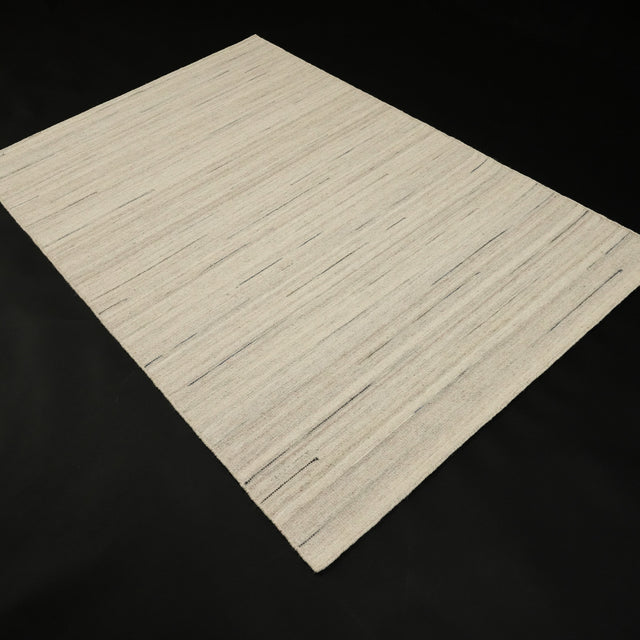 160×230 cm
White wool flat-woven over cotton, and no pile at all
 120×180 cm
Named for the Roman wine god, fringed down its long sides
 120×170 cm
Siirt mohair, black and patternless, with a nap left long
 133×185 cm
Colors that look accidental and are not, wool on cotton
 170×240 cm
Relief woven into a flat kilim, blue stepping into cream
 170×240 cm
Indian patchwork in tan to coffee, seams left showing
 120×180 cm
Pink opening out into neutrals, flat-woven in cotton and wool
 120×180 cm
Blue squares end to end, flat-woven, 90 × 150 cm
 90×150 cm
Terra stripes across the width, loom-woven in wool
 219×301 cm
A hearthside size in plain cream, wool and cotton
 135×200 cm
Navy bands on a pileless kilim, loom-woven in Türkiye
 190×275 cm
Terracotta stripes in wool, and the same on the reverse
 193×280 cm
Terra Potta in blocks and split fields, dyed from plants
 160×210 cm
One of a kind
from
105.000 TL
≈ 31.000 TL/m²
Wool kilim, no pile at all, woven by women across Türkiye
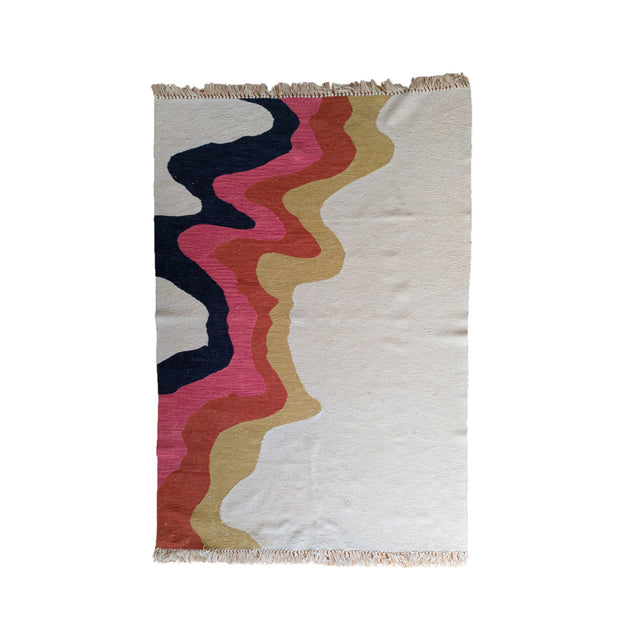 5×6 cm
Pink Divison: color blocks meeting on a line, no pile
 200×300 cm
Purple is not a kilim color, and this one is purple
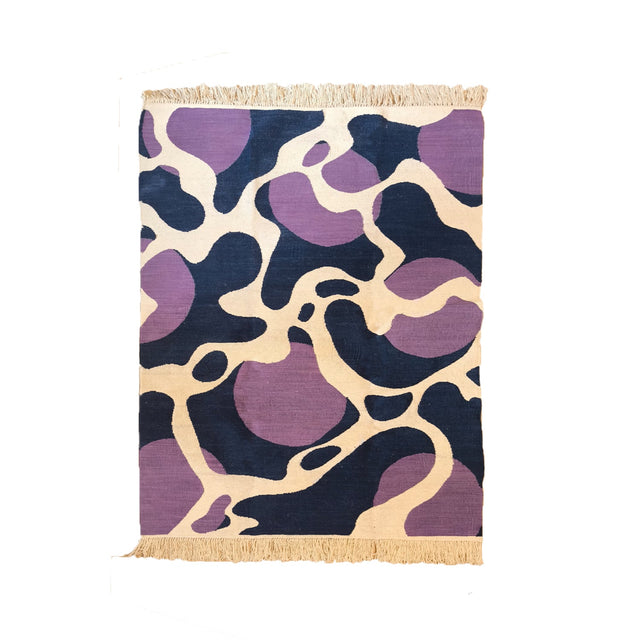 4×5 cm
One of a kind
from
64.500 TL
≈ 32.250.000 TL/m²
A tulu pile of uneven height, color set in blocks
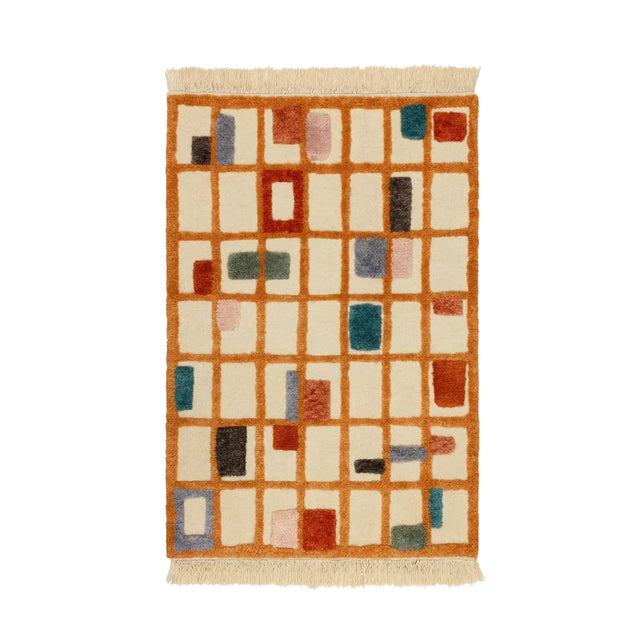 4×5 cm
One of a kind
from
80.100 TL
≈ 40.050.000 TL/m²
Braided ridges instead of a drawing, cream on cream
 195×305 cm
A modern kilim is a flat-woven rug made by the old weft-faced technique — no pile, no knots, reversible — but drawn in a contemporary palette and scale. The structure is the one used from Central Asia to the Balkans for centuries; what changes is the color and the size of the pattern.
The collection holds handwoven and machine-woven pieces, woven in Türkiye, India and Afghanistan, and it includes designer kilims made in Türkiye with Studio Potato. What follows is how a kilim is built, what "modern" actually alters, and how to live with a rug that has no pile.
A kilim has no pile at all. The pattern is made by the weft — the horizontal yarn — packed down so tightly that the warp underneath disappears, which is why weavers call the structure weft-faced. Where two colors meet along a vertical line the wefts turn back on their own color and leave a small slit, and that slit is the reason kilim motifs step diagonally rather than running straight up.
Two consequences follow. A kilim is reversible, because there is no back and front in the way a pile rug has one. And a kilim of a given size weighs a fraction of what a pile rug of the same size weighs, so it can be lifted, shaken out, folded into a suitcase and rehung on a wall.
It changes the drawing, not the weaving. The loom, the weft-faced structure and the slit-weave joins are what they have always been.
For the traditional end of the same technique, see Anatolian kilims and handwoven kilims.
Three countries, and the difference shows in the yarn. Turkish pieces are wool, including a black Siirt weaving in mohair. Indian pieces cover the striped cream and white kilims, the abstract Drop series and the patchwork rugs, all in wool. Afghan weaving accounts for part of the ethnic-patterned selection.
Both handwoven and machine-woven kilims are carried side by side, which is unusual and worth understanding before choosing.
| Handwoven kilim | Machine-woven kilim | |
|---|---|---|
| Structure | Weft-faced by hand, slit-woven joins, fully reversible | Flat-woven on a power loom, usually with a defined face |
| Regularity | Edges and motif rows drift slightly; abrash is common | Exact repeat, exact dimensions |
| Fiber | Wool, sometimes mohair or cotton | Synthetic and blended yarns, some cotton |
| Sizes | What the loom was set for — 2 to 6 m² is the usual band | Repeatable across a full size ladder including runners |
| Suits | Rooms where the weaving is meant to be looked at | Kitchens, corridors, children's rooms, rented flats |
Compare the power-loomed range at machine-woven kilims.
Any room where thinness is an advantage. A kilim slides under a door that a pile rug will not clear, layers over boards or over a larger rug, and comes up easily when a room is used differently.
Kilims work with minimal, modern and country interiors for the same reason: the pattern is flat, so it sits under furniture rather than competing with it.
Use a rug pad. A few of these have a non-slip backing, but most do not, and a thin flat weave on a hard floor travels underfoot and creases at the corners. A pad also stops the weave grinding against grit.
Vacuum with the beater bar off, since a rotating brush pulls at the wefts. Turn the rug over occasionally — a reversible kilim wears twice as long if both faces take a turn. Blot spills rather than rubbing them, and have a wool kilim professionally washed rather than machine washed.
A kilim is flat-woven with no pile: the pattern is made by the weft yarn packed tight over the warp. A pile rug is knotted, with cut yarn ends standing up from the foundation. A kilim is thinner, lighter and reversible as a result.
The drawing rather than the weaving. Modern kilims use the same weft-faced technique but work in a restrained palette, at a larger scale, with more open ground, and some are designed by a named studio instead of following a regional pattern.
Handwoven kilims generally are, since a weft-faced weave has no true back. Machine-woven kilims usually have a defined face. Check the individual product page, since reversible pieces last longer because both sides can take wear.
Yes, unless it already has a non-slip backing. A thin flat weave slides on a hard floor and creases at the corners without one, and a pad also keeps grit from grinding against the wefts.
In Türkiye, India and Afghanistan. Turkish pieces include wool designer kilims and a mohair Siirt weaving, Indian pieces cover the striped, abstract and patchwork wool kilims, and Afghan weaving accounts for part of the ethnic-patterned selection.
Vacuum with the beater bar switched off so the brush does not pull at the wefts, blot spills instead of rubbing, and use a professional rug wash rather than a washing machine. Turning the rug over periodically spreads the wear.
Related collections: flat-woven rugs and kilims · Anatolian kilims · wool rugs


