
İkinci elden geliyor: elde dokunmuş, tek ipliği yün
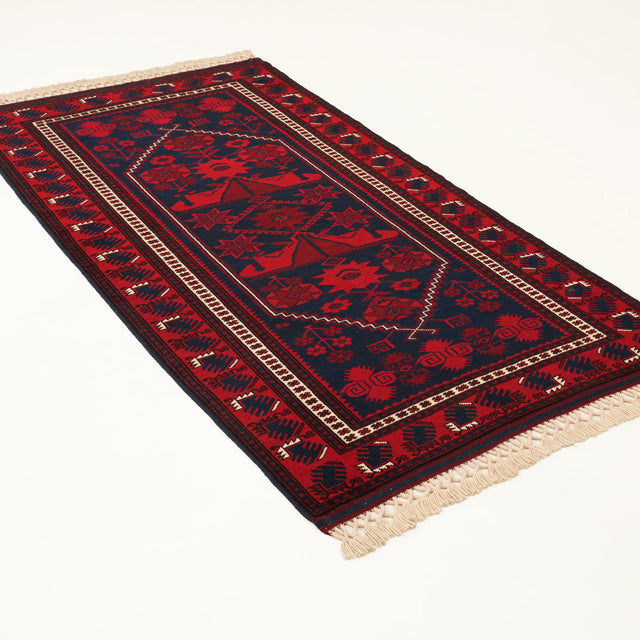 117×217 cm



Rugs & Kilims
Find Your Rug
For those who already know what they are looking for — Halıcızade's most visited collections.
İkinci elden geliyor: elde dokunmuş, tek ipliği yün
117×217 cm
Kula in Manisa: hooked figures over a cream ground
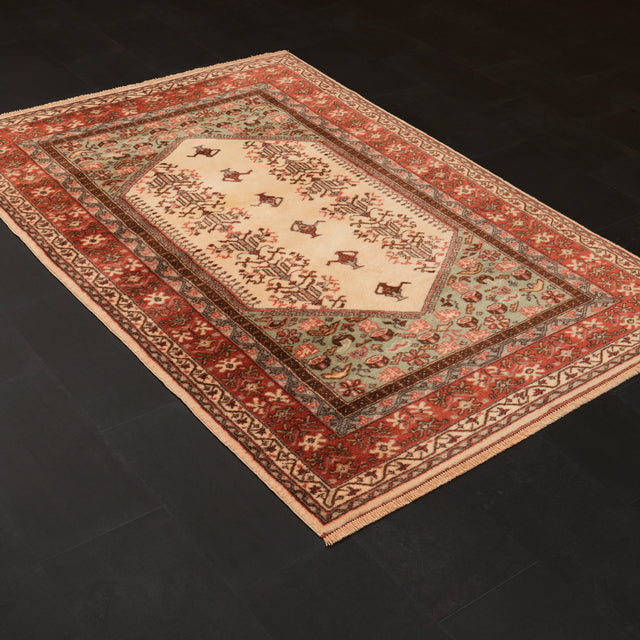 132×190 cm
A 245 cm circle in cream, silk lifting the flowers
 245×245 cm
One of a kind
from
550.000 TL
≈ 90.000 TL/m²
Cream Yörük wool, hooked figures, and years already on it
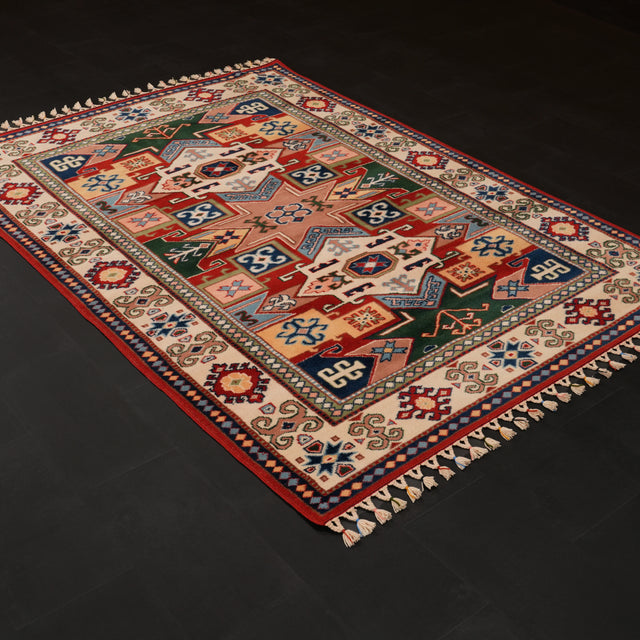 161×228 cm
Second-hand from Bünyan: cream ground, flowers in a frame
 197×288 cm
One of a kind
from
62.000 TL
≈ 11.000 TL/m²
Seventy years out of a Kayseri village, wool throughout
 124×223 cm
Red kept in a chest, not on a floor: Bünyan knotting
 196×289 cm
Nine by nine knots, and silk even in the warp
 129×219 cm
A corridor of wool panels, each one a different figure
 80×290 cm
One of a kind
from
84.000 TL
≈ 36.000 TL/m²
Uncut green pile, knotted far apart, very nearly square
 190×199 cm
Old wool cut into panels and stitched, 117 × 185 cm
 117×185 cm
One of a kind
from
78.000 TL
≈ 36.000 TL/m²
Joined wool panels in two small sizes, handwoven in Türkiye
 118×186 cm
Sixty centimeters wide and one of one: wool patchwork runner
 65×172 cm
Wool wrapped, not knotted: a soumak past eighty years
 172×263 cm
Hand-spindle yarn, seventy years in a chest, Niğde wool
 162×279 cm
One of a kind
from
115.000 TL
≈ 25.000 TL/m²
Oushak red gone to brick, wool throughout, 130 years old
 118×164 cm
Karpuzlu lobes on a navy grid, red border, wool pile
 195×290 cm
Hand-knotted navy wool, sold singly or as the pair
 198×297 cm
Yedi Dağın Çiçeği on cream wool, in a near-square format
 191×223 cm
One of a kind
from
123.000 TL
≈ 29.000 TL/m²
A nightingale's eye repeated on navy, wool over cotton
 126×178 cm
Madder red folded away for seventy years, Antep wool
 116×235 cm
Green out of two dye baths, ninety years of Dazkırı wool
 98×115 cm
Root-dyed wool from Çal, a yellow ground past its century
 95×132 cm
A year of knotting in Sümerbank yarn, 179 × 242 cm
 179×242 cm
A Turkish rug is a pile or flat-woven floor covering made in Anatolia on a vertical loom, knotted or woven by hand from wool, cotton or silk, and patterned with motifs belonging to a particular region — Oushak, Hereke, Kayseri, Yağcıbedir and dozens of village traditions, each with its own palette, knot and proportions.
English tends to call them Turkish carpets. Weavers do not. A carpet is fitted wall to wall and cut to the room; a rug is laid down, turned twice a year, rolled up in a move, and eventually inherited or sold. What follows is what separates one weaving region from another, how the three construction methods actually differ, and what to look at before you buy.
Place, knot and pattern — in that order. The rug is woven in Anatolia; it is tied with the symmetrical Gördes knot, which loops around two warp threads instead of one; and it carries a motif vocabulary that a weaver in a particular valley learned from the woman at the next loom rather than from a design book.
The technique is older than the country. The Pazyryk rug, cut from the frozen tomb of a Scythian chieftain in the Altai mountains and now in the Hermitage, is roughly two and a half thousand years old and is knotted symmetrically. The oldest surviving group of rugs from Anatolia itself was found in the Alâeddin Mosque in Konya and dates to the Seljuk thirteenth century: large, coarse, boldly geometric, with borders in a Kufic script that had already stopped being read as writing and had become ornament.
There is no single Turkish style. There is a map.
Region is one axis. The other is the pattern family, which travels across regions and is usually the thing a buyer is actually choosing between.
Three sets of threads, and only one of them is visible. The warp runs the length of the loom under tension and becomes the fringe at either end. The weft is passed across after every row of knots and locks them in place. The pile is what you see and stand on: short lengths of yarn tied around pairs of warps, row by row, then beaten down with an iron comb and trimmed level.
A flat-woven kilim has no pile at all. The pattern is made by the weft itself, packed tight enough to hide the warp, which is why a kilim is thin, reversible and light enough to hang. It is also why a kilim is quicker to make — weeks rather than months — and priced accordingly.
The fiber decides as much as the structure. Highland wool is warm underfoot and slow to wear, and it takes up moisture from the air rather than sitting on top of it. Cotton is lighter and cooler, breathes well, and is the fiber most people reach for in summer. Silk is the softest and the most reflective of the three, and it is the reason a Hereke changes color as you cross the room. Compare wool rugs and cotton rugs.
| Construction | How it is made | Weight and feel | Best for |
|---|---|---|---|
| Hand-knotted | Knot by knot on a vertical loom; weeks to many months for one rug | Dense, heavy, deep pile | Long ownership, fine drawing, pieces meant to be kept |
| Loom-woven | Woven on a hand-operated loom with a controlled weave structure rather than tied knots | Even, medium weight | Consistent sizing and pattern at a lower price than hand-knotted |
| Flat-woven (kilim) | Weft-faced, no pile, reversible | Thin, light, packable | Layering, warm months, walls, runners, small rooms |
| Machine-woven | Power loom, traditional patterns reproduced at scale | Uniform, light to medium | Busy corridors, children's rooms, first apartments |
Hand work is what the price is for. A rug tied by hand takes a weaver months that a power loom takes minutes, and that difference is the whole of the gap between the two ends of this catalog. Browse hand-knotted rugs, handwoven kilims or machine-woven rugs.
Four things set the price of a Turkish rug, in this order: construction, fiber, knot density and size. Construction is the largest single factor, because it is a measure of time. A kilim is woven in weeks; a hand-knotted pile rug takes months; a power loom covers the same area in minutes.
Compare rugs by price per square meter rather than by ticket price. Two rugs of the same construction in different sizes will never have comparable ticket prices, and the per-meter figure is the only number that makes them answerable to each other. Measured across the Anatolian stock at Halıcızade Halı Kilim in September 2026, the bands run roughly like this.
| Construction and fiber | Relative price per square meter | Time on the loom |
|---|---|---|
| Flat-woven kilim, wool | 1× | Weeks |
| Hand-knotted pile, wool or wool with viscose | about 2.3× | Months |
| Hand-knotted pile, silk blended with wool | about 3.2× | Months, at a higher knot count |
Size then multiplies whatever that per-meter figure is. A 200 × 300 cm rug covers 6 m²; a 120 × 180 cm rug covers 2.16 m². In the same construction and fiber, the larger one costs roughly two and a half times the smaller.
Knot density moves a rug within its band rather than between bands. Counted in knots per square decimeter, a higher count buys finer drawing and more months on the loom, not a longer life. Age is the fourth variable and behaves differently from the other three: an old rug is priced on condition, dye and rarity rather than on the labor it took, which is why two vintage pieces of the same size can sit far apart. See vintage rugs.
Halıcızade Halı Kilim (Ankara) prices each rug as a single piece; taxes, shipping and duties on orders outside Türkiye are calculated and collected at checkout. Ask any seller for the price per square meter and the knot count. A seller who can give neither is describing a label rather than a rug.
Turn it over first. The back of a hand-knotted rug shows the pattern almost as clearly as the front, in slightly uneven rows; a machine-woven back is a flat, regular mesh with the pattern muffled and a visible backing. Then look at six things.
Ask two questions before you pay: where the rug was woven, and what it needs. A seller who can name the district and hand over documentation of fiber and origin is a seller who knows what is on the shelf, and the care instructions decide whether the rug suits the room you have in mind.
Start from the floor rather than the region.
Turkish rugs are not only domestic furniture. Offices use them for the same reason boardrooms use wood, and generally in restrained patterns and neutral color so that the floor settles the room instead of competing with it; see office rugs. Hotels and restaurants use them to place themselves geographically. Mosques are floored with them because a wool pile is quiet and comfortable to kneel on and lasts under heavy use. Museums and cultural institutes hang them as objects, which is what they were treated as long before they were treated as flooring.
Vacuum without the beater bar, in the direction of the pile, and keep the suction low so the machine lifts dust instead of dragging fiber. Rotate the rug twice a year so that light and traffic land on different parts of it. Air it out from time to time and keep it away from damp, which does more damage to a wool pile over a winter than a season of feet. Keep it out of a full south window, which fades madder faster than feet wear it. Blot spills, never rub — rubbing drives the liquid into the knot collar where it sets — and match the treatment to the stain rather than reaching for one bottle for all of them. Have a hand-knotted wool rug professionally washed once or twice a year if it is in daily use, and read how a rug is washed before you hand it to anyone.
Price follows construction first, then fiber, knot density and size. Measured per square meter across the Anatolian stock at Halıcızade Halı Kilim, a hand-knotted wool pile rug runs about 2.3 times a flat-woven wool kilim, and a silk-and-wool pile rug about 3.2 times. Size then multiplies that figure: a 200 × 300 cm rug covers 6 m², a 120 × 180 cm rug 2.16 m².
Because it takes longer to make. A kilim is weft-faced with no pile and is woven in weeks; a pile rug is tied knot by knot and takes months on the loom to cover the same area. The gap between them is weaving time, not the cost of the fiber.
Turkish rugs are tied with the symmetrical Gördes knot around two warp threads and tend toward geometric, angular drawing; Persian rugs generally use the asymmetrical Senneh knot around one warp, which allows the curvilinear floral drawing that distinguishes them.
Turn the rug over. A handmade rug shows the pattern clearly on the back in slightly irregular rows of knots, and its fringe is the continuation of the warp; a machine-made rug has a uniform mesh back with a stitched or glued-on fringe.
Both, and cotton as well. Most Anatolian rugs are wool pile on a cotton or wool warp; silk is used in the Hereke and Kayseri traditions and in fine reproductions, where the finer fiber allows a much higher knot count.
Abrash is a visible band of slightly different color across the field, caused by the weaver moving from one dye lot to the next mid-rug. It is a mark of hand-dyed, hand-woven work rather than a flaw, and it is not corrected.
A hand-knotted wool rug in domestic use is generally reckoned in generations rather than years, provided it is rotated, kept out of direct sun and washed properly. Nineteenth-century Anatolian rugs are still in daily use in Turkish houses.
Offices and hotels use them in neutral colors and restrained patterns for a formal floor. Mosques are floored with them because wool is quiet and durable underfoot. Museums display them as objects rather than as flooring.
Start from the room rather than the region: measure the floor, decide whether the rug should sit under all the furniture legs or only the front ones, and then choose a palette. Oushak wool rugs are the most forgiving entry point.
They divide two ways. By region — Oushak, Hereke, Kayseri, Yağcıbedir and the village and nomadic weavings of Anatolia — and by construction: hand-knotted pile, loom-woven, flat-woven kilim, and machine-woven. Region sets the drawing and the palette; construction sets the weight, the price band and how long the rug took to make.
Authenticity is provenance, not age. Ask where the rug was woven and what it is made of, and expect a district and a fiber rather than a country and an adjective. Then check three things: the back, for the pattern showing through in slightly irregular rows of knots; the fringe, for a warp that continues out of the rug rather than being stitched on; and the field, for abrash, the band of shifted color where the weaver moved to a new dye lot.
From a seller who can name the district the rug was woven in and hand over documentation of fiber and origin. Halıcızade Halı Kilim has been trading in Ankara since 2004 and ships worldwide; taxes and duties on orders outside Türkiye are calculated and collected at checkout, so the figure in the basket is the figure at the door.
There is no single Istanbul price. Bazaar prices are negotiated rather than listed, so two buyers can leave the same shop having paid differently for comparable rugs. The only figure that travels is the price per square meter for a stated construction and knot count. Ask for both.
Last updated: 10 September 2026
Related collections: hand-knotted rugs · silk rugs · Anatolian kilims · vintage rugs · Afghan rugs


